Weekend links 785

mabuse.jpg

A 1933 poster for the second of Fritz Lang’s Mabuse films.

• Good news for those who missed the original run (from 2002–2013), Arthur Magazine is now available for the first time as a complete set of free PDFs. I was laterally involved with the magazine from the outset, mostly as a remote supporter, but I also did several covers and interior illustrations for the early issues.

• Among the new titles at Standard Ebooks, the home of free, high-quality, public-domain texts: Dr. Mabuse, the Gambler by Norbert Jacques (translated by Lilian A. Clare); and two books by J. Sheridan Le Fanu: Short Fiction, and a novella, The Room in the Dragon Volant.

• New music: Spilla by Ensemble Nist-Nah; and Sea-swallowed Wands by Jolanda Moletta and Karen Vogt.

With his compulsions for systems and architecture, his command of shadows and symbolism-imbued sets and props, Lang is never less than arresting. Yet few of the films make complete statements; Lang’s art, in this period, is seemingly as much a fugitive as are his archetypal characters. That is, until the moment that his long journey to the direct subject matter and cultural framework of the 1950s United States, addressed in the terms and by the means available to him in Hollywood, abruptly comes to superb fruition with The Big Heat.

Jonathan Lethem on Fritz Lang in Hollywood and one of the greatest noir pictures of the 1950s

• This week in the Bumper Book of Magic: an enthusiastic review at The Joey Zone. My thanks to Mr Shea!

• Mixes of the week: A mix for The Wire by Nina Garcia; and Isolated Mix 133 by Pentagrams Of Discordia.

• At Colossal: David Romero’s digital recreations of Frank Lloyd Wright’s unrealised buildings.

• At Smithsonian magazine: John Last investigates the history of the Tarot.

• At Planet Paul: An interview with artist Malcolm Ashman.

• At the Daily Heller: A porno gag mag with attitude.

Hodgsonia

Das Testaments Des Mabuse (1984) by Propaganda | (The Ninth Life Of…) Dr Mabuse (1984) by Propaganda | Abuse (Here) (1985) by Propaganda
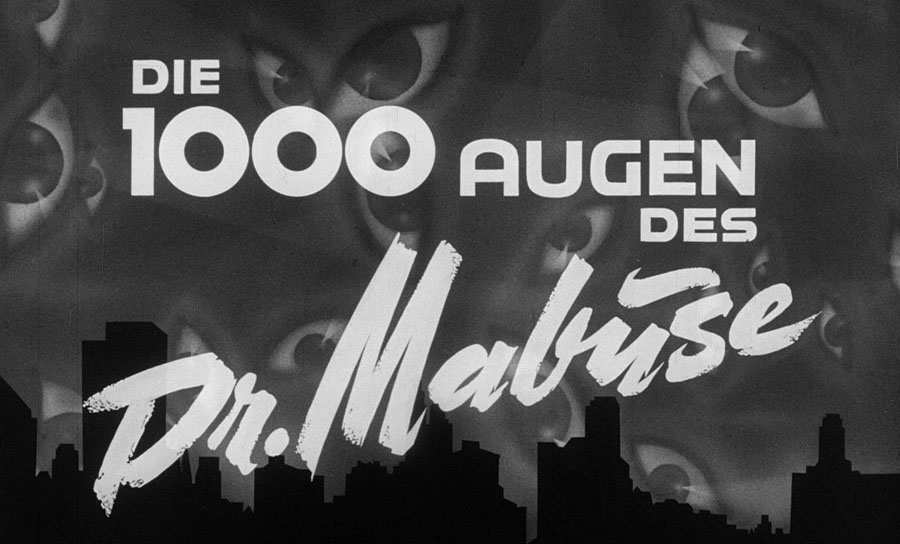
The Thousand Eyes of Dr Mabuse

mabuse1.jpg

Among the weekend’s viewing was the third and final film in Fritz Lang’s Mabuse cycle, The Thousand Eyes of Dr Mabuse (1960). This was also Lang’s final feature, made after his return to Germany in the late 1950s, and another film of his that for many years I knew only as an impossible-to-find title. I’d read about the Mabuse series in Lotte Eisner’s study of Lang’s career even before the name and character was co-opted by Propaganda for their first single in 1984, but the only films of Lang’s that ever used to appear on TV were the Hollywood features or, if you were lucky, a poor print of Metropolis. Mabuse was a source of fascination for the way the character connected the beginning and ends of the director’s career, as well as being a German take on the Moriarty-like super-criminal. The first film in the series, Dr Mabuse, the Gambler (1922), condenses the corruption of Weimar Germany into a potent physical icon, while the sequel, The Testament of Dr Mabuse (1933), reflects the fevered moment when real super-criminals were taking control of the nation. The Nazis were sufficiently discomforted by Testament to ban it shortly after its release.

mabuse2.jpg

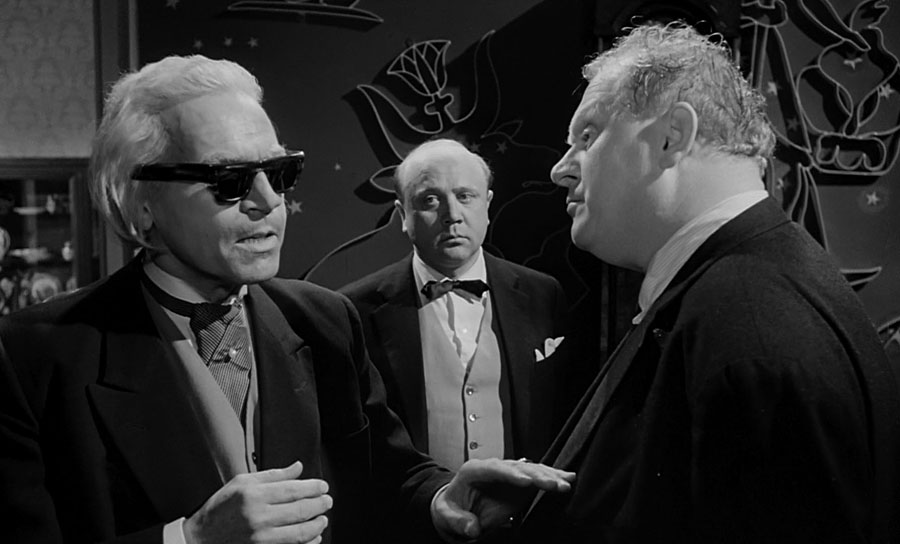
Cornelius the psychic with insurance salesman Hieronymus B. Mistelzweig and police inspector Kras.

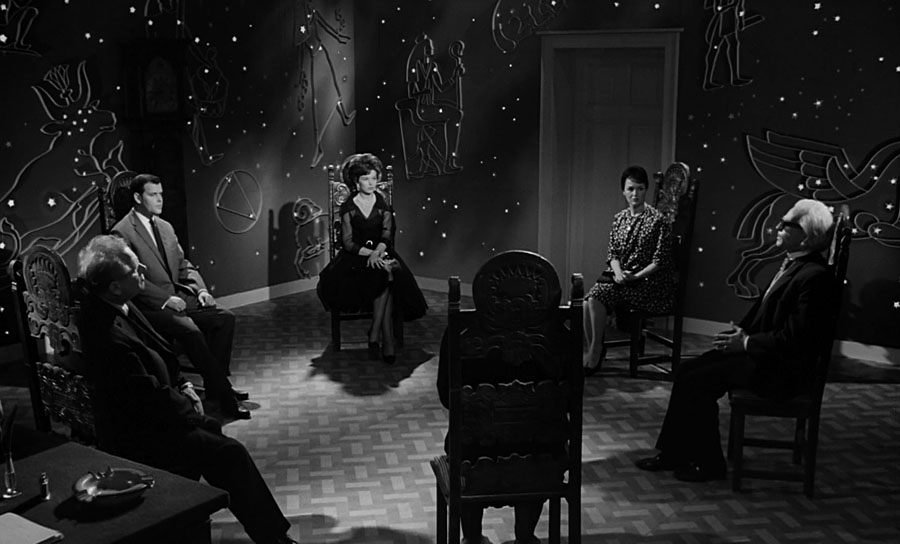
The Thousand Eyes of Dr Mabuse appeared just as new super-villains were emerging to oppose James Bond and his imitators. One of Bond’s early adversaries, Auric Goldfinger, was portrayed on screen by Gert Fröbe who appears here on the opposite side of the law as homicide inspector Kras. Fröbe’s tenacious policeman is one of the few fixed points in a plot filled with twists and deceptive identities. Assassinations and double-crosses are a staple of this type of thriller but Lang also gives us an early example of electronic surveillance in a contemporary setting, together with a séance that harks back to a similar scene in the first Mabuse film. The séance is an unusual touch in a story otherwise devoid of similar moments, prompted by the film’s most mysterious character, Cornelius the blind psychic. With an appearance reminiscent of the late Karl Lagerfeld, Cornelius is an overt throwback to Lang’s pre-war films, many of which hinted at the mystical or supernatural even when such hints seemed unnecessary; Rotwang, the robot-builder in Metropolis (played by the original screen Mabuse, Rudolph Klein-Rogge) is a mechanical genius who just happens to live in a house more suited to an alchemist, with a huge inverted pentagram on one of its walls. The sinister motives of Cornelius aren’t so baldly stated but his consulting room is lavishly decorated with astrological diagrams. The psychic, together with the criminals and the police inspector, create a problem common to films of this kind in which the more colourful characters generate greater interest for the viewer than do the romantic leads. After a succession of breathless opening scenes, Thousand Eyes sags a little while wealthy industrialist Henry Travers (Peter Van Eyck) is getting to know Marion Menil (Dawn Addams), a woman he rescues from a suicide attempt. The film also lacks the subtext of the earlier episodes, although Mabuse’s scheme turns out to be diabolical enough for any of James Bond’s Cold War enemies.

mabuse3.jpg

The séance.

Continue reading “The Thousand Eyes of Dr Mabuse”

The poster art of Josef Vyleťal

vyletal11.jpg

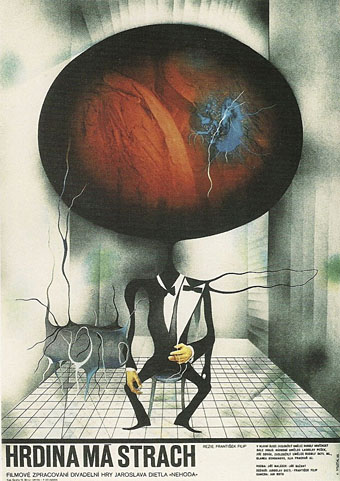
The Hero is Afraid (1965).

Film posters by Czech artist Josef Vyleťal (1940-1989) have appeared here in the past, but after watching Juraj Herz’s gloomily Gothic Beauty and the Beast (1978) at the weekend—a film for which Vyleťal not only created a poster but also provided the title sequence and paintings seen within the film—I thought the artist deserved a post of his own.

Josef Vyleťal was a prolific poster artist and designer—the Terry Posters website states that he created 115 designs for the cinema—who also worked as a book illustrator. Between commercial assignments he produced paintings in a macabre Surrealist style that filtered into his commercial work, the Herz titles included. The absence of barriers between private obsessions and commercial imperatives is what makes the film posters created by Czech and Polish artists so attractive, as well as so surprising to Anglophone viewers. There’s no sense of these works being produced by committee, of a gaggle of marketing executives fretting over details behind the scenes. Some of Vyleťal’s interpretations are so extreme and uncompromising by Hollywood standards it’s impossible to imagine even an adventurous chain like Alamo Drafthouse commissioning them, never mind a risk-averse studio. One of the designs I singled out for an earlier post is an ideal example, a poster for Alfred Hitchcock’s The Birds which dispenses with any visual reference to the film in favour of a liberal borrowing of the bird-headed figures from Max Ernst’s The Robing of the Bride. It’s a commonplace when discussing the films of Jan Švankmajer to situate the director in the history of Czech Surrealism which remained a clandestine movement during the Communist years. But Vyleťal’s paintings demonstrate a confidence that the average Czech filmgoer could accept Surrealist imagery when being tempted by the latest fare from Hollywood.

vyletal07.jpg

The Naked Eye (1966).

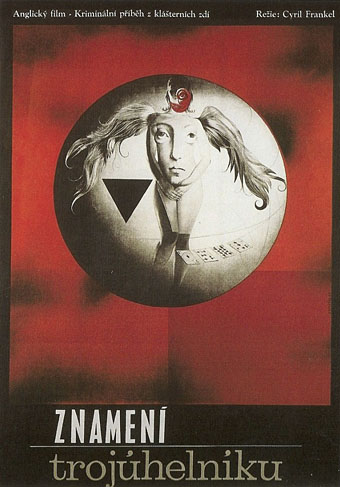
Given my own tastes for Surrealist imagery many of the examples shown here tend in this direction. Vyleťal was a versatile artist who utilised a number of different styles, including collage and a bold graphic style of black shapes on coloured backgrounds. In addition to borrowing from Ernst he also borrowed (or swiped) figures from Aubrey Beardsley on at least two occasions (see below). Most of the examples here are collages augmented by or combined with paint, collage being a quicker solution when faced with deadlines. Terry Posters has many more examples.

vyletal13.jpg

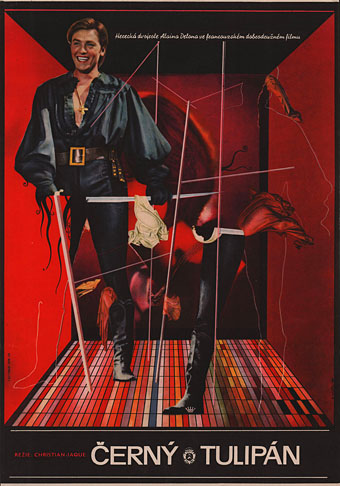
The Black Tulip (1967).

vyletal01.jpg

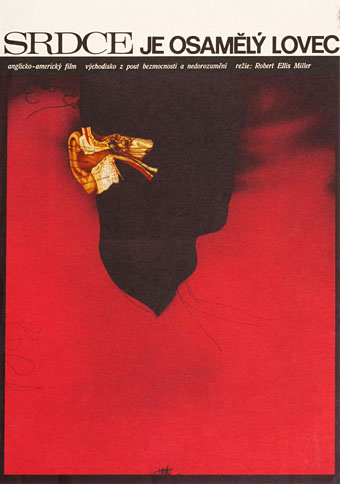
The Heart is a Lonely Hunter (1968).

vyletal12.jpg

The Trygon Factor (1968).

Continue reading “The poster art of Josef Vyleťal”

The poster art of Raymond Gid

gid-28.jpg

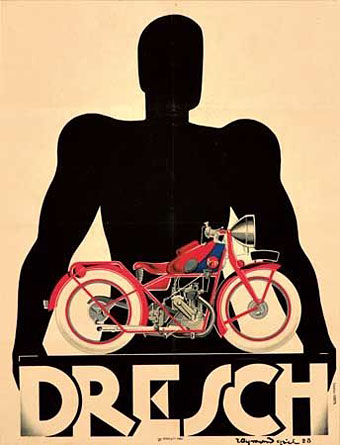
Dresch (1928).

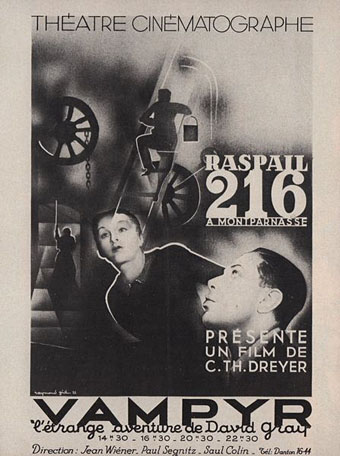
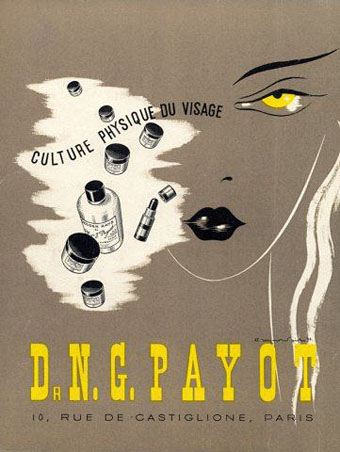
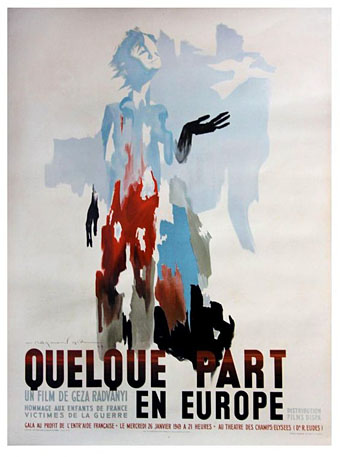
This weekend I was rewatching Henri-Georges Clouzot’s superb thriller, Les Diaboliques (1954) after which I went searching for the equally superb posters by Raymond Gid (1905–2000). I hadn’t really looked at the rest of Gid’s work before so this post remedies the situation with a selection from some of the many examples available online. Gid was something of a French equivalent to Saul Bass, working as a poster artist for feature films while also producing designs for advertising; like Bass he took charge of the typography as well as the illustration, always a useful thing for a poster artist. Typographies (1998), his book on the subject, is still in print.

gid-32.jpg

Vampyr (1932).

gid-38.jpg

Dr. NG Payot (1938).

gid-48.jpg

Quelque part en Europe (1948).

Continue reading “The poster art of Raymond Gid”

High-Rise posters

highrise.jpg

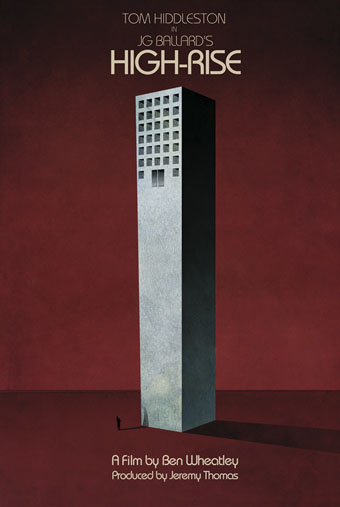
An early promotional poster from 2014 by Jay Shaw.

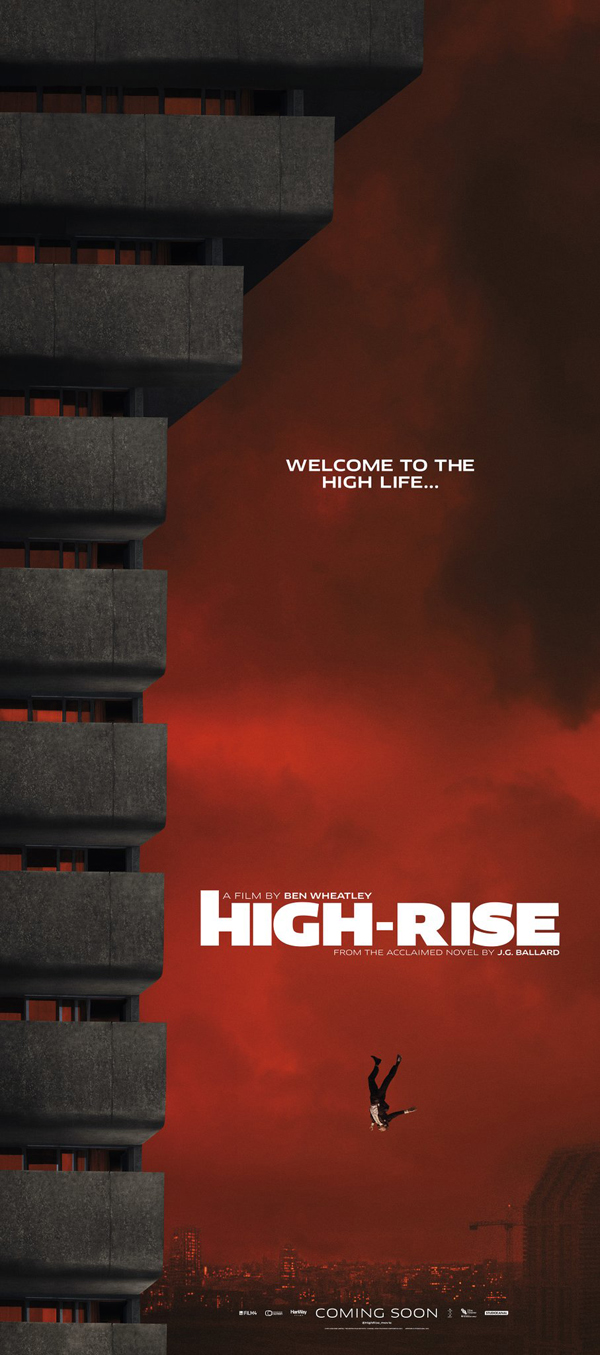
Ben Wheatley’s film of the novel by JG Ballard approaches. As is my custom, I’ve been avoiding the trailers of this and any other film of interest but the posters are increasingly impressive. Ben Wheatley and fellow Brit filmmaker Peter Strickland (whose The Duke of Burgundy was produced by Wheatley’s Rook Films) have distinguished themselves not only by the quality of their films but also by caring about the designs used to advertise their work. Last month I linked to a story about the dire state of the US poster world where design-by-committee is the order of the day. The designs for Wheatley’s films have been a welcome riposte to this trend. Can the film live up to its posters? Find out in March.

highrise1.jpg

The first poster shows the doomed jeweller heading earthwards for his rendezvous with a parked car. Easy to imagine this design giving a Hollywood marketing committee the vapours.

Continue reading “High-Rise posters”