Lindsay Kemp’s Salomé

kemp1.jpg

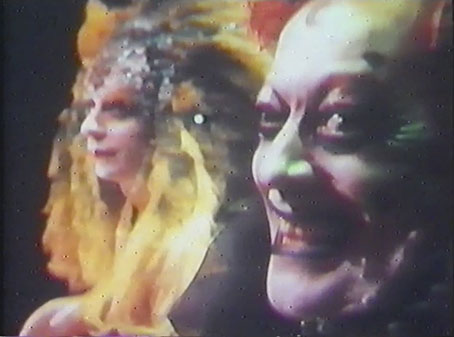
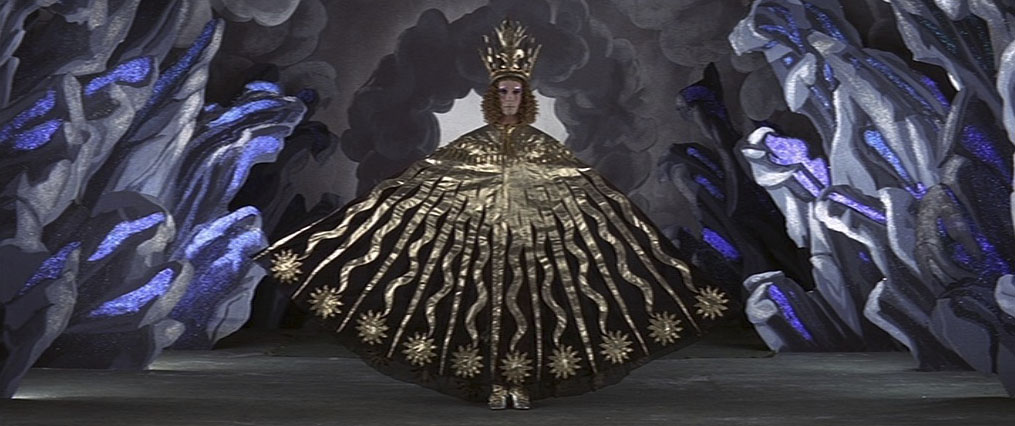
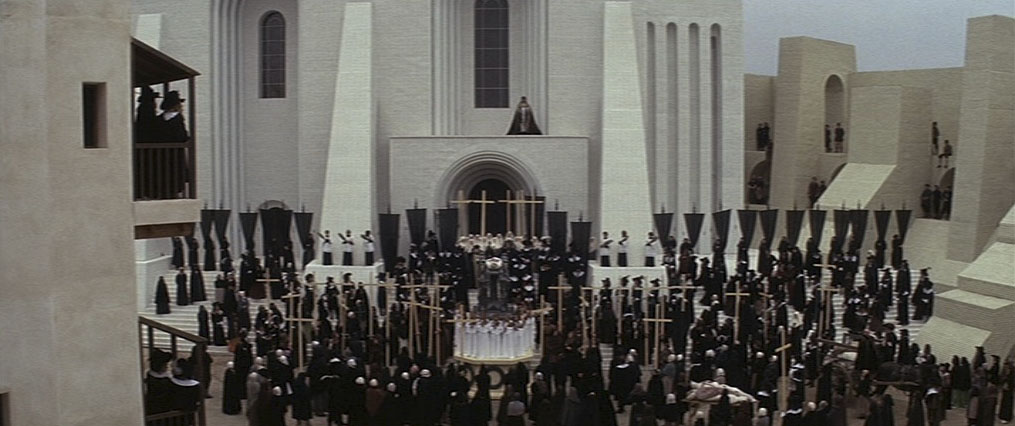
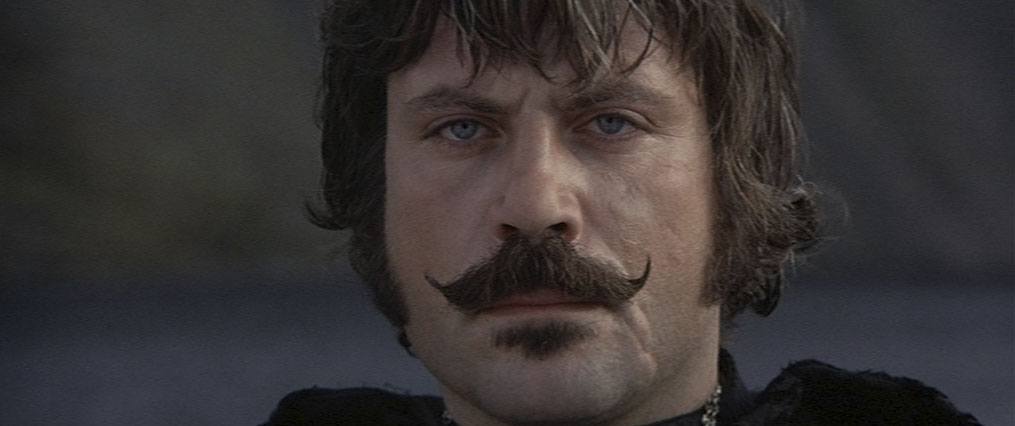
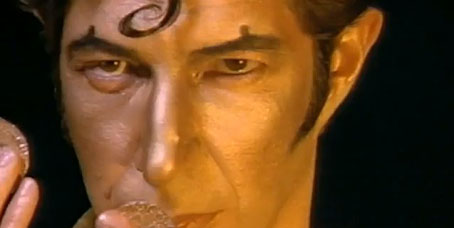
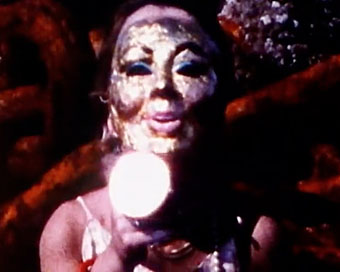
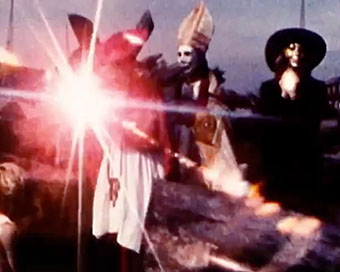
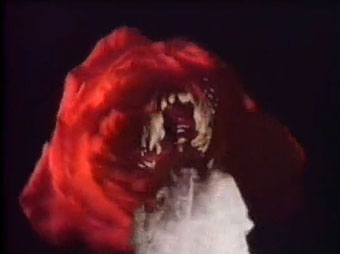
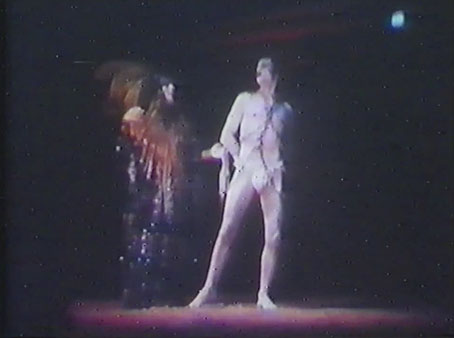
Fragments are all you get with this one, unfortunately, but how tantalising they are. Lindsay Kemp’s 1975 stage production of Oscar Wilde’s play was probably the queerest there’s been to date, with Kemp himself playing Herod’s doomed daughter under a heap of silks and feathers. These stills from a sequence of Super-8 shots of the performance arrive courtesy of Nendie Pinto-Duchinsky, director of the forthcoming Kemp documentary Lindsay Kemp’s Last Dance, a film whose title echoes Ken Russell’s film of the Wilde play. The connections circulate wildly (so to speak) around Kemp’s production: prior to this performance Kemp had acted for Ken Russell, while two of the other actors went on to work with Derek Jarman (as did Kemp). John the Baptist (above) was played by David Haughton who appeared as Ariel in Jarman’s Jubilee; Jack Birkett’s grinning features (bottom, right) appear in many of Jarman’s films. All the more reason to wish these clips were longer.

The Kemp documentary YouTube channel has a few more items related to Kemp’s stage work, notably another tantalising sequence of stills from Flowers (1974), an adaptation of Genet’s Our Lady of the Flowers that also featured Haughton and Birkett.

Update: Thanks to Suzanne in the comments for pointing to her video which includes further film moments including Salomé performing with a live snake à la Salammbô.
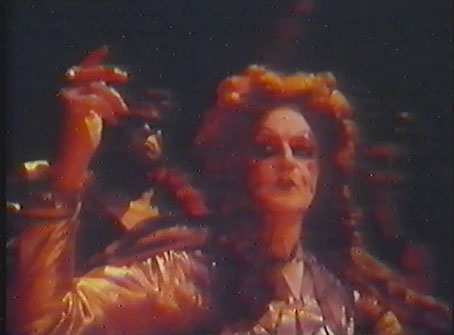
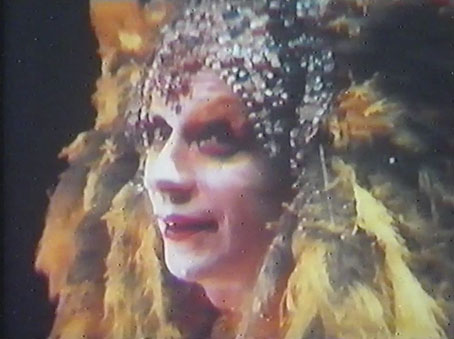
kemp2.jpg

kemp3.jpg

kemp4.jpg

Elsewhere on { feuilleton }
The Salomé archive

Previously on { feuilleton }
Mister Jarman, Mister Moore and Doctor Dee
Saint Genet

Weekend links 107

schwabe.jpg

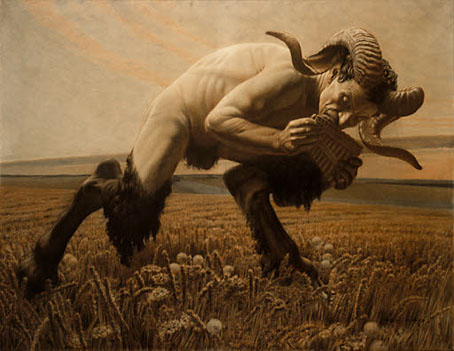
Le Faune (1923) by Carlos Schwabe.

• “When I recently attended a conference in China, many of the presenters left their papers on the cloud—Google Docs, to be specific. You know how this story ends: they got to China and there was no Google. Shit out of luck. Their cloud-based Gmail was also unavailable, as were the cloud lockers on which they had stored their rich media presentations.” Ubuweb’s Kenneth Goldsmith on why he doesn’t trust the Cloud.

• “I’m a poet and Britain is not a land for poets anymore.” A marvellous interview with the great Lindsay Kemp at Dangerous Minds. Subjects include all that you’d hope for: Genet, Salomé, David Bowie, Ken Russell, Derek Jarman, The Wicker Man and “papier maché giant cocks”.

• “As early as the 1950s, Maurice Richardson wrote a Freudian analysis which concluded that Dracula was ‘a kind of incestuous-necrophilious, oral-anal-sadistic all-in wrestling match’.” Christopher Frayling on the Bram Stoker centenary.

Björk gets enthused by (among other things) Leonora Carrington, The Hourglass Sanatorium and Alejandro Jodorowsky’s YouTube lectures.

• Before Fritz Lang’s Metropolis there was Algol – Tragödie der Macht (1920). Strange Flowers investigates.

marsh.jpg

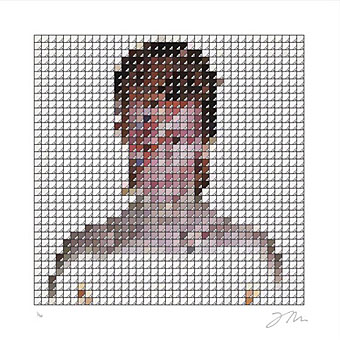
David Marsh recreates famous album covers using Adobe Illustrator’s Pantone swatches.

• New titles forthcoming from Strange Attractor Press. Related: an interview with SAP allies Cyclobe.

• 960 individual slabs of vinyl make an animated waveform for Benga’s I Will Never Change.

• An exhibition of works by Stanislav Szukalksi at Varnish Fine Art, San Francisco,

Keith Haring‘s erotic mural for the NYC LGBT Community Center is restored.

The Situationist Times (1962–1967) is resurrected at Boo-Hooray.

• Doors Closing Slowly: Derek Raymond‘s Factory Novels.

Will Wilkinson insists that fiction isn’t good for you.

• More bookplates at BibliOdyssey and 50 Watts.

The Top 25 Psychedelic Videos of All Time.

Flannery O’Connor: cartoonist.

• RIP Adam Yauch.

• Their finest moment: Sabotage (1994) by Beastie Boys.

The Devils on DVD

devils01.jpg

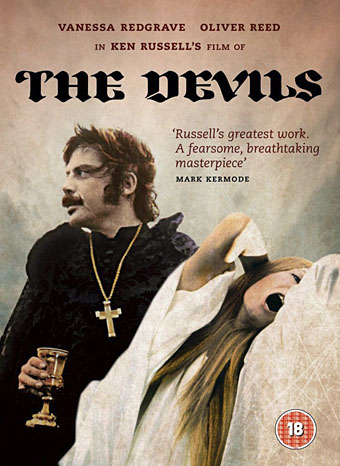
No Blu-ray as yet but this is another excellent BFI release so it looks and sounds fantastic. There’s been some grumbling that the 1971 director’s cut is still being embargoed by Warner Brothers but when the rest of the film looks so pristine I find it difficult to get worked up over a few missing shots of writhing nuns. Among the extras there’s an early Ken Russell short, Amelia and the Angel (1958), and a second disc of supplementary material, including Paul Joyce’s 48-minute documentary about the making of the film, Hell on Earth. Inside the booklet there’s a photo of set designer Derek Jarman looking very young and sweet. A few screen grabs follow to make Russell enthusiasts in Region 1 jealous. (Hi Thom!)

devils02.jpg

devils03.jpg

devils04.jpg

Continue reading “The Devils on DVD”

Derek Jarman’s music videos

jarman3.jpg

Duggie Fields in It’s A Sin

A hidden Derek Jarman film lies scattered among a handful of music videos from the 1980s, something you can pretend you’re seeing flashes of in the promo shorts the director was making whilst trying to raise money for his last few feature films. A recent re-watch of Caravaggio reminded me of these, recalling a remark Jarman made that his video for the Pet Shop Boys’ It’s A Sin was the first time anyone allowed him to use 35mm film. Among other things, that promo features artist Duggie Fields with a gilded face, one of a number of little in-jokes that Jarman aficionados can retrieve from these shorts. Running through them in sequence you get a skate through familiar visuals, from the masks and mirrors flashed into the camera in Broken English, to the Super-8 fast-forwards of The Smiths and Easterhouse films, with plenty of flowers and ritual fires along the way.

jarman1.jpg

Broken English

This isn’t a complete list since not everything is on YouTube. Even if it were I wouldn’t link to anything by the wretched Bob Geldof for whom Jarman made two promos. Needless to say some are more sympathetic to Jarman’s obsessions than others: Marianne Faithfull’s film is a fascinating short that provides a link via the singer between Jarman and Kenneth Anger. The Bryan Ferry film, on the other hand, is a bland piece for a bland song. Suede and The Smiths seemed to have let Derek do what he liked. Well done, boys.

Broken English (1979) by Marianne Faithfull (featuring Witches’ Song, The Ballad of Lucy Jordan and Broken English).

Dance With Me (1983) by The Lords of the New Church.

Willow Weep For Me (1983) by Carmel.

jarman5.jpg

Broken English

Dance Hall Days (1983) by Wang Chung.

Tenderness Is A Weakness (1984) by Marc Almond.

Windswept (1985) by Bryan Ferry.

jarman2.jpg

The Queen Is Dead

Panic (1986) by The Smiths.

Ask (1986) by The Smiths.

The Queen Is Dead (1986) by The Smiths | Long version

1969 (1986) by Easterhouse.

Whistling In The Dark (1986) by Easterhouse.

jarman4.jpg

So Young

It’s A Sin (1987) by the Pet Shop Boys.

Rent (1987) by the Pet Shop Boys.

So Young (1993) by Suede.

Previously on { feuilleton }
Derek Jarman’s Neutron
Mister Jarman, Mister Moore and Doctor Dee
The Tempest illustrated
In the Shadow of the Sun by Derek Jarman
Derek Jarman at the Serpentine
The Angelic Conversation
The life and work of Derek Jarman

John Dee’s Monas Hieroglyphica

monas1.jpg

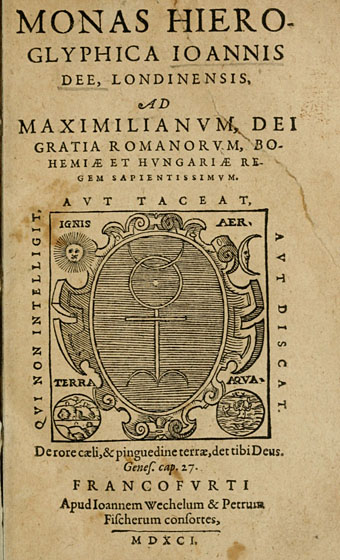
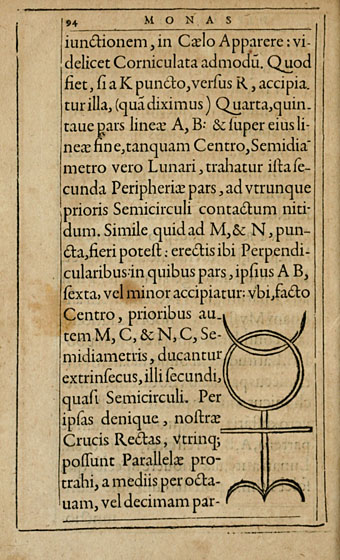
I swear I didn’t go hunting for this. Among the various library collections at the Internet Archive one can find The Getty Alchemy Collection, a substantial gathering of very old alchemical texts scanned in a variety of formats. John Dee’s Monas Hieroglyphica caught my eye during a random search, a third edition of his treatise from 1564 in which he describes his Monas Hieroglyphica, a glyph designed to combine symbols of the Sun, the Moon, the Elements and Fire in a single figure.

monas2.jpg

The glyph also intentionally resembles a human form, and Dee relates its individual parts to various astrological and chemical symbols. I’ve mentioned before that Dee scholar Derek Jarman deliberately based Prospero on John Dee in his 1979 film of The Tempest, giving the magus a scrying wand shaped to resemble the Monas Hieroglyphica.

monas3.jpg

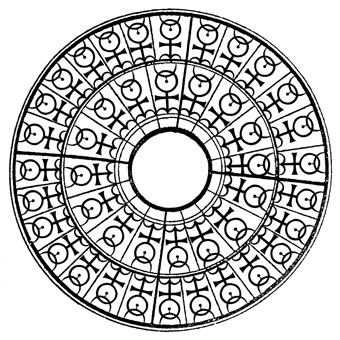
I produced my own variations on the glyph in 2009 when working on the cover of Jeff VanderMeer’s novel, Finch. The symbol recurs in Jeff’s fictional city of Ambergris and I seem to recall there being some discussion about including this doorway design somewhere in the book. In the end it was incorporated into the cover design in a rather subtle fashion. I think this is the first time the design alone has appeared in public.

The Internet Archive has a few other Dee-related items, including Lists of manuscripts formerly owned by Dr. John Dee; with preface and identifications (1921), a 500-page book by antiquarian and ghost story writer MR James.

Previously on { feuilleton }
Mister Jarman, Mister Moore and Doctor Dee
Alchemically Yours
Laurie Lipton’s Splendor Solis
The Arms of the Art
Splendor Solis
Amphitheatrum Sapientiae Aeternae
The Tempest illustrated
Cabala, Speculum Artis Et Naturae In Alchymia
Digital alchemy
Designs on Doctor Dee