Weekend links 453

mccarthy.jpg

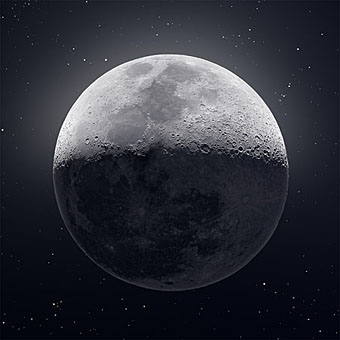
The Moon photographed by Andrew McCarthy.

• Top twenties of the week: Anne Billson on 20 of the best (recent) Japanese horror films, and Britt Brown‘s suggestions for 20 of the best New Age albums. (I’d recommend Journey To The Edge Of The Universe as the best from Upper Astral.) Related to the latter: Jack Needham on lullabies for air conditioners: the corporate bliss of Japanese ambient.

• At Expanding Mind: Erik Davis talks with writer and ultraculture wizard Jason Louv about occult history, reality tunnels, his John Dee and the Empire of Angels book, Aleister Crowley’s secret Christianity, and the apocalyptic RPG the West can’t seem to escape.

• “It’s like someone looked at the vinyl revival and said: what this needs is lower sound quality and even less convenience.” Cassette tapes are back…again. But is anyone playing them?

• Mixes of the week: Secret Thirteen Mix 280 by O Yuki Conjugate, Bleep Mix #53 by Pye Corner Audio, and 1980 by The Ephemeral Man.

• The fifth edition of Wyrd Daze—”The multimedia zine of speculative fiction + extra-ordinary music, art & writing”—is out now.

Midian Books has a new website for its stock of occult publications and related esoterica.

Mark Sinker on three decades of cross-cultural Utopianism in British music writing.

• At Dennis Cooper’s: Nastassja Kinski Day.

Utopia No. 1 (1973) by Utopia | Utopia (2000) by Goldfrapp | Utopian Facade (2016) by John Carpenter

Blood And Rockets by The Claypool Lennon Delirium

blood1.jpg

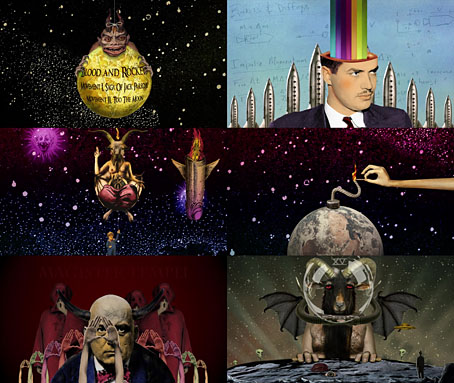
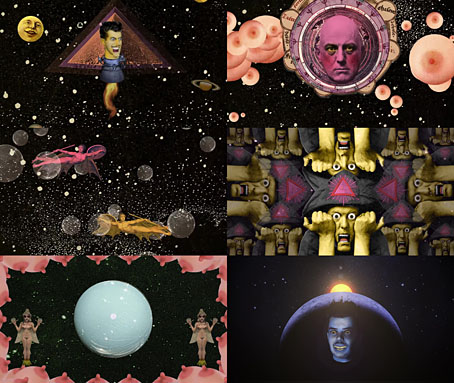
In an overburdened media landscape the words “Terry Gilliam-like animation” could easily mean some hastily-compiled film with a few nods to the collage style that Gilliam popularised in his interludes for the Monty Python TV series. Rich Ragsdale’s music video for The Claypool Lennon Delirium (Les Claypool and Sean Lennon) is much more than this, being a witty and inventive pastiche of the complete Gilliam style, replete with an abundance of sight gags, and familiar touches such as fizzing bombs, clutching hands and chattering heads.

blood2.jpg

The subject of the song is Jack Parsons, the ill-fated Californian rocket engineer whose wild life and entanglement with the West Coast chapter of Aleister Crowley’s Ordo Templi Orientis led to scandal and an untimely death. Parsons’ story is one of the more curious episodes in 20th-century occultism—a pre-Scientology L. Ron Hubbard was also involved in the Crowley shenanigans—but this must be the first time the history has been recounted in the form of a psychedelic ballad. Ragsdale is no slouch with the occult symbolism either, adding a number of Thelemic touches to the inevitable Satanic iconography. As befits the sex-obsessed Parsons the video also contains a fair amount of phallic imagery and boob constellations that somehow evaded the attentions of the YouTube Penis Police. Watch it here. (Thanks to Erik Davis!)

Previously on { feuilleton }
Aleister Crowley: Wandering The Waste revisited
Occult gestures
Konx om Pax
Aleister Crowley: Wandering The Waste
Brush of Baphomet by Kenneth Anger
Rex Ingram’s The Magician
The Mysteries of Myra
Gilliam’s shaver and Bovril by electrocution
Aleister Crowley on vinyl

Weekend links 436

cthulhusex.jpg

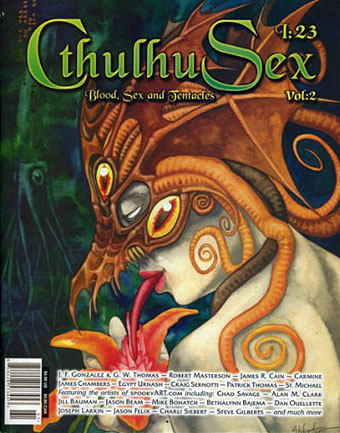
Cover for the now-defunct Cthulhu Sex magazine, volume 2, no. 23. Art by Chad Savage.

• Revising Lovecraft: The Mutant Mythos by Paul StJohn Mackintosh. Mackintosh was interviewed at Greydogtales in 2016 where he made a point that certainly chimes with my experience: “…the English-speaking genre community seems to have far more trouble with certain sexual themes than the mainstream literary community does, especially in Europe. […] A pity, because, for example, if H P Lovecraft’s worldview did owe much to sexual repression, then more mature engagement with that could really benefit the whole cosmic horror genre.”

• At Expanding Mind: Occultist and Aleister Crowley biographer Richard Kaczynski talks with Erik Davis about Jack Parsons, the “method of science,” the Agape Lodge, the women of Thelema, and the pluses and minuses of the Strange Angel TV series.

The Tell-Tale Heart (1953) is a short adaptation of the Poe story directed by JB Williams, and featuring Stanley Baker as the author. The film had been lost for 50 years but may now be seen on the BFI website.

• From July but more suited to the end of October: Paul Karasik on The Addams Family Secret: how a massive painting by Charles Addams wound up hidden away in a university library.

• Mixes of the week: Samhain Séance Seven: A Very Dark Place by The Ephemeral Man, Big Strings Attached, Oct. 2018 by Abigail Ward, and XLR8R Podcast 564 by Niagara.

• At Haute Macabre: Conjured from obscurity: lost, neglected and forgotten literature from Valancourt Books.

The Feathered Bough, a large-format collection of new fiction and art by Stephen J. Clark.

William Doyle on Music For Algorithms: in search of Eno’s ambient vision in a spotify era.

• The devils of our better nature: Daniel Felsenthal on Dennis Cooper and his new film.

Bone Mother, a short animated film by Dale Hayward & Sylvie Trouvé.

• “In Japan, the Kit Kat Isn’t Just a Chocolate. It’s an Obsession.”

Leigh Singer chooses 10 great films about the afterlife.

• “I am a haunted house,” says Sarah Chavez.

Psychedelitypes

Sex Voodoo Venus (1985) by Helios Creed | Sexy Boy (1998) by Air | Sex Magick (2002) by John Zorn

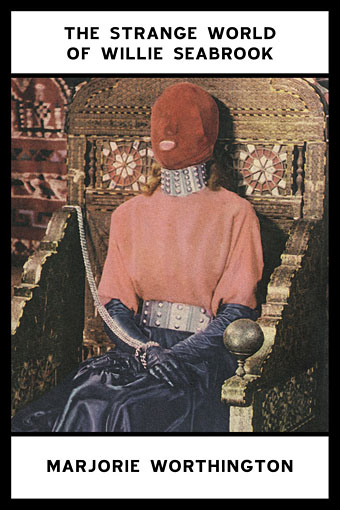
The Strange World of Willie Seabrook by Marjorie Worthington

worthington.jpg

This is a curious book. Marjorie Worthington (1900–1976) was the second wife of William Seabrook, an obscure figure today, known—if at all—as much for the lurid details of his life as for his books. In the 1920s and 1930s Seabrook was a well-regarded and very popular writer, delivering to the American public reports of his travels in the dangerous and exotic parts of the globe. Worthington was a writer herself, the author of novels, short stories and biographies, in addition to this memoir, her final major work. By the time The Strange World of Willie Seabrook appeared in 1966 Worthington’s subject was largely forgotten, his exploits eclipsed by wilder figures, while the “unexplored” areas of the world whose exotic lure had fuelled much of his writing were no longer so distant or so strange in a world of continental travel. Seabrook wasn’t completely forgotten at this time; I knew his name, if little else, from a paperback of Voodoo Island that my parents owned. This was a retitled reprint of The Magic Island (1929), a best-selling study of Haiti and its voodoo culture which, among other things, popularised the concept of the zombie.

Seabrook’s name is hard to avoid if you’re reading about witchcraft or the occult in the first half of the 20th century. Aleister Crowley knew him and mentions him in his autobiography, while Crowley is discussed in Seabrook’s Witchcraft: Its Power in the World Today (1940). Crowley’s attitude towards Seabrook seems to have soured in later years, possibly because of some perceived slight or betrayal. The two men have a lot in common: both were the same generation (Crowley was born in 1875; Seabrook in 1884), both were addicts (Seabrook’s demon was alcohol), and both were fascinated by the outer limits of human experience. In Seabrook’s case this famously extended to eating human flesh, an experience he recounted in the follow-up to The Magic Island, Jungle Ways (1930). Marjorie Worthington gives a detailed account of this episode which was much more mundane than Seabrook’s printed version. When the African feast failed to materialise Seabrook decided to keep the incident in the book even if it meant staging a cannibal meal in Paris. One of the fascinating things about Worthington’s memoir is the frequent lurches of tone when Seabrook disrupts their generally placid domesticity with a hare-brained inspiration. If this makes him sound like an Jazz Age Hunter S. Thompson he wasn’t quite as mercurial, but the cannibal episode has a trace of the gonzo as the pair race around Paris one evening, looking for a convenient stove where Seabrook can cook the “rare goat meat” a friend has procured from a Paris hospital.

Worthington logs these and similar exploits with dismay, and one of the many curious aspects of her memoir is the unexamined nature of the attraction between herself and “Willie” as she calls him. Their relationship was an unusual one from the outset. Seabrook and Worthington were both married to other partners before they met; Worthington fell in love almost immediately but rather than go through the usual adulterous games the four people simply swapped partners and went on their way, all still married but now living with their opposite numbers. Worthington remained in love with Seabrook even though they were sexually incompatible, Seabrook having an obsession with bondage games whose outlet was provided by compliant women hired for the purpose. Worthington tried to be understanding but Seabrook’s fetishes and recurrent alcoholism strained their relationship, despite their mutual dependence. One of the ironies of the book is that Worthington recounts her abhorrence each time Seabrook retires to the barn for an endurance session with one of his new women but offers little detail as to what took place. This has the effect of stoking the reader’s curiosity which could hardly have been her intention. Seabrook told her he was interested in the mental effects caused by his bondage experiments—we see a photograph of one session on the cover of the new edition from Spurl—but the sexual dimension remains undiscussed.

The Strange World of Willie Seabrook isn’t an account of continual torment, however. Seabrook had many successful years, and the pair were friends with Jean Cocteau, Man Ray, Aldous Huxley, the Astors and others. One of the best parts of the book concerns a journey by plane from Paris to Timbuktu at a time when international air travel was still a difficult and dangerous business. Worthington’s account of a noisy flight across the Sahara in a cramped aircraft that could only fly during the day makes contemporary moans about air travel seem like the whining of spoiled children. Her narrative comes alive when it assumes the character of travel writing, and she writes evocatively about her experience of the Sahara Desert. I’d have preferred more along these lines but for this it may be necessary to turn to Seabrook’s own works of the period, Air Adventure (1933) and The White Monk of Timbuctoo (1934).

The Strange World of Willie Seabrook is published by Spurl Editions on 25th October.

Typefaces of the occult revival

mmm.jpg

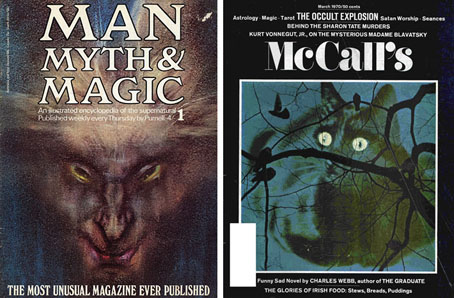
Man, Myth & Magic #1, January 1970; McCall’s, March 1970.

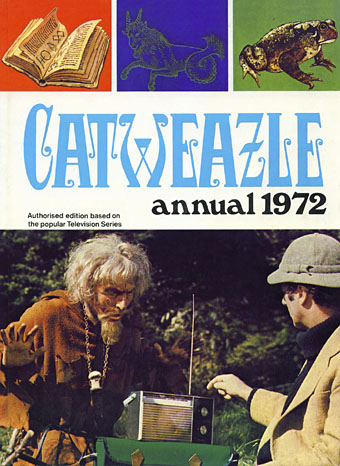
The announcement last week of the death of British character actor Geoffrey Bayldon prompted some discussion here about the typeface used for the titles of Bayldon’s TV series from the early 1970s, Catweazle. This was a humorous drama in which the actor portrayed a warlock transplanted by a time portal from the Norman era to the present day, a comic counterpart to another occult-themed series, Ace of Wands (1970–72). Being aimed at children, both Catweazle and Ace of Wands are at the lighter end of the great flourishing of occult-related media that runs in parallel with the rise and fall of psychedelic culture, a period roughly spanning the years 1965 to 1975. The two trends reflected and fed off each other; the hippie movement stimulated interest in the occult (Aleister Crowley is on the cover of Sgt Pepper) while giving to the commercial propagators of the supernatural a range of aesthetics lifted from the 19th century.
occult.jpg

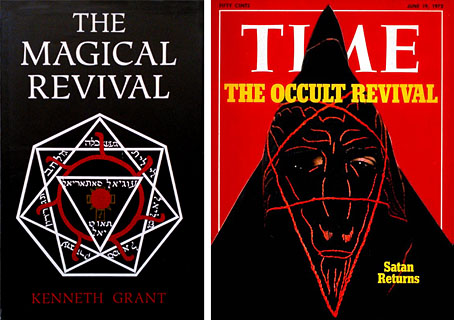
Muller, 1972; TIME, June 1972.

Among the graphic signifiers is a small collection of typefaces from the Victorian or Edwardian eras, designs which vanished from sight after 1920 only to surface 50 years later in very different settings to their previous deployment. I’m always fascinated by the way context changes the perception of a typeface; the repurposing of Art Nouveau fonts—which hadn’t previously been associated with diabolism—to signify witchcraft or sorcery is a good example of this. In the case of the occult revival this was partly opportunism: the commercial application of post-psychedelic style made the previously untouchable trendy again, decoration and elaborate stylisation was no longer taboo. But it was also a solution to the problem of signifying the sorcerous with typography when there were no off-the-peg solutions as there were for, say, Westerns or stories about the Space Race. As well as carrying with them a flavour of old books, some of the more curious letterforms were reminiscent of the glyphs of magical alphabets which no doubt explains their popularity.

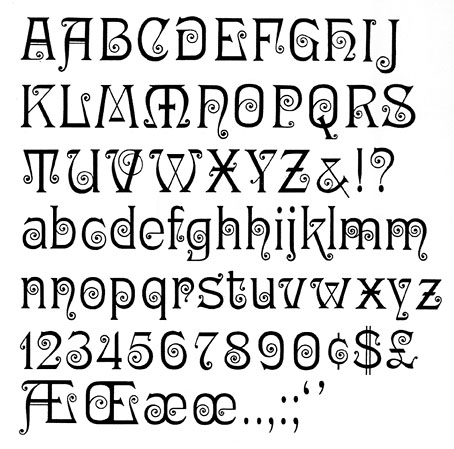
What follows is a chronological selection of the more striking examples (or my favourites…) which conveniently begins with Ringlet, the Catweazle font. With the trend being towards Art Nouveau you find popular Nouveau styles such as Arnold Bocklin also being used in the 1970s but I’ve avoided these in favour of the less common choices.


Ringlet (1882) by Hermann Ihlenburg
ringlet3.jpg

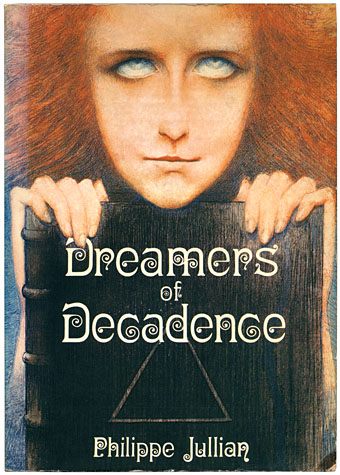
jullian08.jpg

Pall Mall, 1971.

Jullian’s landmark study of the Symbolist movement isn’t an occult text but it is a great favourite of mine whose original title—Esthètes et Magiciens—puts it in the right sphere. Inside, the author touches on the spiritual concerns of many of the artists which included Theosophy and fashionable Satanism.
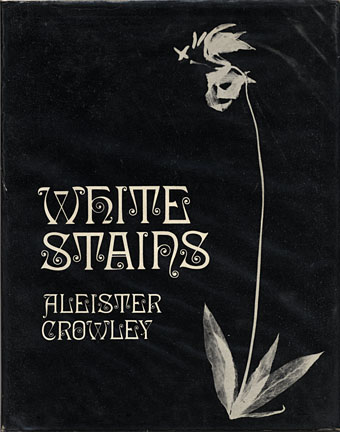
ringlet1.jpg

ringlet2.jpg

Duckworth, 1973.

Aleister Crowley is represented here with the first reprinting of his erotic poetry, produced in a limited run by the venerable London house of Duckworth.
ringlet4.jpg

Rise Above Records, 2016.

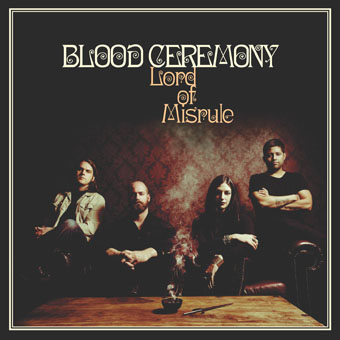
Blood Ceremony are Canadians devoted to the occult rock of previous decades. Their presentation matches songs with titles like The Great God Pan and Morning Of The Magicians.


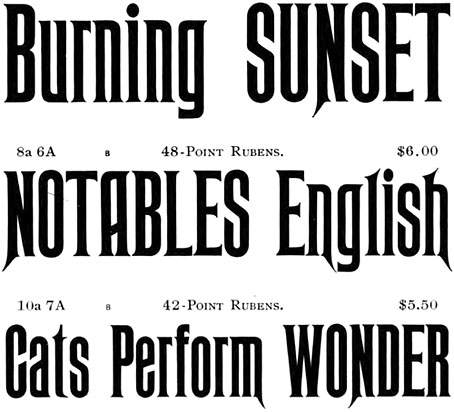
Rubens (1884) by John K. Rogers
rubens2.jpg

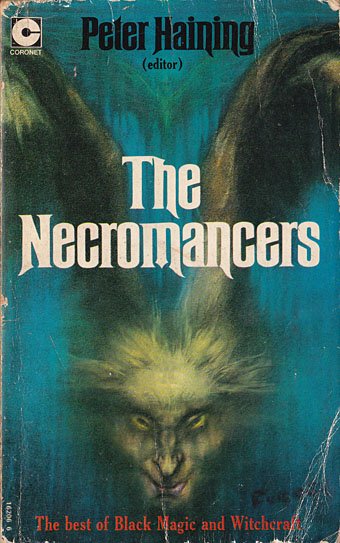
Rubens has long been a favourite of mine even though it gets used a great deal on horror novels and the like. Many Americans also regard it as “the Haunted Mansion font” owing to its use in Disney theme parks.

Peter Haining’s collection combined supernatural fiction with short non-fiction accounts of magical operations. The cover art is the full version of the drawing by Austin Osman Spare—The Elemental aka The Vampires are Coming—seen in detail on the cover of the first issue of Man, Myth & Magic.
rubens1.jpg

Coronet Books, 1972.


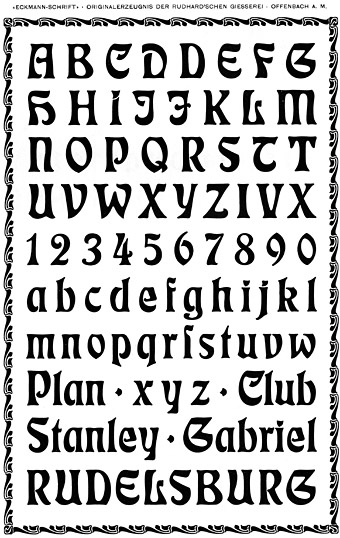
Eckmann (1900) by Otto Eckmann
eckmann2.jpg

eckmann1.jpg

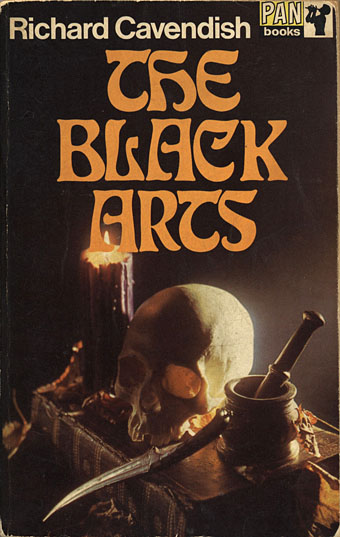
Pan Books, 1969.

Many of the examples in this post tend towards the exploitational (see below…) but Cavendish’s overview of occult theory and history is a serious study, even if the cover does beckon to the Dennis Wheatley readership. My mother was among the latter which no doubt explains why she had a copy of this paperback; in due course it found its way into my hands. Richard Cavendish was enough of an authority to be hired by Purnell as editor-in-chief of Man, Myth & Magic.


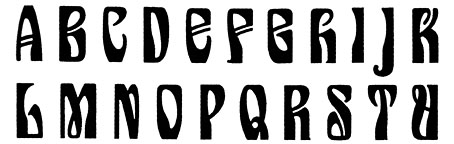
Siegfried (c. 1900) by Wilhelm Woellmer
siegfried2.jpg

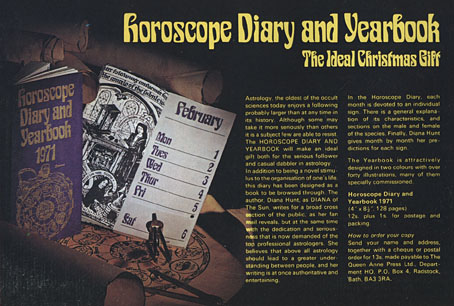
And speaking of which…Purnell offered their readership a sidereal start to 1971.
siegfried1.jpg

Man, Myth and Magic, 1970.

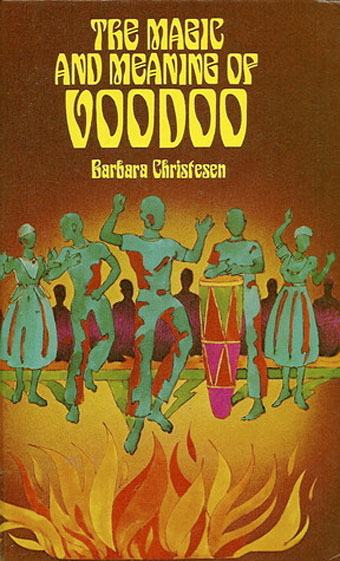
voodoo.jpg

Heinemann, 1977.


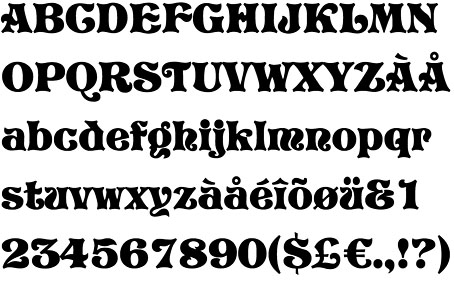
Pretorian (c. 1900) by PM Shanks & Sons
pretoria2.jpg

pretoria1.jpg

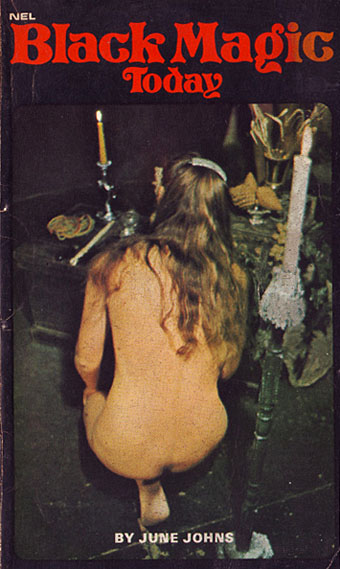
NEL, 1971.

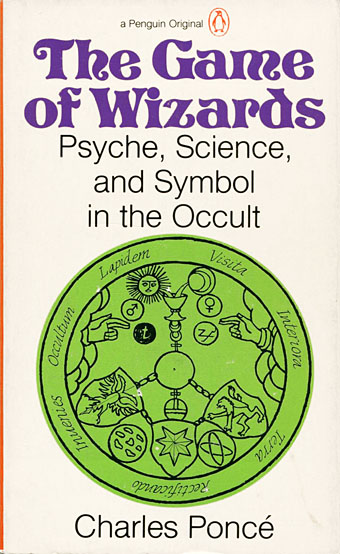
This is where things shift from anthropology, history and children’s television to Satanic exploitation and hardcore porn. “Black magic” ceremonies in previous centuries were often a kind of orgiastic cosplay so it’s no surprise to find the same thing happening in the 20th century. New English Library dominated the British book world of the 1970s with a wide range of genre novels, as well as salaciously-packaged reprints of serious occult studies by Francis King and this volume by June Johns.
pretoria3.jpg

Undated.

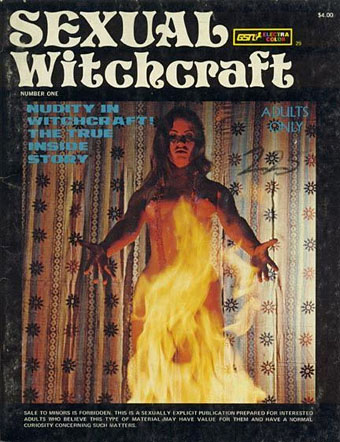
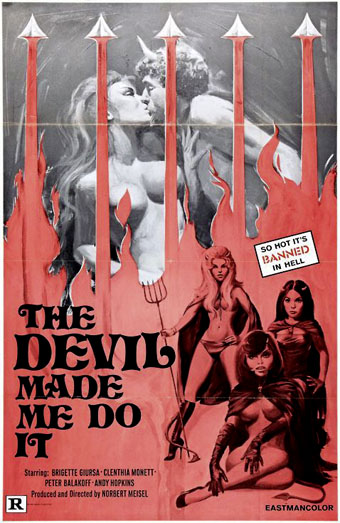
Sexual Witchcraft and The Devil Made Me Do It are two works whose pornographic nature means their origin remains obscure; nobody seems to have any information about the latter title.
pretoria5.jpg

Undated.

pretoria6.jpg

Penguin, 1975.

pretoria4.jpg

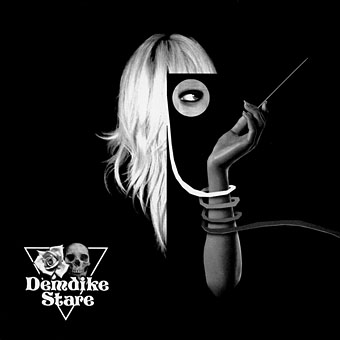
Symbiosis by Demdike Stare. Modern Love, 2009.

Mancunian duo Demdike Stare hark back to the heyday of Ouija boards and witchcraft with sinister electronics and the monochrome art and design of Andy Votel. Pretorian is used on all their early releases.


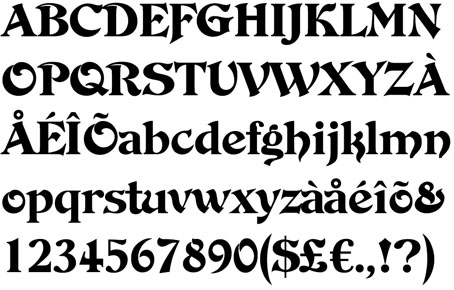
De Vinne Ornamental (1900) by Nicholas J. Werner
devinne1.jpg

devinne2.jpg

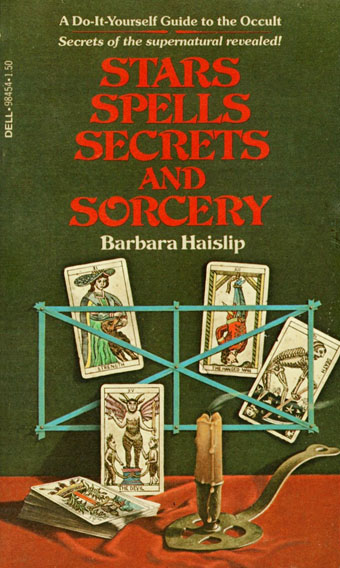
Dell, 1978.

devinne3.jpg

Holt, Rinehart and Winston, 1984.


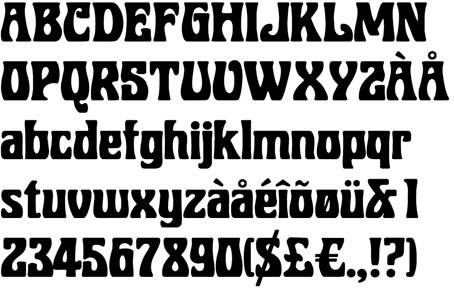
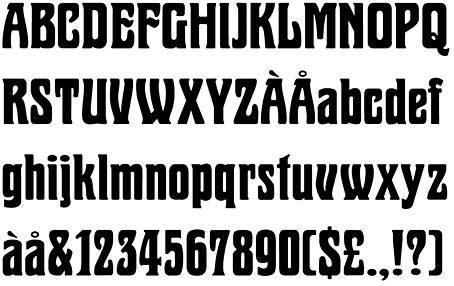
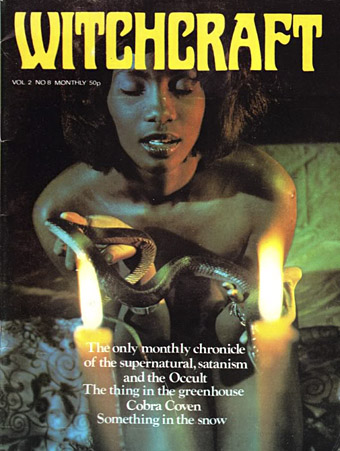
Marschall (1905) by Wilhelm Woellmer
marshall2.jpg

marshall3.jpg

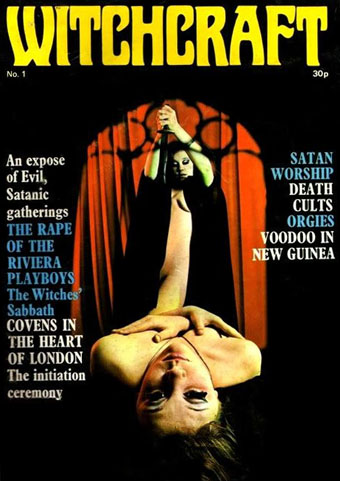
Witchcraft magazine was a UK publication (dates unknown) whose revelatory stories ran alongside many photographs of naked ladies. There was a brief fad for this kind of thing, a diabolic counterpart to all those beefcake mags pretending to be devoted to body-building. Witchcraft did at least manage more than a single issue.
marshall1.jpg


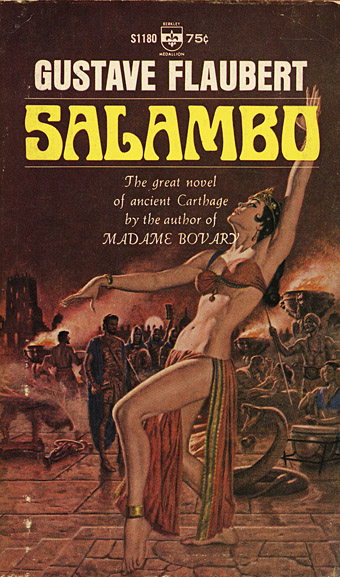
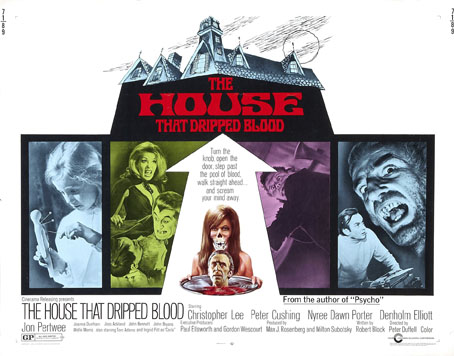
Roberta (1962) by Robert Trogman

roberta1.jpg

Trogman’s type was based on a Belgian restaurant sign so this may be another Art Nouveau derivation. Not so the use to which it was put, however. Flaubert’s novel doesn’t feature any overt occultism (although there is a whole chapter of human sacrifice) but the cover is one of the first to establish Roberta as a signifier of the exotic/erotic .
roberta4.jpg

Berkley Medallion, 1966.

roberta2.jpg

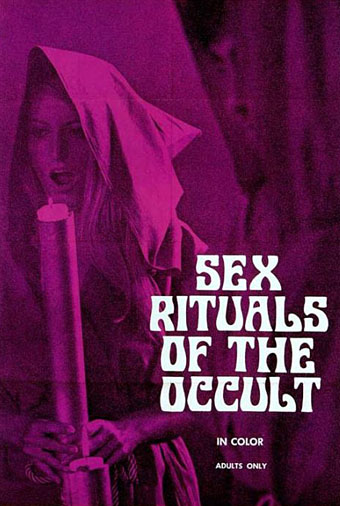
The film equivalent of Witchcraft magazine from 1970. According to this review, Sex Rituals of the Occult also features some gay sex from the male performers, a rare thing in these boob-fests.
roberta3.jpg

Amicus Productions, 1971.


Davida (1965) by Louis Minott
davida1.jpg

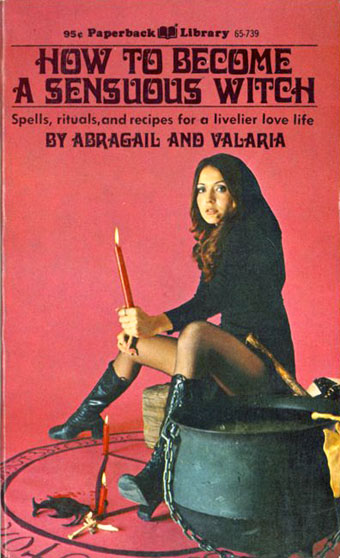
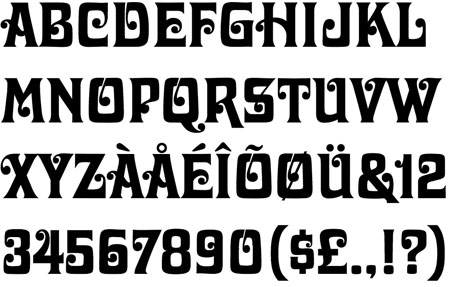
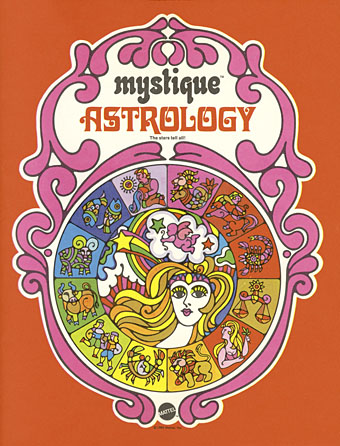
Davida is one of those typefaces from the 60s that was very popular in the following decade so it’s no surprise to find one or two occult titles using it. I’ve included it here for the way its style refers back to Ringlet, and for Abragail and Valaria’s book of recipes.
davida3.jpg

Mattel, 1969.

davida2.jpg

Coronet Communications, 1971.

Previously on { feuilleton }
MMM in IT
The Book of the Lost
The Occult Explosion
Forbidden volumes
The Sapphire Museum of Magic and Occultism
Occultism for kids