Weekend links 544

wright.jpg

“You may if you please, call a partial View of Immensity, or without much Impropriety perhaps, a finite View of Infinity.” An illustration from Thomas Wright’s An Original Theory or New Hypothesis of the Universe (1750).

• If you read about electronic music for any length of time today you’ll eventually come across the term “pad”, referring to a feature of the music itself not the instrumentation. I’ve noticed increasing instances of this with no accompanying explanation of what the term actually refers to. Rob Wreglesworth has the answer.

• At Dangerous Minds: Richard H. Kirk talks to Oliver Hall about Cabaret Voltaire and Shadow Of Fear. No comment from Kirk as to why the new album warrants the CV name when the music is indistinguishable from his many solo works.

• Eyeball Fodder: The Art of the Occult Edition. S. Elizabeth presents artwork featured in her new book, together with links to artist interviews, including one to the interview we did for Coilhouse magazine a few years ago.

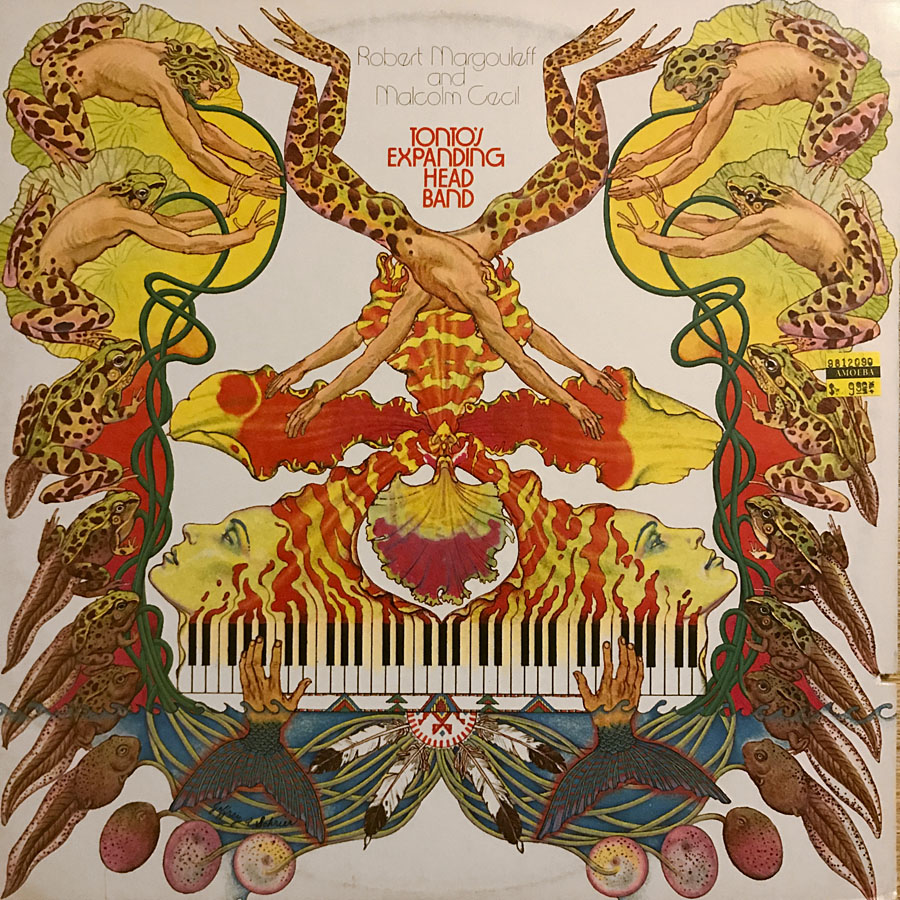
• More electronica: Music From Patch Cord Productions is a new compilation of music by Mort Garson that features some previously unreleased pieces. Great cover art by Robert Beatty as well.

• A trailer for Fireball: Visitors from Darker Worlds, a documentary film about meteorites by Werner Herzog and Clive Oppenheimer.

• From 2019: John Waters and Lynn Tillman in conversation. “The pair discussed Waters’s recent exhibitions and art career.”

Harlan Ellison’s The Last Dangerous Visions may finally be published, after a five-decade wait.

Turn your feline into a god with this cardboard Shinto shrine for cats.

• Mix of the week: XLR8R Podcast 670 by Dadub.

• At Dennis Cooper’s: Harry Dean Stanton Day.

John Cooper Clarke‘s favourite songs.

Meteor Storm (1994) by FFWD | The Third Chamber: Part 5 – 7pm Tokyo Shrine (1994) by Loop Guru | Fireball (1994) by Sun Dial

Weekend links 543

cliffhouse.jpg

Adolph Sutro’s Cliff House in a Storm (c. 1900) by Tsunekichi Imai.

• Good to see a profile of Wendy Carlos, and to hear that she’s still working even though all her albums (to which she owns the rights) have been unavailable for the past two decades. I’d be wary of praising Switched-On Bach too much to avoid giving new listeners a wrong impression. The album was a breakthrough in 1968 but was quickly improved upon by The Well-Tempered Synthesizer (1969) and Switched-On Bach II (1973). And my two favourites, A Clockwork Orange – The Complete Original Score (1972) and the double-disc ambient album, Sonic Seasonings (1972), are superior to both.

• “[Sandy Pearlman] told me that one of the main inspirations was HP Lovecraft. I said, ‘Oh, which of his books?’ He said, ‘You know, the Cthulhu Mythos stories or At The Mountains Of Madness, any of those.'” Albert Bouchard, formerly of Blue Öyster Cult, talks to Edwin Pouncey about BÖC’s occult-themed concept album, Imaginos (1988), and his affiliated opus, Re Imaginos.

• More electronica: Jo Hutton talks to Caroline Catz, director of the “experimental documentary” Delia Derbyshire: The Myths and Legendary Tapes.

• At the V&A blog Clive Hicks-Jenkins talks to Rebecca Law about his award-winning illustrations for Hansel and Gretel: A Nightmare in Eight Scenes.

• New music: Archaeopteryx is a new album by Monolake; What’s Goin’ On is a further preview of the forthcoming Cabaret Voltaire album, Shadow Of Fear.

Celebrating A Voyage to Arcturus: details of two online events to mark the centenary year of David Lindsay’s novel.

• “Streaming platforms aren’t helping musicians – and things are only getting worse,” says Evet Jean.

• At Spoon & Tamago: the cyberpunk, Showa retro aesthetic of anime Akudama Drive.

• At A Year In The Country: a deep dive into the world of Bagpuss.

Sinister Sounds of the Solar System by NASA on SoundCloud.

• At Dennis Cooper’s: Shirley Clarke Day.

Mary Lattimore‘s favourite albums.

• Solaris, Part I: Bach (1972) by Edward Artemiev | Bach Is Dead (1978) by The Residents | Switch On Bach (1981) by Moderne

Weekend links 542

gysbrechts.jpg

The Reverse of a Framed Painting (between 1668 and 1672) by Cornelis Norbertus Gysbrechts.

• New music with a cinematic flavour: Disciples Of The Scorpion (Main Theme) Heavy Mix by The Rowan Amber Mill is a taster for the group’s forthcoming imaginary soundtrack, Disciples Of The Scorpion (also a sequel of sorts to The Book Of The Lost); The Quietened Dream Palace is this year’s final themed compilation from A Year In The Country. The subject this time is abandoned cinemas, past and present.

San Francisco Moog: 1968–72 by Doug McKechnie, a collection of early synthesizer music using a modular instrument that was later bought by Tangerine Dream. “The quiescent, meditative pulse of the music has much more in common with what would come to be known as the Berlin school of German electronic music than anything coming out of the US at the time,” says Geeta Dayal.

• Sarah Davachi released a new album recently, Cantus, Descant, so The Quietus asked her to discuss her favourite albums. Related: XLR8R has a mix of the music that Davachi regards as influences. Kudos for the choice of Why Do I Still Sleep by Popol Vuh, an overlooked piece from the end of the group’s career.

When I use relevance as a filter for determining what books to read, I’m failing to make myself available for an authentic encounter with otherness, something genuine art always offers. I’m presuming that I can guess, from the barest plot summary, whether a book will be useful in my life. But how can I know what I will find relevant about a work before I have submitted myself to the experience? I don’t think we are likely to be transformed by art if we try to determine that encounter in advance. Part of the vulnerability necessary for transformation is the recognition that I am, to a great extent, a mystery to myself. How could I know what I need?

Garth Greenwell on the idea that a novel is only worthwhile if it is somehow “relevant”

• “For a long time I had been encouraged by the world of fine art to remove references to the spiritual from my work,” says Penny Slinger in a piece by Hettie Judah exploring the resurgence of interest in occult art. Good to see S. Elizabeth and her book on the subject receiving a mention.

• Arriving on Region B blu-ray later this month is Spring (2014) by Justin Benson & Aaron Moorhead, which 101 Films describes as Richard Linklater channeling HP Lovecraft. I enjoyed Benson & Moorhead’s Resolution (2012) and The Endless (2017) so this one is on pre-order.

• Topical books dept: The Man in the High Chair and Other Tyrannies by Kurt Fawver, a benefit publication for the California Coalition for Women Prisoners.

• We never know exactly where we’re going in outer space: Caleb Scharf on the difficulties of aiming for distant objects in an ever-changing universe.

• Submissions open soon for the contemporary Dada journal Maintenant 15, with a theme of “Humanity: The Reboot”. Details here.

• At Dennis Cooper’s: Harry Smith, Filmmaker Day.

Pandemonium – Spring (1985) by Peter Principle | Silent Spring (2006) by Massive Attack feat. Elizabeth Fraser | Spring Stars (2009) by Simon Scott

That old black magic: A Dark Song

adarksong1.jpg

Catherine Walker.

Among the Halloween viewing this year was A Dark Song (2016), a debut feature written and directed by Liam Gavin. I’d known about this one for some time thanks to recommendations from friends but for various reasons hadn’t seen it until now. Part of the interest was nakedly egotistical: one of the lead characters wears a T-shirt bearing a design based on the Epigenesis album cover that I created for Melechesh in 2010. The cover art—a variation on the Kabbalistic Tree of Life—suits the occult theme of the film, while Steve Oram’s character is also the kind of person who might be a metal-head.

adarksong2.jpg

Steve Oram in that shirt.

Ego matters aside, it’s the occult business that really sets this film apart. Had I known earlier that the story concerns an enactment of the famously arduous Abra-Melin ritual I’d have sought it out much sooner. Catherine Walker plays Sophia, a woman looking for supernatural vengeance following the murder of her young son. Her ritual guide, Oram’s Joseph Solomon, is evidently her last resort after attempts to hire other occultists have failed. Her determination forces her to engage the man despite his obvious unsuitability as a mentor for the Abra-Melin’s psychic assault course. Solomon is a surly recovering alcoholic; once the ritual begins he turns into a belligerent bully. With the pair locked into a remote house that neither of them can leave for fear of the occult consequences, the ensuing battle of wills makes an already hazardous ritual all the more dangerous.

adarksong3.jpg

Continue reading “That old black magic: A Dark Song”

Pilots Of Purple Twilight

td1.jpg

1982 tour badge not included.

This arrived at last, after the usual shenanigans with Parcelforce and their blink-and-you-miss-em deliveries: 10 compact discs plus a large book that documents the final third of Tangerine Dream’s years on the Virgin label, when Johannes Schmoelling had joined to fill the gap left by Steve Jolliffe. These were all albums I bought as they were released, and I also saw the group for the first time on their 1982/83 tour, a performance from which is documented on the Logos live album. Consequently, I’ve always liked this period, and don’t regard it as lesser than the Peter Baumann years. The two phases of the group’s evolution are very different, in part because the technology they were using by 1980 was very different from the more cumbersome electronics of the 1970s: synthesizers were now polyphonic, sequencers were much more programmable, and digital synthesis had arrived. Tangerine Dream were early users of the PPG Wave, a digital synthesizer that allowed the recording and playback of sound samples. The Wave sound is prominent on all the albums from the Schmoelling period, giving the music a very different character to the earlier Moog-and-Mellotron recordings.

td3.jpg

Pilots Of Purple Twilight doesn’t contain as many revelations as the previous In Search Of Hades box but there are some rarities here which are either making their first appearance on CD or their first official release in any form. The Logos album was 50 minutes of a much longer set from the Dominion Theatre, London, which is now available in full on two discs. (The original Logos album appeared in the shops only five or six weeks after it was recorded, something that amazed and delighted me at the time.) The full concert had been available in the past as part of the fan-produced Tangerine Leaves bootleg series but the recording was typical of the low quality that distinguishes the Leaves discs from the superior Tangerine Tree series. By 1982 the improvisation quotient in Tangerine Dream’s live performances had diminished, so the Dominion concert provides a representative snapshot of the tour as a whole. Some of the new music—the so-called Logos suite—appeared later in the soundtrack of Michael Mann’s cult horror film, The Keep (1983), and another of the rarities here is a variant of one of several discs that have been released as The Keep soundtrack. Unfortunately for Keep enthusiasts, the disc in the Pilots box is the least interesting of the two main Keep releases, comprising a small amount of music which did appear in the film together with a much larger percentage that didn’t. Voices In The Net refers to the 1997 limited-edition release of this music as having been “tangentized” which is their term for old recordings that Edgar Froese later reworked. This pushes the music even further away from the original soundtrack recordings of 1982/82; one of the tracks, Arx Allemand, is a terrible faux-Baroque confection that even Rick Wakeman would reject as sub-standard. The new disc also omits 3 tracks from the 1997 release: Sign In The Dark, Weird Village, and Love And Destiny. There is a Keep soundtrack that features more of the actual music from the film but for that you’ll have to search torrent or bootleg sites for Tangerine Tree Volume 54.

td2.jpg

Edgar Froese, Chris Franke and Johannes Schmoelling performing in Perth, Australia, in February 1982. Edgar is playing a PPG Wave 2 while Johannes has a Roland keyboard, probably a Jupiter 8.

Continue reading “Pilots Of Purple Twilight”