Alice in Acidland

acidland.jpg

No idea how this piece of exploitation from 1968 evaded my attention for so long but going by the IMDB reviews it’s probably safe to say that any obscurity is well-deserved:

this movie is very accurate, as every girl i have met that smokes weed instantly becomes a bisexual nymphomaniac. scientific studies have actual proved this many times over. the accuracy is phenomenal and i think i speak for every man out there when i say i leave my boxers on while having sex. the parties look like any other raging party in the 60’s where people sit together in a well lit room smoking weed and immediate have sex with everyone as soon as they walk in.

The director and writer were evidently embarrassed enough to use pseudonyms (Gertrude Steen…yeah, right) so the poster and title card (below) are probably as good as it gets unless tepid soft porn is something that really turns you on (baby).

Another fabulous Chateau Thombeau tip.

acidland2.jpg

Alice has been in the news again this week with a new trailer turning up for Tim Burton’s forthcoming film and also this lengthy article in New Scientist which looks at the Alice books through an interpretative lens of algebra and geometry. While it’s nice to play with a fresh interpretation of the stories, essays like this are invariably subject to considerable strain as they attempt to wring hidden meanings from every quirk of the text.

The trouble with the Alice books is that their origin is almost as famous as the stories themselves, and it’s well-known that Dodgson wrote down Alice’s Adventures Under Ground as a present for Alice Liddell with no intention of seeing it published. Aside from the addition of extra scenes, the published book doesn’t radically differ from the handwritten original so you have to stretch your credulity to accept that Dodgson managed to improvise an entertaining story for a child whilst simultaneously authoring a critique of developments in contemporary mathematics. As usual in cases such as these it helps to refer to an earlier logician, William of Ockham, whose famous declaration that “Entities should not be multiplied unnecessarily” is given on this mathematician’s page as “when you have two competing theories that make exactly the same predictions, the simpler one is the better.”

Previously on { feuilleton }
Return to Wonderland
Dalí in Wonderland
Virtual Alice
Psychedelic Wonderland: the 2010 calendar
Charles Robinson’s Alice’s Adventures in Wonderland
Humpty Dumpty variations
Alice in Wonderland by Jonathan Miller
The Illustrators of Alice

Styles of Ornament

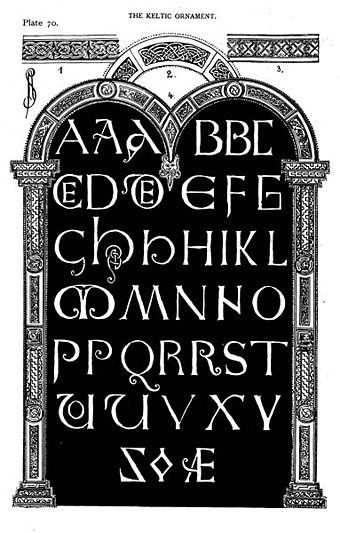
speltz1.jpg

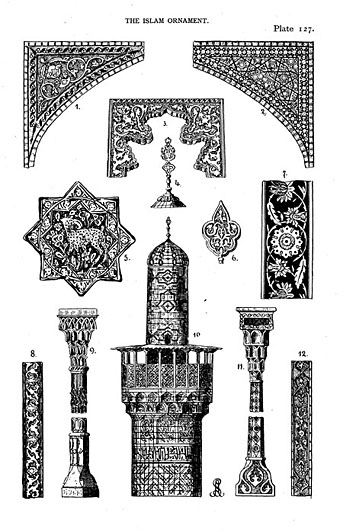
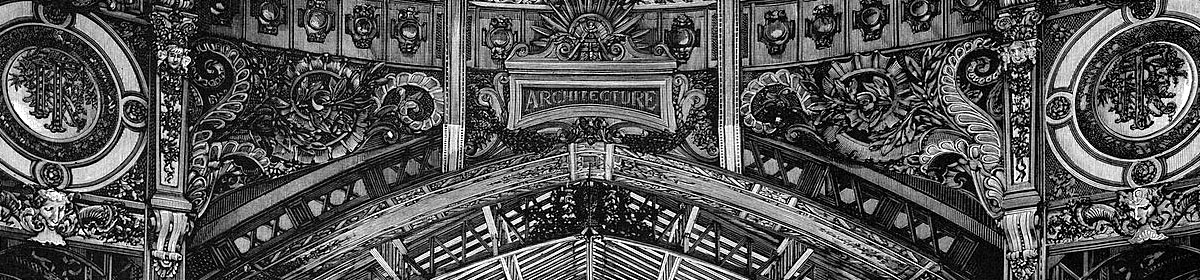
Pages from Styles of Ornament (1904), a collection of ornamental designs by Alexander Speltz. This is one of a great collection of books from the Digital Library for the Decorative Arts and Material Culture at the University of Wisconsin. I only found their collection today so I’ve yet to take a detailed look at the rest of the volumes.

speltz2.jpg

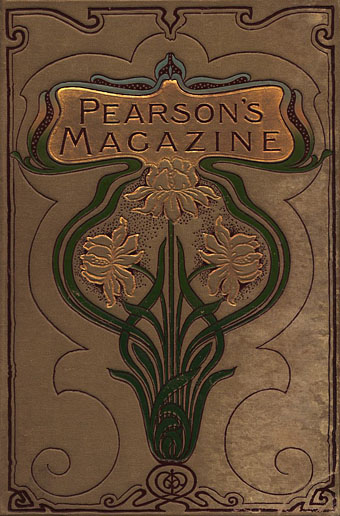
And speaking of ornament, Callum at Front Free Endpaper posted this elegant Art Nouveau-styled cover from a Pearson’s Magazine collection, just the kind of thing I enviously covet.

pearsons.jpg

Previously on { feuilleton }
The Grammar of Ornament by Owen Jones

Queer Noise and the Wolf Girl

queer_noise.jpg

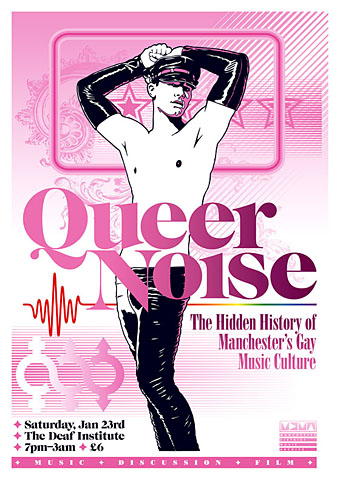
Two recent pieces of work which were being created at the same time so they share some similarity of style (and the same baroque flourish). Queer Noise is a music-related event taking place in Manchester (UK) next month. Music journalist Jon Savage will be leading the discussion and some may recognise the event title as relating to his Trikont CD compilation Queer Noises 1961–1978: From the Closet to the Charts. There are further details about the event at the MDMArchive.

Designing for gay content can be a fraught business since it’s almost inevitable that someone will disagree with your choices. Best then to abandon any thought of trying to please everyone and follow your own instincts. Making this a riot of pink seemed like a good way to offset the fetishised figure as well as making an eye-catching design. My first impetus had been to try an arrangement of pink and black on white similar to that used by Barney Bubbles in one of his Ian Dury designs. In the end this evolved away from that idea but it was a useful starting point. And while we’re on the subject of pink, there’s a growing backlash against the way the colour is forced on young girls:

Back in the 1800s, most children were dressed alike. Gender differences weren’t really apparent until they could walk, or later: boys and girls both wore dresses or skirts until they were six or so. By the end of the century, as the Ladies’ Home Journal noted, boys’ and girls’ clothing styles began to diverge. According to Professor Jo Paoletti of the University of Maryland, pink emerged as an appropriate colour for boys because it was “a close relative of red, seen as a fiery, manly colour”. Blue was considered better suited for girls because of its associations, in art, with the Virgin Mary. (More.)

curse.jpg

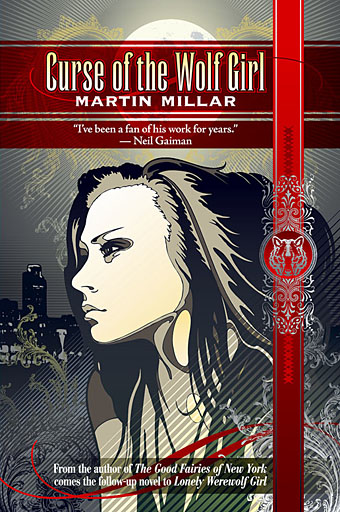
Curse of the Wolf Girl is a young adult title by Martin Millar about which I can tell you very little at the moment other than I’ve finished the cover and the book will be out some time in the new year from Underland Press. More about that when it happens.

Previously on { feuilleton }
Coming Out Day
Over the rainbow
Queer Noises

The art of Ivan Bilibin, 1876–1942

bilibin1.jpg

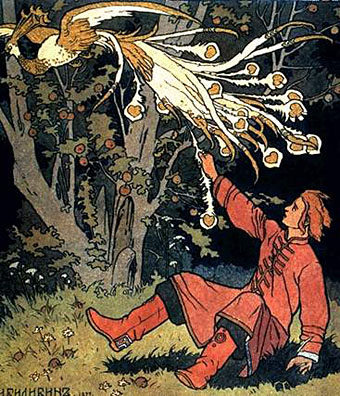
Ivan Tsarevich catching the Firebird’s feather (1899).

The Firebird again, one of Bilibin’s many illustrations of Slavic folktales. These examples are from the collection at Wikimedia Commons. SurLaLune has more of Tsarevitch Ivan, the Firebird and the Grey Wolf (1899) along with other Bilibin books while the trusty Internet Archive has a 1917 edition of Russian Wonder Tales.

bilibin2.jpg

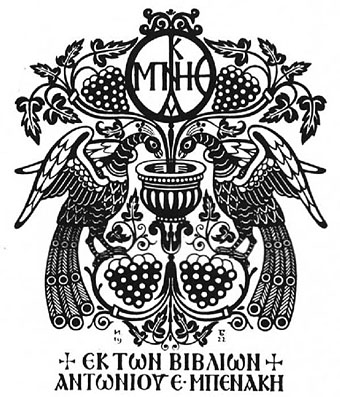
Ex libris design (1922).

bilibin3.jpg

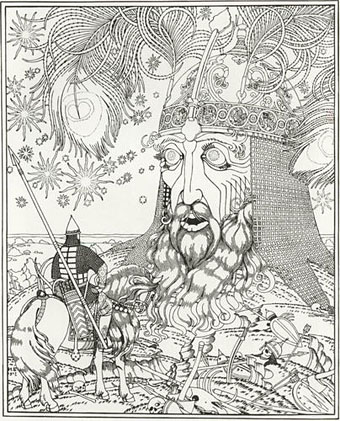
Ruslan and Giant’s Head (1917).

Elsewhere on { feuilleton }
The illustrators archive

Previously on { feuilleton }
Magic carpet ride

Grandville’s Un Autre Monde

grandville1.jpg

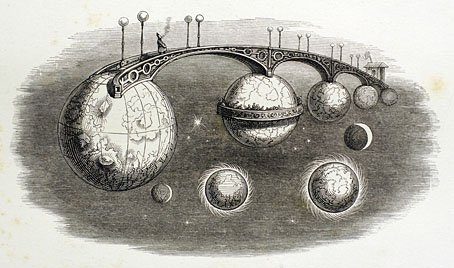
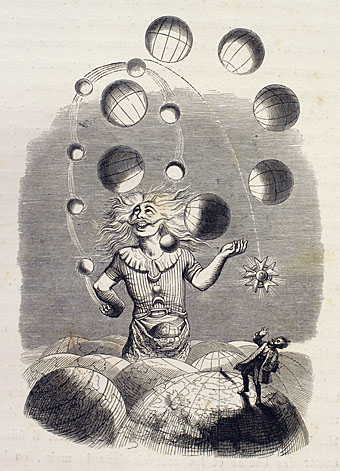
Un Autre Monde by JJ Grandville is a satire from 1844 whose wittily inventive illustrations were among that select group of prior works which received praise from the Surrealists. Some of them also act as early examples of humorous science fiction, and the two pieces shown here have been reprinted endlessly, they even turn up in histories of astronomy. The other illustrations are rarely seen, however, so it’s good to find a Flickr set with scans of the entire book. Comic artist Philippe Druillet took the bridge between worlds as the inspiration for his Lone Sloane story Torquedara Varenkor: The Bridge Over the Stars in 1970, turning the already unlikely construction into a galaxy-spanning edifice.

grandville2.jpg

Elsewhere on { feuilleton }
The etching and engraving archive

Previously on { feuilleton }
Druillet meets Hodgson