The art of Gilles Rimbault

rimbault5.jpg

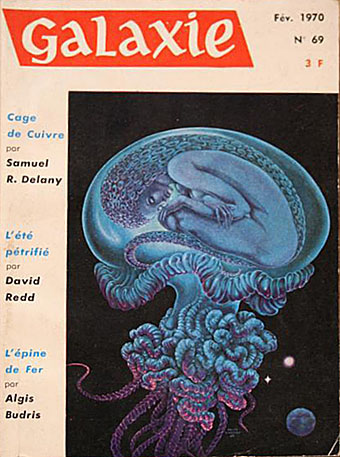
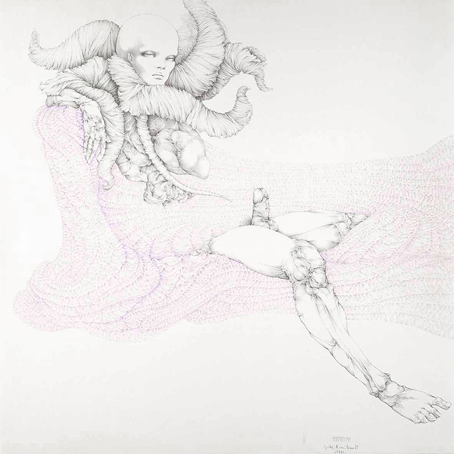
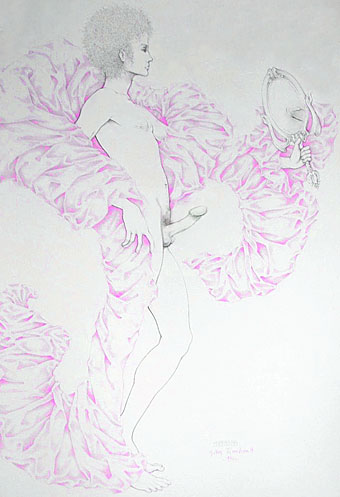
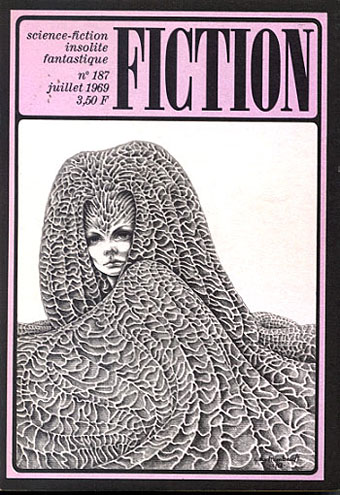
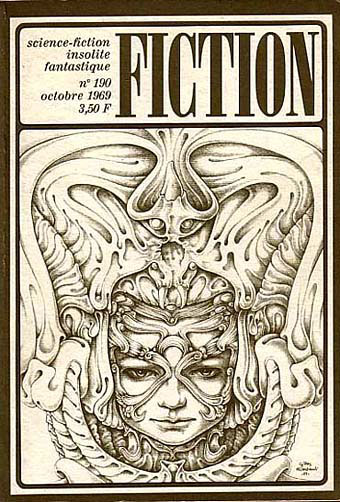
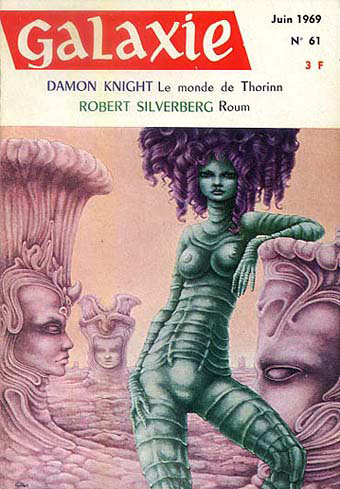
The relaxing of constraints in the 1960s produced a breed of artist which hardly seems to exist any more, invariably male and equally at home illustrating generic fantasy as producing delicately-rendered and frequently weird erotica. French artist Gilles Rimbault is one such, as was British underground artist Jim Leon, and another Frenchman, Raymond Bertrand. Unlike Leon and Bertrand, Rimbault’s work and information about the artist is frustratingly scarce. The first examples here are from covers of French science fiction magazines—also a source of work for Bertrand—while the samples below are a pair of intriguingly androgynous pieces of erotica from this page which gathers a number of similar Hans Bellmer-like works. If anyone turns up more of Rimbault’s drawings, please leave a comment.
rimbault4.jpg

rimbault6.jpg

rimbault7.jpg

rimbault2.jpg

rimbault3.jpg

Elsewhere on { feuilleton }
The fantastic art archive

Previously on { feuilleton }
The art of Jim Leon, 1938–2002
The art of Sibylle Ruppert
The art of Bertrand

Volcano: Turner to Warhol

wright.jpg

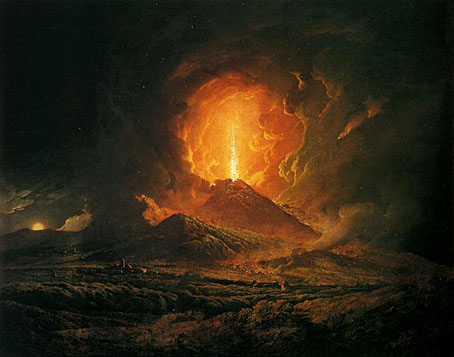
An Eruption of Vesuvius, Seen from Portici (c.1774–6) by Joseph Wright of Derby.

Joseph Wright of Derby captured the eruptions of Vesuvius in several pictures of which this is one of the more spectacular examples. The painter enjoyed spectacle as he also the rendering of chiaroscuro effects so it’s no wonder he was attracted to an apocalyptic night view such as this. Wright is one of the artists featured in a new exhibition at Compton Verney in Warwickshire, Volcano: Turner to Warhol, which presents the depiction of volcanoes in art through the ages.

The exhibition ranges from early engravings, showing imagined cross-sections of the fiery centre of the earth, to an explosive series of paintings by Joseph Wright, JMW Turner and Andy Warhol. It is a chance to examine the presence of volcanoes as geological phenomena and their power and influence, through an exciting range of historic and recent works of art. (More.)

The gallery site doesn’t have a complete list of the featured works but there’s some additional detail in a Telegraph preview from a couple of months ago. Volcano: Turner to Warhol opens on July 24th and runs to October 31st, 2010.

Previously on { feuilleton }
Chiaroscuro II: Joseph Wright of Derby, 1734–1797
Chiaroscuro
Shadows at Compton Verney
Death from above
The apocalyptic art of Francis Danby

Weekend links 22

pota.jpg

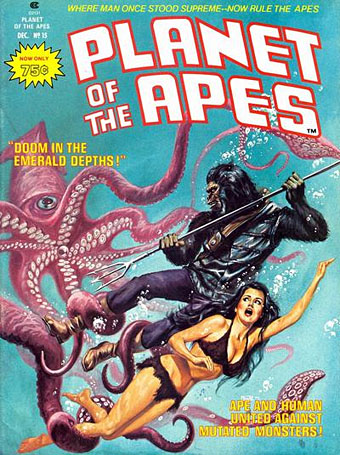
Planet of the Apes Magazine #15 (1975), art by Bob Larkin.

I never read any of Marvel Comics’ Planet of the Apes titles but the painted covers of the American editions are evidence of a distinctly lurid imagination. An excess of drugs—this was the Seventies, after all—or mere enthusiasm? You decide. Related: “The Soft Intelligence”: 5 Underrated Literary Cephalopods by China Miéville. Kudos to him for mentioning The Sea Raiders (1896) by HG Wells, a favourite story of mine when I was 12.

octopussy.jpg

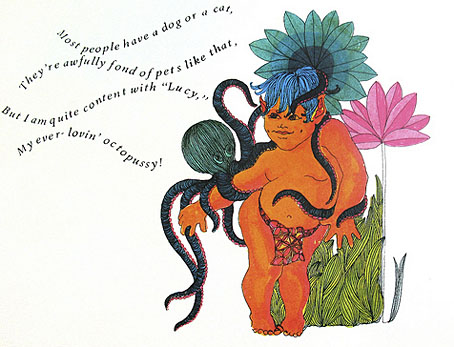
My ever-lovin’ octopussy (1970) by Jackie Black.

A Journey Round My Skull chooses selections from Ang Wyman’s flickr group Eye Candy (above), psychedelic illustration for children’s books by Nicole Claveloux, Peter Max, Heinz Edelmann and others.

• Watch out, there are “fancy gentlemen” about. It’s The Homosexual Menace!

• Design in opposition: Neville Brody announces the Anti-Design Festival.

• The Almias Rural Psychogeography Walk takes place on July 25th.

• Steven Heller on The Incredible Posters of Tadanori Yokoo.

Hipster Priest: Alan Moore interviewed at The Stool Pigeon.

FACT mix 167, a great selection by These New Puritans.

• The Orion Galaxy is a beautiful bespoke synthesizer.

• A radio portrait of Moondog at Speechification.

• RIP: Sugar Minott. RIP Tuli Kupferberg.

• Introducing Wizard’s Tower Press.

Octopus (1970) by Syd Barrett.

The Major Arcana by Jak Flash

arcana1.jpg

The Fool.

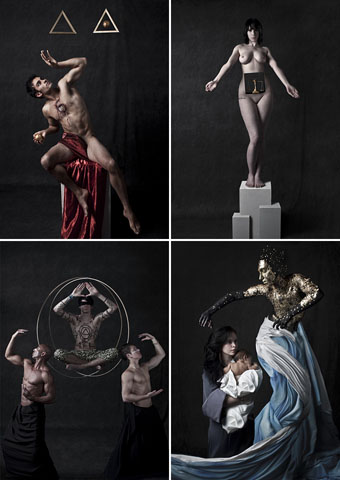
I’d like this photo series by young British photographer Jak Flash even if it didn’t feature attractive men; the eye candy is icing on a thaumaturgic cake. The Major Arcana takes the Trumps of the Tarot as its inspiration and manages to reinterpret the symbolism whilst retaining the hieratic nature of the traditional images. Of his reworking, the photographer says:

I developed my own themes based around things like geometric shapes so that I could encode my images with meaning. The images link to each other and can be read to some extent almost as a progressive story, or commentary. Various signifiers are used throughout the images such as cubes, triangles and spheres to help communicate my ideas. Cubes for example are a representation of the material world and triangles show transition. In an image such as The Hanged Man we see two men firmly seated on a large cube, whilst above their heads another cube breaks apart around them. … The Lovers image is an interpretation of the fall of man from Eden. The man represents mankind in his fall after taking the fruit of Knowledge, whilst being denied eternal life. (More.)

The Major Arcana is available in book form at Blurb. Via Homotography, doing all the leg work once again.

arcana2.jpg

top left: The Lovers; top right: Justice.
bottom left: The Wheel of Fortune; bottom right: The Sun.

Previously on { feuilleton }
The Sapphire Museum of Magic and Occultism
Strange Attractor Salon
The art of Pamela Colman Smith, 1878–1951
Layered Orders: Crowley’s Thoth Deck and the Tarot
In the Shadow of the Sun by Derek Jarman
The Major Arcana

Ghost clocks

ghost1.jpg

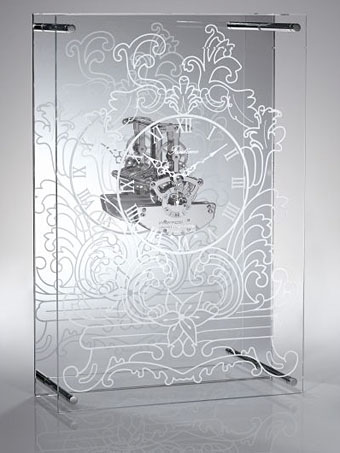
Ghost Clock by Yee Ling Wan (2005).

We’ve had skeleton clocks and mystery clocks this week, ghost clocks would seem the next logical step. There don’t seem to be many devices which fit the label unfortunately but this pair are interesting enough. Yee Ling Wan’s clock is relatively cheap (around £70) compared to yesterday’s antiques and can be purchased from a number of online outlets.

ghost2.jpg

Ghost Clock by Wendell Castle (1985).

Wendell Castle’s Ghost Clock isn’t a timepiece at all but is a solid block of mahogany carved and laminated to give a trompe l’oeil impression of a sheeted grandfather clock. The wrapped object and the confounding of expectations reminds me of Magritte who may have been an inspiration. Ce n’est pas une horloge, perhaps.

Previously on { feuilleton }
Mystery clocks
Skeleton clocks
The Midsummer Chronophage
The Corpus Clock