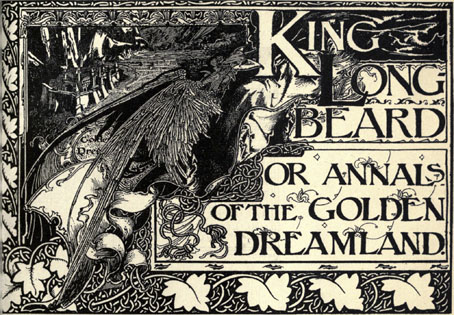
Charles Robinson’s King Longbeard

robinson1.jpg

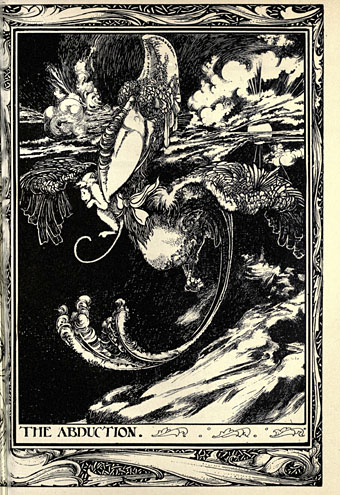
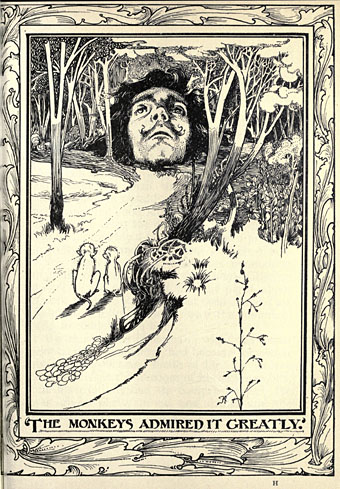
For proof that it’s worth persevering with the eccentric tagging or non-labelling at the Internet Archive, look no further than this tremendous edition of King Longbeard (1898) by Barrington MacGregor which features some astonishing illustrations by Charles Robinson. The illustrator’s name isn’t attached to the book files, I found this by cross-referencing, something I’ve been doing a lot of in order to find other books about design history. I’ve written about Robinson’s work before but I was still taken aback by some of these drawings, a handful of which verge on outright Surrealism. The two monkeys peering at a giant head is one I’ve seen reproduced elsewhere, although I couldn’t say where, so it’s good to be able to find the source at last. I haven’t read through any of the stories so the explanation of that scene remains a mystery. If you want the solution then the book files are here (click the “All files: HTTP” link for the full set).
robinson2.jpg

robinson3.jpg

Continue reading “Charles Robinson’s King Longbeard”

Pavomania

peacock1.jpg

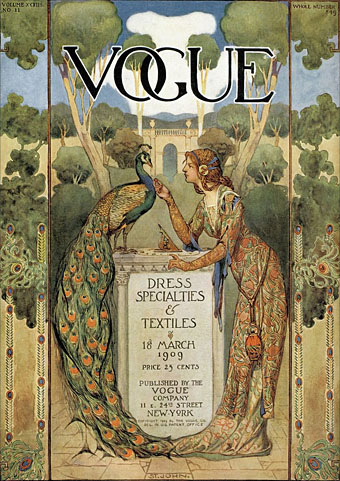
Colour me Mr Popular as I’m interviewed once again, the venue on this occasion being Coilhouse which is a fine place to be featured. My thanks to S. Elizabeth for the indulgence. In the course of our discussion I mentioned The Peacock Obsession, and by coincidence these pages have been receiving links recently from Peacock’s Garden, a site devoted to that ubiquitous fowl. These two pieces can be found there with the Vogue cover being a new one to me. The artist is the great J. Allen St John, better known for his Edgar Rice Burroughs illustrations and distinctive title designs; Golden Age Comic Book Stories has many examples of his work.

peacock2.jpg

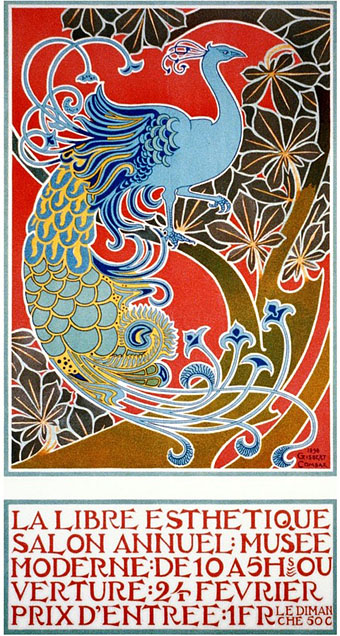
This splendid Art Nouveau poster is by Gisbert Combaz (1869–1941) and those who’ve seen my Dodgem Logic cover may recognise the peacock whose outline I rather shamelessly swiped. Combaz’s poster turns up regularly in Art Nouveau histories but his other work is less visible which is a shame, he has a very bold graphic style and I’d love to see more. Lastly, I’ve linked to this before but it’s worth mentioning again, Seasons of the Peacock at Animalarium which also has Combaz’s poster.

Previously on { feuilleton }
The Art Nouveau dance goes on forever
Dodgem Logic #4

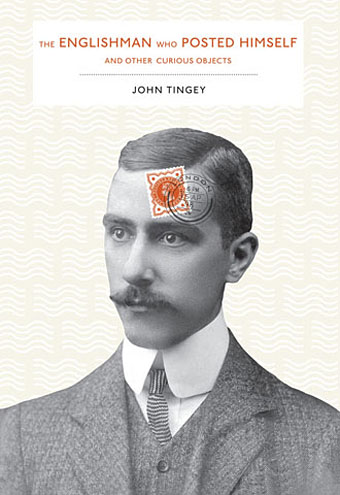
The Englishman who Posted Himself and Other Curious Objects

tingey.jpg

Cover design by Deb Wood.

Arriving most appropriately by post last week from Princeton Architectural Press was this fascinating book by John Tingey, an account of Mr W. Reginald Bray (1879–1939) of South London, and his games with the British postal service:

In 1898, Bray purchased a copy of the Post Office Guide, and began to study the regulations published quarterly by the British postal authorities. He discovered that the smallest item one could post was a bee, and the largest, an elephant. Intrigued, he decided to experiment with sending ordinary and strange objects through the post unwrapped, including a turnip, a bowler hat, a bicycle pump, shirt cuffs, seaweed, a clothes brush, even a rabbit’s skull. He eventually posted his Irish terrier and himself (not together), earning him the name “The Human Letter.”

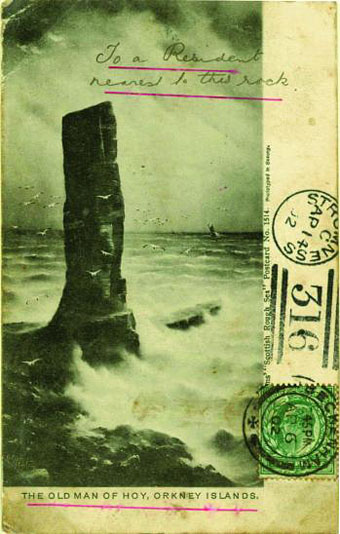
In addition to posting himself (twice!), Bray also challenged the nation’s postmen by addressing his cards and letters with rebuses, with longitude and latitude coordinates or, as in the example below, a pictorial clue to the location of the recipient. Tingey’s book is illustrated throughout with examples of Bray’s inventiveness, and includes a selection of the autographs he plied from famous individuals of the era (many of whom, it should be noted, are now very un-famous indeed). One of the few people to refuse an autograph was a name with which I’m familiar, the British Symbolist painter George Frederick Watts, and his letter of refusal is also included.

The Englishman who Posted Himself and Other Curious Objects may be purchased direct from the publisher.

tingey2.jpg

Previously on { feuilleton }
A postcard from Doctor Kafka

Weekend links 33

andrews1.jpg

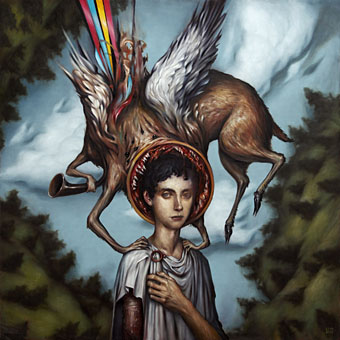
Blue Sky Noise (2010) by Esao Andrews.

Franz Xaver Messerschmidt is the first exhibition in the United States devoted exclusively to the 18th-century sculptor. Related: an earlier post about the artist’s work.

• How are the team behind War Horse planning to follow up their smash hit? With a gay love story performed by puppets. Related: Achilles (1995) by Barry JC Purves.

• More great posts at A Journey Round My Skull: Czechoslovakian Expose VI and Black Cradle of Bright Life, fifteen works by the Macedonian artist Vangel Naumovski (1924–2006).

Top 10 Anti-Gay Activists Caught Being Gay. Related: “Fuck your feelings,” in which columnist Dan Savage gets righteously impatient when a correspondent complains. As Savage says, people who use their faith as a stick to beat gay people contribute to an atmosphere of intolerance in which kids are bullied for being gay (or appearing to be), or transgender, or merely different, and kill themselves as a result. Over the past couple of weeks there’s been an upsurge of US media attention to the most recent suicides; Savage inaugurated the It Gets Better project in order to help. Also related: God Loves Poetry.

andrews2.jpg

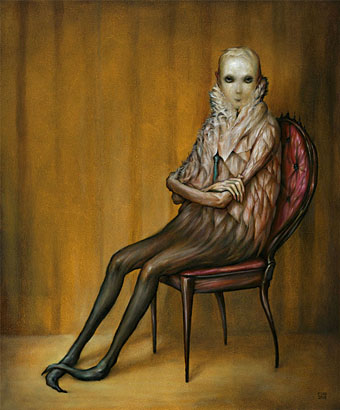
Meigh (2010) by Esao Andrews.

Antony Hegarty enthuses about Shoot Yer Load, one of the scurrilous 12″ singles released by my Savoy colleagues in the 1980s. Antony and the Johnsons have a new album out, Swanlights, on Secretly Canadian.

When the future of music was a rainbow hued parabola: book designer John Gall collects old synthesizer manuals.

Fantastic Memories (1944) by Maurice Sandoz, illustrated by Salvador Dalí.

Urban optometry: life as a London crane operator at BLDGBLOG.

• Today is 10/10/10 which means it’s Powers of Ten Day.

These New Puritans: a band like no other.

Art Nouveau: a virtual exhibition.

Diaghilev: Lord of the dance.

Flaming Telepaths (1974) by Blue Öyster Cult; Flaming Telepaths (2005) by Espers.