Carceri, thermae and candelabra

piranesi_tivoli.jpg

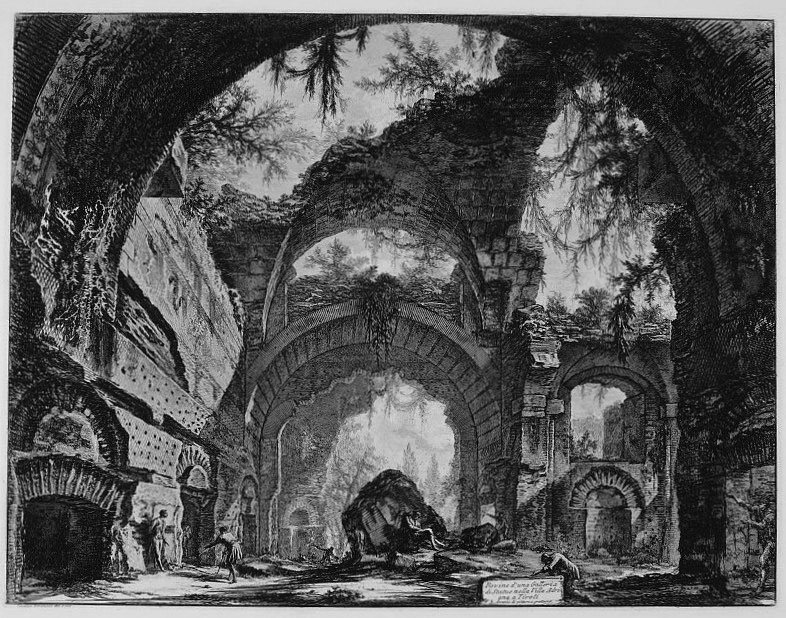
Piranesi’s etching which purports to show a statue gallery at Hadrian’s Villa was published in 1770 as part of the artist’s Vedute di Roma series, and conveniently provides a themed link for a pair of new exhibitions. The artist’s attribution of statue gallery was a mistaken one, the structure is actually the remains of Hadrian’s thermae, or baths, but archaeology was still in its infancy in the 18th century so mistakes were inevitable. If you’re fortunate enough to be in Venice during the next two months the Fondazione Cini has a major exhibition of Piranesi’s work, The Art of Piranesi: architect, engraver, antiquarian, vedutista, designer. On display are over three hundred prints which no doubt include many of the Vedute di Roma.
piranesi.jpg

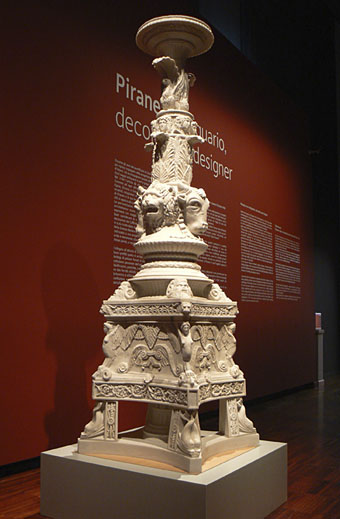
Ornamental candelabrum created by Factum Arte from a design by Piranesi.

Good as that sounds, what’s especially notable about this exhibition is a presentation of three-dimensional works specially created from Piranesi’s designs for candelabra, fireplaces, and other objects based on his studies of artefacts from the ancient world. These pieces have been produced by Factum Arte who have a great website showing the finished pieces and also a page detailing the production of the objects. Also on that page is one of the exhibition’s other features, a 10-minute video by Gregoire Dupond which cleverly joins together and animates a journey through several of Piranesi’s Carceri d’invenzione (Imaginary Prisons). The music accompaniment is Bach’s Cello Suite 2 which happens to be the piece played by Yo-Yo Ma in an earlier animation of the Carceri, so it’s a reasonable guess that the earlier film was an inspiration for this new work. The exhibition runs to November 21, 2010.
jauregui.jpg

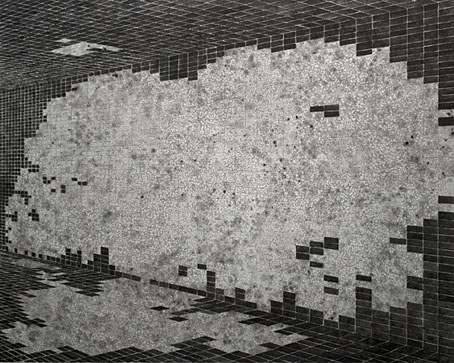
Jack’s Bath (2010) by Danny Jauregui. Gouache on canvas.

Hadrian’s obsession with his doomed lover Antinous makes the Emperor a gay icon which explains the connection between Piranesi’s view of the ruined baths and an exhibition of work by American artist Danny Jauregui. There Goes the Neighborhood is at the Leslie Tonkonow Gallery, New York, and features a selection of Jauregui’s paintings of tiles from the bathhouses which were a feature of gay life in the days before AIDS.

I make paintings of bathhouses in ruin. Moldy, disheveled and abandoned, the paintings are memorials to the absence of memorials – indexes of the traumatic erasure inflicted on the radical gay sexuality of the past. They are paintings of what I imagine those spaces to look like, had they not been disguised and hidden from sight. (More.)

The exhibition runs until October 30, 2010. By coincidence gay news blog Towleroad had a post yesterday about New York’s first anti-gay police raid on the Ariston Baths in 1903.
time-bandits.jpg

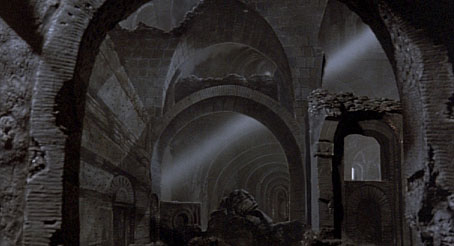
Time Bandits.

Seeing as I posted the picture of Hadrian’s baths I have to also post this shot from Terry Gilliam’s Time Bandits (1981) showing the interior of the Fortress of Ultimate Darkness. Here we see the Piranesi’s ruined baths incorporated into a vast and gloomy space which must surely be inspired by the Carceri, the views of Rome being absorbed by the artist’s darker imaginings. And for a final piece of trivia, writer Marguerite Yourcenar is not only the author of Memoirs of Hadrian (1951), a novel about the Emperor’s passion for Antinous, but also penned an essay about the Carceri. I haven’t read either of those works so I think it’s time to add them to the shopping list.

Update: For those in the UK, there’s also Piranesi’s Prisons, an exhibition at the Mead Gallery, Warwick, from now until December.

Elsewhere on { feuilleton }
The etching and engraving archive

Previously on { feuilleton }
La Tour by Schuiten & Peeters
Set in Stone
Hadrian and Greek love
Piranesi as designer
Vedute di Roma
Aldous Huxley on Piranesi’s Prisons
The Cult of Antinous

Totem and tattoo

katana.jpg

My thanks to Clive for suggesting this stunning photo, another jewel dredged from the Tumblr swamps which, after some searching around, I discovered originates here. The model is a Brit named Ben, and the blog page showing more of his pictures describes his body art as “one of the sexiest tattoos I’ve ever seen on a guy”. No disagreement there.

Elsewhere on { feuilleton }
The men with swords archive

The Tempest illustrated

tempest.jpg

“Such stuff as dreams are made on”: Heathcote Williams and Toyah Willcox.

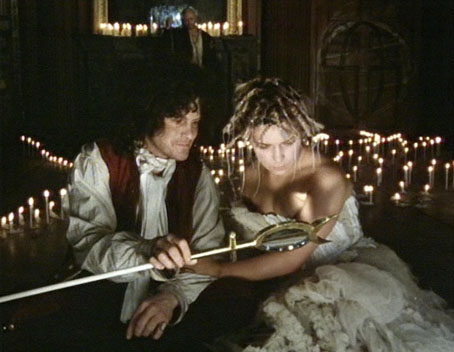
DVD viewing earlier this week was Derek Jarman’s wonderful adaptation of The Tempest which he directed in 1979. This is my favourite of Jarman’s films, partly because the play is my favourite Shakespeare (along with its polar opposite, Macbeth) and also because it’s a film infused with an occult sensibility which comes directly from the director’s own interests, rather than being the usual film or theatre conventions of what magic entails. An example of this is the grimoire which Prospero (Heathcote Williams) is seen leafing through which Jarman reveals in his autobiography, Dancing Ledge, to be his own 17th-century edition of Cornelius Agrippa’s Occult Philosophy. In his account of the filming he also describes his conception of Prospero as being based on Dr John Dee, the Elizabethan occultist who Shakespeare would certainly have known of, and may even have met since the pair both had business with Elizabeth I’s court. The most explicit reference to Dee comes in the shape of Prospero’s magical glass (above), based on Dee’s Monas Hieroglyphica, and a prop I’d dearly love to own. Dee was also a character in Jarman’s Jubilee (1978), and his Angelic Conversations gave a title to Jarman’s later filming of Shakespeare’s sonnets.

Seeing Jarman’s adaptation again had me thinking about the various representations of the characters. Ariel is generally depicted as a fairy type although he’s a lot more powerful than the fairies in A Midsummer Night’s Dream. As for Caliban, like Grendel in Beowulf, he’s an all-purpose monster whose predominant attributes seem to be whatever Ariel isn’t: ugly, earthbound, stupid, treacherous, and so on. I’d be tempted to propose the island’s quartet as representing the four elements—Prospero: water; Miranda: fire; Caliban: earth; Ariel: air—but I’m sure that’s not an original idea given the amount of academic trawling through the Bard’s corpus. Rather than dig for symbolism, what follows is a few pictures found during another trawl of my own through the Internet Archive, where the books aren’t drowned but patiently await their rediscovery.

Continue reading “The Tempest illustrated”

Infernal entrances

atget.jpg

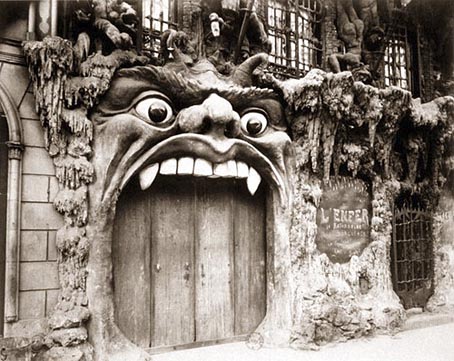
L’Enfer, Boulevard de Clichy (1911).

A recent posting at The Haunted Lamp showed the interior of L’Enfer, a Montmartre cabaret which described itself as “unique au monde”, pictured here in a memorable photo by Eugène Atget. The interior and portions of the exterior were certainly unique enough, and look like they were created by the same people who designed the carnival show for Harry Lachman’s film Dante’s Inferno (1935), but the yawning mouth as an entrance isn’t without precedent. Some prior examples follow.

zuccari.jpg

Palazzo Zuccari.

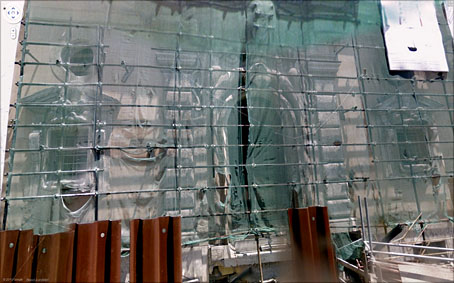
L’Enfer is long gone, unfortunately, but the entrance to the Palazzo Zuccari in the Via Gregoriana, Rome, is still extant despite being hundreds of years older. I was hoping that Google’s Street View would have some good pictures but they managed to capture the building in the midst of renovation. A friend of mine was working at an office in this street when I was in Rome in 1993 and the yawning mouths and windows are a very curious sight in a narrow road near the Spanish Steps. Flickr has better views, here, here and here.

bomarzo.jpg

Ogre, Parco dei Mostri.

The Rome palazzo is named after the Mannerist artist who lived there, Federico Zuccari (c. 1542/1543–1609), and Zuccari’s inspiration for his doorway came from another Mannerist creation, the Parco dei Mostri at Bomarzo. The mouth in this case isn’t an entrance to the underworld but a devouring ogre, and one of the park’s many grotesque attractions. I wonder if this was also an inspiration for the giant floating head in John Boorman’s ludicrous science fiction film, Zardoz (1974).

moulin.jpg

Moulin Rouge!

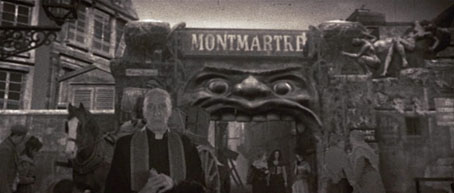
And speaking of films, Baz Luhrmann used the L’Enfer entrance as a gateway to Montmartre itself in the zooming shot which opens Moulin Rouge!. I like that idea, as though it’s an iniquitous equivalent of the old Temple Bar gateway to the City of London. For more pictures of L’Enfer, and details of its history, see here and here. If anyone knows of any other notable doorways like these, please leave a comment.

Update: Nathalie found another Bomarzo influence while Jescie on Twitter drew my attention to a set from this German film.

Previously on { feuilleton }
Villa d’Este
Harry Lachman’s Inferno
Atget’s Paris

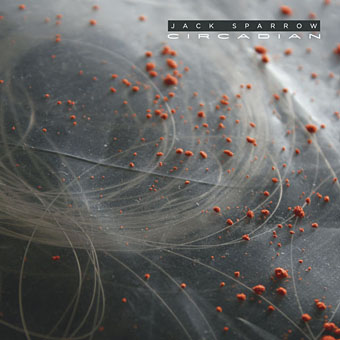
Circadian by Jack Sparrow

sparrow.jpg

I’m still (still!) playing catch-up posting all the things I’ve been working on this year. Here’s one of the more high-profile releases in the music sphere, Jack Sparrow‘s debut album, Circadian, which is unleashed this week on the Tectonic label. This is another dubstep production and I don’t have to try and describe the music this time when you can hear a stream of it at FACT.

sparrow2.jpg

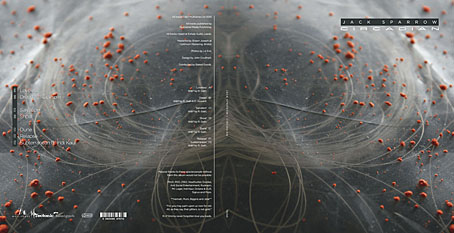
Vinyl sleeve.

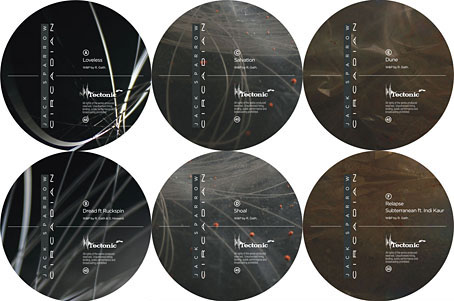
Design-wise, this is another release in CD and vinyl editions, and like all the work I’ve done for Tectonic it comes wrapped in Liz Eve’s wonderful photos. The pictures this time are some kind of industrial detritus which she’s turned into abstract landscapes. The vinyl was a three-disc set and the way the labels have turned out is probably my favourite part of this particular job.

sparrow3.jpg

Vinyl labels.

Elsewhere on { feuilleton }
The album covers archive

Previously on { feuilleton }
New work: Two forms of darkness
The Thorns of Love by Antoni Maiovvi
New music and design
Plates: Volume 2
Aerial by 2562