Le Baiser de Narcisse

brisset1.jpg

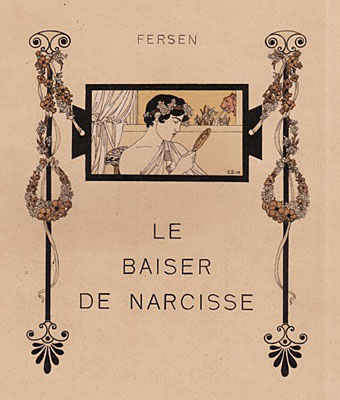
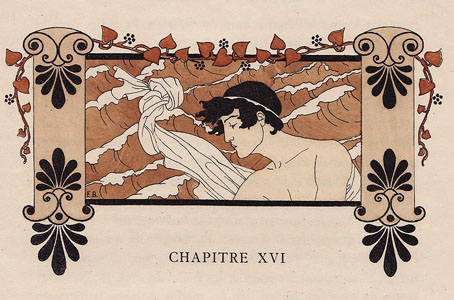
We have the French gay culture site Bibliothèque Gay to thank for posting illustrations by Ernest Brisset from Jacques d’Adelswärd-Fersen’s rare volume of homoerotic fiction, Le baiser de Narcisse (The Kiss of Narcissus). The book was originally published in 1907 but it was a new edition in 1912 which came embellished with Brisset’s Classical drawings and decorations. If these lack a degree of eros it should be noted that the text would have been condemned as outright pornography in the Britain of 1912, a paean to youthful male beauty which lingers over details of a boy’s “polished hips” and his “round and firm sex like a fruit”. As is usual with homoerotics of this period, the Classical setting and allusion to Greek myth provides the vaguest excuse for the subtext even though prudes of the time weren’t remotely fooled by this, as Oscar Wilde discovered.
brisset2.jpg

Among other works by Fersen there’s a decadent roman à clef, Lord Lyllian: Black Masses (1905), which I’ve been intent on reading since it was translated into English a couple of years ago. Here Fersen provides us with yet another fictional extrapolation of Oscar Wilde who the author gifts with some of his own scandalous history. Fersen had been driven from France following a public outrage involving the “Black Masses” of the novel’s title, and the alleged debauching of Parisian schoolboys.

hocker.jpg

Nino Cesarini by Paul Höcker (1904).

Fersen settled in Capri with his partner Nino Cesarini where they spent some years reinforcing the reputation of that island (not for nothing is Noël Coward’s camp and catty character in Boom! named “the Witch of Capri”), and proselytising for the Uranian cause with a literary journal, Akademos, modelled on Adolf Brand’s Der Eigene. Fersen’s later life is reminiscent of that of Elisar von Kupffer, a wealthy contemporary who created a secluded homoerotic paradise of his own, the Sanctuarium Artis Elisarion. Unlike Kupffer, however, Fersen ended his days prematurely in a haze of opium and cocaine. As for Ernest Brisset, if anyone finds other work of his online, please leave a comment.

Elsewhere on { feuilleton }
The gay artists archive

Previously on { feuilleton }
Reflections of Narcissus
Narcissus

Weekend links 41

2001.jpg

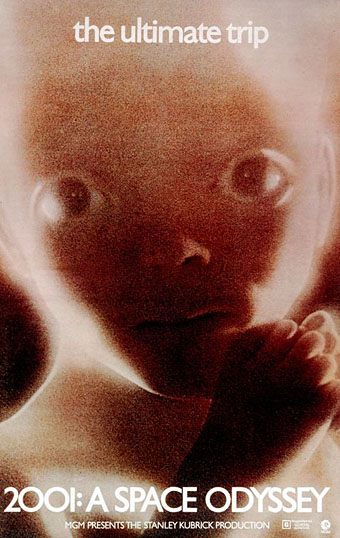
Being an inveterate Kubrickphile I was naturally pleased to hear that some of the excised scenes from 2001: A Space Odyssey have survived in a watchable form, even though I’m often ambivalent about the restoration of such material. While it was good to see at last the missing French compound sequence of Apocalypse Now, for example, that sequence added nothing to the film as a whole and its inclusion was spoiled by music which Coppola used for sentimental reasons. In Kubrick’s case, there’s a longer version of The Shining which the director allowed to be screened on UK TV in the 1980s but, again, most of the unseen material was incidental and added nothing to the film.

• Related: Roger Ebert’s review of 2001 from 1968; Olivier Mourgue, designer of the Djinn chairs seen in the film’s space Hilton scenes; Magnificent obsession, a Vanity Fair piece from 2002 about the search for the missing scenes from The Magnificent Ambersons. Meanwhile, the trailer for Terrence Malick’s new film, The Tree of Life, features some surprising cosmic moments among its scenes of family life.

The separate history [of gay and lesbian artists] has been kind of edited out of art history but in fact art history is very much interwoven with gay or queer history. In a way the two can’t be separated. America doesn’t like anything uncomfortable. I find in my dealings with museums that if I ask a question and the answer is ‘no,’ they don’t answer. If the answer is ‘yes,’ I get these amazingly enthusiastic responses. I find it sort of strange sometimes, not being American myself. In a way what they’re doing is editing out the uncomfortable. David Wojnarowicz’s work can make you uncomfortable — and they’ve edited out that possibility in the show.

Canadian artist AA Bronson (see below).

• More on the Smithsonian versus David Wojnarowicz affair: Frank Rich examined the train of events in a comment piece, Gay Bashing at the Smithsonian, for the NYT; the Andy Warhol Foundation threatened to withdraw their funding for future Smithsonian events unless the work is reinstated, the Robert Mapplethorpe Foundation will be doing the same; another artist featured in the National Portrait Gallery exhibition, AA Bronson, requested that the gallery withdraw his work from the show in protest; the NPG refused, citing a contractual arrangement; among the increasing number of galleries showing support for Wojnarowicz, Tate Modern, London, will host an event in January which will feature a screening of the contentious video; lastly, there’s a protest event in New York City today (Sunday, December 19th) at 1.00pm, details here.

• More censorship in America: Jeffrey Deitch Censors Blu’s Political Street Art Mural. In the book world, writer Selena Kitt finds her erotic incest stories removed from Amazon’s Kindle store. Other authors, Jess C Scott and Esmerelda Green, have had their erotic titles removed from the store. Selena Kitt says:

When some of my readers began checking their Kindle archives for books of mine they’d purchased on Amazon, they found them missing from their archives. When one reader called to get a refund for the book she no longer had access to, she was chastised by the Amazon customer service representative about the “severity” of the book she’d chosen to purchase.

Can you imagine buying a paper book and the bookstore then paying you a visit to forcibly reclaim it? To date no adequate explanation from Amazon has been forthcoming but they’ll be happy to sell you a Kindle edition of the Marquis de Sade’s The 120 Days of Sodom.

m51.jpg

Galaxy M51 aka The Whirlpool. One of the Top Astronomy Pictures of the Year from a selection by Bad Astronomy. Photo by the Hubble Heritage Team & Robert Gendler.

• More cosmic events: there’ll be a total lunar eclipse this coming Monday, visible in much of the Northern Hemisphere.

• “Heterosexuality is the opiate of the masses!” The Raspberry Reich (2004), a film by Bruce LaBruce.

New editions of Borges poetry. Fine so long as you accept that the translations can never truly satisfy.

• Just the thing for the winter weather, illustrations for Pushkin’s Queen of Spades from 1966.

• Another Ghost Box download: Radio Belbury Programme 1: “Holidays & Hintermass”.

Monsters, Inc: Arcimboldo and the Wunderkammer of Rudolf II.

• Silent Porn Star found some burlesque lamps.

Giant airship powered by algae.

Space Oddity (1969) by David Bowie.

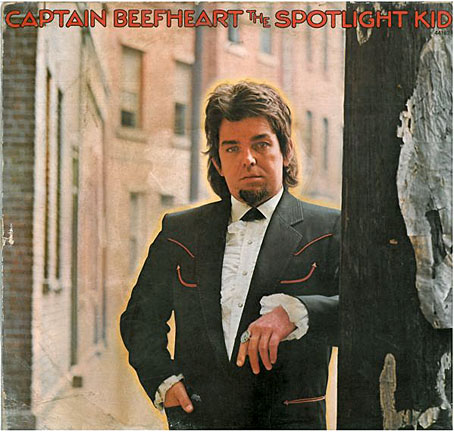
Don Van Vliet, 1941–2010

spotlight.jpg

Photography & design by Ed Thrasher.

So long, Spotlight Kid. This was only announced a few hours ago so you’ll be hearing a lot more about Captain Beefheart this weekend.

What is there to say? I have all the albums and a lot of other stuff besides: rarities, outtakes, bootlegs and so on. Beefheart was sui generis and it’s always seemed fitting that despite the myriad group names flying around in the 1960s he was the one who had the Magic Band. At their height all the implications of thaumaturgy and conjuration that label implies were fully justified. Trout Mask Replica, the non-Euclidean masterwork he cajoled the group into creating in 1969, still sounds like nothing else. The following are essential documents:

Safe As Milk (1967)
Strictly Personal (1968)
Trout Mask Replica (1969)
Lick My Decals Off, Baby (1970)
Mirror Man (1971)
The Spotlight Kid (1972)
Clear Spot (1972)
Shiny Beast (Bat Chain Puller) (1978)
Doc At The Radar Station (1980)
Ice Cream For Crow (1982)
Grow Fins: Rarities (1999)

YouTube has plenty of Beefheart things worth seeing, of course. Best introduction is the BBC’s 1997 documentary, The Artist Formerly Known As Captain Beefheart, narrated by John Peel. They opened that with the great film clip of the Magic Band playing Sure ‘Nuff ‘n’ Yes I Do on the beach at Cannes in 1968. My favourite of all is probably the 1972 TV spot of them playing I’m Gonna Booglarize You Baby on Beat Club. Don Van Vliet may have died but Captain Beefheart lives on.

Guardian obituary
The Captain Beefheart Radio Station

Modern book illustrators, 1914

clarke1.jpg

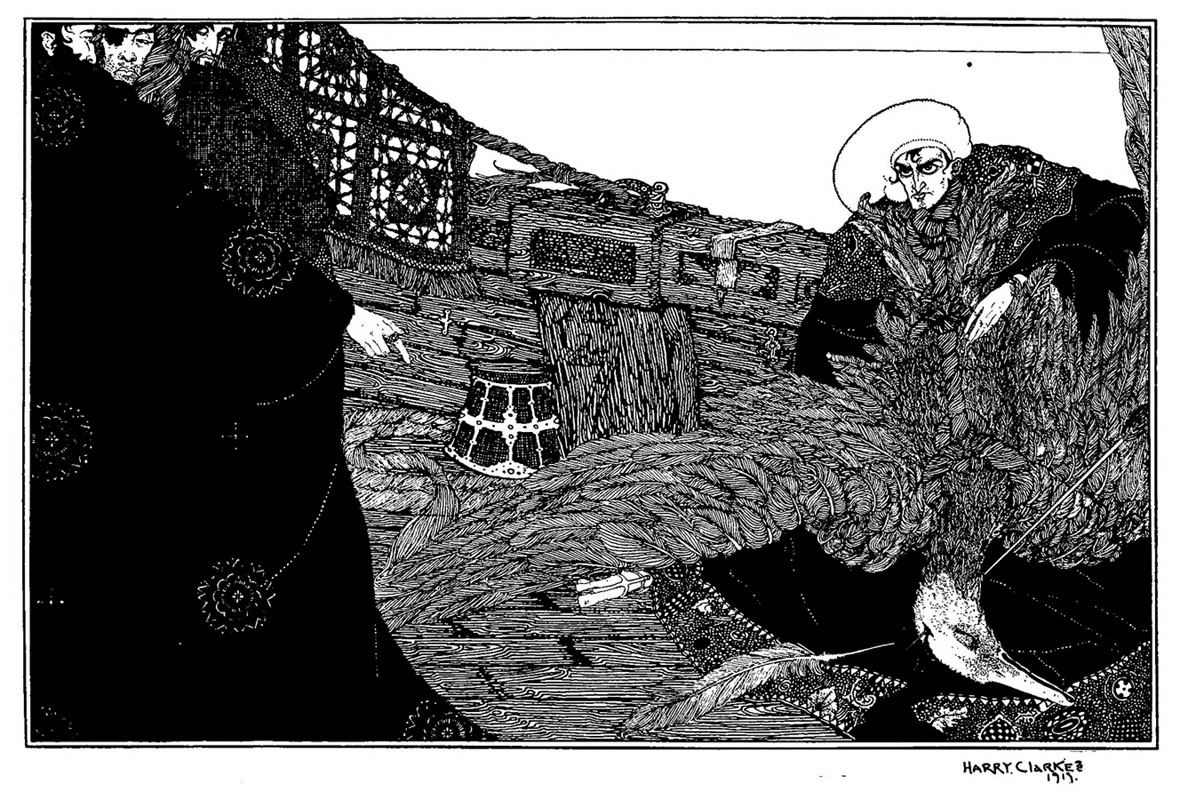
The Rime of the Ancient Mariner by Harry Clarke.

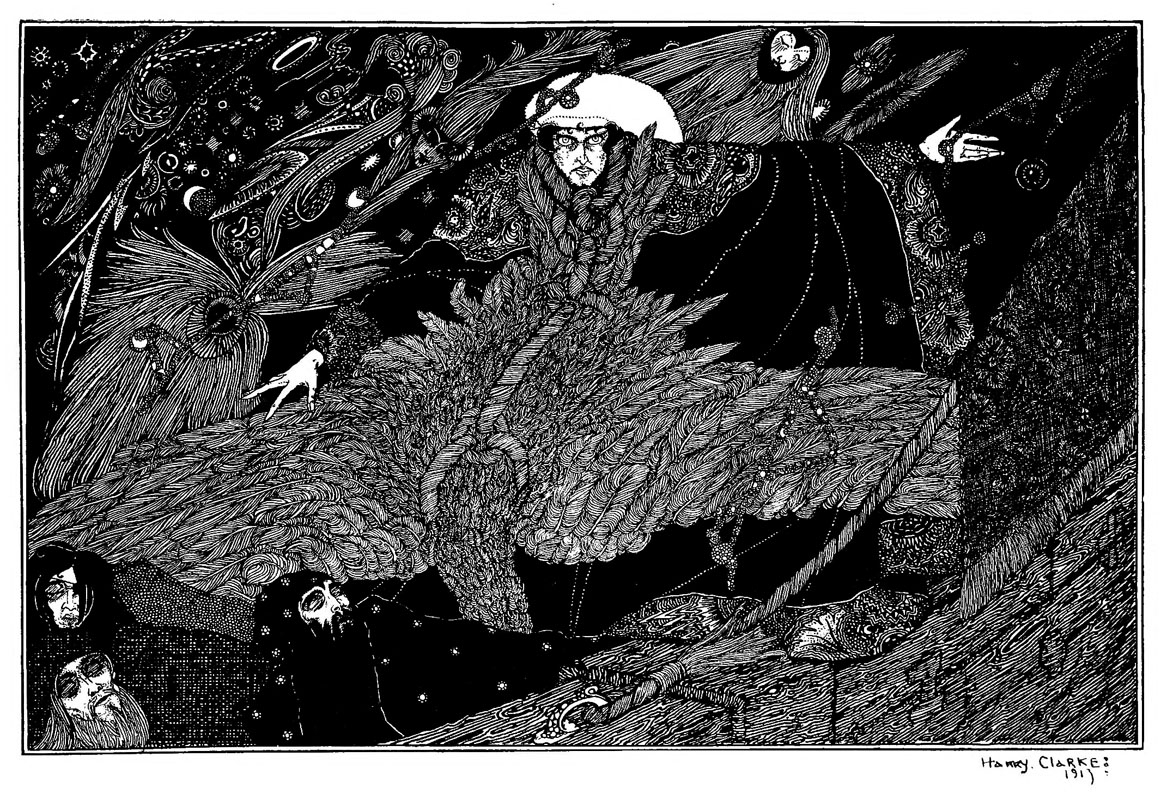
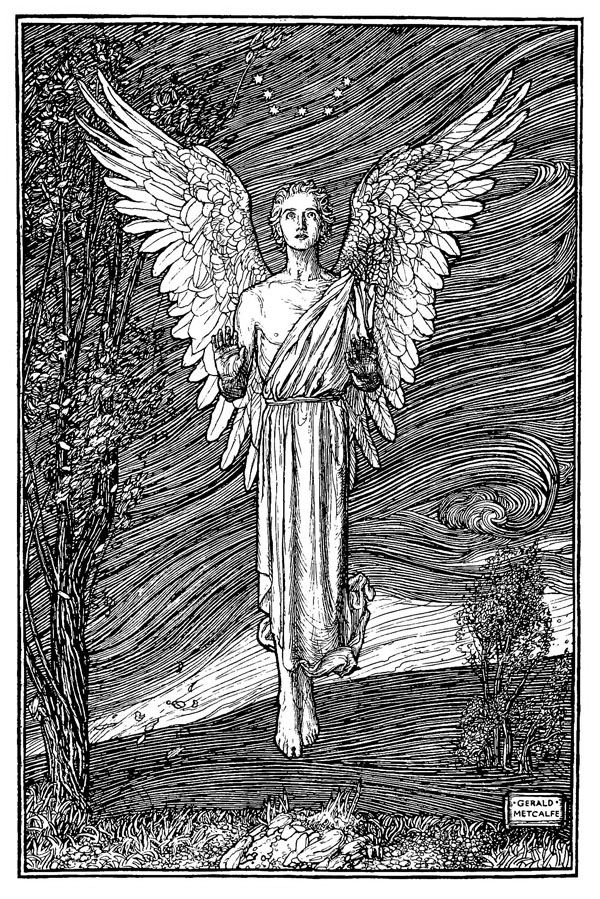
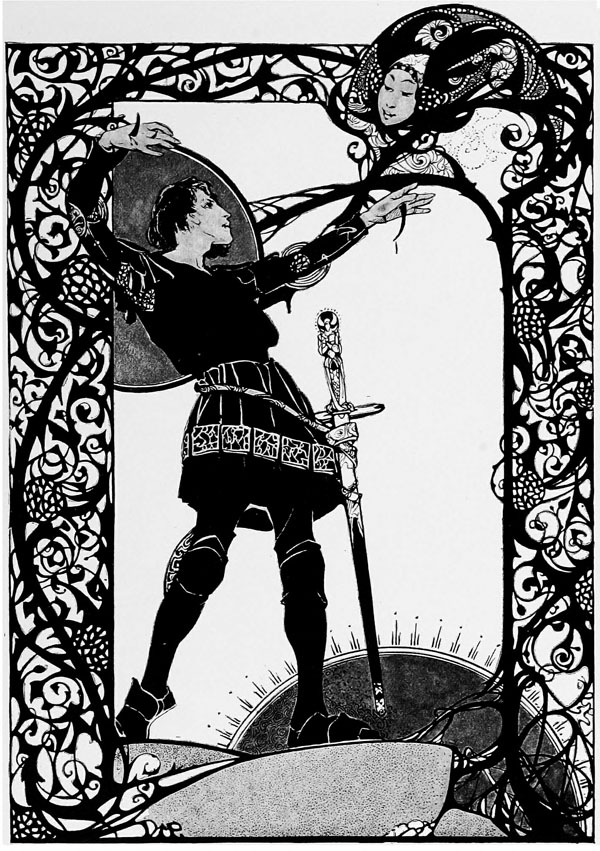
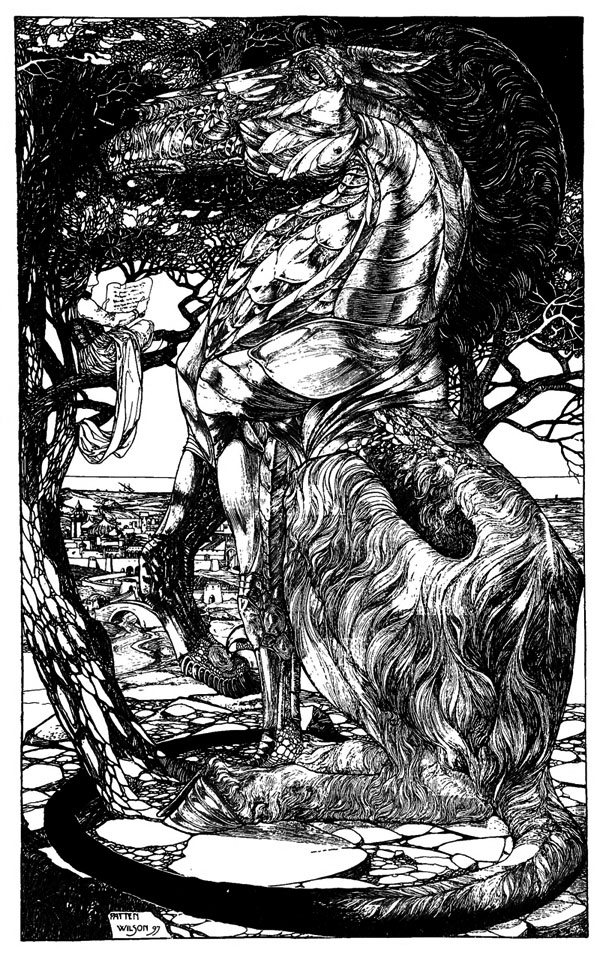
Some samples from a collection of mostly black-and-white drawing at the Internet Archive, Modern Book Illustrators and Their Work (1914), edited by C. Geoffrey Holme & Ernest G. Halton. This was an illustration review produced by The Studio magazine and in this edition happens to feature two pieces of work from Harry Clarke’s The Rime of the Ancient Mariner (1913). Also at the Internet Archive is an earlier Studio publication, Modern Pen Drawings: European and American from 1901 from which I’ve selected Patten Wilson’s hyper-detailed rendering of Rustum and the Simoorg, a fantastic piece of work in every sense.

clarke2.jpg

The Rime of the Ancient Mariner by Harry Clarke.

metcalfe.jpg

From The Poems of Coleridge by Gerald Metcalfe.

payne.jpg

La Belle Dame sans Merci by Dorothy M. Payne.

wilson.jpg

Rustum and the Simoorg by Patten Wilson.

Elsewhere on { feuilleton }
The illustrators archive

Previously on { feuilleton }
Illustrating Poe #3: Harry Clarke
Strangest Genius: The Stained Glass of Harry Clarke
Harry Clarke’s stained glass
Harry Clarke’s The Year’s at the Spring
The art of Patten Wilson, 1868–1928
The art of Harry Clarke, 1889–1931