8 x 8: A Chess Sonata in 8 Movements

8x8-1.jpg

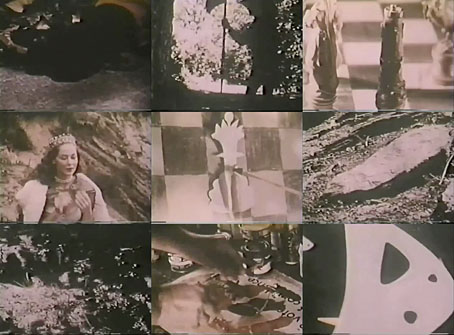
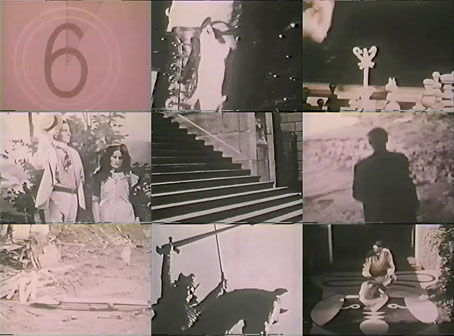
Continuing the Cocteau theme, this fascinating film remains (for the time being) unavailable in a better copy despite its artistic all-star cast. 8 x 8: A Chess Sonata in 8 Movements (1957) can be regarded as a follow-up to Hans Richter’s Surrealist anthology Dreams That Money Can Buy (1947), the directorial credit this time being shared between Richter, Jean Cocteau and Marcel Duchamp. The latter famously quit the art world to devote more time to chess-playing so his involvement with a chess-based fantasy (self-described as “a fairytale for grownups”) isn’t so surprising:

It explores the realm behind the magic mirror which served Lewis Carroll 100 years ago to stimulate our imagination.

The cast comprises famous friends including Cocteau himself, Max Ernst, Dorothea Tanning, Paul Bowles, Fernand Leger, Alexander Calder, Duchamp, and, in the Venetian episode, Peggy Guggenheim in her favourite sunglasses. In places it’s closer to Kenneth Anger’s Inauguration of the Pleasure Dome (1954) than Dreams That Money Can Buy, especially since Anger’s film was another assemblage of unique personalities. One detail I’ve not seen remarked upon elsewhere is the presence behind the camera of Louis & Bebe Barron who assisted with the sound. The Barrons are better known today for their still astonishing all-electronic score for Forbidden Planet (1956). Watch 8 x 8 at Ubuweb or YouTube.
8x8-2.jpg

Previously on { feuilleton }
Dreams That Money Can Buy

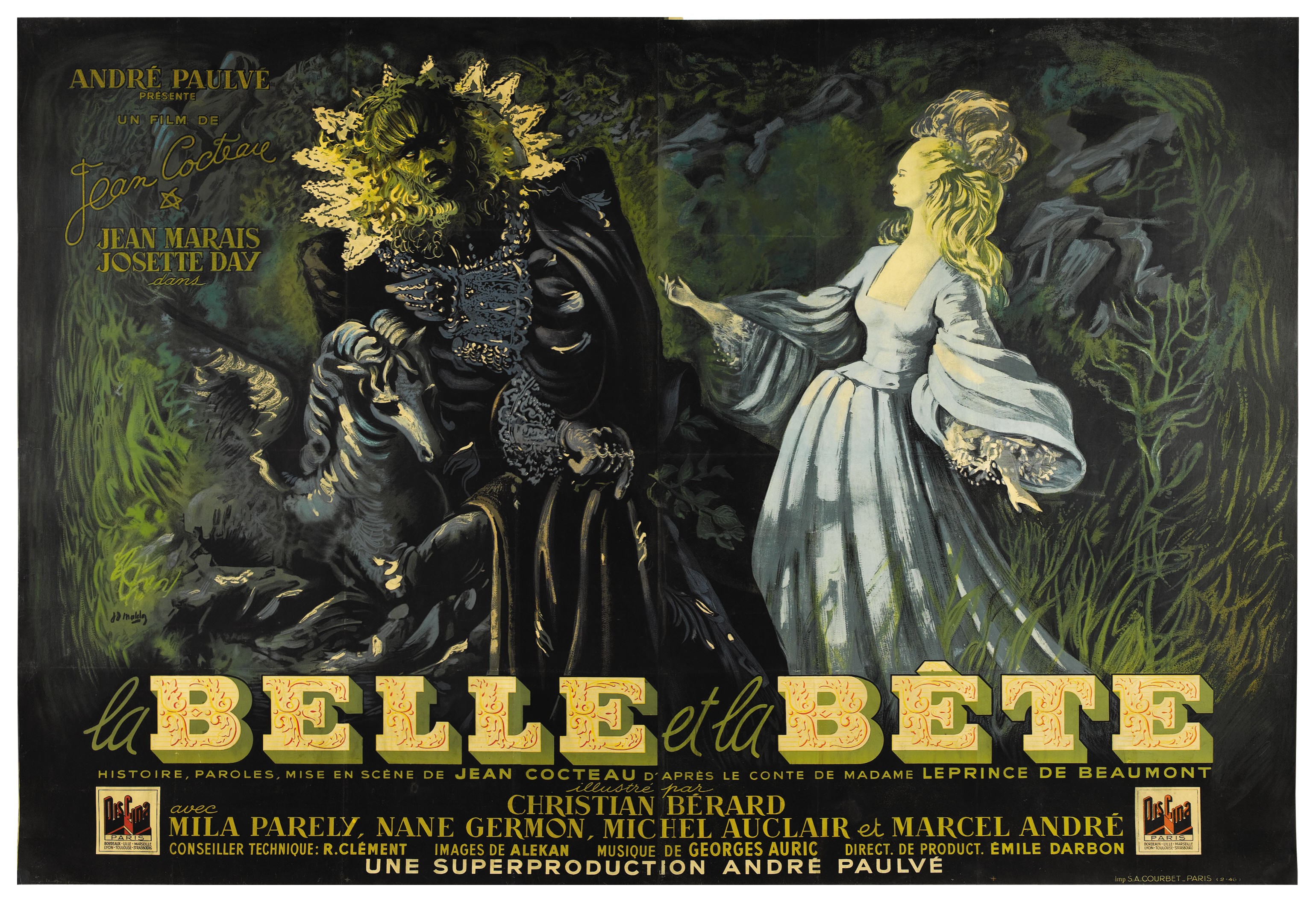
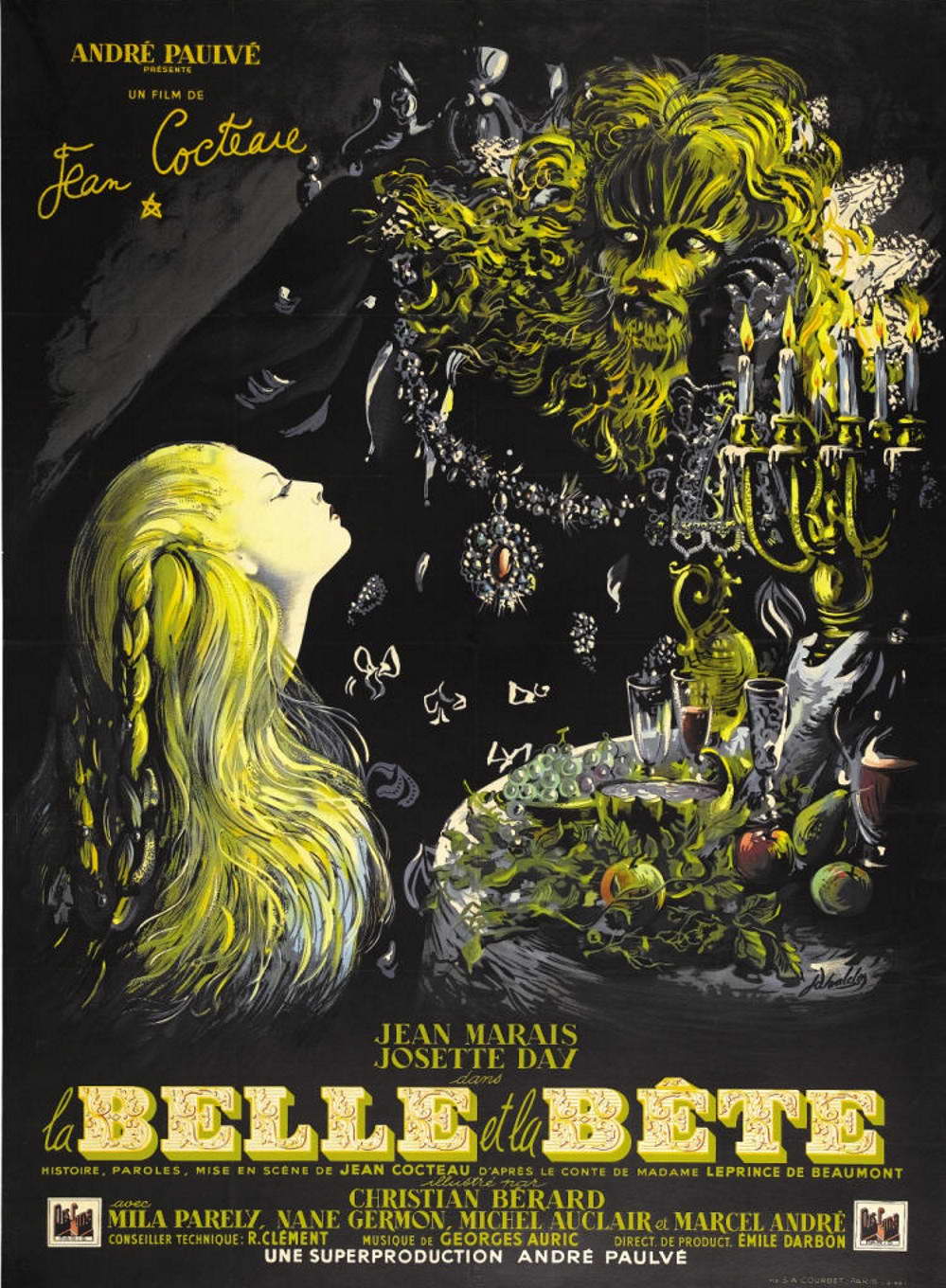
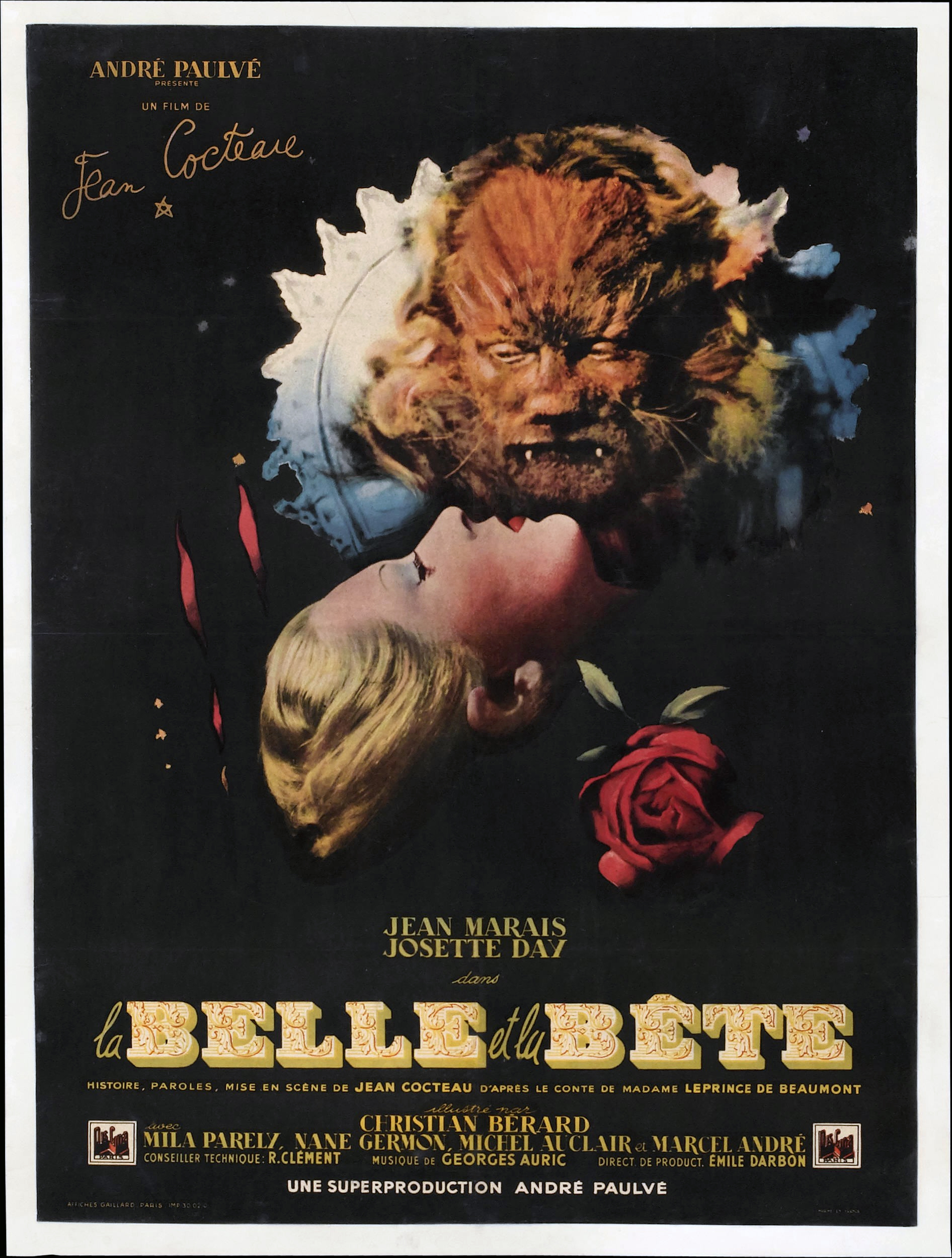
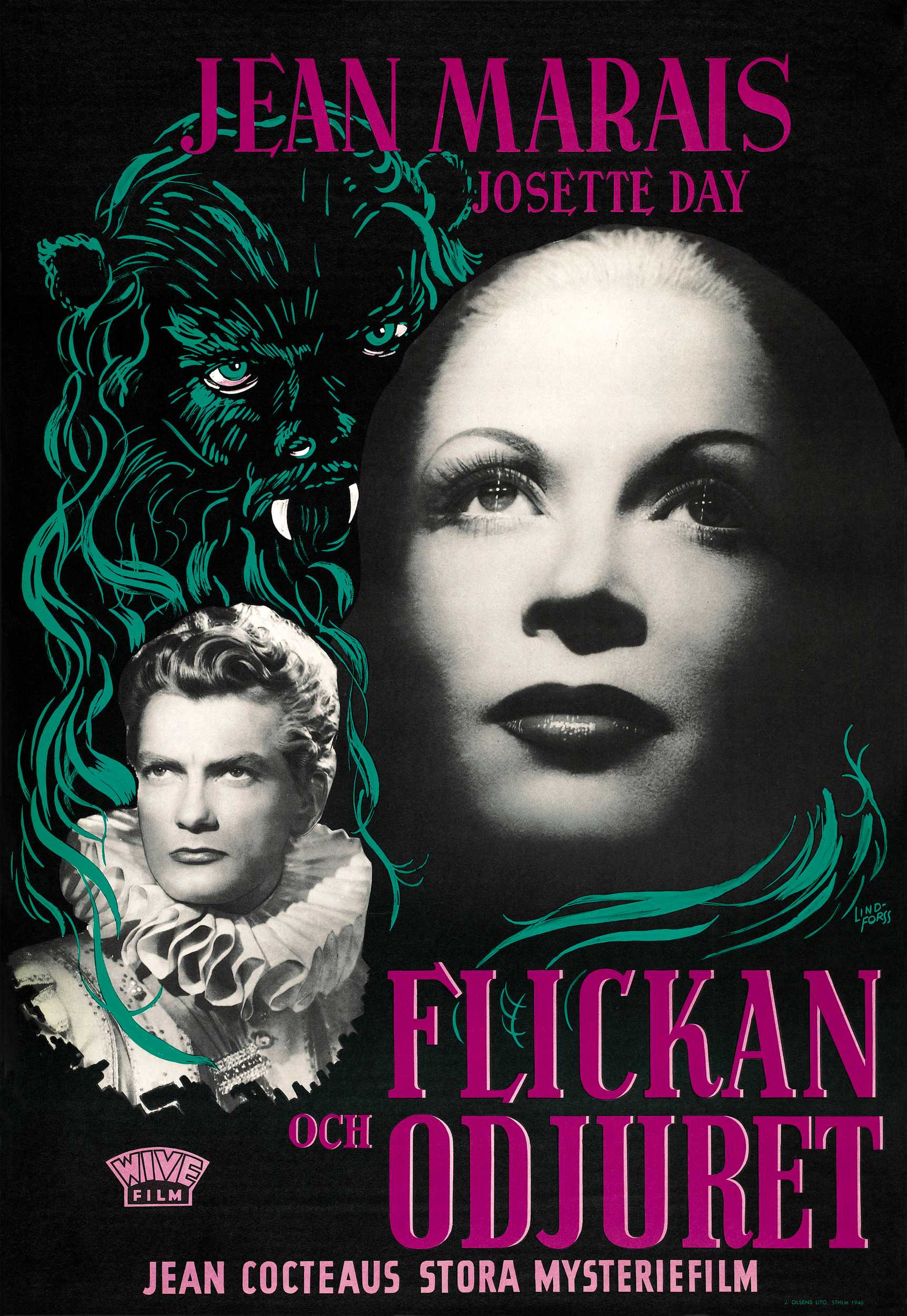
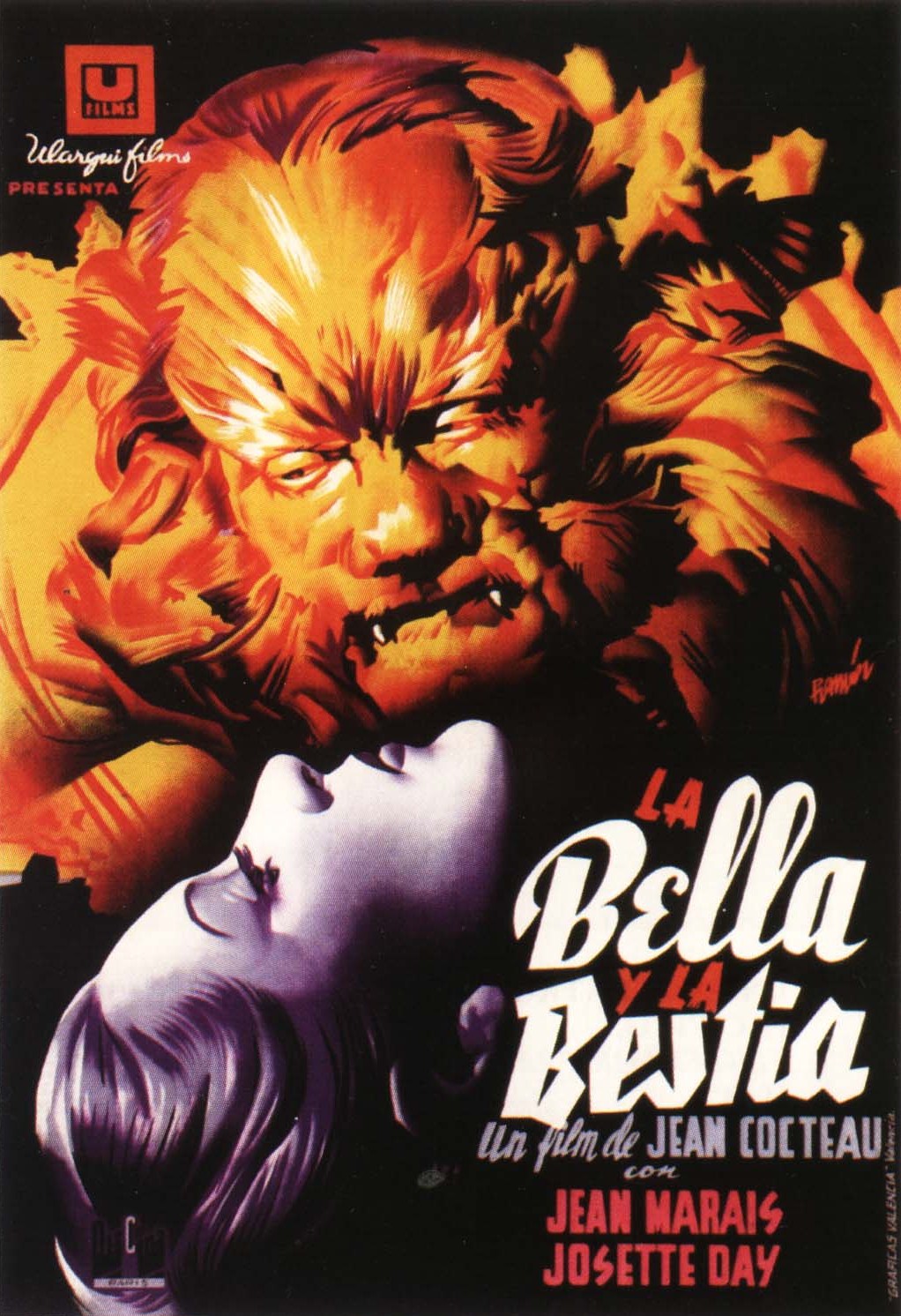
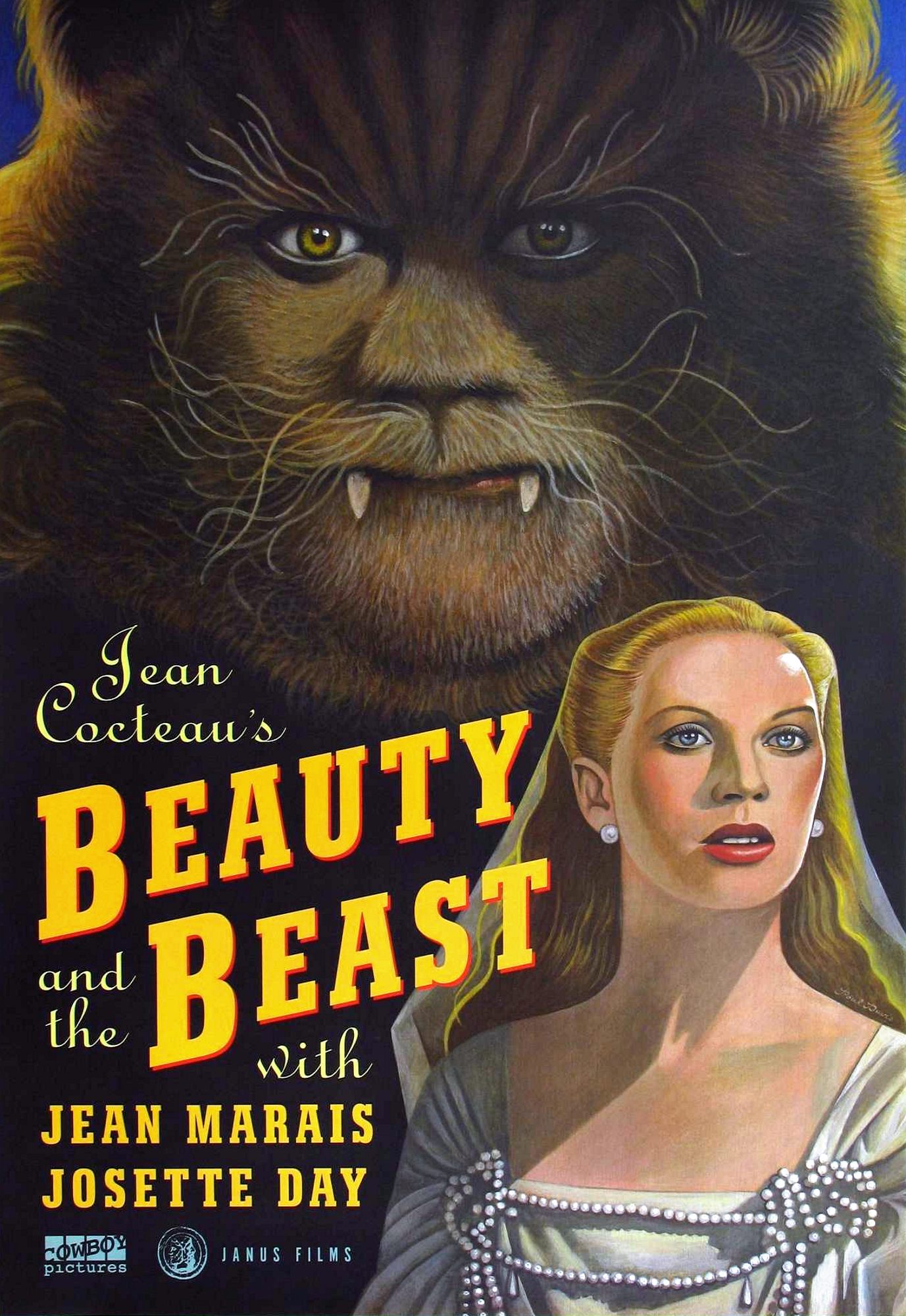
La Belle et la Bête posters

belle1.jpg

Clive’s posts last week about Cocteau’s La Belle et la Bête (here, here and here) sent me back to the film, a most welcome re-viewing. This in turn had me searching for copies of the posters of which these are some of the better examples. No dates or credits, unfortunately, although the French ones above and below look as though they may have been drawn by the film’s production designer, Christian Bérard. (Update: not Bérard, they’re the work of poster artist Jean-Denis Malclès.)

The style of Bérard’s drawings, and much of the film itself, had me thinking this time round of Hein Heckroth, Michael Powell’s favourite production designer whose sketches also had a painterly style. Powell and Pressburger’s The Red Shoes (with designs by Heckroth) appeared a couple of years after La Belle et la Bête although Powell doesn’t mention Cocteau at all in his autobiography so there’s no need to go looking for influences. Both films are based on fairy tales, of course. Powell shared Cocteau’s taste for fantasy and cinematic magic although the closest he gets to the story of Beauty and the Beast is Peeping Tom (1960), a film that contains little of either. By coincidence, Powell scholar Ian Christie calls Peeping Tom the director’s equivalent of Cocteau’s Le testament d’Orphée which was also released in 1960. But that’s a speculation for another day.

belle2.jpg

belle3.jpg

belle4.jpg

belle6.jpg

belle5.jpg

Previously on { feuilleton }
The writhing on the wall
Le livre blanc by Jean Cocteau
Cocteau’s sword
Cristalophonics: searching for the Cocteau sound
Cocteau at the Louvre des Antiquaires
La Villa Santo Sospir by Jean Cocteau

Weekend links 180

andrew.jpg

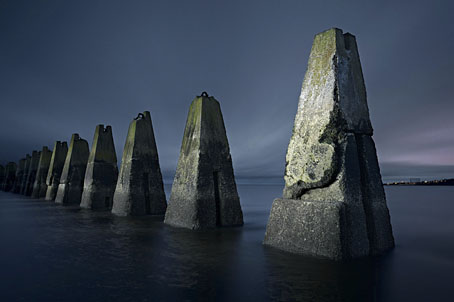
One of Jonathan Andrew‘s photos of coastal bunkers and concrete defences from the Second World War. In 2006 JG Ballard looked at the way these structures embody the functional nature of Modernist architecture.

• “Utamaro, whose prints of famous courtesans were regarded as the very models of sober beauty by 19th-century Western collectors, in fact produced more Shunga books and albums than non-erotic works.” Adrian Hamilton on the Shunga: Sex and Pleasure in Japanese Art exhibition.

• “…in Samoa, as in many traditional cultures around the world, androphilic males occupy a special transgendered category.” Alice Dreger on gay male couples and evolution.

• Robert Fuest’s film of Michael Moorcock’s first Jerry Cornelius novel, The Final Programme (1973), is out on (Region 2) DVD this month.

Masked by reticence and cloaked in tweeds, [Herbert] Read was the unexpectedly ardent and frighteningly prolific champion of nearly everything that was radical in the first half of the twentieth century: Imagism, Surrealism, abstraction, the Bauhaus, Marxism, anarchism, Freud and Jung, progressive education, Gandhian nonviolent resistance. Though now somewhat dimly remembered, he was, for decades, the Victoria Station of the arts, England’s primary explainer of the modern.

Eliot Weinberger introduces Herbert Read’s strange fantasy novel, The Green Child (1935).

• KW Jeter’s steampunk novel Fiendish Schemes is published (with my cover art) by Tor on the 15th. There’s an extract here.

• Mix of the week: An early Halloween mix (and interview) from Joseph Stannard of The Outer Church.

• At Dangerous Minds: Codex Seraphinianus: A New Edition of the Strangest Book in the World.

A trailer for the forthcoming Blu-ray release of Murnau’s Nosferatu: A Symphony of Horror.

• Kenneth Halliwell: lover, killer… artist? Philip Hoare on the collages of Joe Orton’s partner.

• Clive Hicks-Jenkins looks back at Cocteau’s La Belle et la Bête here, here and here.

Anastasia Ivanova‘s photo portraits of lesbian couples in Russia.

Christopher Fox on electronic music’s sound of futures past.

• At Strange Flowers: Melchior Lechter’s book designs.

Vaughan Oliver‘s favourite 4AD album covers.

Swinging Sixties Japanese film posters.

John Foxx’s favourite albums

Beauty And The Beast (1977) by David Bowie | Slow Motion (1978) by Ultravox | I Am The Green Child (2000) by Coil

Paris Qui Dort by René Clair

paris.jpg

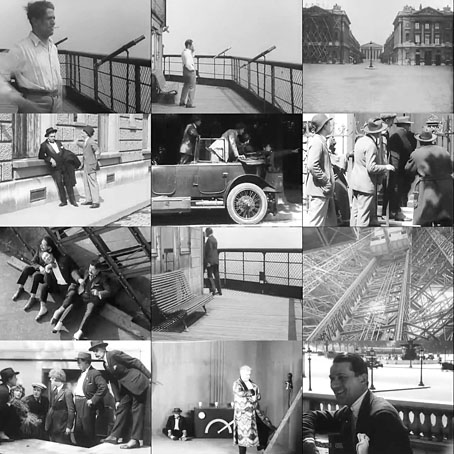
A half-hour comic science fiction film made the same year as Clair’s much more experimental Entr’acte (1924):

The young keeper of the Eiffel Tower awakes one morning and, from his vantage point at the top of the tower, finds that the whole of Paris is at a standstill. On descending the tower, he finds the streets are filled with stationary cars and motionless people. He meets up with a group of tourists who have just landed in a biplane at Paris airport. Unable to explain what has happened, they waste no time profiting from their situation – acquiring new clothes, jewels and wads of bank notes. But they soon grow tired of their new-found freedom and return, bored, to the Eiffel Tower. There, they receive a radio message from a girl, asking to be rescued. She claims to know what has happened to Paris…

Scenes of empty cities are always fun although the effect here is rather hit-and-miss when you glimpse distant cars moving down the streets. The film has French intertitles but the copy at Ubuweb includes a translation. The idea of using temporary stasis to commit robberies reminds me of Arthur C Clarke’s short story All the Time in the World in which someone uses a time accelerator to plunder the British Museum. The story was filmed for American TV in 1952, and may be watched here.

Previously on { feuilleton }
Entr’acte by René Clair

October

october1.jpg

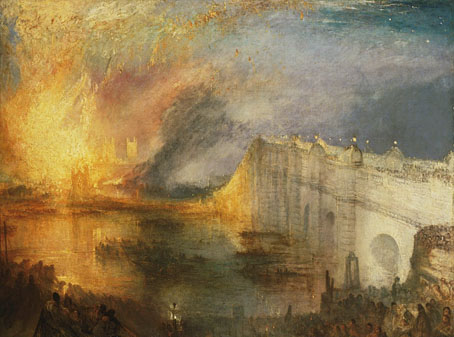
The Burning of the Houses of Lords and Commons, October 16, 1834 (1834 or 1835) by JMW Turner.

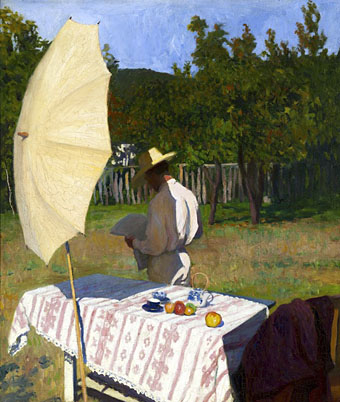
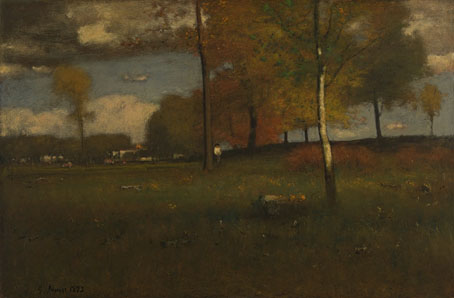
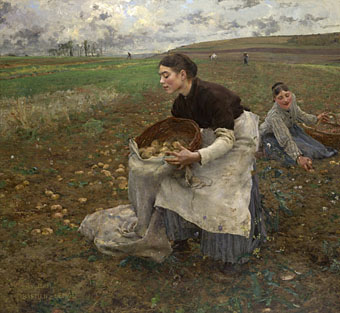
The tenth month of the year at the Google Art Project, or the Google Cultural Institute as it now calls itself.

october2.jpg

October (1903) by Károly Ferenczy.

october3.jpg

Near the Village, October (1892) by George Inness.

october4.jpg

October (1878) by Jules Bastien-Lepage.

october5.jpg

Poster for Sergei Eisenstein’s October (1928); Unidentified artist.