Early Kubrick

day_of_the_fight.jpg

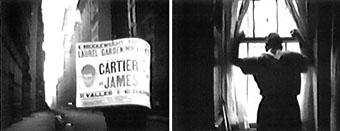
Before Stanley Kubrick’s first self-financed feature, Fear and Desire, there came two documentary shorts: Flying Padre and Day of the Fight. The latter is probably the best, not least for the way it connects to the noir ambience of the period (boxing dramas such as Body and Soul and The Set-Up) and points towards Kubrick’s own noir excursions, Killer’s Kiss (featuring a boxer as the lead character) and The Killing. Thanks to the miracle of the interweb you can now see this early Stanley gem for yourself in a reasonable copy, not crappy YouTube grain-o-vision. Grab it while you can.

a dvd-r recently arrived from an anonymous source. upon hitting ‘play’ i found it was none other than stanley kubrick’s 1951 debut ‘day of the fight’.

i initially considered taking it viral, but decided against that because i thought such anonymity would be an insult, modern american independent filmmaking began here. kubrick didn’t have dvds to study or final cut pro. at the age of 22, he taught himself and did it. and invented the trajectory of the kid who scraps it together and rises to greatness.

Day of the Fight (116MB mov)

Dunwich

dunwich.jpg

Christian Matzke writes to inform me that his short film, Dunwich, based on two HP Lovecraft stories, The Dunwich Horror and The Terrible Old Man, is in production, and that he and co-director Sarah Tarling used my Dunwich Horror adaptation as inspiration. I’m very pleased to hear this, of course, and look forward to seeing how their prequel to the events in Lovecraft’s story turn out. The film’s website has more information.

Hollywood goes lubki

lubok_terminator.jpg

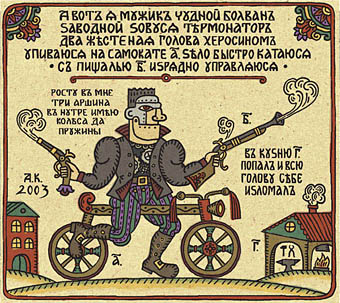
The Terminator

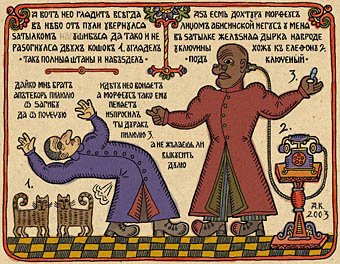
The lubki (sing. lubok), simple printed pictures coloured by hand and often called broadsides, popular prints, folk prints, folk etchings, or folk engravings, are a vivid and fascinating page in the history of Russian culture. Folk prints were known in many other countries (in the Far East as early as the eighth century and in Western Europe from the fifteenth); in Russia they appeared in the middle of the seventeenth century and survived until the beginning of the twentieth.

lubok_matrix.jpg

The Matrix

Impossible to trace the provenance of these things since the page they’re from is in Russian but they’re hilarious. I still haven’t worked out all the movies they’re supposed to be depicting but that’s part of the fun. Would be nice to have a translation of the inscriptions also.

Via BibliOdyssey.

Quite a performance

cammell.jpg

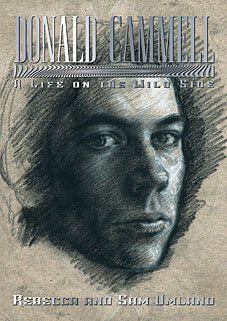
As mentioned earlier, I designed the jacket for this excellent biography of Donald Cammell some time ago. The book is reviewed in today’s (London) Times by Barry Miles.

Quite a performance
review by Barry Miles

DONALD CAMMELL: A Life on the Wild Side
by Rebecca and Sam Umland
FAB Press, £24.95 hardback, £16.95 paperback; 304pp

THERE IS A PERSISTENT rumour that after shooting himself in the head the filmmaker Donald Cammell lived on in a delirious, euphoric state for 45 minutes. The story is that he asked his wife China to place a mirror so that he could watch himself die and said: “Do you see the picture of Borges”? This is a reference to the death scene in Performance, his best known film, when the gangster Chas (played by James Fox) shoots the rock star Turner (played by Mick Jagger).

In a profoundly shocking sequence, the camera follows the bullet into his brain, only to find there a photograph of the Argentine author Jorge Luis Borges who is much quoted in the film. This is but one of the many myths surrounding Cammell that these authors debunk — he died the instant the .38 bullet entered his skull.

Continue reading “Quite a performance”

Dada at MoMA

dada.jpg

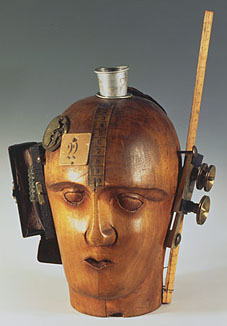
(left) “Mechanical Head (Spirit of Our Age)” by Raoul Hausmann.

‘Dada’ at MoMA: The Moment When Artists Took Over the Asylum

By MICHAEL KIMMELMAN
Published: June 16, 2006

NOW is as good a time as any for a big museum to take another crack at Dada, which arose in the poisoned climate of World War I, when governments were lying, and soldiers were dying, and society looked like it was going bananas. Not unreasonably the Dadaists figured that art’s only sane option, in its impotence, was to go nuts too.

“Total pandemonium” was how the sculptor Hans Arp reported the situation in 1916 at the great Cabaret Voltaire in Zurich, where Dada was born. “Tzara is wiggling his behind like the belly of an Oriental dancer. Janco is playing an invisible violin and bowing and scraping. Madame Hennings, with a Madonna face, is doing the splits. Huelsenbeck is banging away nonstop on the great drum, with Ball accompanying him on the piano, pale as a chalky ghost.”

I’m sure you had to be there.

Continue reading “Dada at MoMA”