Listen to the Colour of Your Dreams: Part Five

hippies.jpg

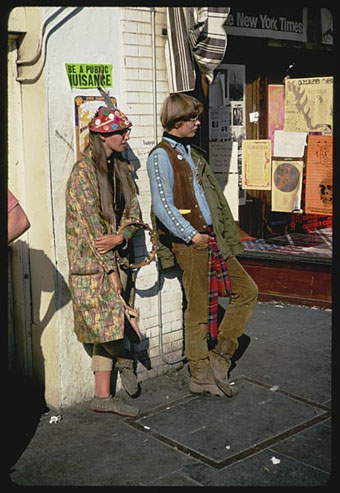
Haight Street hippies, San Francisco, Oct. 26, 1967. From the Charles W. Cushman Photograph Collection.

Continuing the psychedelic mega-mix based on Jon Savage’s list of “100 mind-expanding masterpieces” (see this post). The fifth of the six mixes is the second visit to the USA, and features songs from the years 1967 to 1968 arranged in chronological order. As before, the selections from the Savage 100 are in bold, and I’ve added notes about my additions or amendments.

Savage’s selections for the USA can be more arguable than those in the UK list. As I noted earlier, UK singles are easily identifiable for being effects-heavy studio creations. The US scene evolved out of the dance halls of San Francisco, the same halls that also fuelled the demand for all the trend-setting psychedelic poster art. Some of the bands could be just as adventurous in the studio but the sound at this point is more a transcription of the live performance. In other songs the “psychedelic” quality is a result of context, as with Otis Redding who played at the Monterey Pop Festival, and is singing here about the San Francisco Bay, but isn’t really a psychedelic artist.

US Psychedelia, Part Two by Feuilleton on Mixcloud

Radio ad — The Trip
The Glass Family — House Of Glass (The first song on the group’s only album.)
Kaleidoscope (US) — Egyptian Candy (The multi-generic multi-instrumentalists recorded a number of Middle Eastern-style pieces. This is one of the more obscure ones.)
Park Avenue Playground — The Trip (The wildest trip song of them all.)
The Red Crayola — Hurricane Fighter Plane (One of the few actual songs in the psychedelic soup of the group’s first album. This version is from a compilation.)
Jefferson Airplane — White Rabbit
Tim Buckley — Hallucinations
The Chocolate Watchband — In The Past (The Savage 100 has Are You Gonna Be There (At The Love-In). This replacement is by the “fake” Watchband assembled by producer Ed Cobb to fill out a side of the group’s second album. Real or fake, I always liked the song.)
Big Brother and the Holding Company — Piece Of My Heart (The Savage 100 has Ball And Chain.)
The West Coast Pop Art Experimental Band — Smell of Incense (A great song by a group who never sound as experimental as their name implies.)
The Third Bardo — Five Years Ahead Of My Time
Painted Faces — Anxious Colour
The Beau Brummels — Magic Hollow
Buffalo Springfield — Broken Arrow
The Strawberry Alarm Clock — Incense And Peppermints
Love — The Red Telephone
The Byrds — Change Is Now
Otis Redding — (Sittin’ On) The Dock Of The Bay
The Balloon Farm — A Question Of Temperature
Sly & The Family Stone — Dance To The Music
Quicksilver Messenger Service — Pride Of Man
The Monkees — Porpoise Song (The Monkees at their most tripped-out. A song by Goffin & King that plays over shots of Micky Dolenz swimming with solarised mermaids during the opening of their feature film, Head.)

Previously on { feuilleton }
Listen to the Colour of Your Dreams: Part Four
Listen to the Colour of Your Dreams: Part Three
Listen to the Colour of Your Dreams: Part Two
Listen to the Colour of Your Dreams: Part One
What Is A Happening?
My White Bicycle
Ogdens’ Nut Gone Flake
Tomorrow Never Knows
The Dukes declare it’s 25 O’Clock!
A splendid time is guaranteed for all
Weekend links 244

scarpulla.jpg

MMOB :: Far West (2013) by Alison Scarpulla.

• “…although same-sex love is as old as love itself, the public discourse around it, and the political movement to win rights for it, arose in Germany in the late nineteenth and early twentieth centuries. This message may surprise those who believe that gay identity came of age in London and New York, sometime between the Oscar Wilde trials and the Stonewall riots.” Alex Ross reviewing Robert Beachy’s Gay Berlin: Birthplace of a Modern Identity. Beachy talks about his book here.

• “I was in a room with tube synthesizers, where you had to tune them up to play them. It was unbelievable.” John Carpenter talking to Joseph Stannard about composing with electronics. Carpenter’s album of new music, Lost Themes, may be previewed here.

• From 2010: John Ridpath on Mervyn Peake’s illustrations for Lewis Carroll’s Alice Through the Looking Glass and Alice in Wonderland. Related: “The most twisted version of Alice in Wonderland you’ll ever see.”

I was brought up in a world where art was something owned and insured—usually inherited: but seldom if ever made by anyone one I knew.

I had an early inkling that there was fun to be had over the hill, like the feeling when faced with a sunset that someone’s throwing a mega awesome party just beyond the nearest cloud, and I set off to join the caravan. Let’s just say I was in search of company, headed towards the glow, and I found it.

Tilda Swinton‘s speech at the Rothko Chapel

• “Her art often touches on alchemy and magic; and in her memoir of insanity she writes of misreading an Imperial Chemicals sign as ‘chemistry and alchemy’.” Charlotte Higgins on Leonora Carrington.

Shadows Over Main Street, an anthology of small-town Lovecraftian terror, is out this week from Hazardous Press. 20 stories and poems plus interior illustrations including a contribution of my own.

• “With Fantastic Planet, I felt torn about using it, because it’s…the title of an animated film.” Guitarist Sarah Lipstate, aka Noveller, talks to Ned Raggett about her new album.

Jim Jupp of Belbury Poly and the Ghost Box record label answers 15 questions.

• A DeLorean driving through a Tron cityscape: Retrowave by Florian Renner.

• Powell & Pressburger’s Tales of Hoffmann (1951) has been restored.

Music from Forbidden Planet (1956) by Louis & Bebe Barron | The Four Horsemen (1972) by Aphrodite’s Child | Assault on Precinct 13 (Main Theme) (1976) by John Carpenter

January

january2.jpg

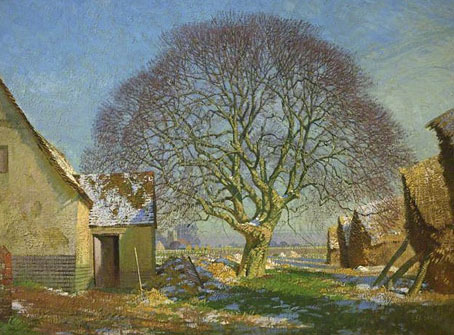
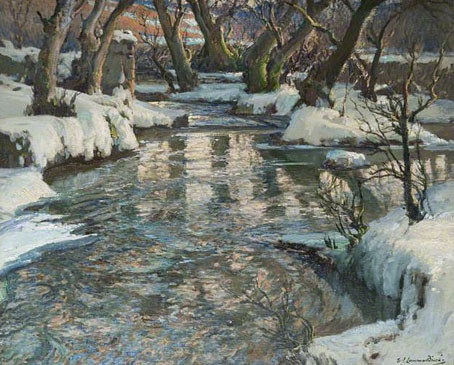
January, Where Daffodils Lie Sleeping (no date) by Samuel John Lamorna Birch.

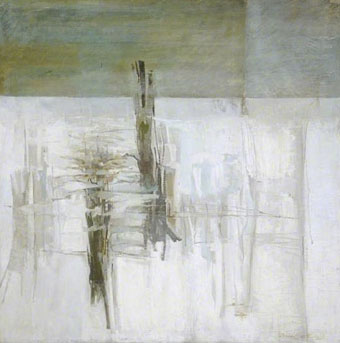
One day left to post some more January paintings. These are mostly British scenes, and the snowier ones give a good sense of how it’s been here for the past few days.

january8.jpg

Morning in January (no date) by Gerald Gardiner.

january6.jpg

January (1960) by Denis Booth.

Continue reading “January”

Autobahnen

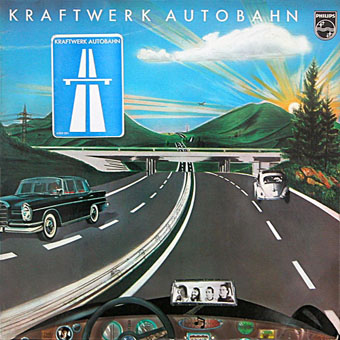
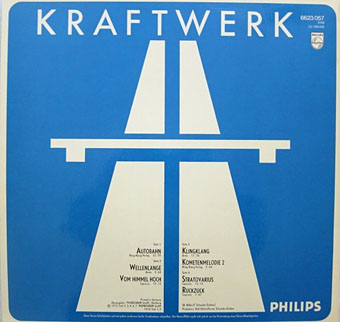
1: Autobahn (1974), an album by Kraftwerk.

autobahn01.jpg

Cover art by Emil Schult.


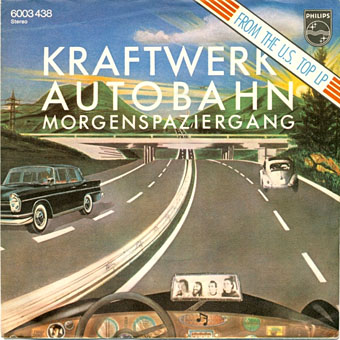
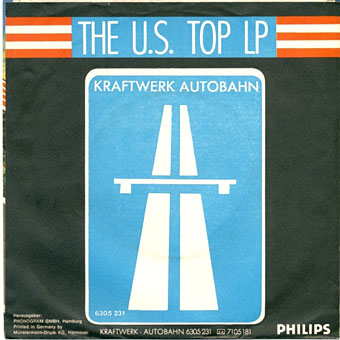
2: Autobahn (1974), a single by Kraftwerk.

autobahn09.jpg

autobahn10.jpg


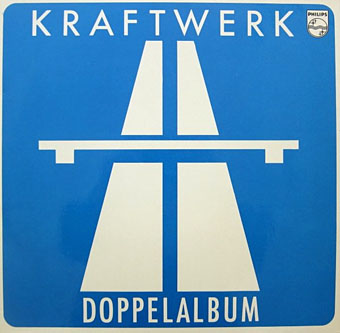
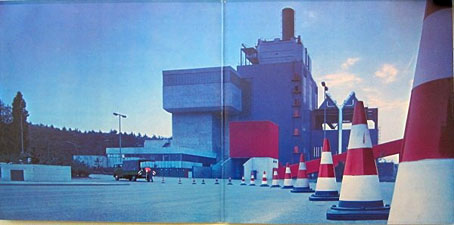
3: Doppelalbum (1974), a double-disc compilation album by Kraftwerk.

autobahn11.jpg

autobahn12.jpg

autobahn13.jpg


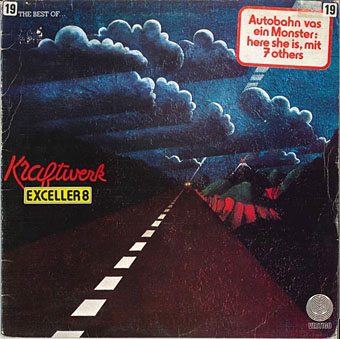
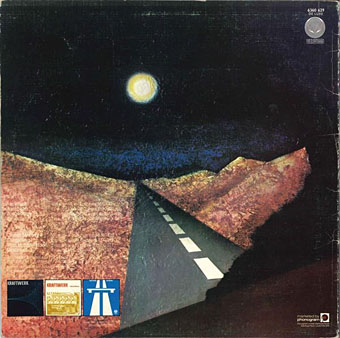
4: Exceller 8 (1975), a compilation album by Kraftwerk.

autobahn14.jpg

Cover by Grafad.

autobahn15.jpg


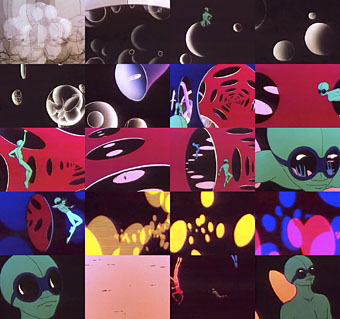
5: Autobahn (1979), an animated film by Roger Mainwood.

autobahn17.jpg


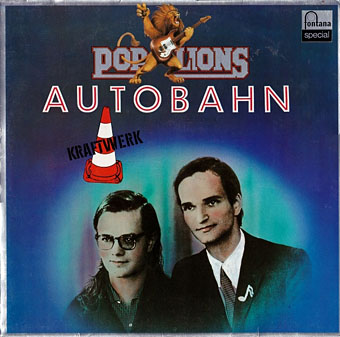
6: Autobahn (1980), a compilation album by Kraftwerk.

autobahn08.jpg


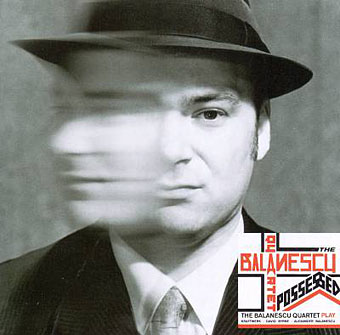
7: Possessed (1992), an album by the Balanescu Quartet. Track 3: Autobahn.

autobahn07.jpg


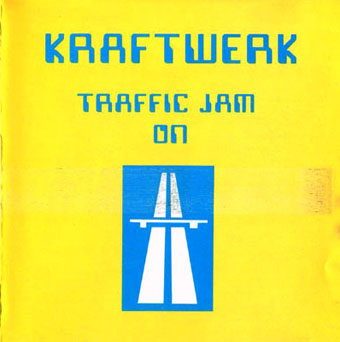
8: Traffic Jam On Autobahn (1993), a Kraftwerk bootleg from a live soundboard recording at Hummingbird, Birmingham, UK, on July 15th 1991.

autobahn02.jpg


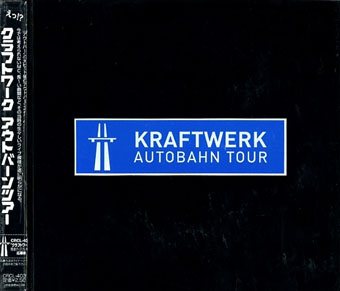
9: Autobahn Tour (1998), a Kraftwerk bootleg. The Japanese release of Concert Classics, a live soundboard recording from a concert in Denver, USA on 20th May, 1975.

autobahn05.jpg


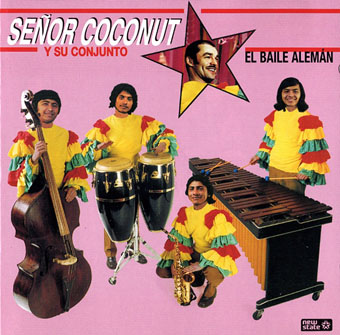
10: El Baile Alemán (2000), an album by Señor Coconut Y Su Conjunto. Track 6: Autobahn (Cumbia Merengue).

autobahn04.jpg


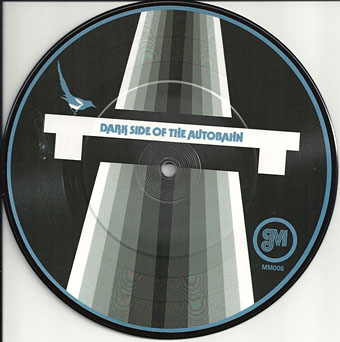
11: Dark Side Of The Autobahn (2003), a single by Mordant Music. The Pink Floyd/Kraftwerk/Joy Division collision that the world was waiting for.

autobahn06.jpg


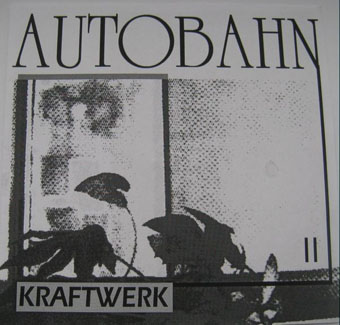
12: Autobahn II (no date) by Kraftwerk. A Russian flexi-disc.

autobahn03.jpg


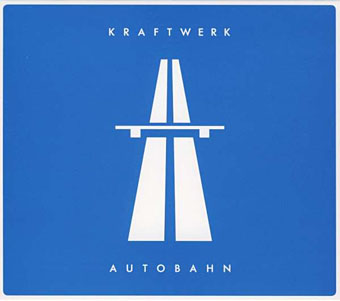
13: Autobahn (2009), an album by Kraftwerk. The remastered release.

autobahn16.jpg

Elsewhere on { feuilleton }
The album covers archive

Previously on { feuilleton }
Ralf and Florian
Reworking Kraftwerk
Autobahn animated
Sleeve craft
Who designed Vertigo #6360 620?
Old music and old technology
Aerodynamik by Kraftwerk

Alphonse Mucha record covers

mucha01.jpg

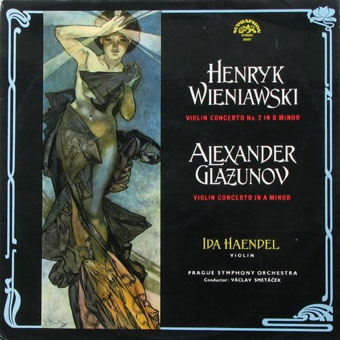
Henryk Wieniawski / Alexander Glazunov: Violin Concerto No. 2 In D Minor / Violin Concerto In A Minor (1965); Ida Haendel, Prague Symphony Orchestra, Václav Smetácek. Artwork: Morning Star (1902).

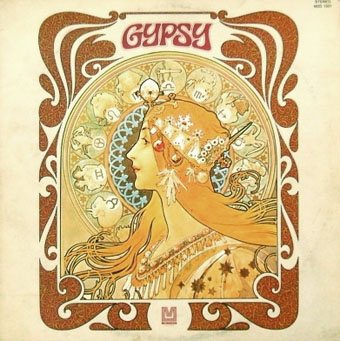
Continuing an occasional series about artists or designers whose work has been used on record sleeves. Note that this is a selection of works by Alphonse Mucha only. Pastiches of the Mucha style are plentiful, and some—like Barney Bubbles’ cover for Space Ritual by Hawkwind—are very familiar, but I’ll leave it to someone else to go looking for those.

mucha04.jpg

Gypsy (1970) by Gypsy. Artwork: La Plume: Zodiac (1896).

mucha02.jpg

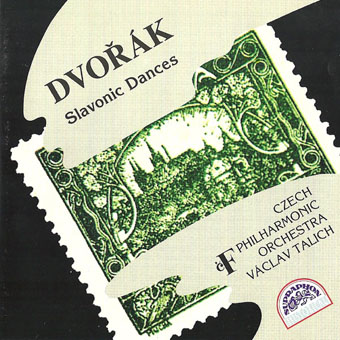
Dvorák: Slavonic Dances (1993); Czech Philharmonic Orchestra, Václav Talich.

Mucha is one of the most celebrated of all Czech artists so it’s no surprise his work appears on releases from Czech label Supraphon. This is one of a series of orchestral recordings that use a Mucha postage stamp for the cover art.

Continue reading “Alphonse Mucha record covers”