Steinlen’s cats revisited

steinlen01.jpg

Chris Marker’s feline obsession was oft-remarked: cats feature regularly in his films, and in later years he’d often send a picture of a cat to anyone requesting a portrait photo. The Immemory CD-ROM features his cartoon avatar/companion/alter-ego Guillaume, a character who later manifested in three dimensions in Marker’s corner of Second Life.

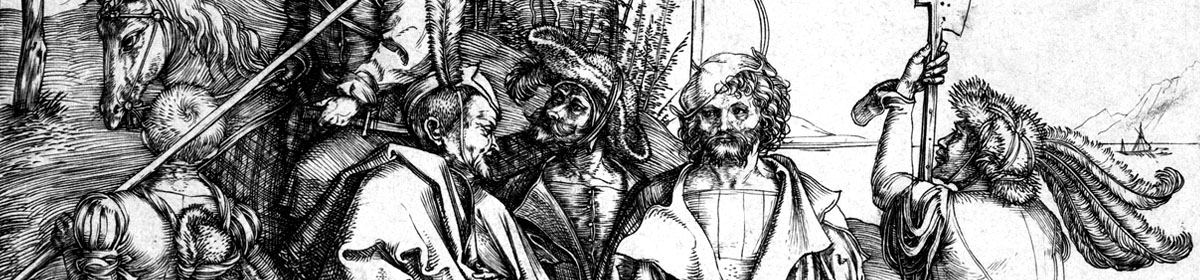
All of which had me thinking about another Parisian cat obsessive, artist Théophile Alexandre Steinlen (1859–1923). I’ve written about Steinlen’s cats before, one of which, his Chat Noir poster of 1896, is now a permanent fixture in the tourist shops of the city. Parisians are probably sick of the sight of that particular animal although I imagine Marker would have liked Steinlen’s other cats which range from fine art studies to cartoony sketches. All the examples here are from L’oeuvre gravé et lithographié de Steinlen, a catalogue of the artist’s print work from 1913. The song Ronde Des Marmites concerns the grey cats of Montmartre. At the end of the post there’s an other nod to Monsieur Marker (and Edward Lear) with a trio of Steinlen owls.

steinlen02.jpg

steinlen03.jpg

steinlen04.jpg

Continue reading “Steinlen’s cats revisited”

Chris Marker, 1921–2012

chrismarker.jpg

“A recurrent rumour says that Chris Marker and the cat Guillaume-en-Egypt sank with the Titanic.” Photo credited to Wim Wenders.

In our moments of megalomaniacal reverie, we tend to see our memory as a kind of history book: we have won and lost battles, discovered empires and abandoned them. At the very least we are the characters of an epic novel (“Quel roman que ma vie!” said Napoleon). A more modest and perhaps more fruitful approach might be to consider the fragments of memory in terms of geography. In every life we would find continents, islands, deserts, swamps, overpopulated territories and terrae incognitae. We could draw the map of such a memory and extract images from it with greater ease (and truthfulness) than from tales and legends. That the subject of this memory should be a photographer and a filmmaker does not mean that his memory is essentially more interesting than that of the next man (or the next woman), but only that he has left traces with which one can work, contours to draw up his maps.

Chris Marker, introductory notes to Immemory (2002)

Memory is the key word: it’s at the heart of Chris Marker’s most well-known films, his science fiction short La Jetée (1962), and the feature-length film-essay Sans Soleil. Both those films reference Hitchcock’s Vertigo, a film concerned with layered memories, both real and invented. Memory also comprises the subject of Marker’s most ambitious work from his later years, the CD-ROM Immemory, a unique creation which few will have experienced since it appeared after the great wave of ROM-mania in the 1990s, and was also Mac-only at a time (2002) when Macs were even more of a minority concern than they are today. My own copy is now unusable since it only runs on the outmoded OS 9 system (later copies were upgraded to OS X), leaving me with nothing but memories of Immemory and a box which sports a still from Vertigo among its cover images. The loss is regrettable but somehow fitting, and there’s a lesson here about impermanence for all you boys and girls planning bright new iPad apps. La Jetée is the film that receives the most attention, made on a budget that even when adjusted forward wouldn’t have covered the catering costs on Inception, it was one of JG Ballard’s favourites, and the source (of course) for Terry Gilliam’s Twelve Monkeys. But it’s to Sans Soleil that I always return, a place where the complex interleaving of documentary footage and fictional—or is it?—narration proves endlessly rewarding.

marker.jpg

The Beckoning Cats from Sans Soleil (1983).

Chrismarker.org: an essential resource
Chris Marker’s YouTube channel
Chris Marker interviewed by Samuel Douhaire and Annick Rivoire in 2003
The New Yorker: In Memoriam: Chris Marker by Richard Brody
Guardian obituary by Ronald Bergan
Telegraph obituary
Things That Quicken The Heart: Chris Marker’s Sans Soleil by David Moats
The Humanists: Chris Marker’s Sans Soleil by Colin Marshall
Brian Dillon on La Jetée

Previously on { feuilleton }
Junkopia
Penguin Labyrinths and the Thief’s Journal
Monsieur Chat
Sans Soleil

m_chat.jpg

Weekend links 119

peterderome.jpg

The BFI’s recent DVD release of Peter de Rome’s gay porn films has been mentioned here a couple of times already but I only bought a copy this week. It’s a remarkable release for a number of reasons, not least for showing how much attitudes towards pornography in Britain have changed in recent years. De Rome’s films are explicit enough to ensure that in the 1970s and 1980s anyone caught selling them in the UK might have been imprisoned. That you can now buy them uncut from a high street shop on a disc packaged with the usual care by the British Film Institute means another small part of our iniquitous past has gone for good. Among the extras there’s a documentary with the 88-year-old director discussing his work. This week he talked to BUTT magazine who also have one of his shorter films from the DVD, Hot Pants, on their site.

• “Reading this book, it is hard not to feel that the largest mental health problem – the really crazy thing – is society’s attitude to drugs in general and LSD in particular…” Phil Baker reviews Albion Dreaming: A Popular History of LSD in Britain by Andy Roberts.

• “Loved by aristocrats and immortalized in literature, Denham Fouts remains virtually unknown in his own hometown.” Richard Wall on The World’s Most Expensive Male Prostitute.

The very etiology of rabies is mythic: once the bite heals and the virus has traveled to the brain, “the wound will usually return, as if by magic, with some odd sensation occurring at the site.” Then there’s the fact that no definitive diagnosis can be made without taking a biopsy of the sick animal’s brain, leaving only one gory solution: decapitation.

Rabies is horror’s muse. In almost all iterations of the genre, those we most trust suddenly turn strange: a boyfriend morphs into a wolf at midnight, a fiancé turns out to be harboring a mad first wife in the attic, a friend is bit by a zombie and goes berserk.

Alice Gregory reviews Rabid: A Cultural History of the World’s Most Diabolical Virus by Bill Wasik and Monica Murphy.

• The Horror of Philosophy: Erik Davis talks to Eugene Thacker about Lovecraft, medieval mysticism, and thinking the world-without-us.

Eagle Scouts Returning Our Badges: A Tumblr for those protesting the current anti-gay stance of the Boy Scouts of America.

• His Father’s Best Translator: Lila Azam Zanganeh on the late Dmitri Nabokov.

Les Liaisons dangereuses: illustrations by Alastair (Hans Henning Voigt).

• Andrea Scrima looks at Robert Walser’s Der Spaziergang (The Walk).

10 Great Places to Meet Lesbians If You Have a Time Machine.

• Jesse Bering in Scientific American asks “Is Your Child Gay?

As Above, So Below (1981) by Tom Tom Club | Genius Of Love (1981) by Tom Tom Club | Mea Culpa (1981) by Brian Eno & David Byrne.

Weekend links 118

owczarek.jpg

The Garden of Urban Delights (2010) by Marcin Owczarek.

His protagonists are misfits: alienated, implicitly gay, longing for love, frequently hard to be around, always fixated on small pleasures that compensate for an essential feeling of not belonging. […] His patroness Edith Sitwell termed him “that rare being, a born writer.” William Burroughs dedicated The Place of Dead Roads to him, declaring Welch “certainly the writer who most directly influenced my work.” John Waters has called In Youth is Pleasure “so precious, so beyond gay, so deliciously subversive, [it] is enough to make illiteracy a worse social crime than hunger.”

Sadie Stein on Denton Welch, a writer I’m embarrassed about still not having read. Edith Sitwell and William Burroughs had a famously disputatious correspondence in the pages of the TLS over The Naked Lunch. An appreciation of Welch’s work was one of the few things they had in common.

• Don’t mention guitars: Robert Hampson on acousmatic music, the curse of Loop and the rebirth of Main.

• No Straight Lines: A Collection Of Queer Comics part one, part two, part three. A history by Justin Hall.

Pieces Of Gold by The Aikiu: shots from gay porn videos repurposed via some smart editing.

• RIP İlhan Mimaroğlu, electroacoustic composer. Ubuweb has a selection of his recordings.

“A good ground rule for writing in any genre is: start with a form, then undermine its confidence in itself,” he says. “Ask what it’s afraid of, what it’s trying to hide – then write that.” For Harrison, the most satisfying writers are “at odds with their cultural context. They’re trying to fit in and failing, or they’re trying to remove themselves and failing. The attempt to resolve the conflict is an angle – a frame or a context – in itself.”

The Guardian’s A Life in Writing profiles M. John Harrison. His new novel, Empty Space, was published on Thursday. There’s also this recent video interview with Arc magazine.

• Stephen Usery interviews editor Russ Kick about The Graphic Canon: Volume One.

At home with Prince Zaleski, the “most decadent and imperial detective in fiction”.

• A Visit with Magritte: photographs by Duane Michals.

Loitering airships could dispense drones on demand.

• Creating a Forever Object: Ian Schon’s Pen Project.

• A Tumblr for the late, lamented Arthur Magazine.

• “Few cities can boast a railway line for the dead.”

The Lost Tapes by Can: An Oral History.

Space Reflex (1963) by Dick Hyman & Mary Mayo | Space Is Deep (1972) by Hawkwind | Space Is The Place (1973) by Sun Ra | Space Moment (1995) by Stereolab | Space Pong (2006) by T++

Un Chant d’Amour (nouveau)

chant.jpg

A brief homage by Sam Scott Schiavo to Genet’s masterwork of homoerotic cinema Un Chant d’Amour (1950). Genet’s film works so well, and is so closely tied to his artistic obsessions, it’s difficult to approach but it’s good to see it still wields an influence. For comparison the original film can be watched at Ubuweb.

Previously on { feuilleton }
Jean Genet… ‘The Courtesy of Objects’
Querelle again
Saint Genet
Emil Cadoo
Exterface
Penguin Labyrinths and the Thief’s Journal
Un Chant D’Amour by Jean Genet