Fracture by Paul and Gaëtan Brizzi

fracture1.jpg

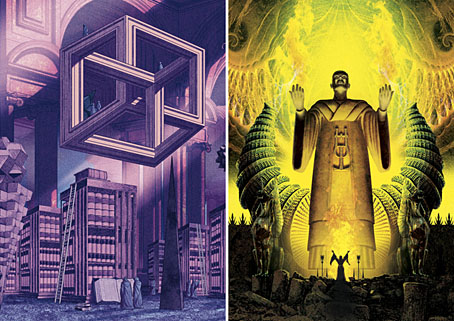
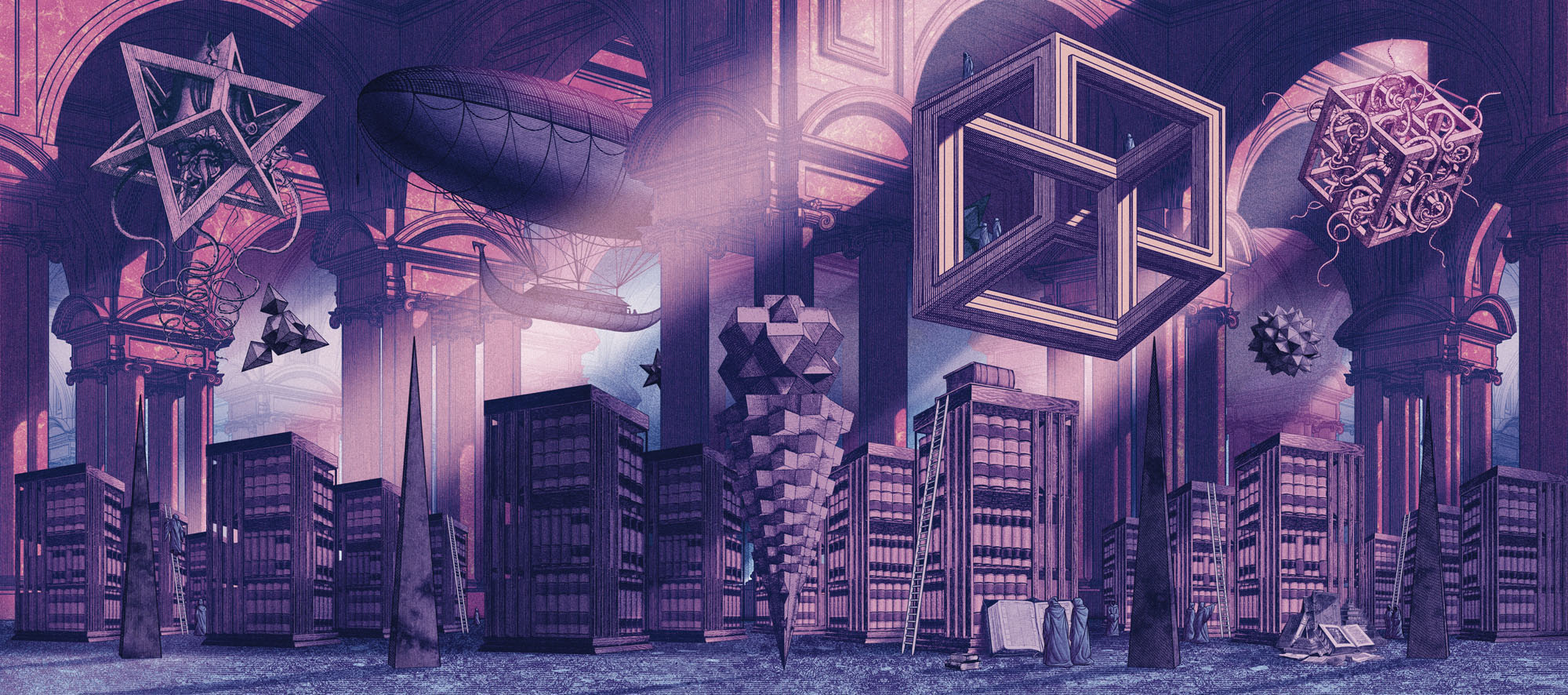
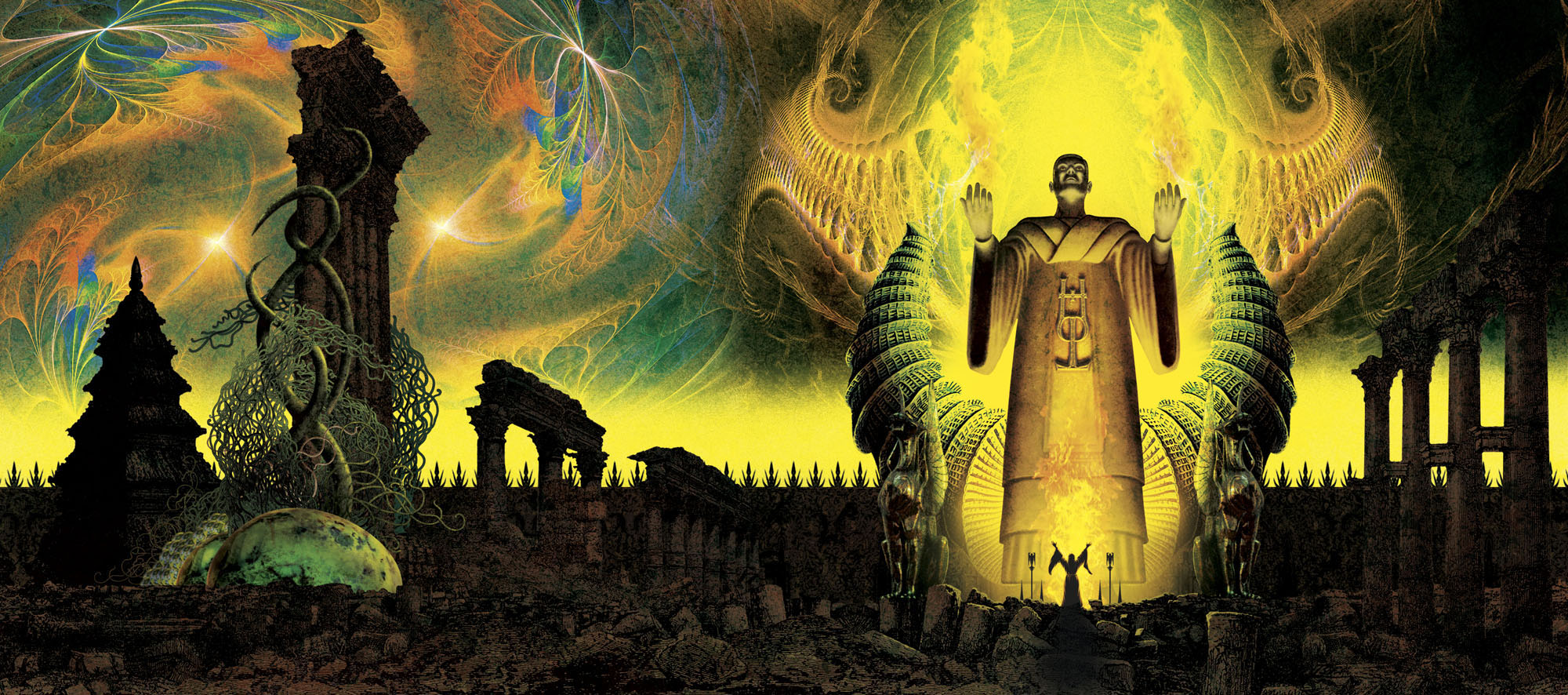
Fracture (1977) is a short animated film from France by the Brizzi Brothers (Paul and Gaëtan), a duo better known for their work on feature-length animated films such as Asterix versus Caesar (1985), and a number of films for Disney. Fracture is their earliest work, and isn’t remotely Disney-like, delivering an SF/fantasy scenario of alien inexplicabilities that makes it an animated counterpart of the comic strips that were running in Métal Hurlant (and its US counterpart, Heavy Metal) in the late 1970s. (The Brizzi Brothers’ most recent works have been comic books so I’d be surprised if Fracture didn’t have comics influence.)

fracture2.jpg

Comics and animation have a considerable advantage over film and TV in being able to avoid the commercial imperatives that explain away mysteries and make the alien too familiar. Animation doesn’t exploit this advantage as often as it might so examples such as Fracture are all the more rare and valuable. The Brizzi Brothers’ film may not be as thoroughly strange and inexplicable as Piotr Kamler’s masterpiece, Chronopolis (1983), but it has its moments. As a bonus, the soundtrack is lifted from albums by Tangerine Dream and Edgar Froese which have been monopolising my waking hours for the past two weeks.

Previously on { feuilleton }
The Captive, a film by René Laloux
Continu-discontinu 2010, a film by Piotr Kamler
L’Araignéléphant
Le labyrinthe and Coeur de secours
Chronopolis by Piotr Kamler

Weekend links 470

genso.jpg

A rail station in ruins by Tokyo Genso. From a series of views of Tokyo showing a ruined and abandoned city.

• Old music technology of the week: The EKO ComputeRhythm, a programmable drum machine from 1972 used by Chris Franke (who didn’t like the sounds so he used it to trigger other instruments), Manuel Göttsching (the rhythms on New Age Of Earth), and Jean-Michel Jarre (on Equinoxe); and Yuri Suzuki‘s digital reconstruction of Raymond Scott’s Electronium.

• At Dennis Cooper’s: Spotlight on…Ishmael Reed Mumbo Jumbo (1972), and DC’s favourite fiction, poetry, non-fiction, film, art, and internet of the year so far. Thanks again for the link here!

• “Pauline told her to shove her shyckle up her khyber.” Philip Hensher on the origins and revival of Polari, the secret gay argot. Related: a Polari word list, plus other links.

In Star, Mishima fuses his major theme of the mask, the public role all humans are destined to play out, with the theme of suicide, an act which Mishima considered a work of art. All of his work is punctuated by suicide, and it is peopled with masks, with people knowing they are nothing but masks, who are aware that the center doesn’t hold because there is no center, that character is a flowing fixture, a paradoxical constancy and a definite variable, always.

Jan Wilm on Star, a novella by Yukio Mishima receiving its first publication in English

• “How have these places managed to transform from monuments to atrocity and resistance into concrete clickbait?” Owen Hatherley on the popularity of spomeniks.

• The late George Craig on translating the scrawl of Samuel Beckett’s letters (written in French) into coherent English.

• Outsider Literature, Part 1: a Wormwoodiana guide by RB Russell.

• Mix of the week: Secret Thirteen Mix 291 by Arturas Bumsteinas.

Symbiose, a split album by Prana Crafter and Tarotplane.

Robby Müller’s Polaroids

Apollo 11 in Real-time

Tokyo Shyness Boy (1976) by Haruomi Hosono | Tokyo (1979) by Jean-Claude Eloy | Tokyosaka Train (2002) by Funki Porcini

Jan Švankmajer: The Animator of Prague

svankmajer.jpg

“Surrealism is not aesthetics. It is a philosophy,” says Jan Švankmajer in James Marsh’s short (25 mins) portrait for the BBC from 1990. This was broadcast at a time when Švankmajer’s films were receiving more attention in the UK than they had before or since, thanks in part to Channel 4’s screening and funding of animation, and to the late Michael O’Pray, a film writer and champion of avant-garde cinema. O’Pray is the main commentator here apart from Švankmajer himself, and his name was a regular fixture of any writing about Švankmajer or the Brothers Quay in the 1980s. Švankmajer’s films were featured in at least two of the touring programmes of short films that O’Pray put together for Film and Video Umbrella in the late 1980s, so its good to see his enthusiasm memorialised in this way, even if it is stuck on a rather temperamental Korean website. In addition to discussion of the influence of Bohemian emperor Rudolf II on Švankmajer’s work we also see the director filming his latest short, The Death of Stalinism in Bohemia; a rare glimpse behind the camera. (Note: the video wouldn’t load for me but the stream is downloadable if you’re determined to see it.)

Previously on { feuilleton }
Jan Švankmajer, Director
Don Juan, a film by Jan Švankmajer
The Pendulum, the Pit and Hope
Two sides of Liška
The Torchbearer by Václav Švankmajer

Weekend links 469

X.jpg

X from Theodore Howard’s ABC (1880) by Theodore Howard.

• “[Parade] has everything: joy and sadness, get-down and wistfulness, mourning and melancholia, group funk and Debussy interludes, echoes of Ellington, Joni, film music, chanson. It’s a perfectly realised whole.” Ian Penman on the enigmas and pleasures of Prince.

• “Mescaline reads like the culmination of a lifetime’s wanderings in the very farthest outposts of scientific and medical history.” Ian Sansom review’s Mike Jay’s history of the psychedelic alkaloid.

• The Day the Music Burned by Jody Rosen: “It was the biggest disaster in the history of the music business—and almost nobody knew. This is the story of the 2008 Universal fire.”

This willing constriction of intellectual freedom will do lasting damage. It corrupts the ability to think clearly, and it undermines both culture and progress. Good art doesn’t come from wokeness, and social problems starved of debate can’t find real solutions. “Nothing is gained by teaching a parrot a new word,” Orwell wrote in 1946. “What is needed is the right to print what one believes to be true, without having to fear bullying or blackmail from any side.” Not much has changed since the 1940s. The will to power still passes through hatred on the right and virtue on the left.

George Packer on what George Orwell’s Nineteen Eighty-Four means today

• Having spent the past week watching Jacques Rivette’s 775-minute Out 1, this interview with Rivette from 1974 was of particular interest.

• At Dangerous Minds: Donald Sutherland as “a sperm-filled waxwork with the eyes of a masturbator” in Fellini’s Casanova.

The Adventures of the Son of Exploding Sausage (1969): the Bonzo Dog Band getting it untogether in the country.

• Dark, velvety dark: Nabokov’s discarded ending to Camera Obscura, introduced by Olga Voronina.

• “Spotify pursues emotional surveillance for global profit”, says Liz Pelly.

• Mix of the week: Then Space Began To Toll by The Ephemeral Man.

• An interview with master of horror manga Junji Ito.

• Announcing the Arthur Machen Essay Prizes.

• RIP film-maker and author Peter Whitehead.

X is for…

X Offender (1976) by Blondie | X-Factor (1981) by Patrick Cowley | X-Flies (1997) by Mouse On Mars

Fantasmagie

fantasmagie01.jpg

Another post with a Belgian theme (a coincidence despite my present preoccupation with Franco-Belgian culture), and another that has to be filed under “further research required”. The splendidly titled Fantasmagie was founded by author Serge Hutin and artist Aubin Pascale, and was the newsletter/review for the Centre International pour l’étude de l’Art Fantastique et Magique. 52 issues were published from 1959 to 1979 charting the Belgian continuation of the Surrealist project.

fantasmagie02.jpg

I’d been hoping there might be a collection of all the issues online somewhere but this isn’t the case to date. However, the first 11 issues may be browsed in full at Scribd or downloaded if you use one of the PDF scrapers (search for “Scribd free”). Each issue showcases art by contemporary Surrealists or practitioners of what Ernst Fuchs called Fantastic Realism, all of which was of little interest to the art establishment of the time so from our perspective the artists are fresh discoveries. Issue 8, which is a collage special, is especially good.

fantasmagie03.jpg

fantasmagie04.jpg

Continue reading “Fantasmagie”