Weekend links 479

hinge.jpg

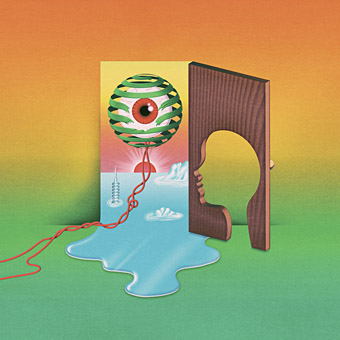
Cover art by Mike Hinge.

• “[The Family] is an unforgettable fusion of journalism and poetic prose that still holds up precisely because it has no use for category, for genre, or for being anything other than its own unique, obsessive self.” Sarah Weinman on how Ed Sanders wrote the definitive account of the Manson murders.

• “The best-known detail of Sartre’s bad trip is Simone de Beauvoir’s anecdote of him being haunted for weeks after by lobster-like creatures scuttling just beyond his field of vision.” Mike Jay on Jean-Paul Sartre (and Walter Benjamin) under the influence of mescaline.

• The MGM film of The Wizard of Oz had its US premiere 80 years ago today. Of Oz the Wizard is a cut-up of the entire film by Matt Busy which rearranges every piece of dialogue (and all the credits) alphabetically.

• “The screenwriter Nagisa Oshima complained that Mishima’s suicide ‘failed to satisfy our Japanese aesthetic’ because it was ‘too elaborate.'” Anna Sherman on Yukio Mishima in Ichigaya.

• “Anarchists don’t like restrictive labels, including the word ‘anarchism’.” Terry Eagleton reviewing The Government of No One by Ruth Kinna.

• At Strange Flowers: Schloss Zwickledt, home of artist and author Alfred Kubin.

• More French music: Zeuhl collection, a list of recommended listening.

• Caro C on Janet Beat, a pioneer of British electronic music.

John Boardley on pomp, type and circumstance.

10 Goth cheeses and what to pair with them.

• At Dennis Cooper’s: Peter Sellers Day.

Longing, Love, Loss by Majeure.

The Lobster (1968) by Fairport Convention | Death Valley 69 (1985) by Sonic Youth | Return To Oz (2004) by Scissor Sisters

The Righteous One

righteous.jpg

Another week, another new book cover. Author Neil Perry Gordon was in touch earlier this year asking if I could create something for his latest novel set in New York City. Gordon’s previous novels have been historical narratives about the city’s Jewish community; The Righteous One (subtitled “A Cobbler’s Journey into the Dreamworld and Beyond”) follows suit but is slightly different in having more of a fantasy theme:

The Righteous One is the story of Moshe the cobbler, a gentle, sixty-year-old tzaddik—a righteous and saintly Jew—who is called upon to rekindle his divine connection to the Almighty in order to destroy the notorious New York gangster and rasha Solomon Blass, a man who uses his power of foreseeing events via his vivid dreams to advance his own financial interests.

For a guide to the visual content I was given this illustration from Camille Flammarion’s L’Atmosphère: Météorologie Populaire (1888), a picture whose antiquated appearance has often led it to be taken as a much older engraving. It’s also one of those occult or mystical illustrations you see reproduced in many books about magic or the supernatural without any reference to its origin.

flammarion.jpg

Neil’s request was for his book cover to show a similar barrier between the worlds with his cobbler character being caught between the wake world and the dream world. An engraved style wouldn’t have suited a story set in New York City (even the NYC of the recent past) but I also didn’t want the cover to look like a piece of typical fantasy art filled with Photoshop mists and translucent layers. The final design is modelled on the bolder art styles of Tarot cards, hence the flattened perspective, simplified colouring and distinct outlines. I spent some time researching old New York for this one as I wanted the buildings and street lamps to look accurate. Did you know those old “bishop’s crook” lamps come in a variety of different shapes? I didn’t until working on this.

The Righteous One will be published next month as a Kindle paperback.

Previously on { feuilleton }
Les Terres du Ciel

Weekend links 478

trip.jpg

Poster by Tadanori Yokoo for The Trip (1967).

• Post of the week is this long-overdue introduction by Warren Hatter to the French rock and electronic music of the 1970s and 80s, a variety of Continental culture which has never commanded the same level of interest in the Anglophone world as its German equivalent. The music made in Germany in the 1970s became popular in Britain thanks to record labels UA and Virgin, and support from enthusiasts like John Peel, but the label “Krautrock” demonstrates how even a favourable form could be promoted in a manner not much better than a tabloid slur. French underground music, as Hatter notes, was never recognised enough to be explicitly labelled although the term “Eurorock” was common for a while in the UK music press, useful for avoiding the slurs while also ignoring national boundaries. Now that German music of the period has been thoroughly explored, resurrected and plundered, more attention may be given to the musicians across la Manche.

Related: Eurock, the long-running distributor/publisher/website/podcast; David Elliott’s Neumusik fanzine, 1979–82; Richard Pinhas: Electronique Guerilla – A Profile by Tony Mitchell; and (linked here before) a Discogs list, French Underground Rock—1967/1980.

• More music: The Flower Called Nowhere, a previously unreleased instrumental version by Stereolab, and Midsummer’s Queen by Meadowsilver.

• Hard Time for the Hardcore: Nick Pinkerton on the pleasure of long feature films, and a decent article once you’re past the stupid sub-heading.

• Coming soon from Strange Attractor Press: Bass, Mids, Tops, An Oral History of Sound System Culture by Joe Muggs & Brian David Stevens.

Anthony Quinn reviews It Gets Me Home, This Curving Track, Ian Penman’s collection of music essays.

Bajo el Sigo de Libra on the art of Touko Valio Laaksonen, better known as Tom of Finland.

• Territory of Dreams: Becca Rothfeld on the world of Bruno Schulz.

• Mix of the week: XLR8R Podcast 601 by Sa Pa.

• RIP Richard Williams, master animator.

A trailer for The Trip. RIP Peter Fonda.

The Trip (1966) by Donovan | Trippin’ Out (1967) by Something Wild | The Trip (1968) by Park Avenue Playground

The Fallen King’s Penitent Soldier

penitent.jpg

Despite having been busy throughout this year I’ve not updated my website for a while so this is the first of several posts intended to remedy the situation. It’s also a dismaying entry since it not only sees the end of this series of gay romance titles by Megan Derr but also the end of the publisher, Less Than Three, who closed their doors a couple of months ago. The sombre appearance of The Fallen King’s Penitent Soldier (which I completed late last year) seems in retrospect like an omen. Gloom aside, I was pleased with the way this series evolved, with each cover posing a challenge in how to maintain the format while working a new variation on the theme.

There are more new book covers still to come, and—when I can find the time—some news of a personal project of my own. As with previous posts about Megan’s series, I’ve included the rest of the covers below.

mercenaries.jpg

loststar.jpg

derr2.jpg

derr1.jpg

Previously on { feuilleton }
The Mercenaries of the Stolen Moon
The Heart of the Lost Star
Tales of the High Court

Weekend links 477

starling.jpg

Edge of Industry (2009) by Anne Starling.

• “In her darkroom with her silver salts and gelatine plates, she experimented with the mercurial effects of light, time and temperature.” Hailey Maxwell on the photographic art of Dora Maar.

• A Visionary Work Renew’d: A conversational review of Swan River Press edition of William Hope Hodgson’s The House on the Borderland by the late Sam Gafford & The joey Zone.

Brian Blomerth’s graphic novel Bicycle Day tells the story of the psychedelic ride made in 1943 by Swiss chemist Albert Hofmann while he was researching LSD.

• “The cinema is not the industrial cinema. The cinema is independent cinema.” Francis Ford Coppola on Apocalypse Now and related matters.

• More lunacy: “Fireworks, wild swans and super-cannons were propelling people mentally Moonwards long before 1969,” says David Seed.

• Mix of the week: Then Beautiful Swift Sparrows Led You Over the Black Earth by The Ephemeral Man.

Working (You Are), a new recording by Stephen Mallinder, his first solo work since Pow Wow in 1982.

Lost Proust stories of homosexual love finally published (but only in French for the moment).

Oren Ambarchi‘s favourite albums.

My White Bicycle (1967) by Tomorrow | Trip On An Orange Bicycle (1968) by The Orange Bicycle | Blue Bicycle (2008) by Hauschka