Weekend links 210

usaoov.jpg

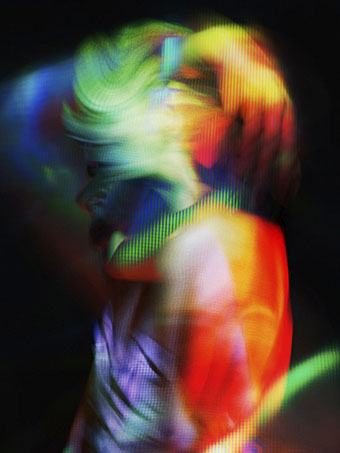
Crashing Diseases And Incurable Airplanes (2014) by USA Out Of Vietnam. Artwork by Amy Torok.

Amy Torok’s cover art for the debut album by Canadian band USA Out Of Vietnam is pleasingly reminiscent of the surreal and psychedelic collages of Wilfried Sätty. The music within has been described as “a cross between ELO and Sunn O)))” which it is up to a point, although to these ears the group are more in the Sunn O))) camp than the post-Beatles pop of Jeff Lynne and co. The sound is big whatever label you apply, and promises much for the future.

Mysterious creatures of Monterey Bay Aquarium’s ‘Tentacles’. The Aquarium bought one of my drawings last year for this exhibition which juxtaposes tentacular artwork with live creatures. The show runs until 2016.

• Jon Hassell’s 1990 album, City: Works Of Fiction, has been reissued in an expanded edition including a live concert collaboration with Brian Eno, and a collection of remixes/alternate takes.

• Photographer Jonathan Keys uses antique camera equipment to give his views of contemporary Britain a patina of the past.

Roman Polanski and the man who invented masochism. Nicholas Blincoe on Leopold von Sacher-Masoch and Venus in Fur (sic).

• Mixes of the week are by James Pianta, E.M.M.A. (whose Blue Gardens album I helped design), and Balduin.

• Sweet Jane unearths another great article about psychedelic London: The Fool and Apple Boutique, 1968.

• “Did Chris Marker think history to be not only an infinite book but a sacred one?” asks Barry Schwabsky.

• Front Free Endpaper on the story behind the cover photo of A Boy’s Own Story by Edmund White.

Mapping the Viennese Alien Event Site. Christina Scholz explores another Zone.

Moondog: The Viking of 6th Avenue. The first and only movie about Moondog.

Rick Poynor on rediscovering the lost art of the typewriter.

• At BLDGBLOG: 100 Views of a Drowning World.

Miguel Chevalier’s magic carpets

Venus In Furs (1967) by The Velvet Underground | Sex Voodoo Venus (1985) by Helios Creed | Venus As A Boy (1993) by Björk

Heimkiller and High

giger2.jpg

Heimkiller.

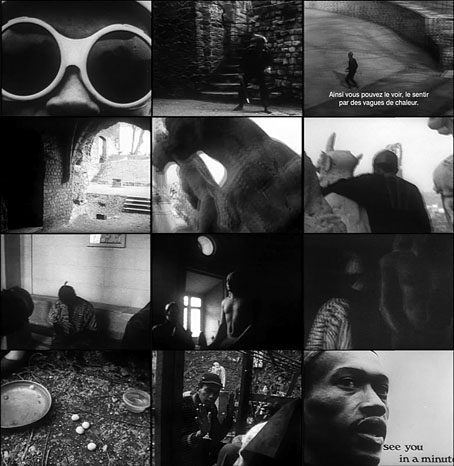
More Giger. Among the pre-Alien films, Passagen (1972), a documentary by FM Murer about the artist’s work, is the one I’d most like to see. That’s yet to appear online, however, so in the meantime here’s two shorts from 1967 which are the earliest entries in Giger’s filmography. Heimkiller is a brief study of Giger’s Blood-Glass sculpture which shows the piece in action and does little else. High is the first of several collaborations with director FM Murer, a black-and-white journey through the late Surrealism of Giger’s early works, some of which show a slight Dalí influence. I’ve always liked the drawings in his Shafts series, some of which can be seen here: views of plunging walls threaded with staircases that were derived from nightmares about a cellar stairway in his parents’ house.

giger3.jpg

High.

Elsewhere on { feuilleton }
The fantastic art archive

Previously on { feuilleton }
The Man Who Paints Monsters In The Night
Hans by Sibylle
HR Giger album covers
Giger’s Necronomicon
Dan O’Bannon, 1946–2009
Alejandro Jodorowsky’s Dune
The monstrous tome

The Man Who Paints Monsters In The Night

giger.jpg

HR Giger. Photo by Eve Arnold, 1979.

The news of HR Giger’s death was prominently featured in UK papers, something that wouldn’t have happened without his connection to the Alien films. Artists like Giger seldom make the front-page news even though he was well-established before the call from Ridley Scott. He’d already worked on Jodorowsky’s aborted Dune project alongside Moebius (who also did some work on Alien; people forget that), and his work had even appeared in a major feature film before Alien with a blink-and-you-miss-it appearance from his portrait of Li Tobler in Alain Resnais’s Providence (1977). Alien may have made him world-famous but I’ve always felt that Ridley Scott needed Giger far more than Giger needed either Scott or Hollywood. Paul Scanlon and Michael Gross’s The Book of Alien (1979) shows the production designs for the alien components before Giger’s involvement, none of which had the requisite strangeness that made the film such a success. That success would have made many artists decamp to Los Angeles in the hope of repeating the trick but Giger kept his distance. You can’t blame him when his work was diluted by James Cameron in Aliens while a unique project like Clair Noto’s The Tourist—which had heavy Giger involvement—never got made. (See here and here.)

The following is the first interview I read with Giger, a feature in the Sunday Telegraph magazine from August 1979, shortly before Alien was released in the UK. I wasn’t sure whether I still had this since I’d chopped up some of the other pages in the 1980s when I was making collages. The Sunday Telegraph then was even more of a stuffily conservative title than it is now so it’s a surprise to see Giger given such treatment; he was also the cover star although the cover on my copy is lost. I was given this by a friend whose parents read the paper; the only time I’ve ever bought the Sunday Telegraph was when I appeared in it in the early 1990s for a piece about Savoy Books. The interviewer on that occasion was Byron Rogers who I’m surprised to find wrote one of the other pieces in this magazine. (Thanks to Joe for sending me a picture of the missing cover!)

* * *

THE MAN WHO PAINTS MONSTERS IN THE NIGHT by Robin Stringer

giger4.jpgThe man in black is talking about his monster. “It is elegant, fast and terrible. It exists to destroy—and destroys to exist. Once seen it will never be forgotten. It will remain with people who have seen it, perhaps in their dreams or nightmares, for a long, long time. Perhaps for all time.”

The speaker is H. R. Giger, a Swiss-German surrealist painter, who designed the monster for Alien, the latest screen shocker, made in British studios under British direction to meet the apparently insatiable twin public cravings for space and horror films. Alien has already persuaded Americans to queue in record-breaking numbers outside their cinemas. It is said to have recouped its £15 million cost within 26 days of opening, and it comes to Britain on September 6.

The crew of a space tug on a fuelfinding mission answer a distress signal from an unknown planet. They land and discover an alien spacecraft in which, unknown to them, an awful creature has been spawned and waits seething, but with infinite patience, for a chance of life. Taken on board the space tug, clinging to one of the crew, the creature parasitically reproduces itself in him and bursts out into life in a welter of blood. It proceeds to make itself at home on board by hiding in dark places and jumping out at passers-by. It gobbles up the space crew one by one and grows prodigiously. Being unfamiliar with the monster’s lifestyle, the crew understandably panic.

That in brief the story of Alien, which, of course, has actually been spawned by the movie makers to scare us just a little bit and, in the process. to make them a lot of money.

The man who designed the monster will make some money, too—though not a lot, he says. He is not on a percentage. H. R. Giger, who calls himself H.R., because “the other things are too long and complicated”, is a chunky 39-year-old who lives with his girlfriend/secretary Mia, two cats, 12 skeletons and some books on magic in the middle of a rickety row of terraced houses in the industrial outskirts of Zurich. He always wears black.

Continue reading “The Man Who Paints Monsters In The Night”

Weekend links 209

soundcarriers.jpg

Soundcarriers poster by Julian House.

A new release on the Ghost Box label is always a welcome thing but Entropicalia by The Soundcarriers, out on May 20th, is one I’m especially looking forward to. Julian House has made a video for new song Boiling Point, and there’s also the poster above which can be downloaded at larger size here. The Ghost Box Guest Shop has a couple of new additions including the recent Man Woman Birth Death Infinity album by Raagnagrok.

• “It’s a funny time to be making music, because we’re a generation of people who make music with screens instead of with ears.” Ben Frost talking to Tristan Bath.

• At Dangerous Minds: You Gotta Say Yes to Another Excess, a rare glimpse of Yello live in concert, 1983.

Our movements about London are closely circumscribed, and while we may imagine ourselves to be free, the truth is that the vast majority of our journeys are undertaken for commercial imperatives: we travel either to work or to spend. All about us during our daily existence we are presented with buildings we cannot enter, fences we cannot climb and thoroughfares it would be foolhardy to cross. We are disbarred from some places because we don’t have the money — and from others because we don’t have the power. The city promises us everything, but it will deliver only a bit.

The place-hackers draw our attention to how physically and commercially circumscribed our urban existence really is. […] As more and more international capital flows into London, so public space is increasingly eroded — it’s just too valuable for us ordinary folk to paddle about in any more.

Give the freedom of the city to our urban explorers, says Will Self. Related: Robert Macfarlane accompanied urbexer Bradley Garrett on a night-time jaunt.

Black Sabbeth: Metal band Gonga covering a classic with Portishead’s Beth Gibbons on vocals.

• Pelican books take flight again; Paul Laity on the resurrection of the non-fiction imprint.

• Finland’s homoerotic stamps are an ocular feast for women, too, says Nell Frizzell.

• “I guess you could say I am a Pagan.” Kenneth Anger on the occult.

• “How much gay sex should a novel have?” asks Caleb Crain.

• Mix of the week: Secret Thirteen Mix 112 by Kyoka.

The Gibraltar Encyclopedia of Progressive Rock

Zombi’s Guide to Goblin

Decadence Comics

Zombie Warfare (1979) by Chrome | Escape From The Flesheaters (Zombie) (1979) by Fabio Frizzi | Zombie’ites (1993) by Transglobal Underground

Swinging Britain, 1967

pathe.jpg

My thanks to Jay for turning up this gem from the huge British Pathé archive which recently landed at YouTube. British Pathé provided short newsreel films for UK cinemas up until 1970. The flaws of these films have always been immediately apparent, chiefly an irritating editorial attitude manifested by patronising voiceovers and sequences staged for the camera. On the plus side, everything was being shot for cinema screens so 35mm film was used which means the footage always looks better than the TV news of the time.

Swinging Britain is an 8-minute jaunt from the Portobello Road and Carnaby Street, to the offices of Intro magazine (launched that year), Mary Quant’s boutique, a “happening” in a park, and various nightclubs (not the UFO, unfortunately). Most footage along these lines tends to concentrate exclusively on London but this one also includes scenes in Manchester and Newcastle. The voiceover is as sceptical as you’d expect, leavened with a few qualifying remarks: “It’s good business for Britain!” The event in the park was one of a number of happenings and art events staged by Keith Albarn (Damon’s dad). The Pathé archive has another film showing the interior of Albarn’s Fun City environment at Margate, Kent. Of more general interest is this film of one of the popular beat groups of the period, four young men who call themselves The Pink Floyd.

See also:
Woburn Love-In (1967)
Light Fantastic (1968)
Out Takes / Cuts From Cp 662 – Reel 1 Of 3 – Swinging Britain (1967)
Out Takes / Cuts From Cp 662 – Reel 2 Of 3 – Swinging Britain (1967)
Out Takes / Cuts From Cp 662 – Reel 3 Of 3 – Swinging Britain (1967)
Out Takes / Cuts From Cp 719 – Fun Palace, Air Cushion And Balloon Race (1968)

Previously on { feuilleton }
San Francisco by Anthony Stern
Smashing Time