Weekend links 241

clerc.jpg

A drawing by Lucille Clerc.

• The usual imbalance of heat versus light this week but Kenan Malik and Teju Cole had some worthwhile things to say. Related: Atlantic illustrators respond to the events of Wednesday. And some history: covers of Charlie Hebdo‘s parent magazine, Hara-Kiri, whose legacy of bad taste and confrontation was overlooked in the rush to express disapproval.

• At The Quietus: Virginie Sélavy, Mark Pilkington and Stephen Thrower of the Miskatonic Institute talk to Mat Colegate about horror old and new. There’s more horror cinema in Mat Colegate’s interview with animator Carla MacKinnon.

• Mixes of the week: Sleepwalkers of the Montgomery Canal by The Geography Trip, and Secret Thirteen Mix 142 by Helena Hauff.

• Jazz legend Julian Priester reflects on his fusion classic Love, Love, Sun Ra, Herbie Hancock, and a lot more.

• “No gays, no blacks, no fat people”: Ryan Gilbey on how film advertising continues to betray filmmakers.

Paul Gorman on the drumheads that Barney Bubbles painted for Hawkwind’s Simon King in 1972.

Massive: Gay Erotic Manga and the Men Who Make It, edited by Anne Ishii & Graham Kolbeins.

NASA’s exoplanet travel bureau wants you to pack your bags.

• The New Humanist on imagining a world without work.

• At Strange Flowers: 15 books for 2015.

Ghosts in the TV

Prologue/Love, Love (1974) by Julian Priester | The Jewel in the Lotus (1974) by Bennie Maupin | Rima (1975) by The Headhunters

Number 11: Mirror Animations, a film by Harry Smith

smith.jpg

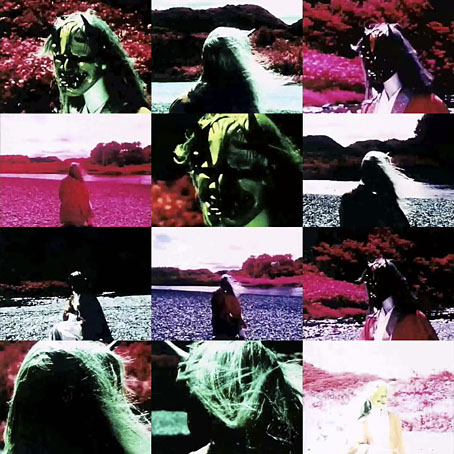
A very short collage animation from 1956 that Smith later expanded into a version running 12 minutes. The artwork crams a great deal of occult and religious symbolism into its 3-minute running time—alchemy, the Kabbalah, Buddhism, Eliphas Levi’s Baphomet, and so on—while Misterioso by Thelonious Monk is playing. Watching this makes me realise that there are still many Harry Smith films I’ve not yet seen despite having read about them for years. Further investigation is required.

Previously on { feuilleton }
Meeting Harry Smith by Drew Christie
Heaven and Earth Magic by Harry Smith
Harry Smith revisited
The art of Harry Smith, 1923–1991

Oskar Schlemmer’s Triadic Ballet

schlemmer.jpg

Oskar Schlemmer’s Triadic Ballet of the 1920s is one of the more famous products of the Bauhaus movement, a radical reinvention of the medium which encased the dancers in cumbersome costumes. The outfits and stage designs are familiar from Bauhaus histories but you’re less likely to see an actual performance, something that’s possible with this 30-minute film made in 1970. The ballet is in three acts: yellow, pink and black. Erich Ferstl wrote the music for the filmed reconstruction by Margarete Hasting, the original score by Paul Hindemith being lost.

The ballet has additional interest for me in having influenced part of the Reverbstorm book. Oskar Schlemmer’s Bauhaus logo is reworked in the opening and closing pages together with other Bauhaus-derived graphics, but I also looked at Schlemmer’s ballet costumes when I was planning the final section which required a stylised transformation of Lord Horror. In the end I used a sketch by one of Schlemmer’s pupils, Klaus Barthelmess, for the Horror figure but the Barthelmess drawing was also of a dancer, and is very similar to some of Schlemmer’s designs, especially the silver-headed robot-like figures that appear in the black section of the ballet.

Previously on { feuilleton }
Reverbstorm: Bauhaus Horror

The Incredible Robert Baldick

baldick1.jpg

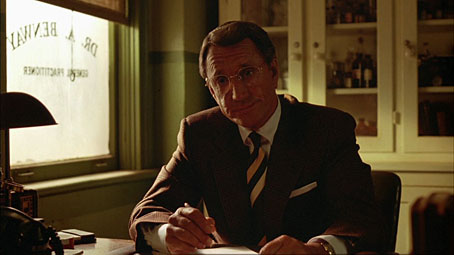
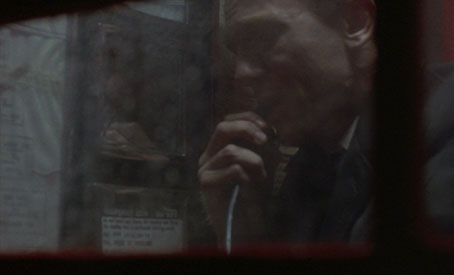
This is an odd one-off TV drama whose title I’ve known for years but which I hadn’t seen until this week. The Incredible Robert Baldick was broadcast in 1972 in a slot used by the BBC to test dramas that might later become series. The writer was Terry Nation, creator of Doctor Who and the dour post-apocalypse series, Survivors. Robert Hardy plays Robert Baldick, an aristocratic occult detective who we’re informed “cannot resist the inexplicable”. We’re also told he’s one of the finest scientific minds in 19th-century Britain. The exact period is vague but we first see Baldick and cohorts playing with an “electrical telepathy” communication device which would fix the time around the turn of the century. Baldick has a country estate, a bulletproof Russian train (“The Tsar”), a valet who is also an expert in Classics and ancient languages, a gamekeeper with preternatural senses, and a pet owl named Cosmo.

baldick2.jpg

The one-and-only 50-minute episode is entitled Never Come Night, and plays like something Nigel Kneale might have written, a combination of supernatural horror, suspicious yokels and archaeology, with an abrupt swerve into outright science fiction at the end. The cast features many familiar faces from film and television of the period: James Cossins as a fearful clergyman, Barry Andrews playing the same type of rustic he also played in Blood on Satan’s Claw, Julian Holloway as Thomas the valet, and John Rhys-Davies (Gimli in The Lord of the Rings) as Caleb the gamekeeper. All the ingredients are in place for what might have been a promising series along the lines of The Rivals of Sherlock Holmes, the first season of which had been running on another channel the year before, and which may have been an inspiration. A shame that the only women in the cast are a couple of barely visible servants and a corpse; even Holmes and Watson had Mrs Hudson. The timecoded copy on YouTube has evidently been hijacked from the BBC archives but it’s watchable enough.

Previously on { feuilleton }
The Horse of the Invisible
“The game is afoot!”

The weekend artists, 2014

crystal.jpg

The Crystal Gazer (or The Magic Crystal, 1904) by Gertrude Käsebier.

Once again the annual review of artists/designers/photographers featured in the weekend posts arrives at the beginning of the new year rather than the end of the old. Scroll down to see what caught my attention over the past twelve months.

hinrichsen.jpg

We Are The Water – Snow Drawings Project, Colorado (2014) by Sonja Hinrichsen with 50 volunteers.

trouille.jpg

Le Palais des Merveilles, 1907 – 1927 – 1960 by Clovis Trouille.

carvalho.jpg

The Three Witches (2014) by Lorena Carvalho.

Continue reading “The weekend artists, 2014”