Weekend links 572

poumeyrol.jpg

L’Insolite (1980) by Jean-Marie Poumeyrol.

• “As we move down the ladder of prestige into the world of unvetted tweets, we observe an increasing difficulty, among people with very strong opinions, in exercising that basic critical competence of distinguishing between the authorial creation of a character, and the author’s affirmation of that character’s every moral trait and political view.” Justin EH Smith on the HR managers of the human soul.

• “When is a Didone not a Didone? How far must an exemplar Didone, like a Didot or a Bodoni, be altered before it loses its ‘Didoneness’?” John Boardley on the vexed question of font classification, and the need for an alternative to the present system.

• “Birds with Human Faces and Birds with Human Souls share shelf space with The Book of Owls and Expert Obedience Training for Dogs…” Joanna Moorhead visits the Casa Estudio Leonora Carrington in Mexico City.

“Indolent” is a funny way to characterize her natural state, which seems more like “incisive” to me, but I also have the unshakable sense—for myself—that writing can’t or shouldn’t look like staring into space or feel like not wanting to move from the couch. “A fraud is being perpetrated: writing is not work, it’s doing nothing,” she states in that first essay, from 1992. But she immediately counters with, “It’s not a fraud: doing nothing is what I have to do to live.” Listing a few more pertinent existential options, Diski ends with, “Or: writing is what I have to do to be my melancholy self.” The protoplasmic, chattering, melancholic “I” of these essays is, of course, the collection’s constant, its true subject. I can commiserate with her on every page even if emulation is out of reach.

Johanna Fateman on the incisive long-form criticism of Jenny Diski

• At Spine: Vyki Hendy identifies sunburst as a new trend in book cover design. I often think I overuse these things in my own cover designs which means I may be inadvertently (and fleetingly) trendy.

• At the Magnum Gallery, London: Metamorphoses, photographic studies by Herbert List of male bodies and Greek statuary.

• At Spoon & Tamago: A butterfly sipping moisture from puddles, sculpted entirely in wood by Toru Fukuda.

• At Dangerous Minds: Joseph Lanza on the easy listening side of psychedelic pop.

• At CounterPunch: Louis Proyect on thinking like an octopus.

• Mix of the week: Fact Mix 510 by Britton Powell.

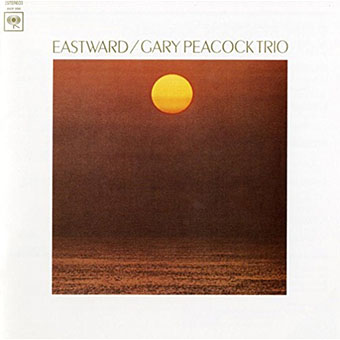
Bye Bye Butterfly (1965) by Pauline Oliveros | Butterfly Mornings (2001) by Hope Sandoval & The Warm Inventions | Butterfly Caught (2003) by Massive Attack

Peter Haars book covers

haars20.jpg

Peter Haars (1940–2005) was born in Germany but moved to Norway in the 1960s where he worked as a graphic designer, art director and illustrator. He also wrote fiction and created Prokon (1971), a one-off publication that looks like a designer’s take on underground comics. Most of the covers that turn up when you search for his work are science fiction, and all painted in that bold airbrush style that was common in the 1970s. Documentation is scarce, unfortunately, ISFDB only lists two titles, so I’ve no idea about the dates, but the Lanterne SF imprint was active throughout the decade.

haars01.jpg

haars21.jpg

haars15.jpg

haars08.jpg

Continue reading “Peter Haars book covers”

Paul Delvaux ou les Femmes Défendues

delvaux1.jpg

Henri Storck’s short film from 1971 is mostly an overview of Paul Delvaux’s irreducibly mysterious paintings but the first 7 minutes are invaluable for the views they give of the artist at work. I’m always interested in the technical details of painting but these are seldom mentioned in art books which tend to be more concerned with discussions of meaning and artistic intent. So here we see Delvaux sketching, then leafing through a collection of preliminary studies before finally dabbing at a figure on a large canvas in his skull-filled studio.

delvaux2.jpg

The rest of the film is taken up with shots that roam over many of the artist’s earlier paintings. I don’t have any books about Delvaux so there are more of his pictures here than I’ve seen in one place, all of them displaying the familiar nocturnal enigmas: somnambulist nudes, trains, moonlight, Classical architecture and so on. The voiceovers, including that of the artist, are in unsubtitled French but the film is available with subtitles as part of a DVD collection of films about Belgian artists and cultural figures directed by Storck and others. One for the shopping list.

Previously on { feuilleton }
Raoul Servais: Courts-Métrages
The mystery of trams
Temptations
Papillons de Nuit, a film by Raoul Servais
Paul Delvaux: The Sleepwalker of Saint-Idesbald
Ballard and the painters
Taxandria, or Raoul Servais meets Paul Delvaux

Weekend links 571

valck.jpg

Habit d’Astrologue (c. 1700) by Gerard Valck.

• “The Appointed Cloud begins with the high-pitched, keening sound of many bagpipes noisily playing at once—and then the music slowly coalesces, approaching a peaceful, tranquil hum. This gives way to fast-paced repetitive pulses, reminiscent of the minimalist works of composers such as Terry Riley and Philip Glass. Then the bagpipes join in once more, in a ferocious swarm of energy.” Geeta Dayal on the music of Yoshi Wada.

• “How can we conceive of the time of climate change, the time of planetary death? The House on the Borderland tried to conceive of exactly this a century ago. Yes, the narrator’s acts are fruitless. He gets haplessly carted about the universe to witness the end of time, which never really ends, is always at the edge, nearing an asymptote, on the borderland.” Namwali Serpell journeys through space and time with William Hope Hodgson.

• The Bureau of Lost Culture: DJ Food hosts a podcast discussion with Tony Bennett, founder and publisher of Knockabout Comics.

• Mixes of the week: Isolated Mix 111 (plus interview) by Ian Boddy, and a Wire mix (plus interview) by Teresa Winter.

• Fantastic visions and unknown worlds: Edwin Pouncey on Van Der Graaf Generator’s sleeve art.

• At Spoon & Tamago: Sculptor Kenichi Nakaya reconfigures ubiquitous Japanese rural crafts.

• My Bloody Valentine’s Kevin Shields: “We wanted to sound like a band killing their songs.”

• At Wormwoodiana: More earth mysteries are explored in Northern Earth magazine.

• New music: Black Horses Of The Sun by Dave Bessell.

The Exotica Project: One Hundred Dreamland 45s

• At Dennis Cooper’s: Hans Richter Day.

Mdou Moctar‘s favourite music.

Earth Floor (1985) by Michael Brook | Earth Tribe (1993) by Transglobal Underground | Earth Lights (2012) by Belbury Poly

Frazetta and Poe

frazetta.jpg

Art by Frank Frazetta, lettering by Gail Smith.

Frank Frazetta wasn’t an artist you’d usually associate with a literary master like Edgar Allan Poe. With the exception of an idiosyncratic Lord of the Rings portfolio most of the books that Frazetta illustrated were by Robert E. Howard or Edgar Rice Burroughs. The page above is from a series of drawings in issue 8 of Witzend magazine that accompany the text of Poe’s The City in the Sea. There’s no editorial comment to explain the origin of this piece but Frazetta’s drawings, which depict the sole survivor of a plane crash, look like they may have been intended for something else entirely, there’s no connection with the poem apart from the coastal setting. Witzend was an odd and interesting magazine that was founded by Wallace Wood to accommodate pieces like this one which might not have an outlet elsewhere. Frazetta had a drawing in the first issue in 1966; issue 8 appeared in 1972 by which time the magazine had a different publisher and editor but continued to feature work by Wood and his friends. The whole run is very worthwhile, even issue 9 which departed from the usual form to devote the entire number to the films of WC Fields.

Previously on { feuilleton }
Frank Frazetta, 1928–2010
Frazetta: Painting with Fire
Fantastic art from Pan Books