Weekend links 621

foghorn.jpg

Holmes’s fog-horn apparatus, 1875.

• “Have scientists designed the perfect chocolate?” According to Betteridge, the answer would have to be “no”, even more so when the scientists only seem to have reinvented the Flake which Cadbury have been making since 1920. But the story does tell you something about “edible metamaterials” and even “edible holograms”.

• “In The Foghorn’s Lament, I talk about someone called The Fogmaster, who apparently used to do guerrilla foghorn performances…his ringtones are still available.” Jennifer Lucy Allan on foghorns past and present.

• “The story of Les Rallizes Dénudés is almost that of fan fiction. Fans know some basic details and the rest is conjecture and imagination.” Patrick St. Michel explores the occluded history of the Japanese rock band.

The Wharton completist may recognize some of the raw material for these stories in her earlier works. For instance, she used the Greek myth of Demeter and Persephone in a 1912 verse play before finding its subtle final expression in “Pomegranate Seed,” in which the ghostly letters keep the New York lawyer figuratively tethered to the underworld. And a 1926 volume of poems contained an experimental riff on a dead woman returning home on All Souls’ Day, published over a decade before Wharton revisited the holiday in her final short story. The ghost story form transforms both these familiar materials and her evergreen themes: Once some donnée becomes a ghost story, what may have been just an amusing character study acquires a participatory element, since readers must meet her halfway in becoming scared. To do so involves truly contemplating what exactly it is in these texts—and it is never the literal ghosts—that elicits a chill.

Krithika Varagur on Edith Wharton’s ghosts

Gaspar Noé’s favourite films. Elsewhere, Noé and Dario Argento talk about Noé’s latest feature, Vortex, while later this month Arrow are giving Enter the Void an overdue UK blu-ray release.

• Gay utopia: recent photographic portraits by Matthew Leifheit of Fire Island.

• Yogaville, 1993: more historic film of Alice Coltrane performing.

• At Dennis Cooper’s: The Maysles Brothers Day.

Sugar Chocolate Machine (1967) by The Beatstalkers | Chocolate Machine (1993) by Sandoz | Chocolate Jesus (1999) by Tom Waits
Ghost Power

ghostpower.jpg

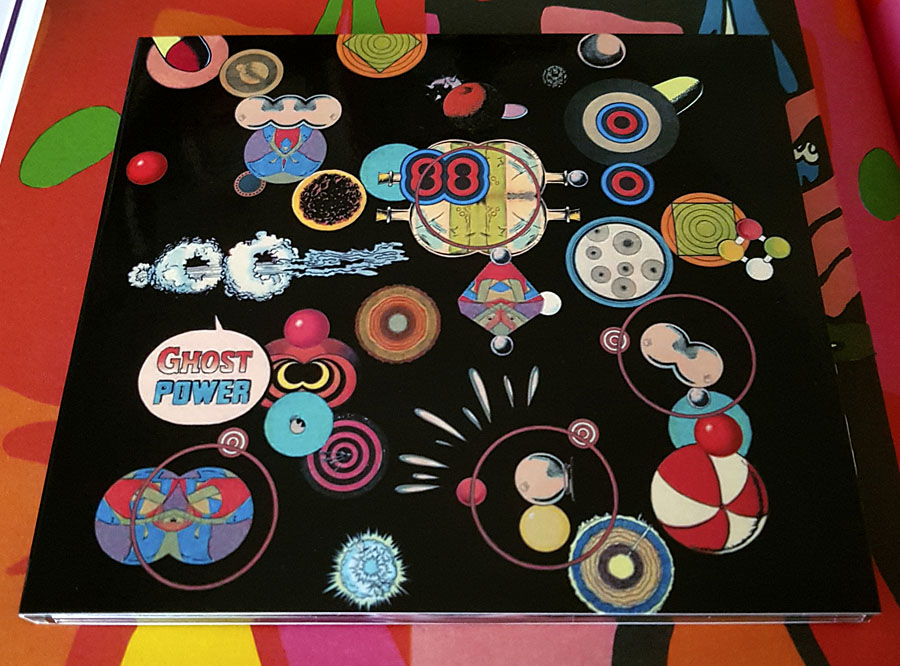
This week I’ve been enjoying the Ghost Power album, a collection of groovy instrumentals from Tim Gane and Jeremy Novak. A heavier use of synthesizers and samples than you usually hear from Gane, together with trace elements of his previous project, Cavern Of Anti-Matter. The highlight is the final track, Astral Melancholy Suite, a 15-minute synth odyssey that includes an extended sequencer run of a kind usually associated with the Berlin School.

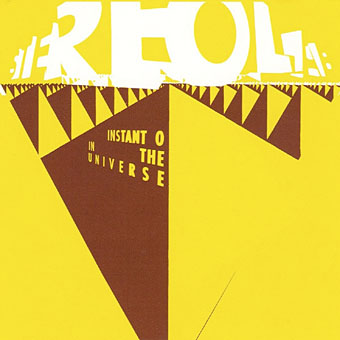
The comic-book details that decorate the packaging are credited to Samplerman, whoever they are. There’s further continuity here with Stereolab who borrowed graphics from French comics for the artwork on some of their singles and EPs. I’ve never been a fervent collector of Duophonic releases so it was years before I realised that the graphic on this cover for Instant 0 In The Universe

stereolab.jpg

…was swiped from this page in the fabulously rare Saga de Xam.

saga.jpg

Update: Samplerman is here. Thanks, Dave C!

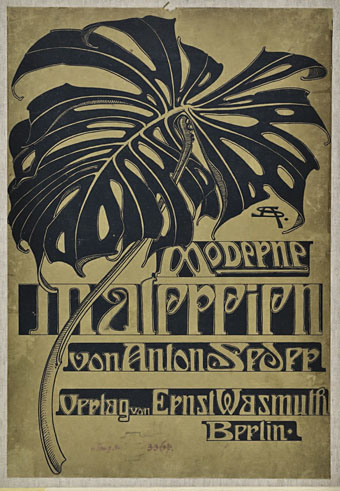
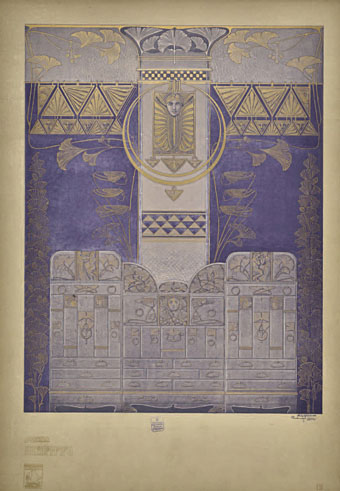
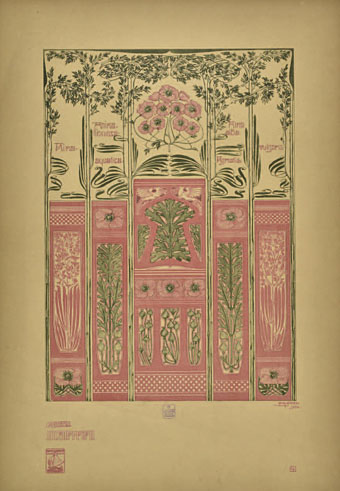
Moderne Malereien, 1903

seder01.jpg

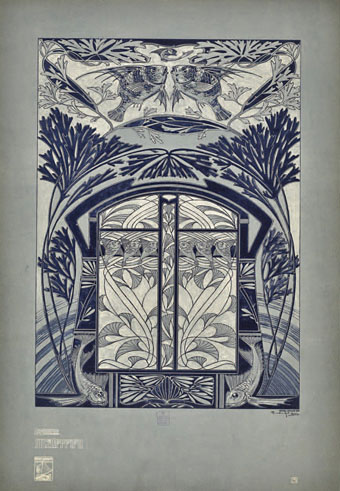
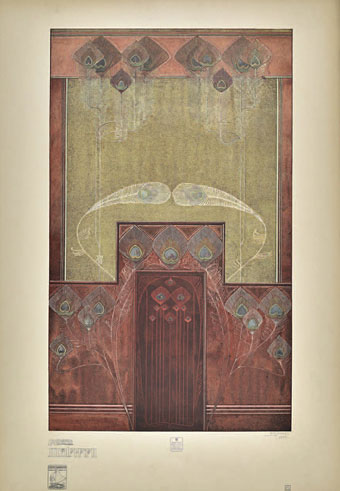
A few months ago I turned up a collection of decorative animal designs by Anton Seder, a German artist, designer and art teacher. Moderne Malereien is a sequel to this in which Seder applies his somewhat overwrought Art Nouveau style to the world of interior design, with suggestions for a variety of elaborate murals. Animals are also present in some of these plates, especially fish; Seder had a fondness for aquatic organisms. Similar designs may be found in the pages of Kunstgewerbe in Elsass-Lothringen, a short-lived journal which Seder co-edited from 1900 to 1906.

seder02.jpg

seder03.jpg

seder04.jpg

seder05.jpg

Continue reading “Moderne Malereien, 1903”

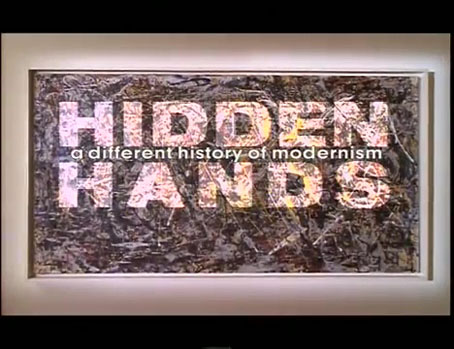
Hidden Hands: A Different History of Modernism

hh1.jpg

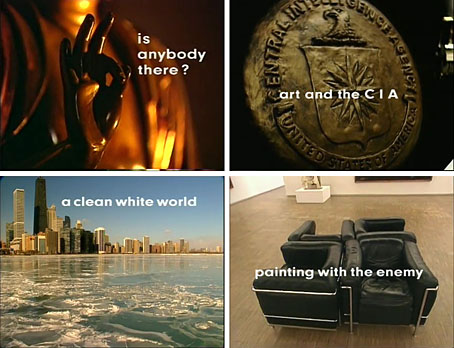
I thought I’d finished with the arts documentaries until I remembered this four-part series from 1995. Hidden Hands was based on researches by Frances Stonor Saunders who also co-produced. As the subtitle suggests, the programmes examined aspects of Modernist art and architecture that weren’t exactly unknown but were often downplayed (sometimes deliberately ignored) by the art establishment. The episodes were as follows:

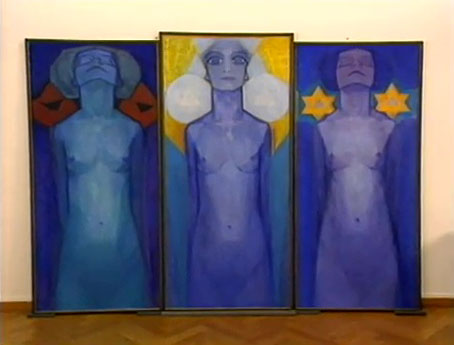
1: Is Anybody There? The occult roots of abstract painting, especially the influence of Theosophy on Vasily Kandinsky and Piet Mondrian. Kazimir Malevich and František Kupka are also mentioned at the beginning of the programme but we don’t hear anything more about them.

2: Art and the CIA. A history of the Congress for Cultural Freedom, a CIA front for channelling money to avant-garde exhibitions and literary magazines during the Cold War.

3: A Clean White World. Modernist architecture as a reaction to, and proposed solution for, the squalor of 19th-century city life. Also the similarity between the impulses that drove the Modernist architectural ideal, and the later health and purity obsessions of European fascist states.

4: Painting with the Enemy. The inadvertent way in which the animus towards “degenerate art” shared by the Nazis and the Vichy regime in occupied France helped sustain Modernism during the war years.

hh2.jpg

This is a very good series on the whole, informative and with a roster of authoritative interviewees. The narration overstates the contrarian angle in places but that’s television for you. Much of the history under investigation wasn’t necessarily hidden, more sidestepped by general discussions of 20th-century art. Even so, fifteen years earlier in the architecture episode of The Shock of the New, Robert Hughes covered similar territory and with similar criticisms, following the development of what would become known as the International Style while noting Mussolini’s adoption of a Modernist idiom for the architecture of Fascist Italy.

Elsewhere, when Hughes reviewed a major Kandinsky retrospective he paid sufficient attention to Kandinsky’s Theosophical beliefs; this was in 1982 for TIME magazine, not exactly an obscure publication. Theosophy’s ectoplasmic tentacles are all over the art of the late 19th century so you’d expect some crossover into the art of the new century, as there was in the careers of the artists themselves. (Matisse was a pupil of Gustave Moreau, for example, an inconvenient detail that often irritated critics.) Given the amount of artists swayed by Madame Blavatsky’s writings, a more interesting argument might have been to propose Theosophy as the prime cause of early abstraction rather than another inconvenient factor in its development. Hilma af Klint’s pioneering abstract paintings were as much products of her Theosophical studies as were those of Kandinsky but in the 1990s nobody was paying her very much attention.

hh3.jpg

Mondrian’s mysticism: Evolution (1910–1911).

As for the CIA, the agency’s clandestine cultural adventures were exposed by a leak in the late 1960s—Stephen Spender famously resigned in shame from his editorship of Encounter magazine—so this could almost be classed as old news. What you wouldn’t have had in the past, however, is the agents involved in the scheme openly discussing their activities.

Continue reading “Hidden Hands: A Different History of Modernism”

Weekend links 620

varo

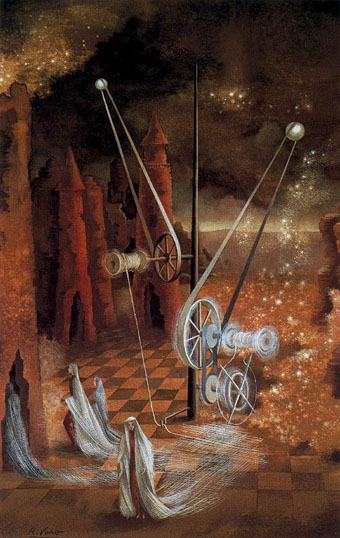
Premonition (1953) by Remedios Varo.

• “Classical mythology, Arcadian idylls, occult speculation, and an interest in cultural curiosities coexisted in the grotto, allowing for the playful exploration of a new tension emerging between Nature and Artifice.” Laura Tradii explores the artificial grottoes of the Renaissance and beyond.

• “Some of the symbols and signs seem like bridges to nowhere, and perhaps Nabokov was lovingly teasing our endless quest to find patterns and generate meaning.” David M. Rubin on writing a response to a Nabokov short story.

• New music: “KMRU & Aho Ssan erupt in post-apocalyptic extremity with Resurgence“. I did the layout for this latest release on the Subtext label but I still haven’t got round to updating my web pages so you’ll have to take my word for it.

• Powell & Pressburger’s Black Narcissus “unleashes a level of eroticism that’s surprising for 1940s British cinema,” says Adam Scovell.

• “Premonitions are impossible, and they come true all the time.” Fiona Sturges reviews The Premonitions Bureau by Sam Knight.

• Between Hell and Paradise: paintings by Hieronymus Bosch and his followers at the Museum of Fine Arts, Budapest.

• At The Collector: Olivia Barrett on the Voodoo Queens of New Orleans.

• Steven Heller’s font of the month is Astronef Super.

• Mix of the week: Isolatedmix 118 by Pan American.

TMP-01 Vintage Synth TV Series from Benge.

• Vale, A Year In The Country.

Premonition (1979) by Simple Minds | Premonition (1980) by Cabaret Voltaire | Premonition (Giant Empty Iron Vessel) (1987) by David Sylvian & Holger Czukay