Cracked Actor

cracked1.jpg

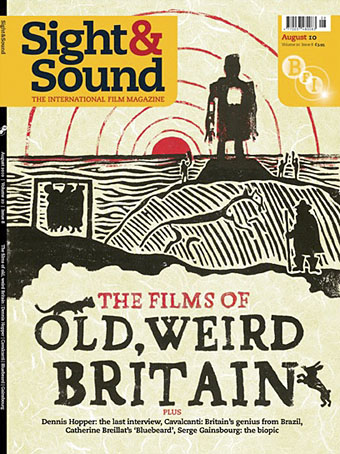
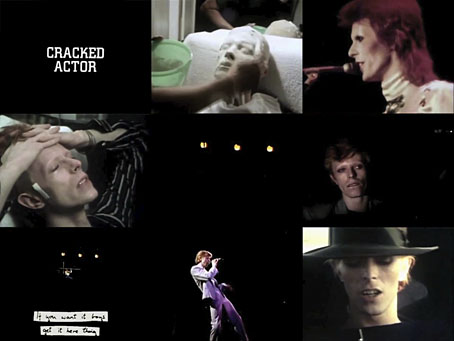
This is one of those TV documentaries that it’s tempting to think everyone must have seen by now, but if it’s over-familiar to me it’s undoubtedly new to others. Cracked Actor: A film about David Bowie was broadcast by the BBC in their Omnibus arts strand in January 1975. Director Alan Yentob followed David Bowie around the US during the Diamond Dogs tour, and while it’s good to see some of the numbers from that album being performed live, I’ve always found it odd that Bowie’s stage persona is that of the Young Americans album, all big hair and padded shoulders; it’s a look that doesn’t work with Diamond Dogs‘ theme of dystopian futurism. Despite Yentob’s directorial coup this was one of many BBC documentaries that were screened once then not shown again for a long time, so that viewers such as myself who saw the original broadcast would be left to reminisce about memorable moments.
cracked2.jpg

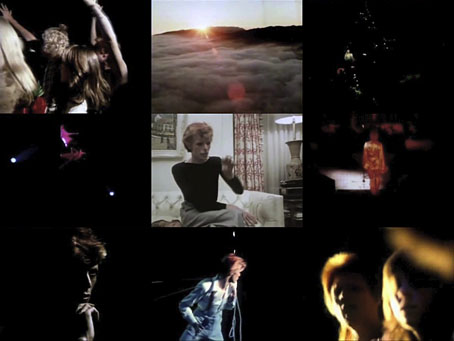
The most significant moment for me was Bowie demonstrating his own application of the cut-up method as he applied it to lyric writing, a sequence that was not only my first exposure to William Burroughs’ writing techniques but also my first introduction to Burroughs’ and Gysin’s names. Subsequent viewings confirmed that Bowie was as drug-addled as people claimed at the time (confirmed by the man himself in later years), especially in the limousine scenes which prefigure those in The Man Who Fell To Earth.

The amount of music in this film attracts the attentions of the YouTube copyright police so the upload linked here may not be around for long. Watch it while you can.

Previously on { feuilleton }
Strange fascination

The Strange Case of Yukio Mishima

mishima.jpg

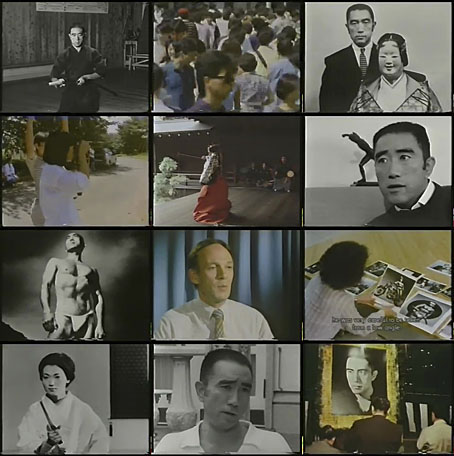
This is another of those excellent television documentaries that I have imprisoned on a video tape somewhere so it was good to find on YouTube. The Strange Case of Yukio Mishima (1985) was directed by Michael MacIntyre for the BBC’s Arena arts strand. This was the year that Paul Schrader’s Mishima: A Life in Four Chapters was released so the documentary had some topical value even though Schrader’s film isn’t mentioned at all (something that wouldn’t happen today). MacIntyre begins as Schrader does, however, with the events of the final day of Mishima’s life on November 25th, 1970, before rewinding to present a biographical portrait of the writer/actor/director. There’s more footage than I remembered of Mishima discussing his work (in English) while John Hurt reads from Mishima’s writings. Commentary is supplied by biographer Henry Scott Stokes, translator Donald Keene, photographer Eikoh Hosoe (creator of the famous Mishima beefcake poses), director Nagisa Oshima, and Mishima’s lover Akihiro Maruyama, an actor who the credits also describe as a “female impersonator”.

Previously on { feuilleton }
Tamotsu Yato’s men with katanas
Forbidden Colours
Mishima’s Rite of Love and Death

Weekend links 289

hermes.jpg

Fathomless Sounding (1932) by Gertrude Hermes.

• Over at Greydogtales (“weird fiction, weird art and even weirder lurchers”) I talk about art, design, the writing of this blog, and I also reveal more about my ongoing Axiom project. The latter currently stands at two novels, a couple of half-finished stories and a few pieces of artwork. I may be unveiling some of the art in the new year so watch this space.

• Howard Brookner’s Burroughs: The Movie (1983), a definitive film portrait of William Burroughs, is released at last on DVD/Blu-ray. US-only for the moment but further releases elsewhere are promised. The director’s nephew, Aaron Brookner, has a documentary about his uncle released next year.

• “…beautifully articulated bawdiness, perverse pleasures and a radical, though nondidactic, political view.” Melissa Anderson reviews Boyd McDonald’s Cruising the Movies: A Sexual Guide to Oldies.

The crisis, as Ellis and Silk tell it, is the wildly speculative nature of modern physics theories, which they say reflects a dangerous departure from the scientific method. Many of today’s theorists — chief among them the proponents of string theory and the multiverse hypothesis — appear convinced of their ideas on the grounds that they are beautiful or logically compelling, despite the impossibility of testing them. Ellis and Silk accused these theorists of “moving the goalposts” of science and blurring the line between physics and pseudoscience. “The imprimatur of science should be awarded only to a theory that is testable,” Ellis and Silk wrote, thereby disqualifying most of the leading theories of the past 40 years. “Only then can we defend science from attack.”

Natalie Wolchover on A Fight for the Soul of Science

• Mixes of the week: A mix by Front & Follow, and The Ivy-Strangled Path Vol. XIV by David Colohan.

• “Psychedelics can’t be tested using conventional clinical trials,” says Nicolas Langlitz.

• At Dangerous Minds: Ralph Steadman illustrates Ray Bradbury’s Fahrenheit 451.

• Why does Moby-Dick (sometimes) have a hyphen? Erin Blakemore investigates.

• My thanks again to Dennis Cooper for including this blog on his year-end list.

• Cian Traynor was given 20 minutes to ask Ennio Morricone some questions.

Lolita at 60: Ten writers reconsider Nabokov’s novel, page by page.

• At Ballardian: High-Rise: Wheatley vs Cronenberg.

Poison Ivy: The Queen of Psychobilly Punk

The Cinema of Hotels: a list

Solo intimacy DIY

Moby Dick (1970) by Led Zeppelin | William Burroughs Don’t Play Guitar (1996) by Islamic Diggers | Physical (2001) by Goldfrapp

Text Videovoid by David Larcher

larcher.jpg

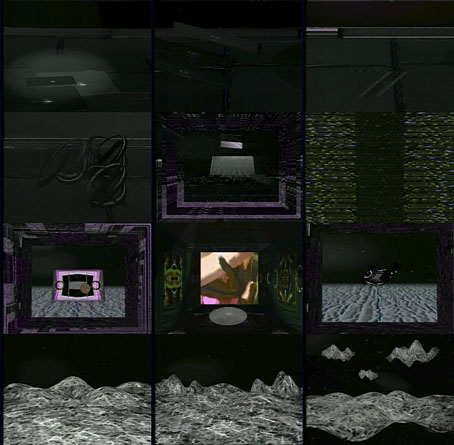
Yesterday’s post concerned an atypical piece of art by David Larcher. Text Videovoid (1993) (aka Videovoid Text, etc) is a good example of Larcher’s more usual work in film and video which is non-narrative yet remains eminently watchable, something you can’t always say about the outer limits of video production. The UK’s Channel 4 broadcast a large chunk of Larcher cut-ups one evening in the 1980s, something they’d never do today; I used to have that broadcast on tape, and enjoyed watching it with the sound off and music playing. Text Videovoid (1993) is a lot stranger:

The viewer is navigated through dark electronically constructed seascapes, conjuring a lighthouse beam and the Blue Peter code flag (“all on board – this ship is leaving port”) to lead us into a heaving ocean of alphabetic patterns where dolphins formed from letters leap from the waves. Larcher’s eloquent stream of consciousness monologue proceeds from a reflexive incantation of video terminology into a philosophical discourse on the state of non-being at the heart of the void itself.

Larcher’s video is also described as a work-in-progress which may explain why different times (and titles) are listed. The copy linked here runs for 30 minutes.

Folk Horror Revival: Field Studies

folkhorror.jpg

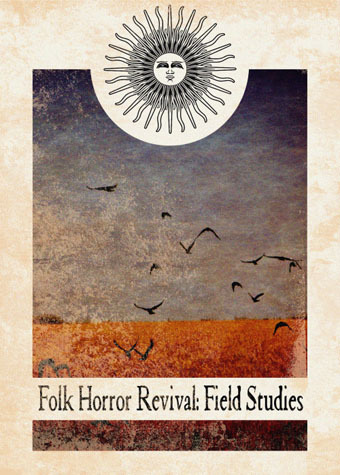
The particularly British sub-genre of folk horror receives a substantial examination in Folk Horror Revival: Field Studies, a 500-page collection of essays, interviews and artwork edited by Andy Paciorek.

Featuring essays and interviews by many great cinematic, musical, artistic and literary talents, Folk Horror Revival: Field Studies is the most comprehensive and engaging exploration to date of the sub-genre of Folk Horror and associated fields in cinema, television, music, art, culture and folklore.

Includes contributions by Kim Newman, Robin Hardy, Thomas Ligotti, Philip Pullman, Gary Lachman and many many more.

100% of all profits from sales of the book will be charitably donated to environmental, wildlife and community projects undertaken by The Wildlife Trusts.

sun2.jpg

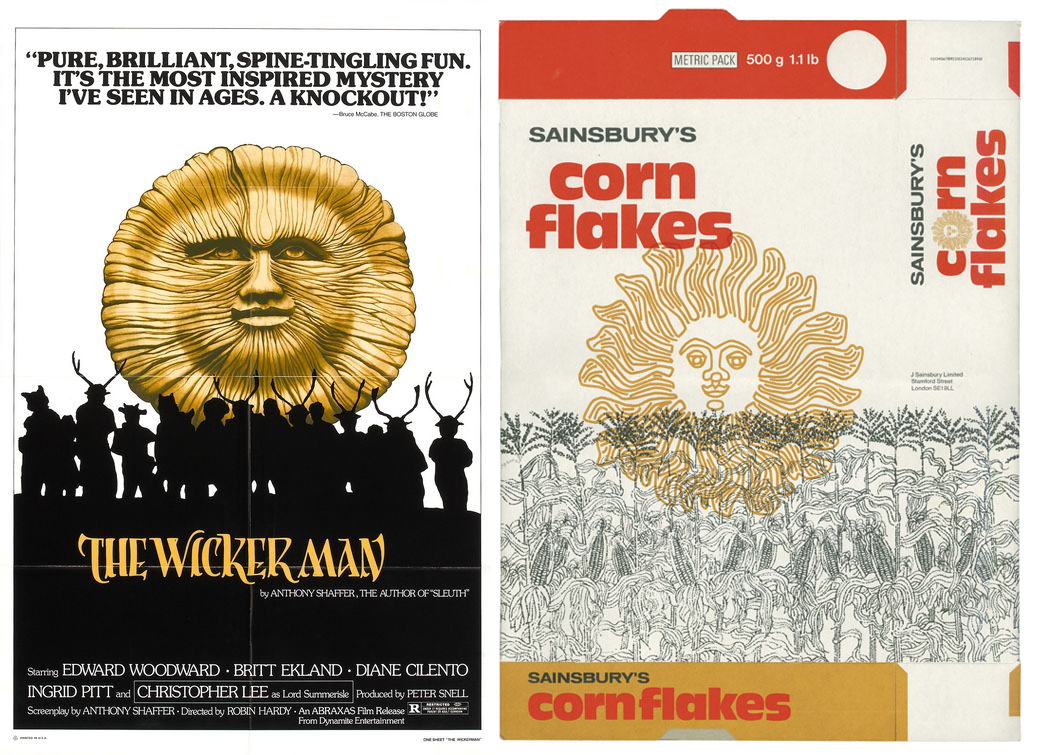
Nuada rising, 1973 & 1976.

Among the contents there’s my 4000-word essay Sacred Demons: The Dramatic Art of David Rudkin, parts of which will be familiar to readers of my previous posts about Rudkin’s work. I’m not sure Rudkin would appreciate being subjected to such a narrow focus when his plays and TV films are much more personal and cerebral than most generic entertainments. But there is an intersection in a number of them with folk horror at its widest reach, and Rudkin did happen to adapt The Ash-Tree (1975) by MR James for the BBC’s series of ghost stories at Christmas. My piece covers this along with other TV films such as Penda’s Fen (1974) and Artemis 81 (1981), and many of the stage plays including Afore Night Come (1962), The Sons of Light (1965/76) and The Saxon Shore (1983). The stage plays I only know from their scripts which makes them difficult to appraise; maybe the renewed interest in Rudkin’s work will spur some revivals.

oldweird.jpg

Sight and Sound, August 2010. Illustration by Becca Thorne.

Paciorek’s book isn’t solely concerned with British subjects, other essays include studies of Weird Americana, the music of The Cremator and Morgiana, and Czech folk horror. The Lulu page apparently didn’t allow the listing of a full table of contents so I’m posting the details below.

Continue reading “Folk Horror Revival: Field Studies”