Weekend links 582

dore.jpg

Illustration by Gustave Doré from L’Espagne (1874) by Jean Charles Davillier.

• Warp Records has announced the forthcoming publication of Atmospherics by Jon Hassell, a short book collecting the diary extracts, composition notes and other ephemera that Jon compiled as an evolving appendix for his website. I was involved with the first iteration of the Atmospherics when we were working on his site in 2004, and for me this section was always the most interesting part of the project, comprising unique, personal material. The book will be published in October.

• “Almost everything in his book would be dismissed by today’s streaming behemoths as ‘too quirky, too local, too slow, too dry, too difficult, too weird’.” Sukhdev Sandhu reviewing The Magic Box, a history of British TV from the 1950s to the 1980s by Rob Young.

• New music: Cobalt Desert Oasis by Marco Shuttle, Angel’s Flight (AD 93) by Biosphere, and The Shildam Hall Tapes: The Falling Reverse by Stephen Prince, a sequel to an earlier release by A Year In The Country which includes an accompanying novella.

• Mix of the week, month and year: Sentimental Ornament: A Broadcast Rarities Mix by Aquarium Drunkard. First posted almost a year ago, I only discovered it last week; Aquarium Drunkard is now added to my RSS feed to avoid further neglect.

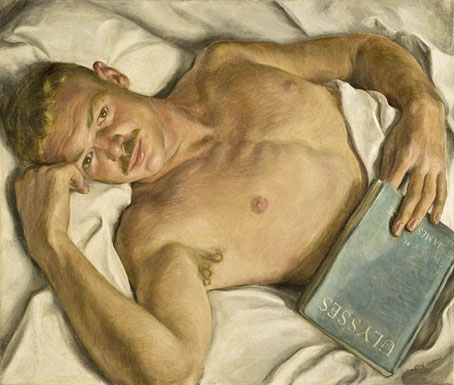
• I didn’t post anything for Bloomsday this year but if I’d seen these caricatures by Craig Morriss back in June I would have linked to them at the time.

• At Unquiet Things: The Eerie Moods and Pulpy Frights of Henri Lievens.

• Whole lotta rarities: the strangest Led Zeppelin artwork.

• Old music: A Willow Swept By Train by Janet Beat.

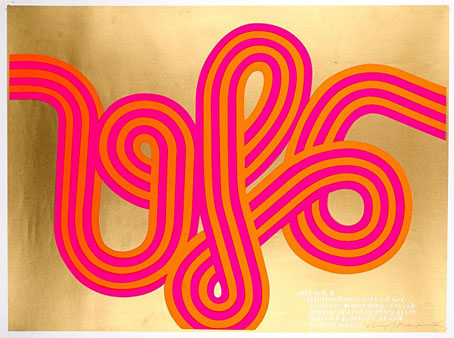
Instant Lettering Database

Atmospheres (1967) by Wimple Winch | Atmospheric Lightness (2018) by Brian Eno | Ligeti: Atmosphères (2019) by Orchestre Philharmonique de Radio France; Alan Gilbert

Weekend links 581

oz33.jpg

The back cover of Oz 33, February 1971. Art by Norman Lindsay.

Walker Mimms looks back 50 years to the trial of the editors/publishers of Oz magazine, in which the trio were accused of “conspiracy to corrupt public morals” following the appearance of Oz 28, the “Schoolkids Issue”, in May 1970. Elsewhere: corrupt your own morals by reading the offending issue; then see Hugh Grant in a hippie wig in The Trials of Oz, a BBC dramatisation of the courtroom drama; after which you can watch the real editors—Richard Neville, Jim Anderson and Felix Dennis—discuss the whole affair with other interested parties 20 years on (and also see Germaine Greer shame Jonathan Dimbleby into saying the word “cunt” on live TV).

• New music: Caves – A Compilation Of Silences by Other People (“This collection of silences and music can be used as timers for cooking, meditation, running, walking, sleeping or anything you want”), and Vaganten by ToiToiToi, the next release on the Ghost Box label.

Chris Carter‘s favourite albums. I think I own more of the albums listed here (including the ABBA) than any other entry in this long-running series. Which isn’t really surprising…

What I would say about that in general is what I’ve written in the new introduction to Teenage, which is that the 60s youth culture that we’ve been talking about, the progressive, critical side of it came as a complete surprise to adults. And once they identified what was going on, they were incredibly hostile, and authorities were incredibly hostile to it. And from the Thatcher government in the 80s you have a series of measures, a series of laws, a series of attitudes, a series of structures put in place to make sure that that never happens again. So youth itself has been deliberately depoliticised and also had a lot of the opportunities for any kind of autonomy taken away from it. That is, it has been a deliberate government policy right the way through, including Blair, and definitely with the current lot.

Echoes of the Oz debate in this discussion between Jon Savage and Owen Hatherley

• At Perfect Sound Forever: RIP Jon Hassell: honouring a one-of-kind musician/composer.

• At Spoon & Tamago: Edward Luper’s 36 Views of the BT Tower (after Hokusai).

• At Unquiet Things: Doorways into Awareness: An interview with Century Guild.

• Mix of the week: The Ivy-Strangled Path Vol. XXIV by David Colohan.

• Ghost notes: Michio Kurihara‘s favourite guitar solos.

• “Future space travel might require mushrooms.”

• At Dennis Cooper’s: Alexander Hammid Day.

Wyrd Daze Lvl.4 FIVE STAR is live.

Like A Tear (1968) by The World Of Oz | Return To Oz (2004) by Scissor Sisters | Il Pavone Di Oz (Praslesh Remix) (2014) by Verrina & Ventura

Herbie Hancock live!

hh.jpg

Whenever my music listening gets on the jazz train, as it has been for the past week or so, I find myself gravitating to the Kozmigroov Konnection to see what albums I may still be missing. “Kozmigroov” is one of those descriptive terms that sounds awkward but is nevertheless useful for framing an idiom that would otherwise go undefined: “a transgressive improvisational music which combines elements of psychedelia, spirituality, jazz, rock, soul, funk, and African, Latin, Brazilian, Indian and Asian influences culminating [in] an all encompassing cosmic groove. At its most accomplished, Kozmigroov is both expansive and highly rhythmic, and simultaneously finds connections with the mind, soul and body.” (more)

If you like this kind of thing then the Kozmigroov Konnection is an essential guide, especially when you’re faced with discographies by artists you know only from their contributions to releases by bigger names. Herbie Hancock isn’t exactly an unknown quantity but I hadn’t noticed before that his Kozmigroov listing features a number of live recordings that I was sure I hadn’t heard. Could they be found anywhere? The answer is obviously yes, thanks to the trove of live recordings archived at Never Enough Rhodes. The post there is an old one but the links for all the Herbie Hancock recordings were updated a few years ago, and all the ones from the essential years up to 1979 are still active. Not only are they active but there are far more concerts from the Mwandishi/Head Hunters era than I ever expected to find in one place. And many of these are from FM radio broadcasts so they don’t suffer from the cassette-recorder-under-the-seat syndrome that spoils so many rock bootlegs from the 1970s and 80s. Amazing.

flood.jpg

Sleeve art by Nobuyuki Nakanishi for one of the few official live albums from Hancock’s Head Hunters period (but only in Japan until it was reissued a few years ago). I love everything about this cover: the Cosmic Coelacanth, Mr. Hancock’s NASA helmet, the Stop typeface, the waterspout nod to Mati Klarwein’s cover for Bitches Brew… Earth, air, fire and water.

The performances range from extended extrapolations of album compositions—a 43-minute version of Hornets (Boston Jazz Workshop, 1973) featuring a lot of synth freakery from Patrick Gleeson; a 57-minute performance of Sleeping Giant (Baker’s Keyboard Lounge, Detroit, 1972)—to later concerts that capture the post Head Hunters group playing to wildly enthusiastic audiences. The thumping version of Palm Grease that opens the Kansas City show makes the studio version sound very restrained. The only disappointment is a rather noisy recording of the FM session from the Ultra-Sonic Recording Studio, a Long Island venue that in the early 1970s hosted many studio appearances by rock, blues and jazz artists. An Ultra-Sonic session by Dr John from 1973 has circulated for years in exceptional quality so I was hoping the Hancock set might sound as good. This is a minor quibble, however, the recording is still decent enough, and the performances are fantastic.

hh2.jpg

Musikladen, 1974.

The only concert on the list that I had heard before is an audio rip from a 1974 appearance by the Hancock ensemble on Musikladen, a German TV series. I linked to a copy of this in one of the weekend posts years ago but nothing lasts on YouTube so the link is now defunct. There is another copy here, however. For the time being… The person who was running Never Enough Rhodes complained about having to keep reposting concerts when file hosting services were shut down. Always download things of interest, you never know how long they may be available.

Previously on { feuilleton }
Miles and Miles

Sounds off the Beaten Track

womad1.jpg

In 1987 the Glastonbury Festival opened its WOMAD stage for the first time to provide a showcase for the kind of acts you might expect to see at the separate World Of Music And Dance festival. Sounds off the Beaten Track is a 52-minute TV documentary about the acts who appeared on the WOMAD stage at Worthy Farm that year, and also about the WOMAD ethos itself, a project inaugurated in 1980 by Peter Gabriel and others to give greater prominence to musicians from all over the world. One of the WOMAD initiators, Mark Kidel, also directed the film, while co-founders Peter Gabriel and Thomas Brooman talk on camera. The film captures the Glastonbury Festival at a time when it was still a relatively small and rather ramshackle affair, closer to its hippy roots, and very different from the sprawling tent city of later years.

womad2.jpg

The main interest, however, is the music, especially the amount of time given to the Burkina Faso group, Farafina, and to Jon Hassell, whose Flash Of The Spirit collaboration with Farafina was released the following year. This was the first I saw of Hassell on TV, and also the last until he turned up much later as a guest on MTV’s Seal Unplugged session. I remembered the Farafina performance but I’d forgotten that Hassell also talks a little about his Fourth World idea. Among the other featured artists are The Bhundu Boys, Toumani Diabaté, Amadu Bansang Jobarteh, The Inspirational Choir, and Najma Akhtar who subsequently appeared on another unplugged (or partly plugged) session with Jimmy Page and Robert Plant. Jon Hassell had been under the WOMAD umbrella since 1982 via the excellent Music And Rhythm compilation album which included an exclusive live recording of Ba-Benzélé. He was often critical of the “world music” marketing label, seeing it as a convenient way for record companies and music sellers to appear to be supporting musical diversity while placing all the non-Anglophone recordings in a ghetto area away from everything else. He preferred to talk of “worldly music”, an idiom that was of the world, uncloistered, freed from the ghetto; music where the beaten and unbeaten tracks might combine to form a new highway.

Previously on { feuilleton }
Jon Hassell, 1937–2021
Jon Hassell, live 1989
Power Spot by Michael Scroggins

Weekend links 574

vyletal09.jpg

Poster for Beauty and the Beast (1978) by Josef Vyletal.

• Next month, Second Run release Juraj Herz’s 1978 adaptation of Beauty and the Beast on region-free blu-ray. I watched this last year on a Czech DVD so it’s good to hear it’s being given an upgrade. Herz’s film is a distinctly sinister take on the familiar tale, with a bird-headed Beast that’s closer to Max Ernst than anything you’ll find in illustrations for Perrault’s stories.

• “In a coincidence so unlikely it almost seems, well, magical, the girls traced illustrations from a book of folklore that also contained a short story by Sir Arthur Conan Doyle himself, a reflection of a reflection of a reflection.” Audrey Wollen on the Cottingley fairy photographs. Related: The Coming of the Fairies by Arthur Conan Doyle.

• “[Mark E. Smith], with his love of Stockhausen, HP Lovecraft, and (bizarrely) the sitcom Keeping Up Appearances, becomes a reverse coder, an apostle of avant pulp, a ‘paperback shaman’.” Sukhdev Sandhu reviews Excavate! The Wonderful and Frightening World of the Fall, edited by Tessa Norton and Bob Stanley.

• “Found photos of men in love from 1850–1950“. Maybe. As before, I’m always cautious about imposing a narrative on old photographs.

• Mixes of the week: A mix for The Wire by Pamela Z, and a dose of post-punk esoterica by Moin for XLR8R.

DJ Food takes another dive into back issues of International Times in search of ads for London’s Middle Earth club.

• At The Smart Set: Colin Fleming watches John Bowen’s drama of pastoral horror, Robin Redbreast.

• At Dennis Cooper’s: Heavily plotted non-linear structures whose velocity lacks narrative drive.

Ryan Gilbey attempts to rank Robert Altman’s features into a list of 20 best.

• Still Farther South: Poe and Pym’s Suggestive Symmetries by John Tresch.

• New music: At One Point by Scorn.

Visionist‘s favourite albums.

The Beast (1956) by Milt Buckner | Leggo Beast (1978) by Gregory Isaac’s All Stars | This Beast (1983) by Tuxedomoon