Dear Antonioni…

ma1.jpg

Sit through the credits for Monty Python’s The Meaning of Life and you’ll be rewarded at the very end with a written suggestion: “If you have enjoyed this film, why not go and see La Notte?” The joke being that a notoriously sombre offering from Michelangelo Antonioni is the antithesis of a laugh riot. In 1983 you could still poke fun at a director whose films were acclaimed as well as derided for being slow and serious; in 2022 this no longer seems likely. Antonioni hasn’t exactly been forgotten but his visibility as a cultural signifier has deflated considerably since his final feature in 1997, and the cinematic landscape has changed a great deal since 1983. The most significant change where Antonioni’s films are concerned is the way in which the techniques that once set him apart from many other directors have been thoroughly absorbed into the language of cinema. His predilection for sustained shots, for posing his characters in striking landscapes or architectural spaces, for refusing to offer simple explanations for the behaviour of those characters; none of this seems as radical as it did in the 1960s. We have a sub-genre today known as “slow cinema“, a form which Antonioni’s films helped make possible. It’s easy to characterise these aspects of the Antonioni oeuvre as running counter to a Hollywood that prefers everything to be swiftly delivered and comprehensible. But Antonioni’s techniques have followed the course of any aesthetic innovation which in time becomes a part of the available range of options for an artist, wherever that artist may be situated.

ma2.jpg

In 1963 Stanley Kubrick put La Notte on a list of 10 favourite films, and there’s a case to be made that 2001: A Space Odyssey is science fiction filtered through Antonioni’s sensibility; or there would be if Kubrick and Arthur C. Clarke were more concerned with human beings. A better candidate for SF Antonioni-style is Andrei Tarkovsky’s Solaris, and there’s a further case to be made that the continued popularity (or visibility) of Tarkovsky’s films is one of the main reasons we hear less today about the man Tarkovsky named in his diaries as “the best Italian director working today”. The first film Tarkovsky made after he left the Soviet Union was Nostalgia, a drama about a Russian writer in Italy that was co-written with Antonioni’s regular screenwriter, Tonino Guerra. (The pair began work on the Nostalgia screenplay while staying at Antonioni’s house.) Tarkovsky’s films are just as serious and slow as Antonioni’s, more so in most cases, but Tarkovsky remains visible because we’re living in a world where once-disreputable genres, science fiction in particular, are now a dominant form, and Tarkovsky just happened to make two cult science-fiction films. It’s difficult to imagine Antonioni being nakedly generic but Blow-up is partly a murder mystery, albeit one that refuses satisfactory explanation, while The Passenger is an extenuated thriller with all the dynamics pared away, and with the climactic event taking place while the camera is looking elsewhere. In Il Deserto Rosso Monica Vitti loses her mind in the industrial wastelands of Ravenna accompanied by the buzzes and whines of Vittorio Gelmetti’s electronic score. There’s nothing overtly science fictional about this but the film would make a fitting companion to a screening of Stalker.

ma3.jpg

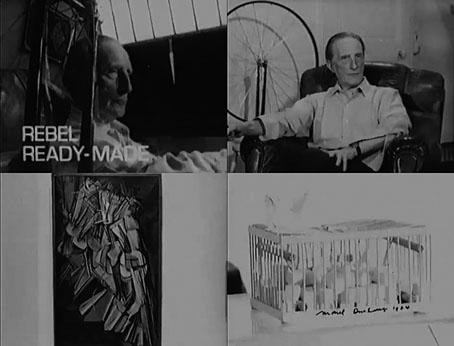
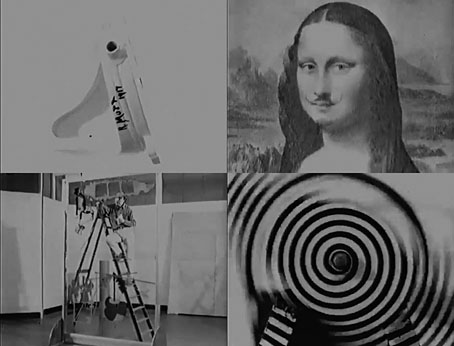
All of which brings us to Dear Antonioni…, a 90-minute documentary by Gianni Massironi which serves as an ideal introduction to the director and his works. The film was a co-production with the BBC, made to coincide with the release of Antonioni’s final feature, Beyond the Clouds, in 1997. Dear Antonioni… is also the title of an open letter to the director by Roland Barthes, passages from which are read by several of Antoninio’s actors. The readings punctuate a chronological examination of the director’s career, from his early documentaries and excursions into Neo-Realism to the features that established his reputation. If it had been made ten years earlier it might have hastened my appreciation of his films.

During my erratic self-education into the works of European directors I had a hard time getting used to Antonioni. I liked The Passenger very much, had a grudging respect for Blow-up, hated Zabriskie Point until the final 20 minutes or so, and for a long time regarded L’Avventura as over-rated. But my old video lists tell me that I taped this documentary anyway because I felt the problem was more a result of my own impatience rather than anything in the films themselves. A further problem was getting to see some of the films at all. I’ve mentioned before how difficult it used to be to appraise the work of directors outside the Anglosphere if you weren’t living in a city with a decent arts cinema. Il Deserto Rosso was never on TV, neither were La Notte or L’Eclisse, two major features which I still haven’t seen. The latter pair are mentioned in Dear Antonioni… but no clips are shown which makes me wonder if they were subject to a rights dispute like the one that kept several Hitchcock films out of circulation for many years. Antonioni himself is only present in historic interview footage but there’s plenty of production commentary from his screenwriters, Tonino Guerro, Sam Shepard, and Mark Peploe, plus more actors and collaborators including Monica Vitti, David Hemmings and Vanessa Redgrave. I’d also forgotten that Alain Robbe-Grillet turns up to present a lucid argument for Antonioni’s films as “Modern” (or Modernist) works in contrast to the Hollywood idiom exemplified by Alfred Hitchcock. I won’t attempt a précis of Robbe-Grillet’s remarks, it’s easier to suggest you hear them for yourself. Whether you’re a neophyte or an aficionado this is an unfailingly intelligent and absorbing study.

Previously on { feuilleton }
Michelangelo Antonioni, 1912–2007

The Late Show: Thomas Pynchon

pynchon1.jpg

Among other things, I’ll remember 2021 as the year of Too Much Work, but it’s also been the year of reading several thousand pages of Thomas Pynchon’s prose. After finally getting through Gravity’s Rainbow back in June (having also read V. and The Crying of Lot 49) I continued with the rest of the Pynchon oeuvre, working my way through Vineland, Mason & Dixon, and Inherent Vice. And after reading the latter I watched the film adaptation again which I found to be much more enjoyable and less confusing the second time round. (Moral: read the novel first). I’m currently ploughing through Against the Day, not worrying too much about how all the various episodes are supposed to join together.

pynchon2.jpg

The commendable inaccessibility of Pynchon the man means that documentary features about his books are scarce. Television abhors an authorial vacuum which is why so many TV documentaries about long-dead or otherwise unavailable writers resort to the cliches of a silhouette hammering away at a typewriter, or an actor in period clothing scribbling in a dimly-lit room. The BBC, in the days when it still used to make programmes about books and writers, often evaded the absurdities of docu-drama by the simple expedient of having a suitable actor read portions of prose, which is what we have in this all-too-brief Pynchon feature from 1990. The Late Show was a nightly fixture on BBC 2 at this time, with a remit to cover anything newsworthy in the cultural sphere. Vineland was about to be published in Britain so editor David Gale was called upon to explain to viewers the lure of Pynchon’s novels and their mysterious author. It’s a fascinating piece which achieves in a mere 19 minutes what Thomas Pynchon – A Journey into the Mind of [P.] barely manages in an hour and a half. As with the Dubinis documentary, there’s some discussion of the authorial enigmas but Gale keeps the novels to the fore. It’s amusing with hindsight to hear about the critical disappointment that greeted the arrival of Vineland—Pynchon’s first novel after a silence of 17 years—knowing that the monumental Mason & Dixon would be published a few years later. Commentary is supplied by publishing heavyweights Tom Maschler, Dan Franklin and John Brown (two of whom describe their meetings with the elusive author), together with critic Rhoda Koenig and critic/poet Eric Mottram, here interviewed with a picture of one of his favourite authors, William Burroughs, peering over his shoulder.

Previously on { feuilleton }
Esoterica 49
Pynchonian cinema
Going beyond the zero
Pynchon and Varo
Thomas Pynchon – A Journey into the Mind of [P.]

L’après-midi d’un faune

faune1.jpg

Listening recently to a collection of Debussy’s music it occurred to me that I knew rather a lot about the creation and performance of the Nijinsky ballet based on Prélude à l’après-midi d’un faune but couldn’t recall having seen a performance of the original dance. Not in full, anyway, although “full” here only means the entire 12 minutes, Debussy’s short piece being the only completed part of what would have been a much longer composition.

faune2.jpg

This filmed version of the ballet dates from 1980, and forms part of a tribute to Nijinsky staged by Rudolf Nureyev and Chicago’s Joffrey Ballet, the other works being Petrouchka and Le Spectre de la Rose. L’après-midi d’un faune is the only one of the three ballets that was choreographed as well as danced by Nijinsky, and was famously radical at the time, with the dancers adopting the stylised postures of figures from the ceramics of Ancient Greece. The erotic tone of the piece also generated controversy.

The Nureyev/Joffrey film restages the original Ballets Russes performance from 1912, using the costumes and decor designed by Léon Bakst. The choreography departs so much from classical ballet it might serve as a different kind of prelude, to the even more radical and controversial dances that Nijinsky and the Ballets Russes staged the following year. The original performance of The Rite of Spring was subsequently resurrected by the Joffrey Ballet after a lengthy period of historical research by Millicent Hodson and Kenneth Archer. A 1989 BBC documentary about the process of research and reconstruction, The Search for Nijinsky’s Rite of Spring, is essential viewing for anyone interested in Diaghilev’s company.

Previously on { feuilleton }
George Barbier’s Nijinsky
The Rite of Spring reconstructed
Vaslav Nijinsky by Paul Iribe
Diaghilev and the Ballets Russes
Pamela Colman Smith’s Russian Ballet
Images of Nijinsky

Abstract Cinema

abstract.jpg

Good to see this documentary turn up at last even if it is on a private YouTube channel affiliated to a site that hosts cinematic rarities. Abstract Cinema was made in 1993 for Channel 4 (UK) at the tail end of the period when the channel could be relied upon to screen resolutely uncommercial fare. The documentary was another production by Keith Griffiths, producer of many films with the Brothers Quay, and producer/director of a number of documentaries such as this, exploring the cinematic zones that television seldom acknowledges.

abstract1.jpg

I’ve mentioned this programme a few times before because I taped it at the time, and still regard it as an excellent introduction to an idiom that many enthusiasts consider to be the purest form of cinema, as opposed to the theatrical storytelling that dominates the medium. Peter Greenaway has complained for years about the formulaic nature of contemporary feature films yet his own films, which are supposed to be an alternative to what he calls “dominant cinema”, aren’t so very different from the Hollywood norm in their reliance on actors, narratives, sets and the like. Abstract cinema avoids all of these things. Stan Brakhage is one of the filmmakers interviewed, and his own productions not only shunned sound, they even shunned the camera when he was painting directly onto the film strip. At the time of Griffiths’ interview Brakhage was doing this again using the comparatively larger canvas of Imax stock.

abstract2.jpg

Griffiths’ documentary runs through the history of cinematic abstraction, from Oskar Fischinger and Len Lye (both the subjects of earlier Griffiths studies) to the 1990s when several of the interviewees had taken to programming computers to create their visuals. Griffiths made his documentary at just the right time. As well as having access to a TV channel that would present such work to an audience (albeit late at night), he was also able to interview a number of the leading practitioners while they were still around; in addition to Brakhage there’s John Whitney, Jules Engel, Pat O’Neill, Malcolm le Grice, Michael Scroggins and Vibeke Sorensen. Notably absent is Jordan Belson, possibly because he’s always been reluctant to discuss the production process that created his ethereal imagery, although film historian William Moritz discusses Belson’s work while guiding us through the history. What you don’t get here is the additional 25 minutes of abstract films that were broadcast after the documentary, an unprecedented event, and one that wouldn’t be repeated.

Elsewhere on { feuilleton }
The abstract cinema archive

Serious houses: The Lud Heat Tapes, 1979

ludheat.jpg
Goldmark hardcover, 1987.

The old maps present a sky-line dominated by church towers; those horizons were differently punctured, so that the subservience of the grounded eye, & the division of the city by nome-wound, was not disguised. Moving now on an eastern arc the churches of Nicholas Hawksmoor soon invade the consciousness, the charting instinct. Eight churches give us the enclosure, the shape of the fear; – built for early century optimism, erected over a fen of undisclosed horrors, white stones laid upon the mud & dust. In this air certain hungers were activated that have yet to be pacified; no turning back, as Yeats claims: “the stones once set up traffic with the enemy.”
—Iain Sinclair, Lud Heat

A serious house on serious earth it is
—Philip Larkin, Church Going

“Serious” is a word with many meanings. The Oxford English Dictionary gives one of these as “attended with danger; giving cause for anxiety”, a definition that wouldn’t suit Philip Larkin’s poem describing a visit to a moribund country church, but which is easily applied to a longer cycle of poems by Iain Sinclair. Lud Heat: A Book of the Dead Hamlets is the collection of writings that lifted Sinclair’s authorial profile out of the poetry ghetto in which he’d been situated throughout the 1970s. He published the first edition through his own Albion Village Press in 1975 but it wasn’t until the arrival of Peter Ackroyd’s Hawksmoor a decade later that wider public attention began to turn in Sinclair’s direction. Lud Heat set out for the first time a series of observations concerning the peculiar and sinister qualities of the churches built by Nicholas Hawksmoor in 18th-century London: Christ Church, Spitalfields; St George’s, Bloomsbury; St Mary Woolnoth; St George in the East; St Anne’s, Limehouse; St Alfege Church, Greenwich; plus those built in collaboration with John James: St Luke Old Street, and St John Horsleydown. The book separates the poetry with prose pieces—diary extracts, accounts of a film viewing and an art exhibition—that anticipate the author’s subsequent explorations of London’s margins and esoterica. Like many of Sinclair’s later writings, the texts in the early editions are accompanied by a variety of illustrations: engravings, contemporary photographs, and a map of London drawn by Brian Catling that posits a network of “lines of influence…invisible rods of force” connecting the churches with each other and with significant locations such as William Blake’s house, Cleopatra’s Needle and so on. Paperback reprints omitted the illustrations* but retained the map which was redrawn by Dave McKean. The new version gave greater emphasis to the Egyptian symbols that Sinclair and Catling had scattered across the city: jackal-headed Anubis as the presiding deity of the Isle of Dogs.

christchurch.jpg

Photo by Charles Latham from London Churches of the XVIIth and XVIIIth Centuries (1896) by George H. Birch.

Lud Heat is a beguiling and potent book; it’s also a book that’s of its time in its suggestion of malefic “rods of force” scored across the capital. Sinclair’s map may be the earliest artistic development of a process begun in 1969 when John Michell published The View Over Atlantis, an elaboration of ideas set forth in another of his books, The Flying Saucer Vision. Michell’s free-wheeling speculations gave new life to the innocuous studies of Alfred Watkins, inflating amateur archaeological ruminations into full-blown Aquarian metaphysics. Where Watkins considered that “ley lines” (a term of his own invention) might have been ancient trading routes, Michell’s enthusiasm for the full range of Fortean phenomena transmuted the alleged paths into channels of unspecified “Earth energy”, flying-saucer guides and the axes of a sacred geometry. Other crank scholars were eager to follow Michell’s lead, leaving an opening for Sinclair to adopt the conceit for its poetic resonances. New Age trappings were inverted to reveal a darker pattern more suited to London’s history of plague, murder and mass destruction. (The Hawksmoor churches had been built to compensate for the devastations of the Great Fire of 1666; two of them were hit by bombs during the Blitz, with one being damaged beyond repair.)

This isn’t to suggest that Sinclair was borrowing directly from Watkins and Michell; in an interview he mentions an earlier precursor of both his map and Watkins’ ley lines in Prehistoric London: Its Mounds and Circles (1914) by Elizabeth O. Gordon. But something was in the air in the 1970s. Lud Heat appeared shortly before the release of a pair of albums that borrowed heavily from Michell’s books—Green (1978) by Steve Hillage, and Blake’s New Jerusalem (1978) by Tim Blake—while two TV serials exploited the idea of ley lines as channels of Earth energy, Children of the Stones (1977) and Nigel Kneale’s Quatermass (1979). Lud Heat stands apart from these works by concentrating on urban structures rather than isolated monoliths and ancient pathways. The suggestion that the city of London could be home to mysterious “rods of force” is an especially intriguing one, hence the appropriation of the idea by Peter Ackroyd in Hawksmoor, and Alan Moore in From Hell. Any church of a sufficient size or age is a kind of time machine, maintaining in its appearance and its grounds a pocket of history separated from the changes that take place around it. The churches in Lud Heat are also batteries of stone, impregnated with the unspent energies of the dead who lie in their crypts. These latent forces overflow their containers, spilling into the streets beyond the church walls. Sinclair has always been adamant that his Lud Heat map is a fabrication; the degree to which he believes in the rest of his thesis is for the reader to decide. It is a fact that St George in the East is close to the location of the Ratcliffe Highway Murders of 1811 (Sinclair includes a illustration of the murderer’s corpse in Lud Heat), while Christ Church, Spitalfields, sits at the centre of maps of the Jack the Ripper murders. The fifth and most brutal of these occurred a short distance from that colossal porch on the opposite side of Commercial Street. “Dead Hamlets” also has many meanings.

Continue reading “Serious houses: The Lud Heat Tapes, 1979”