Weekend links 166

foxxbelbury.jpg

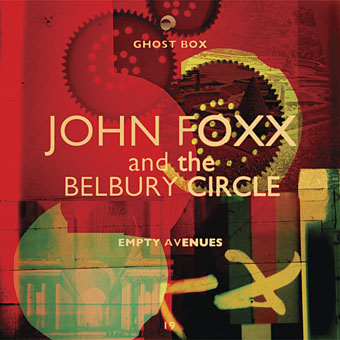
The Julian House cover art for the forthcoming collaboration between John Foxx and Belbury Poly (here renamed) has been revealed. Single no. 9 in the Ghost Box Listening Centre Study Series is now available.

• In addition to new Ghost Box records there’s more Hauntological (for want of a better term) cinema on the way this summer with the DVD/BR release of Ben Wheatley’s A Field in England. The potted description at Movie Mail is “a monochrome psychedelic trip into magic and madness set during the English Civil War”. Julian House has made a trailer. Meanwhile at Fangoria, there’s a PIF mixtape from The Advisory Circle. This accompanies an interview with John Krish, director of the most bizarre of the UK’s many strange and alarming public information films from the 1970s.

• More mixes: The hour-long OH/EX/OH show for The Geography Trip on Chorlton FM. “Expect slumber / tension / euphoria in almost equal measures.” It’s marvellous. At Self-Titled mag there’s DJ Food with O Is For Orange: Boards of Canada, Broadcast, The Books, etc.

Tangiers is a computer game based on the fiction of William Burroughs. Jim Rossignol talked to Alex Harvey about the development of the project.
walpurgisnacht.jpg

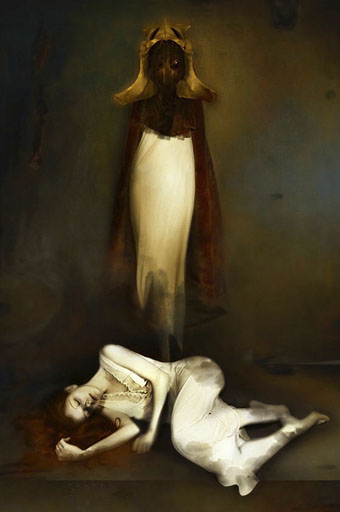
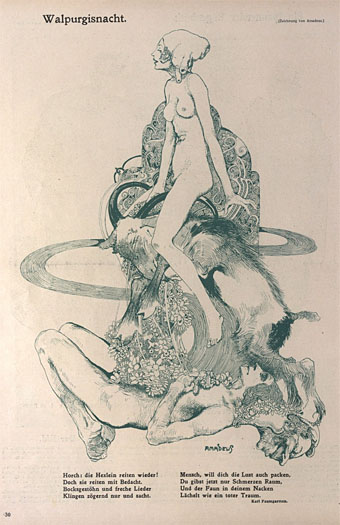
Walpurgisnacht (1917) by Amadeus. A drawing that could easily be from the late 1960s. If anyone knows the full name of the artist, please leave a comment. Via Beautiful Century.

Rebecca J. Rosen asks “What would the night sky look like if the other planets were as close as the moon?”

• The mystery of Charles Dellschau and the Sonora Aero Club.

The Surreal Cave Paintings Of Stockholm’s Metro Stations.

• At 50 Watts: More strange art from Marcus Behmer.

Ry Cooder in 1970. Directed by Van Dyke Parks!

The Post Office Tower: now you see it…

• At Little Augury: 99 Meninas.

Sartori In Tangier (1982) by King Crimson | City Of Mirage (2010) by John Foxx
LightSpin

lightspin.jpg

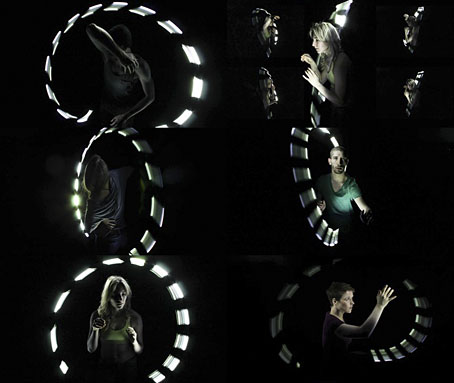
After a week or so of posts looking back over a century of dance, this brings everything into the present. Eric Paré’s LightSpin used stop-motion photography and twenty-four cameras to capture half a million photos which were then edited into a short video. All of the lighting, which floats around the dancers, is done by hand. Core77 goes into the technical detail, and also has some astonishing jpeg loops from the same sessions.

Weekend links 161

descent.jpg

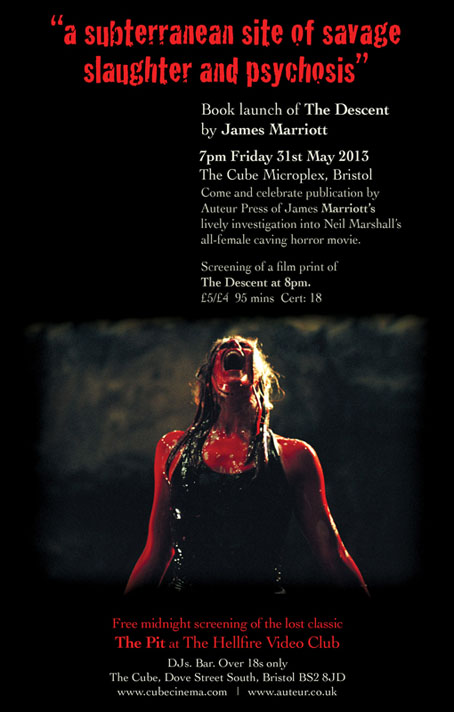
My friend James Marriott died last year. He was 39. His final book, The Descent, a study of Neil Marshall’s acclaimed horror film, is launched on Friday at the Cube Microplex in Bristol. The book is published by Auteur, a UK imprint, in their Devil’s Advocates series. James was finishing the book a year ago this month, and sent me a late draft for comments. In addition to examining Marshall’s film in detail he also looks at its sequel and explores the micro-genre of cavern-oriented horror. When it came to literature James preferred Robert Aickman and Thomas Ligotti; he enjoyed their cinematic equivalents too but he also had a great appetite for horror films of any description, and would happily wade through hours of giallo trash in the hope of finding something worthwhile. I miss our long, digressive email exchanges, and the opportunity they afforded to swap new discoveries.

• “For artists not working in digital media — those who cut, build, draw, paint, glue, bend, and make things in the more traditional manner — there is something of a ‘Surrealist’ popularity at hand today,” says John Foster.

• At Open Culture: Duke Ellington’s Symphony in Black starring a 19-year-old Billie Holiday, and Nina Simone performs six songs on The Sound of Soul (1968).

• I’m not remotely interested in Baz Luhrman’s latest but I do like the Art Deco graphics and logos created by Like Minded Studio for The Great Gatsby.

Alejandro Jodorowsky: “I am not mad. I am trying to heal my soul”

• The Clang of the Yankee Reaper: Van Dyke Parks interviewed.

• A 45-minute horror soundtrack mix by Spencer Hickman.

• At But Does It Float: Album art by Robert Beatty.

Topological Marvel: The Klein Bottle in Art

Anne Billson on The Art of the Voiceover.

Soviet board-games, 1920–1938

A Brief History of Robot Birds

Le Chemin De La Descente (1970) by Cameleon | Descent Into New York (1981) by John Carpenter | The Descent (1985) by Helios Creed

Cassette culture

xetb.jpg

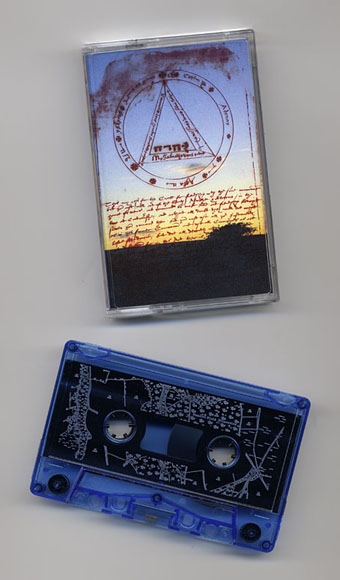
Three Spirits by Xenis Emputae Travelling Band.

Looks like I was premature in 2008 when I was eagerly contemplating the demise of the cassette tape as a music format. Earlier this year I bought a music cassette for the first time since the early 1980s, albeit inadvertently since this was the compilation that came with The Twilight Language of Nigel Kneale (more about that at a later date). This week Phil Legard of Xenis Emputae Travelling Band very generously sent a copy of his latest release, Three Spirits, which is another cassette edition. And to top things off, FACT magazine this week launched a review section for new cassette releases. So much for the format being moribund.

I have to admit my anti-cassette animus has largely dissipated now there’s no reason to rely on them for anything. And I did hang on to my cassette deck… Switching that on for the first time in years and pressing “play” was a considerable novelty, as was the inevitable tape hiss that’s absent from most contemporary releases unless your name is Pye Corner Audio. The resurgence of the format is both interesting and understandable: interesting for its being another example of the way the future never unfolds in a predictable manner; understandable because cassettes are relatively cheap to produce, and there’s still a very evident market for material, analogue artefacts. And the novelty is present, of course, for people young enough to miss out on the delight of friends’ cheap tape machines chewing their lovingly-crafted compilations.

As to Three Spirits, it’s an excellent release, two sides of sublime atmospheres which at times sound like a local equivalent of Popol Vuh. I’ll be playing this one a lot. Phil writes about the music here, and there’s also a video for one of the tracks.

Previously on { feuilleton }
Xenis Emputae Travelling Band
Old music and old technology

Weekend links 159

francov2.jpg

El Banquete Magnético (2011) by Cristina Francov.

Did Vertigo Introduce Computer Graphics to Cinema? asks Tom McCormack. He means Saul Bass’s title sequence which mostly uses still harmonographs but also features some animated moments by John Whitney.

•  Temple of the Vanities by Thomas Jorion. “Pictured here are political monuments and munitions depots, hulking concrete forms that marked the edges of empires.” Related: Paintings by Minoru Nomata.

• Musical reminiscences: Matt Domino on the Small Faces’ psychedelic magnum opus Ogden’s Nut Gone Flake, and Richard Metzger on the sombre splendours of Tuxedomoon.

Harrison is best known as one of the restless fathers of modern SF, but to my mind he is among the most brilliant novelists writing today, with regard to whom the question of genre is an irrelevance. To read his work is to encounter fiction doing what fiction must: carrying out the kinds of thinking and expression that would be possible in no other form. I pass through his novels feeling a mixture of wonder, calmness and disturbance; I end them brain-jarred and unsettled. Metaphysical echoes persist for days afterwards. It feels as if I have had a strabismus induced, causing illusions that slowly resolve into insights.

Robert Macfarlane on M. John Harrison and the reissue of Climbers.

• Divine Machinery: An Interview with Paul Jebanasam. Arvo Pärt, Cormac McCarthy and Algernon Blackwood are folded into his new album, Rites.

Autostraddle shows the evolution of twelve queer book cover designs. As is often the case in cover design, latest isn’t always best.

• “My Definition Of Hell? It’s Other People, At The Cinema!” Anne Billson on the very thing that finished me as a cinema-goer.

• “London in the 1830s was a truly weird and terrifying place.” Spring-Heeled Jack, The Terror of London.

• At Scientific American: The Reading Brain in the Digital Age: The Science of Paper versus Screens.

Van Dyke Parks: “I was victimised by Brian Wilson’s buffoonery.”

Colour film of London in 1927.

Abandonedography

Social Dead Zone

• Tuxedomoon: Tritone (Musica Diablo) (1980) | Desire (1981) | Incubus (Blue Suit) (1981)