Mongolian impressions

mongolie.jpg

My phone line problem still hasn’t been resolved but I am able to get online again for longer than two minutes at a time…for now. Posting may remain sporadic for the next few days.

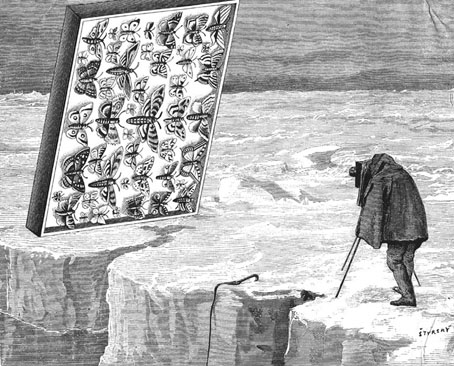
This is the third time I’ve written about Impressions de la Haute Mongolie, a 50-minute film made by José Montes-Baquer in the mid-70s in which Salvador Dalí is our guide on a phantasmic journey through micrographic landscapes. Dalí’s narration covers such diverse subject matter as Raymond Roussel, giant hallucinogenic mushrooms, Outer Mongolia and Adolf Hitler. The film turned up at Ubuweb a few years ago but without English subtitles. (A document with an English translation was added later.) Now YouTube user DrewBadly has added the English translation to a copy of the film he’s posted on his YT channel. It’s essential viewing for Dalí enthusiasts.

Related: A Movable Feast, Raymond Roussel’s extravagant, hermetic universe.

Previously on { feuilleton }
Hello Dali!
Dalí and the City
Dalí’s Elephant
Dalí in Wonderland
Alejandro Jodorowsky’s Dune
Dirty Dalí
Impressions de la Haute Mongolie revisited
Dalí and Film
Salvador Dalí’s apocalyptic happening
Dalí Atomicus
Impressions de la Haute Mongolie

Weekend links 72

lesyeux.jpg

If Jean Cocteau had made a horror film it might have resembled George Franju’s dreamy and disturbing body-horror masterwork Les Yeux Sans Visage (1960). I’ve not been able to trace the artist for this poster but it’s a good example of the diluted Surrealism which was still prevalent in poster graphics at this time.

If I were asked what’s needed today, I’d say innovation, and greater timbral variety. If you truly want the audience to experience the clammy thrill of the grotesque, the uncanny and the fearful, you have to reach for the unfamilar, the perplexing, even the ugly; there’s an infinite Lovecraftian sound-world out there waiting to be explored. We need new combinations, new textures in film scoring. Horror has a licence to be weird – it’s supposed to mess with our heads. (more)

Stephen Thrower.

Stephen Thrower is an ex-member of Coil, a current member of Cyclobe, was the editor of a great magazine, Eyeball, devoted to horror cinema and what Kim Newman (casting about for a wider, non-generic label) calls “nightmare movies”, and is the author of Nightmare USA and Beyond Terror: The Films of Lucio Fulci. In other words, he’s more than qualified to write about horror film soundtracks. The reason is an event at the South Bank Centre, London, two weeks from now, Sound of Fear: The Musical Universe of Horror, one of the highlights of which will be a performance by John Carpenter’s soundtrack collaborator Alan Howarth. Related: my post about Italian horror soundtracks from 2008.

lovato.jpg

Art by Justin Lovato.

Mind Over Matter: Alan Fletcher’s The Art of Looking Sideways. “The Art of Looking Sideways captures the sensory overload of contemporary visual culture, while also acting as a primer in visual intelligence.” Related: Alan Fletcher profiled at the Design Museum.

• More music and more psychedelia: Past Present Future Space-Time “Wysing Arts Centre explores the legacy of psychedelia in this year’s annual music event”.

The Coilhouse International Silent Auction is GO and ends Sunday night if you want to bid for some rare and special things.

The Garden of Kama and Other Love Lyrics from India (1901), illustrated by John Byam Shaw.

• Chris Marker’s take on the recent London riots: Overnight.

• Bristol’s graffiti artists are redecorating the city’s streets.

• Women and knives: a Dario Argento poster gallery.

Inferno (1993) by Miranda Sex Garden, from their album Suspiria.

The art of Jindrich Pilecek, 1944–2002

pilecek1.jpg

Knight of Autumn (1971).

A pair of intaglio prints by a Czech illustrator and ex libris artist whose work helped sustain that strand of Surrealism which has never quite expired in Eastern Europe. These are from a larger selection of prints found here, and the tip comes via the ~Wunderkammer~.

pilecek2.jpg

Mirrors II (1986).

Elsewhere on { feuilleton }
The etching and engraving archive

Weekend links 70

swinburne1.jpg

Faustine (1928) by Harry Clarke.

• This week’s Harry Clarke fix: 50 Watts reposts the Faust illustrations while Golden Age Comic Book Stories has the illustrated Swinburne.

What Goes Steam in the Night is an evening with contributors to The Steampunk Bible hosted in London by The Last Tuesday Society on September 6th:

Co-author S. J. Chambers invites you to the official U.K. celebration of her book The Steampunk Bible (Abrams Image). Part lecture, part signing, and part entertainment, S. J. will be accompanied by contributors Jema Hewitt (author of Steampunk Emporium ) and Sydney Padua (Lovelace & Babbage) for a discussion of the movement, a special performance by Victorian monster hunter, Major Jack Union, and inevitable hi-jinks and shenanigans to later be announced.

• RIP Conrad Schnitzler, an incredibly prolific electronic musician, and founder member of Tangerine Dream and Kluster/Cluster.

Golden Pavilion Records reissues fully-licensed late 60’s and 70’s psychedelic, progressive, acid-folk & art-rock music.

Dressing the Air is “an exclusive consulting and online resource for the creative industries”.

Luke Haines explains how to cook rabbit stew whilst listening to Hawkwind.

Wood pyrography by Ernst Haeckel from his home, the Villa Medusa.

swinburne2.jpg

Satia Te Sanguine (1928) by Harry Clarke.

The truth is, the best novels will always defy category. Is Great Expectations a mystery or The Brothers Karamazov a whodunnit or The Scarlet Letter science fiction? Does Kafka’s Metamorphosis belong to the genre of fantasy? In reality men don’t turn into giant insects. And it’s funny. Does that mean it’s a comic novel? […] At a time when reading is in trouble, those readers left should define themselves less rigidly.

Howard Jacobson: The best fiction doesn’t need a label.

Pace the redoubtable Jacobson, Alan Jacobs believes We Can’t Teach Students to Love Reading.

How Ken Kesey’s LSD-fuelled bus trip created the psychedelic 60s.

Salvador Dalí creates something for Playboy magazine in 1973.

JG Ballard: Relics of a red-hot mind.

Electric Garden (1978) by Conrad Schnitzler | Auf Dem Schwarzen Kanal (1980) by Conrad Schnitzler.

The art of Leonidas Kryvošej

kryvosej1.jpg

Anděl západního okna.

Leonidas Kryvošej is a contemporary Czech Surrealist whose work I’d known for a while from an exhibition catalogue. I’d always wanted to see more so it’s a pleasure to discover a substantial set of paintings on the website he shares with Lucie Hrusková. A biographical note tells us that:

Leonidas Kryvošej was born 14th May, 1957 in Moravská Třebová. He lives in Ondratice near Prostějov. He has been a member of the surrealist group in Sternberk (later A.I.V) since 1986. Since 1997 a member Czech and Slovak surrealist group.

Most of the text on the site is Czech-only but the green painting above was one of the catalogue works whose English title, The Angel of the Western Window, we can no doubt assume is borrowed from Gustav Meyrink’s occult novel about Elizabethan magus John Dee. Occultism and alchemical symbolism seem to fuel Kryvošej’s art, and I like the profusion of wings and mutated bird-like creatures. There’s a lot of work on his gallery pages, all of it worth seeing for anyone who favours this kind of imagery.

kryvosej2.jpg

Ptací hra.

Elsewhere on { feuilleton }
The fantastic art archive