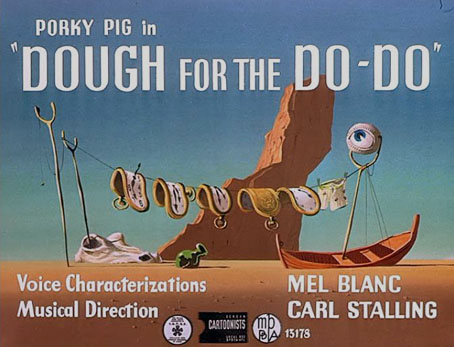
Bugs Bunny meets Fantômas in the Aquarium of Love

porky.jpg

Pop Surrealism, 1949.

More from the Chicago Surrealists. The discovery of the first item comes via a comment from Paul (thanks!) in the post about Arsenal magazine which directed my attention to Monoskop where there’s another publication, Cultural Correspondence, related to the Chicago Surrealist Group. Cultural Correspondence was a US journal which ran for 14 issues from 1975 to 1981. Searching around for more information revealed an archive of the entire run at Brown University:

A journal born from the collapse of the New Left and hopes for a new beginning of a social movement, but also of left-wing thinking about culture, Cultural Correspondence was in many ways a unique publication.

Its founding editors, Paul Buhle and Dave Wagner, had both served on the editorial board of the journal Radical America, founded in 1967. Buhle had been the founder of that bi-monthly journal, creating it out of a network of activist-intellectuals in the Students for a Democratic Society; Wagner was officially “Poetry Editor,” but after its shift from Madison, Wisconsin, to the Boston area in 1971, he became a member of an expanded board of editors. Together they taught at the Cambridge-Goddard Graduate School, then Wagner left for Europe and Buhle left the editorial board, moving to Yonkers. An exchange of letters from these locations spawned the notion of a new publication. It was to be the first radical magazine put out by members of a generation that had since childhood watched television and appreciated as well as enjoyed a considerable portion of it, also films and “pulp” literature.
cc1.jpg

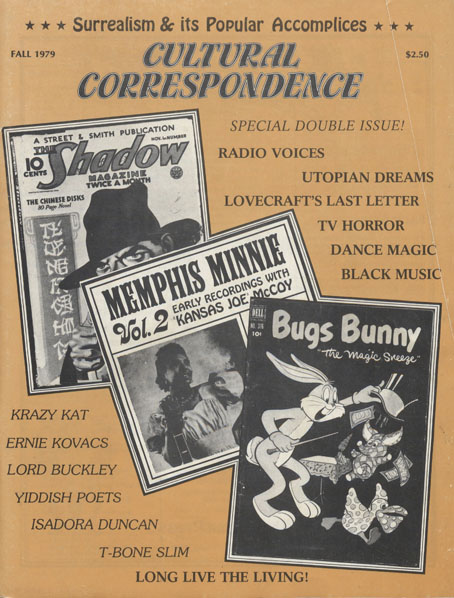
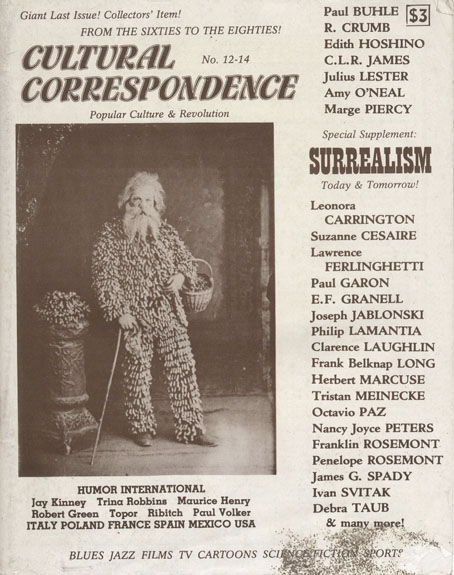
The issue at Monoskop was the penultimate one (numbered 10/11), guest-edited by Franklin Rosemont who took the opportunity to give the readers an exploration of “Surrealism and Its Popular Accomplices”. The final issue (numbered 12–14) continued the theme with a Surrealist supplement.
cc2.jpg

Even without the Surrealist content, Cultural Correspondence is an interesting magazine, closer to the era’s underground magazines than an arts publication, especially in its attention to the underground cartoonists. Given my general antipathy to arts magazines I find this very much in its favour. The Rosemont-edited issue shows a different side of the Chicago group when compared to the more pugnacious Arsenal, with no sign of the scowling ideologues that fill the pages of the Surrealist journal. HP Lovecraft turns up once again (musings about Surrealism from his very last letter), together with Rosemont’s beloved blues musicians. Rosemont also reprints the short essay about pulp fiction by Robert Allerton Parker, Explorers of the Pluriverse, which appeared in the catalogue for First Papers of Surrealism.
marvelous.jpg

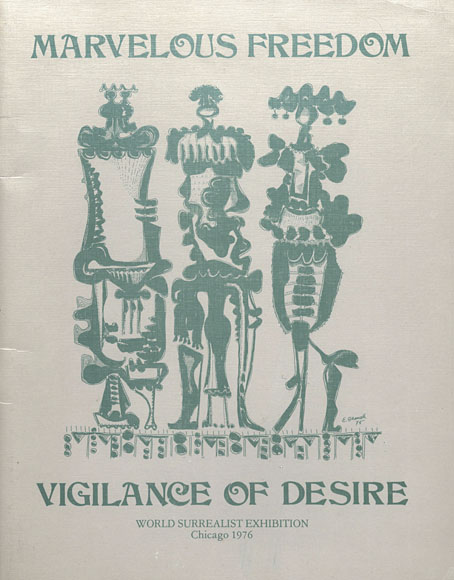
Meanwhile, at the Internet Archive there’s Marvellous Freedom, Vigilance of Desire, the exhibition programme for the World Surrealist Exhibition which was staged in Chicago in 1976. Penelope Rosemont refers to this event several times in Surrealist Women so it’s great to be able to see some of the artworks which are only described in brief in the book. Many exhibition catalogues are mere lists of pictures with an essay or two but this one looks like it took the First Papers of Surrealism catalogue as its model, being filled with essays, poems, small illustrations and so on. The early Surrealist exhibitions were never satisfied with scattering artworks around an otherwise empty room, several of them extended their themes into the exhibition space in early manifestations of the installation or environment concept. For the Chicago event the visitor passed through “Sleepwalker’s Hill” into the “Corridor of the Forgotten Future”, which led to the heart of the exhibition and eleven “Domains of Surrealist Vigilance” dedicated to significant figures: Lewis Carroll’s Alice, the Duchess of Towers (from one of Andre Bréton’s favourite films, Peter Ibbetson), Sade’s Juliette, Harpo Marx, T-Bone Slim, Peetie Wheatstraw, Robin Hood, Bugs Bunny, Alfred Jarry’s Doctor Faustroll, Melmoth the Wanderer, and the Surrealists’ favourite master criminal, Fantômas. The imperishable wise-cracking rabbit had already appeared in the pages of Arsenal, as well as on the cover of the first issue of Cultural Correspondence, but this is where he becomes a genuine Surrealist icon.

Elsewhere on { feuilleton }
The Surrealism archive

Previously on { feuilleton }
Arsenal: Surrealist Subversion
Arsenal: Surrealist Subversion
arsenal1.jpg

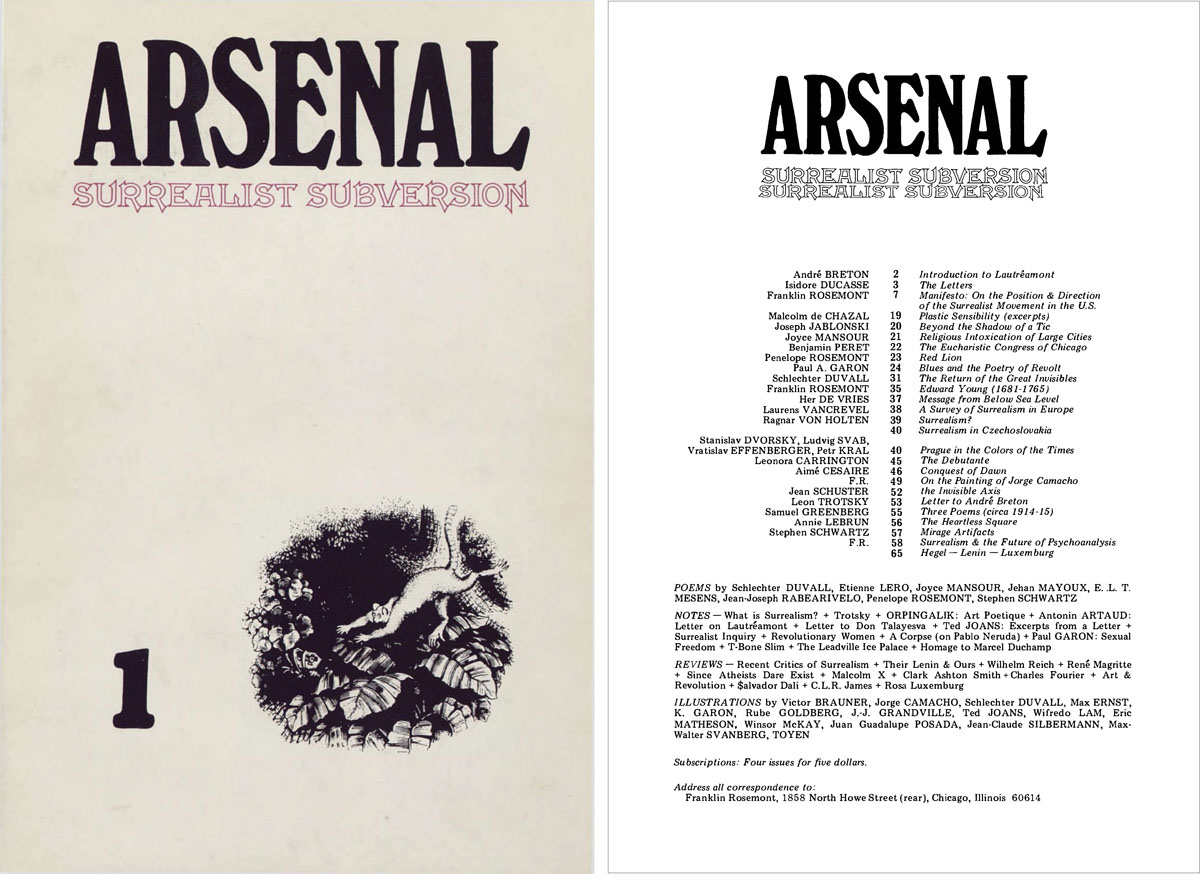
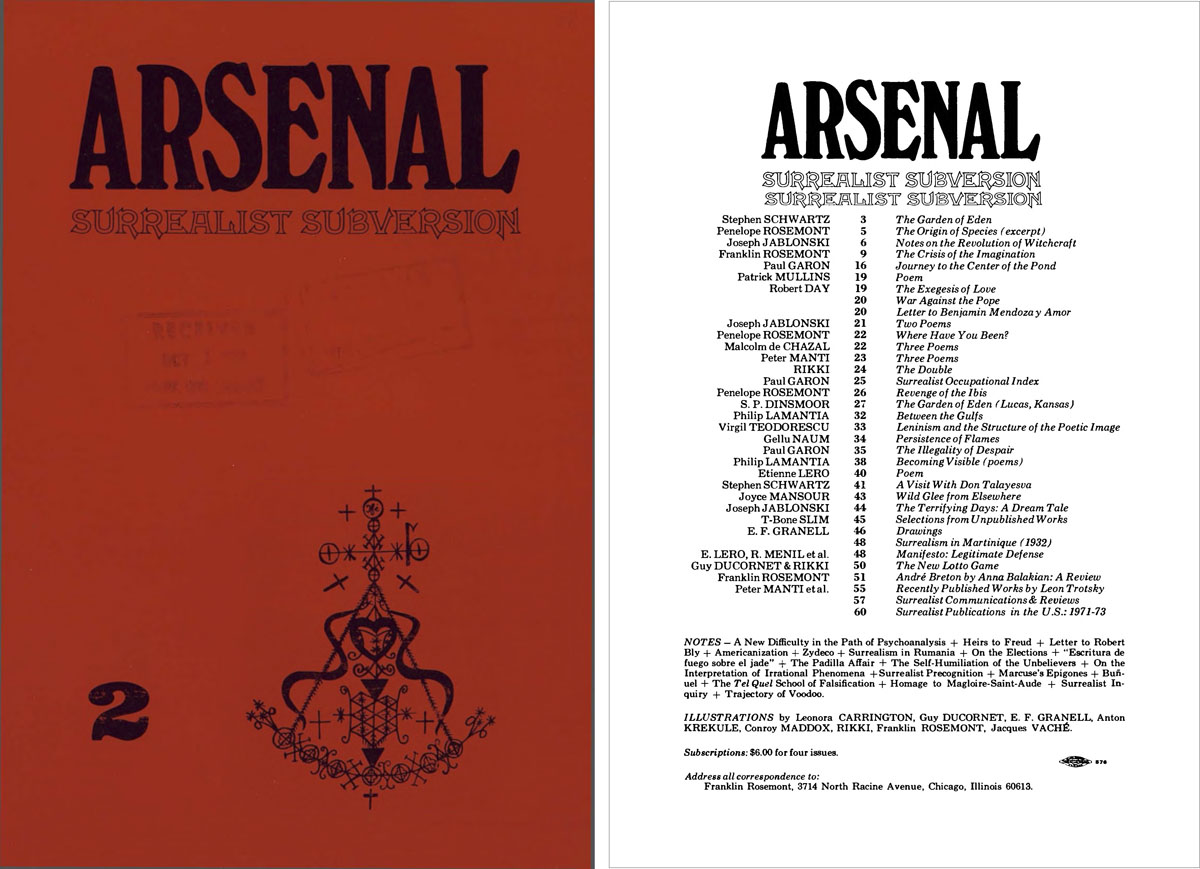
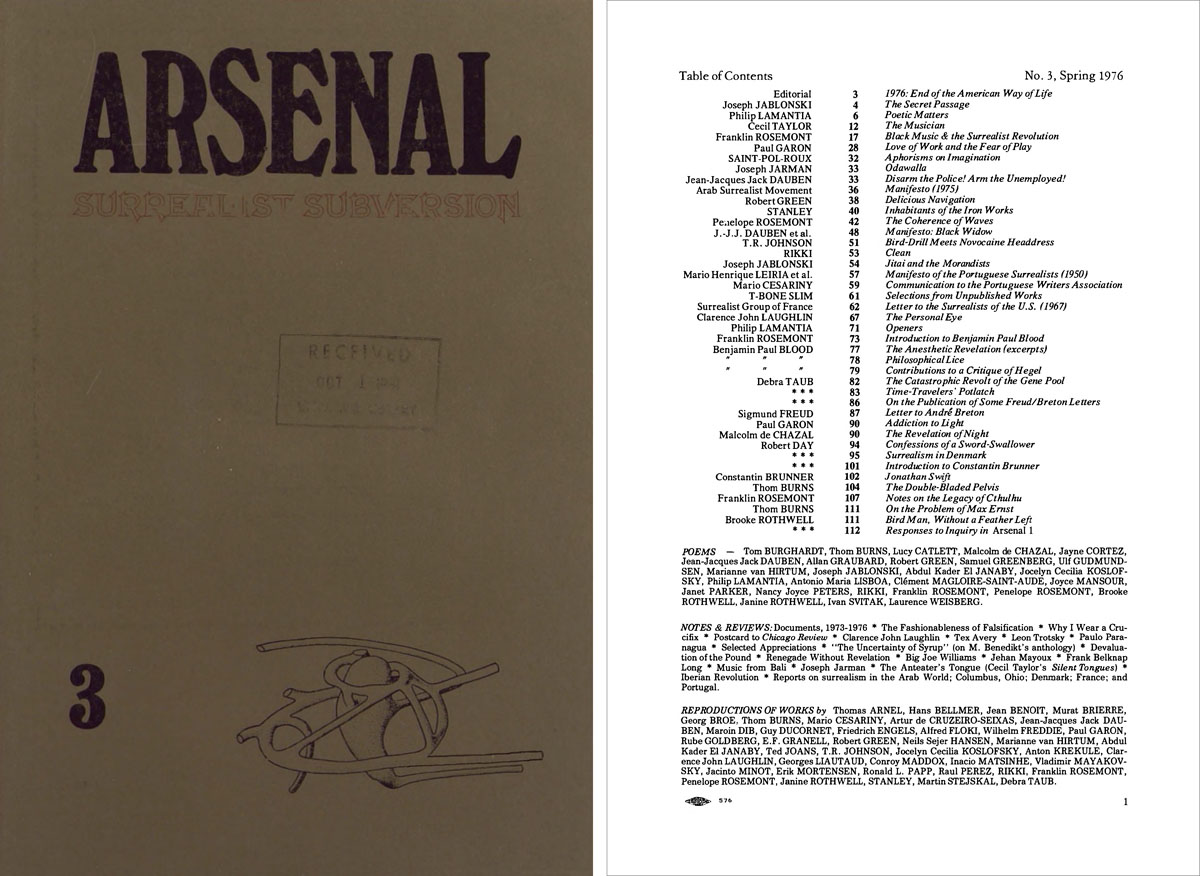
It’s the “S” word again. I said at the beginning of this month that I was looking forward to seeing where this interest led, and here we are. My recent reading has included Penelope Rosemont’s Surrealist Women (1998), a comprehensive study that I’d dipped into in the past but hadn’t gone through properly until now. In the section devoted to activities since the 1960s Rosemont mentions a magazine, Arsenal: Surrealist Subversion, which she produced with her husband, Franklin Rosemont, as part of their work with the Chicago Surrealist Group. Arsenal had more of an erratic schedule than most magazines, managing four issues that appeared in 1970, 1973, 1976 and 1989. I really didn’t expect there to be copies of such an obscure publication available anywhere but, once again, the invaluable Internet Archive has scans of the first three issues.

arsenal2.jpg

Arsenal proves to be a curious mix of the kind of material you’d expect from a Surrealist publication—poetry, essays, drawings, collages, significant quotes—together with chunks of Marxist politics and Freudian business that seem to have strayed in from another magazine. The latter material isn’t so unwarranted, being a reflection of André Breton’s original concerns, but committed Marxists of whatever stripe have never had much time for Surrealist art-creation and game-playing, while Freud himself was nonplussed by Breton’s attempts to interest him in the activities of the Parisian Surrealists. Breton casts a long shadow here; the Rosemonts had met him in Paris in the mid-60s, and many of the articles (also their combative attitudes) have a Bretonian cast.

arsenal3.jpg

Elsewhere, Arsenal breaks new ground with a Surrealist appraisal of blues musicians, music being a form that Breton and Louis Aragon had dismissed in the 1920s as “too confusing” for incorporation into the Surrealist project. The magazine also reprints a couple of comic strips, including a page of Little Nemo in Slumberland which may be the first acknowledgement from inside Surrealism of Winsor McCay’s dream-worlds as Surrealist precursors. And after posting Breton’s musings about “The Great Transparent Ones” these mysterious beings surface once again. Not only the Great Transparent Ones but also HP Lovecraft’s Great Old Ones in a piece by Franklin Rosemont about the Cthulhu Mythos. Rosemont draws attention to the obvious similarity between the names of Breton and Lovecraft’s beings, while also noting Lovecraft’s prowess as a transcriber of dreams. In doing so he complains about Lovecraft circumscribing his imagination by resorting to the story structures of the pulp magazines. Lovecraft was never a member of any avant-garde literary circle, however, unlike Clark Ashton Smith, who also receives further mention in these pages; if it wasn’t for Weird Tales we never would have heard of HP Lovecraft and there wouldn’t be a Cthulhu Mythos. This fault-picking is typical of many other pieces in the magazine, the book reviews in particular where a kind of petulant bad temper is the predominant tone. You probably can’t expect much else from a magazine that names itself after a store of weapons but the cumulative effect makes it seem that the road to the Marvellous must be paved with razor blades and broken glass. To their credit, the editors did print in the third issue some of the negative reviews they received for the previous two, including the inevitable dismissals from hardline Communists. Despite all this I’d still like to see how things developed (or came to an end) in the fourth and final issue.

• Further reading: I Could Dream In French: An Interview With Penelope Rosemont.

Elsewhere on { feuilleton }
The Surrealism archive

Previously on { feuilleton }
First Papers of Surrealism
The original Cabaret Voltaire
View: The Modern Magazine

Weekend links 684

okamoto.jpg

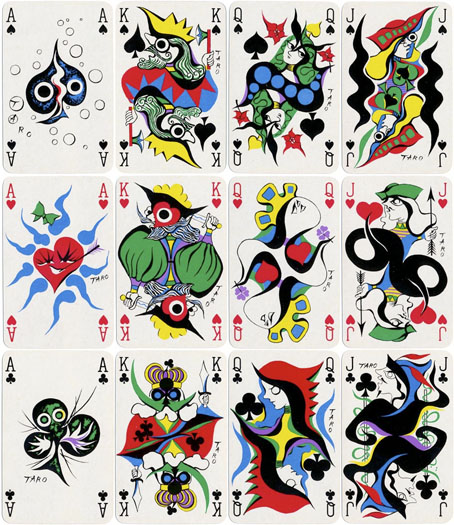
Playing cards designed in 1977 by Taro Okamoto.

• “This practice of looking does not prioritise academic or historical perspectives on art. It is divorced from the artist, the industry and the formal study of the arts. By paying attention to the form, title and other perceptible ‘clues’ in the work, this practice is primarily interested in using the intuitive, sensory, suggestive and aleatory to engage in conversation with a creative work. The point is not to develop an answer, an interpretation that ‘settles’ the ‘question’ of the painting, or to intellectualise the work in terms of form, style, history or the concerns of the artist. Rather, in this practice, a piece of art or writing becomes a test or opportunity for working one’s imagination—an exercise in making associations.” Aparna Chivukula on choosing art over wellness apps.

• “But with the discourse about the limitations of moralizing steadily growing, the question of an alternative naturally arises. The critics of self-righteousness and trauma mongering are for the most part not calling for a return to the amoral ironism that governed the Nineties and early Aughts—the sensibility that surely gave rise, at least in part, to the overgrowth of didacticism that followed. But if not this, then what? Where do we go from here?” Anastasia Berg on “the aesthetic turn”.

• “…by choosing ordinary creatures, the fabulist naturalises the stories in a world that is close to hand, which helps the writer communicate opinions that are often subversive.” Marina Warner on Kalilah wa-Dimnah and the animal fable.

• Coming soon from Strange Attractor: Austin Osman Spare, a revised and expanded edition of Phil Baker’s excellent biography of the artist/occultist.

• At Rarefilmm: The Marat/Sade (1967), Peter Brook’s film (previously) of the 1965 Broadway production of Peter Weiss’s play.

• New music: Hostile Environment by Creation Rebel, and Tone Maps by Field Lines Cartographer.

• Mixes of the week: Isolatedmix 122 by Mary Yalex, and XLR8R Podcast 810 by Zaumne.

• At Dennis Cooper’s: Pierre Clementi Day.

Sade Masoch (1968) by Bobby Callender | On Sadism (1979) by Material | Sadistic (1995) by Stereolab

Consulting the Oracle

sfo01.jpg

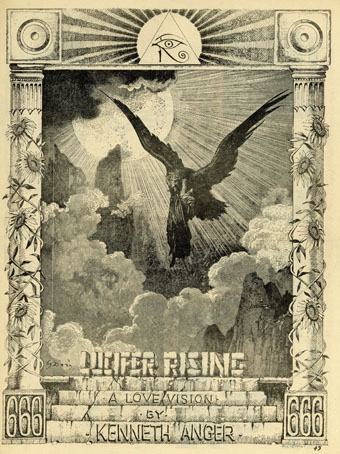
Good to find such a pristine reproduction of this Rick Griffin poster. Kenneth Anger commissioned the design in 1967 when he was putting together a package of promotional items to stimulate the interest of potential investors in his new film. Bill Landis in the unofficial Anger biography says the ploy was a successful one, investors were forthcoming although it would be several years before Anger had enough footage for the ill-fated first version of Lucifer Rising to appear in public. While we’re on the subject, I’ll note again that the Gustave Doré engraving used here is from the Purgatorio section of The Divine Comedy, not Paradise Lost as some people continue to claim. Milton’s Lucifer had wings of his own, as well as god-like powers, he didn’t need to be ferried around by a giant bird.

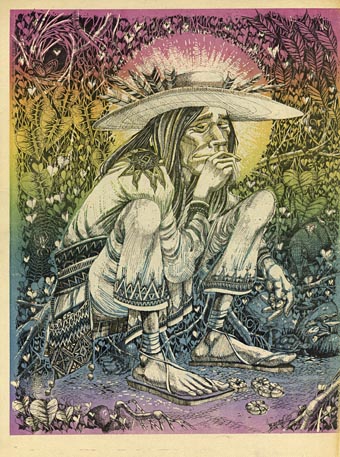
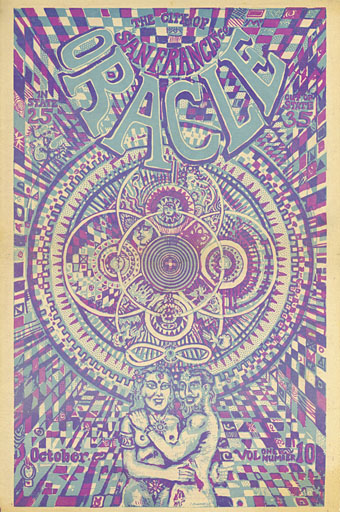
This copy of Griffin’s poster is from issue 7 of the Oracle, or the San Francisco Oracle as it was later titled and known outside the city, an underground newspaper, and one of the best where graphics are concerned.

sfo02.jpg

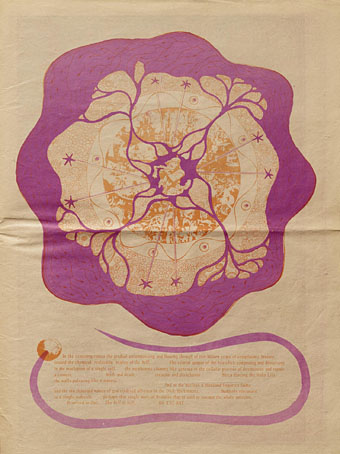
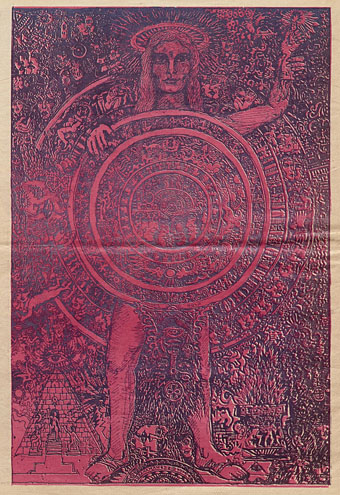
Underground papers and magazines of the late 1960s often followed the form of other amateur or semi-professional publications, with attractive cover art wrapped around more prosaic interiors. The Oracle ran for 12 issues, from 1966 to 1968, and in its later issues gave as much attention to the appearance of its inner pages as its covers, assisted by artists like Griffin and Bruce Conner. Being based in the city that gave the world so many exceptional concert posters was an obvious advantage.

sfo03.jpg

I was hoping the Internet Archive might have a complete run of the Oracle but only four of the highly-decorated issues are currently available. There’s no Wilfried Sätty artwork in evidence either, although I’m not sure he ever worked for the undergrounds despite there being many titles to choose from in the Bay area. Of note in one of the later issues is a full-page announcement for the forthcoming march on the Pentagon, an anti-war protest that took place in October 1967. Kenneth Anger attended the event although the exact nature of his involvement, like so many other Anger stories, varies according to the reporter.

San Francisco Oracle – Vol 1, No 7
San Francisco Oracle – Vol 1, No 9
San Francisco Oracle – Vol 1, No 10
San Francisco Oracle – Vol 1, No 12

sfo04.jpg

sfo05.jpg

Continue reading “Consulting the Oracle”

Eco calls on Cthulhu

eco2.jpg

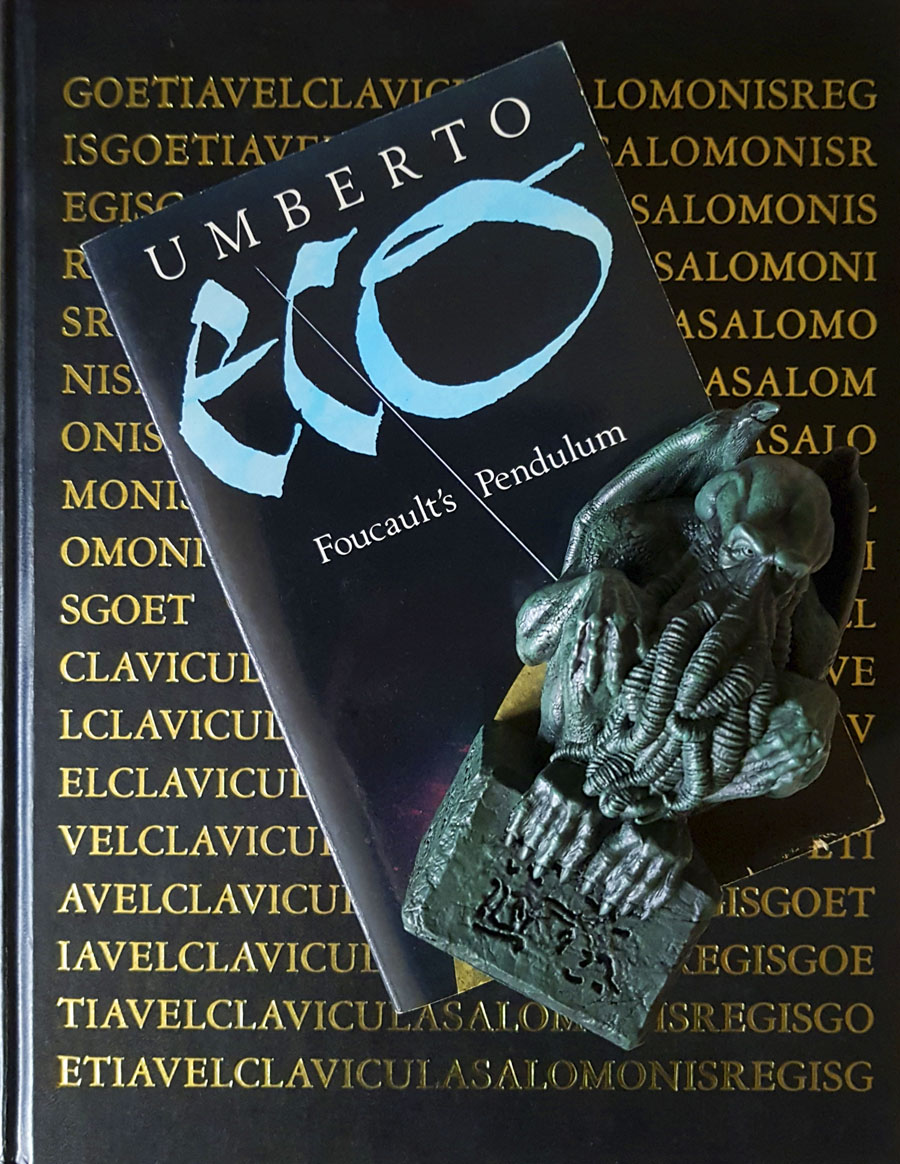
In which Umberto Eco nods fleetingly to the Cthulhu Mythos near the end of his second novel, Foucault’s Pendulum. I’d show you more of the relevant passage (below) but it’s rather spoilerish if you haven’t read the book. This turned up during a re-reading, my first since the novel appeared in paperback in 1990. A reference like this doesn’t stand out as much as it might elsewhere, not when the text that precedes it is stuffed to the gills with esoterica. Several hundred pages of occult history made me forget that Eco had hauled Lovecraft into his compendious fabulation along with everything else.

eco1.jpg

Ishmael Reed was responsible for returning me to Eco’s novel as a result of an earlier re-read of Mumbo Jumbo, Reed’s fictional account of voodoo, jazz, politics and many other things in the America of the 1920s. Eco was already in mind prior to this since I’d been working my way through his essays and lectures. (As I still am. He wrote a lot of the things.) Mumbo Jumbo‘s exploration of occult knowledge and occult conspiracy summoned vague memories of Foucault’s Pendulum, which made me realise that I didn’t remember very much at all about Eco’s novel even though both books share an interest in the tangled history of the Knights Templar. To the top of the pile it went.

It’s been interesting reading Eco’s novel again. For a start, it was funnier than I remembered, although this may be a result of my being much more familiar with the publishing business than I was in 1990. The story concerns a trio of men who work for a small publishing house in Milan, a division of which is devoted to the works of self-financing authors or “SFAs”. A vanity press in other words. A potential SFA turns up with a crank book rather similar to The Holy Blood and the Holy Grail, then abruptly disappears without collecting his manuscript. Curiosity, idleness and invention inspire the trio to improve upon the manuscript’s occult conspiracy in a manner that knits together just about every aspect of Western mysticism there is, and even some of the Eastern ones: Rosicrucianism, alchemy, the Kabbalah, Atlantis, the Illuminati, ley lines, the Hollow Earth, Stonehenge, etc, etc; it’s all in there. This is the thing they eventually call “the Plan”, a kind of Unified Field Theory of esoteric knowledge, and a contrivance whose fabrication is assisted by further SFA manuscripts arriving as candidates for a new line of “Hermetic” books. Problems arise for the publishers when their elaborate intellectual game ends up being taken for a serious revelation by a group of fanatical mystics. Eco’s novel demonstrates the pleasures of creative apophenia—the trio are continually challenging each other to fit a new piece of historical data into their scheme—while also acting as a warning that any halfway plausible Plan has the potential to be taken seriously by credulous cranks. As Lia, the novel’s voice of reason, says:

People are starved for plans. If you offer them one, they fall on it like a pack of wolves. You invent, and they’ll believe. It’s wrong to add to the inventings that already exist.

Eco explored this phenomenon more seriously in a later novel, The Prague Cemetery, which invents an author for the notorious Protocols of the Elders of Zion, a Plan whose conspiratorial claims continue to fuel anti-Semitism the world over. The internet has only accelerated Plan-construction, and I imagine Eco would have been simultaneously fascinated and appalled by the feeble imaginings of that ex-football player with the lizard obsession, and the shambling, frothing Q-mob with their Very Important jpegs. (What is it the latter are always saying? “Trust the Plan”… And having mentioned Mr Icke, I just put his name into Google only to find that the latest extract from his Twitter feed has him talking about the Holy Grail. Welcome to the Crank Zone.)

Continue reading “Eco calls on Cthulhu”