Weekend links 386

ward.jpg

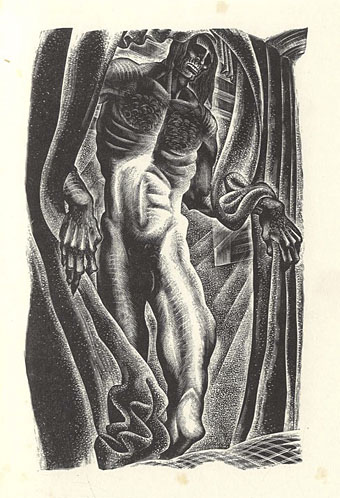
Lynd Ward again, and one of his illustrations for Frankenstein (1934).

• “Julio Mario Santo Domingo was a collector and visionary who filled his homes and warehouses with the world’s greatest private collection related to the subjects of drugs, sex, magic, and rock and roll: a library of more than 50,000 items…” Altered States: The Library of Julio Santo Domingo by Peter Watts catalogues some of the artefacts.

• “His vision of Gay Liberation was deeply, and uniquely, inflected by his study of, and belief, in anarchism.” More on the late Charles Shively: Michael Bronski remembers a pivotal figure in the gay liberation movement.

• William Friedkin’s Sorcerer was released on region-free blu-ray a couple of years ago but it’s being reissued again in the UK for its fortieth anniversary. Julian House has created a series of designs for the insert.

• Electronic musician and podcaster Marc Kate talks to Erik Davis about nihilism, horror movies, New Age music, and transmuting Nazi black metal into the ambient soundscapes of his latest album, Deface.

• “Beware the polished little man“: an extract from The Guesthouse at the Sign of the Teetering Globe by Franziska zu Reventlow which is available now from Rixdorf Editions.

• Another welcome blu-ray release, Sergei Parajanov’s The Colour of Pomegranates appears later this month in a special edition from Second Sight.

• Mixes of the week: FACT mix 626 by Sharp Veins, XLR8R Podcast 515 by Sammy Dee, and Secret Thirteen Mix 236 by Beta Evers.

The Witch Wave with Pam Grossman is a podcast for bewitching conversation about magic, creativity, and culture.

• Call me by the wrong name: Benjamin Lee on Hollywood’s perennial attempts to straight-wash gay films.

• At Dennis Cooper’s: Spotlight on…Ronald Firbank Concerning the Eccentricities of Cardinal Pirelli (1926).

• Zoë Lescaze reviews Frankenstein: The First Two Hundred Years by Christopher Frayling.

• Angry Optimism in a Drowned World: A Conversation with Kim Stanley Robinson.

• Stewart Smith on The Strange World of…Linda Sharrock.

Colors (1969) by Pharoah Sanders | Frankenstein (1972) by The Edgar Winter Group | Pomegranate (2001) by Transglobal Underground

Weekend links 384

muljat.jpg

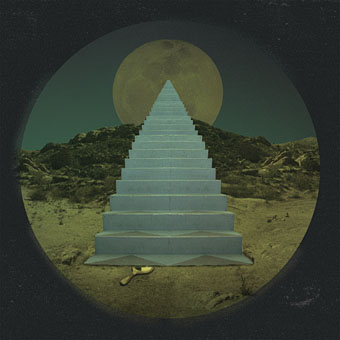
Sultans of Swing by Samantha Muljat.

• Pain & Pleasure, Indivisible: Mat Colegate talks to Stephen Thrower (Coil, Cyclobe) about the meeting between Coil and Clive Barker that would have led to Coil scoring Barker’s Hellraiser if the studio hadn’t rejected the music.

• “From Arsedestroyer to Zoogz Rift: 50 underground albums you’ve never heard of” The usual presumption—I’ve been listening to The Groundhogs since the mid-1980s—but it’s a good list.

• More magazines at the Internet Archive: an incomplete run of British science-fiction monthly Interzone; and a complete (?) run of the film magazine for horror (and gore) obsessives, Fangoria.

• “…it’s background music, is what it is. But there’s nothing wrong with that. I’m very proud of it.” John Carpenter discussing his soundtrack music and his new album, Anthology.

• Mixes of the week: Aral Mix 05 by Ellen Arkbro, Secret Thirteen Mix 234 by FOQL, and Samhain Séance Six: Triffid Witch by The Ephemeral Man.

• Dallas Killers Club: Nicholson Baker reads a stack of books about the Kennedy assassinations then draws his own conclusions.

Michael Flanagan on searching for LGB histories of Neopaganism, the paranormal and the occult in San Francisco.

• At Lounge Books: author Amelia Mangan on horror, old and new, and her favourite things.

• At Monoskop: the (almost) complete works of James Joyce in one convenient epub.

Jillian Steinhauer on Duchamp’s last riddle.

Hell Raiser (1973) by Sweet | Hell’s Bells (1989) by Rhythm Devils | Hell’s Winter (2011) by Earth

Weekend links 383

nomata.jpg

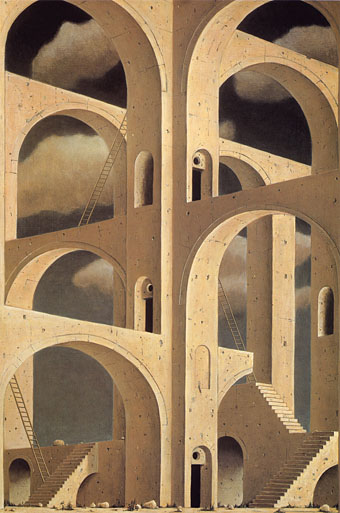
Arcadia-24 (1988) by Minoru Nomata.

Dark Entries and Honey Soundsystem Records release a video of edited moments from gay porn film Afternooners to promote the release of the film’s electronic soundtrack by Patrick Cowley. The album, which is the third and final collection of Cowley’s porn soundtracks, is out now.

Emily Temple looks at some of the art inspired by Italo Calvino’s Invisible Cities. I explored the same subject a couple of years ago in a week of Calvino art posts. From 2014: Peter Mendelsund on designing covers for Calvino.

Jim Downes on the late Charley Shively, a gay liberation activist who wasn’t interested in equality. Not an uncommon attitude in some gay circles but it’s one you seldom see aired in the mainstream press.

Geeta Dayal on A Little Electronic Milky Way of Sound by Roland Kayn, a 14-hour composition of “cybernetic music” which has been released in a lavish 16-CD box set by Frozen Reeds.

• An introduction to Henri-Georges Clouzot in seven films by Adam Scovell. Clouzot’s masterwork, The Wages of Fear (1953), is released on blu-ray by the BFI next week.

• Ubu Yorker: Menachem Feuer interviews Kenneth Goldsmith, writer and the man behind Ubuweb.

• Why Oscar-winning cinematographer Vittorio Storaro thinks the film vs. digital debate is bullshit.

David Barnett on supernatural fiction’s “best kept secret”, Robert Aickman.

Michèle Mendelssohn on how Oscar Wilde’s life imitates his art.

• Mix of the week: Secret Thirteen Mix 233 by Mick Harris.

Invisible Limits (1976) by Tangerine Dream | Invisible Cities (1990) by Jah Wobble’s Invaders Of The Heart | Invisible Architecture (1995) by John Foxx

Weekend links 372

mognetti.jpg

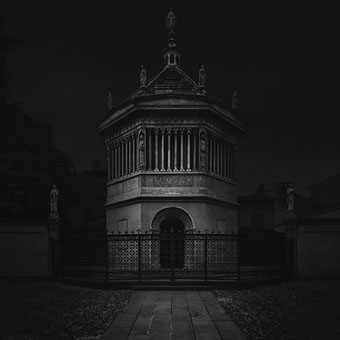
Battistero della Basilica di Santa Maria Maggiore, Bergamo (2017) by Mattia Mognetti.

• “Mumbo Jumbo: a dazzling classic finally gets the recognition it deserves.” Jonathan McAloon on Ishmael Reed’s unique novel being reissued as a Penguin Modern Classic.

• Amanda Gefter talks to Donald D. Hoffman, professor of cognitive science at the University of California, about “the evolutionary argument against reality”.

• Geeta Dayal on composer Raymond Scott. A new compilation, Three Willow Park, collects more of Scott’s electronic music from the 1960s.

Nagle critiques the follies of campus identity politics and social media liberalism not from the right, but as a left-leaning feminist. As she elucidates point after reasonable point, it feels as if a grown-up has finally entered the room. Like Mark Fisher, the Marxist critic who was savaged by his putative comrades for decrying “the stench of bad conscience and witch-hunting moralism” of the online left, Nagle has no sympathy for Twitter/Tumblr liberalism’s “cult of fragility and victimhood mixed with a vicious culture of group attacks, group shaming, and attempts to destroy the reputations and lives of others”. It is reassuring to find a self-described feminist disdaining the “hysterical” liberal call-out culture, and acknowledging that it has produced “a breeding ground for an online backlash of irreverent mockery and anti-PC”. Without joining the forces of reaction or losing sight of the vileness of the alt-right, she writes of “the deep intellectual rot of contemporary political progressivism”; “the moral self-flattery of … a tired liberal intellectual conformity”; and “the hysteria and faux-politics of liberal Internet culture”.

Rob Doyle reviewing Kill All Normies by Angela Nagle

• Mixes of the week: XLR8R Podcast 501 by Ryan Elliott, and ReMelodiya vol. 1 by Laurent Fairon.

Sumit Paul-Choudhury on the slime mould instruments that make sweet music.

The Wire Salon: an audience with photographer and writer Val Wilmer.

Simon McCallum‘s list of 10 great lesser-known British LGB films.

Zaria Gorvett on the ghostly radio station that no one claims to run.

S. Elizabeth reposted her Coilhouse interview with me from 2010.

• “Boys are selling sex in Japan. Who is buying?” Boys For Sale

• At Spoon & Tamago: Ando Tadao’s Hill of Buddha.

• At Dennis Cooper’s: Gisèle Vienne Day.

Sun Ra is now on Bandcamp.

Shaolin Buddha Finger (1994) by Depth Charge | Atomic Buddha (1998) by Techno Animal | Psycho Buddha (2001) by Acid Mothers Temple & The Melting Paraiso U.F.O.

Being PrEPared

prepdiaries.jpg

I don’t know when I first noticed that the word “introvert” contains the word “invert” but if I require a shorthand self-identification beyond the vocational then “introvert invert” is a suitable candidate. Being an introvert isn’t always easy in a resolutely extrovert world, but being an introvert invert has considerable drawbacks, such as how you meet anyone like yourself when the available meeting places—club and bars—inspire severe loathing. Clubbing is no longer the only option now that we have online dating (and gay clubs have been dying off in any case…) but the options were few in the 1980s. It’s impossible for me to think about any of this without considering that if I wasn’t such an introvert I might not be alive today. I was 20 in 1982 when the AIDS epidemic was starting to travel the world; had I been more gregarious I might have been investigating all those wretched clubs and bars instead of sitting at home, listening to music and drawing pictures.
aids.jpg

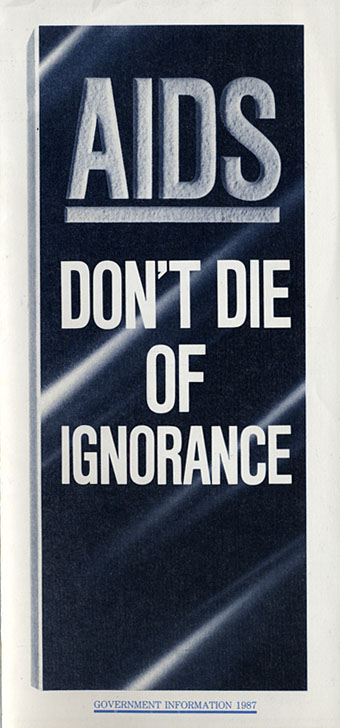
The Thatcher government only started to get serious about HIV/AIDS in 1987 when this information leaflet was delivered to every household in Britain. (See scans of the whole thing here and here.) There was also an accompanying public information film narrated by John Hurt, and directed by Nicolas Roeg, of all people. It was quickly replaced with other films that were less apocalyptic.

Whatever your attitude to nightlife, if you were gay in the 1980s then AIDS was omnipresent even before it became an issue that politicians dared to discuss in public. I remember when Patrick Cowley died (November 1982); I remember when Klaus Nomi died (August 1983); I bought the Panic/Tainted Love single by Coil when it was released (May 1985), the profits of which went to AIDS charity The Terrence Higgins Trust (the first record release to make such a donation). Coil’s doom-laden Horse Rotovator album from 1986 was shaped by the group’s experience of watching many of their friends succumb to illness and death. There were many other such responses, one of the greatest being the monumental Masque Of The Red Death album cycle by Diamanda Galás, dedicated to Galás’s brother and her friends who were killed by the epidemic. I can’t think of artist and writer Philip Core without remembering the interview he gave to The Late Show from his hospital bed in 1989, a hollow-eyed ghost of his former self. The accumulated fear and paranoia of a dark decade lingered into the 1990s even after condom-use had become widespread and HIV became manageable with drug treatments.
aidsad.jpg

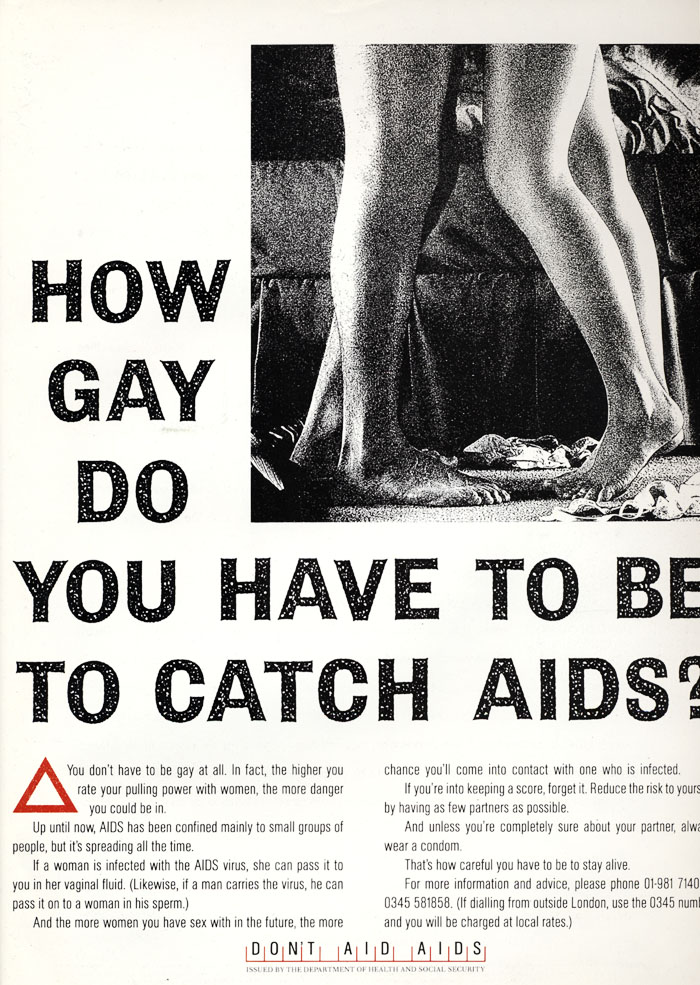
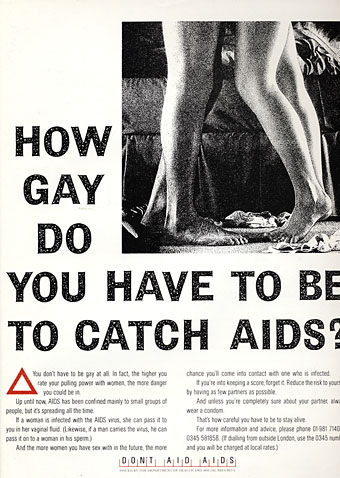
More from the fun decade. A government health ad from The Face magazine, February 1987.

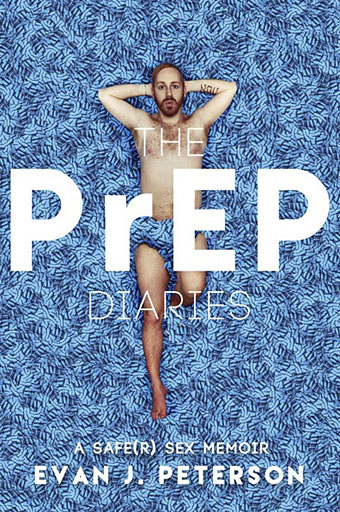
The paranoia of the 1990s is one of the first things that Evan J. Peterson discusses in The PrEP Diaries, an account of growing up gay in America at a time when HIV was treatable but still something to be worried about. Evan is a friend whose previous books have been mentioned here (one of which I contributed to), but this is his first non-fiction title, a witty and enlightening combination of erotic memoir and public service declaration. “PrEP” refers to the drug marketed in America as Truvada, a pre-exposure prophylaxis anti-viral medication which has been gaining use in the US as a preventative treatment for HIV. The drug’s use is recommended primarily to partners of those who are HIV+ but it’s also being recommended to gay men with active sex lives as an additional safeguard against HIV. I’ve been aware of Truvada for several years but since it still isn’t easily available in the UK I’ve not followed the discussion around its use or effectiveness very closely.

One of the reasons for Evan writing The PrEP Diaries was to widen the discussion about PrEP/Truvada by showing how his own use of the medication has helped dispel the paranoia he felt about HIV risks, a paranoia that had been with him since childhood. He was born in 1982, the year that AIDS first began to make headlines so he’s of a generation that has never known a time without the risk of HIV. One of the notable things about his book is the way it shows the substantial differences of experience between the gay and straight worlds, differences that persist even as legislative equality grows. Sexual risk is one of these differences, something you’re always aware of if you’re gay or bisexual but which the straight world seldom considers at all. I have a half-brother who’s a few years older than Evan, and two nephews who are a decade younger; all are straight, and I doubt that any of them have given more than a moment’s thought to the idea that sexual activity could have life-changing consequences even though viruses don’t care about your sexuality. HIV can be kept under control today yet it continues to spread, in part because the serious concerns of previous decades are no longer prevalent. You can’t go on any gay dating site without eventually seeing someone with “poz” in their name or some other indication (usually a + symbol) of their HIV status. One of the benefits of PrEP that Evan discusses is its helping people who are HIV+ to find more partners as well as protecting those partners from infection. He also emphasises something you seldom see mentioned in general discussion of HIV, that positive status doesn’t describe a single condition; some people are positive but undetectable, meaning that their viral load is extremely small.

Continue reading “Being PrEPared”