Winter music

nordfjord.jpg

Kjendalskronebrae, Nordfjord, Norway (c. 1900). From the Library of Congress Prints and Photographs Division via Wood s Lot.

Are you suffering list fatigue yet? I certainly have been, especially from the apparently endless “best ___ of the decade” catalogues which would have you believe that the significant cultural products of the past ten years have been thoroughly sifted, reviewed and appraised. So yes, there’s a degree of hypocrisy in adding to the list surplus but, as with the Halloween music lists, it’s difficult to write about an area of listening without compiling something like this. As it happens, my Halloween playlists proved briefly popular this year when they were noticed by Stumbleupon users so someone appreciates them.

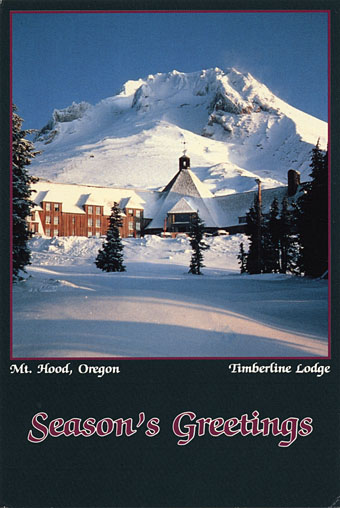
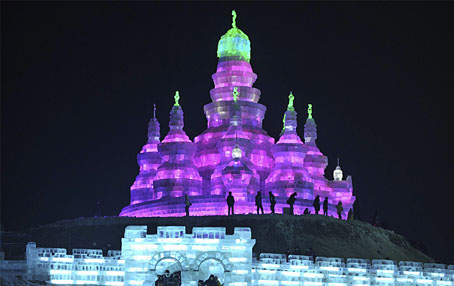
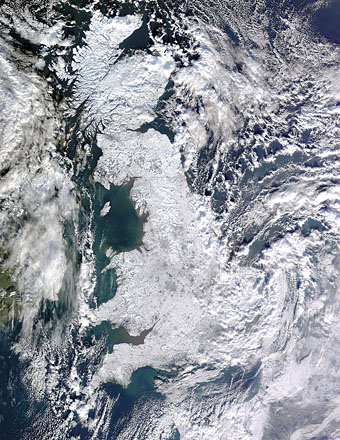
The present selection is music to complement the season and its chilly weather which in our part of the world has been colder than usual and laden with snow. It might also serve as a suggested alternative to the dreary plague of Christmas songs. This isn’t definitive, of course, and I could have added more than ten. I kept the choices in the electronic spectrum but there’s a whole other list which could be made of winter-themed folk songs, folk music of all kinds being sensitive to the changing seasons.

Sonic Seasonings (1972) by Wendy Carlos.
Between her electronic transcriptions of Baroque music and the score for A Clockwork Orange, Wendy Carlos released a collection of four long pieces of electronic atmospherics blended with natural sound recordings, with each track dedicated to a different season. The album may not have had the formal intent of Brian Eno’s ambient albums but ambient it certainly is, preceding Eno’s Discreet Music by three years whilst predicting much of what would become over-familiar during the 1990s. The Winter track is the one which concerns us here, a droning Moog landscape of echoed notes, tinkling ice, distant wind and Rachel Elkind’s lupine howls. Carlos and Elkind carried the synthesised chill into their opening music for The Shining a few years later, and Carlos returned to the theme with the digital improvisations of Land of the Midnight Sun, included as a bonus on the Sonic Seasonings CD.

Eskimo (1979) by The Residents.
A conceptual masterpiece, and an album which still sounds as strange and timeless as it did when it first appeared. Eskimo is the first and (one presumes) only example of what might be labelled “Eskimo exotica” since the whole work is more Eskimo-esque than an authentic musical rendering of the world of the Inuit people. Like Wendy Carlos’s Winter, these are shifting soundscapes augmented by ritual chants and synthesised animal sounds. For those who found the album to be musically inaccessible the group released Diskomo, a segue of the musical themes matched to a thumping dance beat.

Iceland (1979) by Richard Pinhas.
Another far north concept album and the third solo release from the Heldon guitarist who subdues his Robert Fripp impersonations in favour of synth arrangements. The CD version includes a 22-minute bonus, Winter Music.

Victorialand (1986) by Cocteau Twins.
Much of the Cocteau Twins’ chiming and reverb-drenched output would suit the colder months but Victorialand in particular takes its title from a region of Antarctica, and many of the track titles—Whales Tails, How to Bring a Blush to the Snow—point in that direction. Another timeless work.

White Out (1990) by Johannes Schmoelling.
Schmoelling was a member of Tangerine Dream in what I consider to be their last worthwhile incarnation from 1980 to 1986. His third solo album also takes Antarctica as its theme and while some of the music tends to a jaunty blandness at its best it manages to evoke the isolation of the continent through lengthy synthesiser pieces. When the Polydor release went out of print, Schmoelling re-worked the album slightly for reissue on his own label.

Songs from the Cold Seas (1995) by Hector Zazou.
Many of the late Hector Zazou‘s albums were concepts of some kind, often involving a roster of guest artists. Songs from the Cold Seas follows this pattern with singers from around the world delivering a variety of songs from the world’s colder regions. For a contrast to the Residents’ ethnological forgeries, Song of the Water is a chant by Inuit artists Elisha Kilabuk and Koomoot Nooveya. Among other highlights there’s Björk who restrains her vocal gymnastics for once with a delicate Icelandic lullaby, Vísur Vatnsenda-Rósu.

Polar Sequences (1996) by Higher Intelligence Agency & Biosphere.
A collaboration between Bobby Bird of HIA and Biosphere‘s Geir Jenssen, recorded live with sounds sourced in and around Jenssen’s home town of Tromsø at the Arctic Circle. I much prefer this to the other HIA releases which lack its detailed textures. One track, Meltwater, sounds just as you’d expect, all running water and crackling ice.

Substrata (1997) by Biosphere.
Still one of the finest Biosphere releases (although Nordheim Transformed is probably my favourite) and included here for its chilly and mostly beatless atmosphere which includes further samples from the far north.

La Marche de L’Empereur (2005) by Emilie Simon.
I still haven’t seen La Marche de L’Empereur (March of the Penguins) but the soundtrack for the original French release is a fantastic collection of songs illustrating the survival struggles of the film’s penguins. Emilie Simon is frequently described as “the French Björk”, a lazy label which only connects the pair because they’re female singers who also happen to be “foreign” and users of unorthodox electronic arrangements. The recordings here feature glitch-inflected rhythms and glass instruments which means they were far too interesting for the American release of the film. The Hollywood version dropped the songs in favour of a traditional orchestral score.

Alaska Melting (2006) by Monolake.
The latest album from Monolake, aka Robert Henke, was released earlier this month. Silence has a winter scene on the cover and a track entitled Infinite Snow but winter isn’t a predominant theme. While the music is up to Henke’s usual high standard, it’s a lot less urgent than Alaska Melting, a one-off release on 12″ vinyl with two slices of vibrant techno that foreground Henke’s environmental concerns. The most uptempo and abrasive work on this list.

Previously on { feuilleton }
A playlist for Halloween: Voodoo!
Dead on the Dancefloor
Cristalophonics: searching for the Cocteau sound
A Clockwork Orange: The Complete Original Score
A cluster of Cluster
Fragment Endloss by Robert Henke
Another playlist for Halloween
Thomas Köner
A playlist for Halloween

The tights have it

slimane.jpg

In which the marvellous Hedi Slimane captures dancer Oscar Nilsson resting during a performance involving a percussive score tapped out by someone wearing a bear’s head. (Video here and here.) There’s probably a joke to be made there about bears and twinks but you won’t find me attempting it.

The picture below is from a fishnets session photographed by Bell Soto. Both links are from Homotography which continues to be an essential curator of male pulchritude.

soto.jpg

Previously on { feuilleton }
Torero
Eonism and Eonnagata
Tiger Lily
Chris Nash
Peter Reed and Salomé After Dark
Felix D’Eon
Dancers by John Andresen
Youssef Nabil
Images of Nijinsky

Jack Rose, 1971–2009

rose1.jpg

It was a shock this weekend to hear of the sudden death (heart attack, apparently) of American guitarist Jack Rose. I think I saw him perform four times in all, the first occasion being at Spaceland in Los Angeles, 2005, where I snapped this photo which I used for a poster design when he played in Manchester a few months later. His shimmering extemporisations on blues and folk themes that evening were simply stunning and I rushed to buy his Kensington Blues CD as soon as he’d finished. There’s no need to attempt futile descriptions of his talent when you can go to YouTube and discover it for yourself. He was only 38. A great loss to family, friends and music.

rose2.jpg

Previously on { feuilleton }
The Golden Apples of the Sun
Jack Rose returns
Jack Rose in Manchester

Tite Street then and now

tite1.jpg

This LIFE magazine photo of Oscar Wilde’s home at 34 Tite Street, Chelsea, is fascinating for Wilde aficionados in being a far more detailed view of the “House Beautiful” exterior than one ever finds in books about the writer. No information as to when it was taken but from the look of the print it was probably some time just before or after 1900.

tite2.jpg

Google Earth lets us examine Tite Street as it is today, with Oscar’s house looking relatively unchanged aside from the blue plaque which informs people that he once lived there. What you can’t see in this picture is the opposite side of the street which now contains a particularly dreary housing development from the 1960s. Oscar and his contemporaries in the area—many of whom were artists—wouldn’t have been impressed at all.

Elsewhere on { feuilleton }
The Oscar Wilde archive

Prague panoramas

prague1.jpg

Now that we’re into the dismal weather, sombre views of Old Prague’s splendour seem appropriate. The pages at 360 Cities have a lot of Prague panoramas—76 in all—including many more of the Viriconium-esque Giant Mantis performance I linked to a few years ago. A shame they don’t do this every year.

prague2.jpg

Previously on { feuilleton }
Eno’s Luminous Opera House panorama
Callanish Standing Stone panoramas
Jaipur Observatory panoramas
Infinite reflections
Large Hadron Collider panoramas
Passage des Panoramas
Bruges panoramas
Paris panoramas
Venice panoramas
St Pancras in Spheroview
Karel Plicka’s views of Prague
Giant mantis invades Prague
Whirling Istanbul