Bosch details

bosch01.jpg

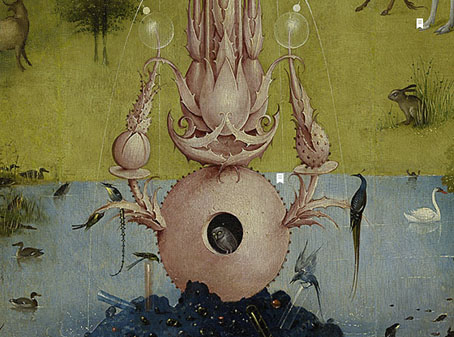
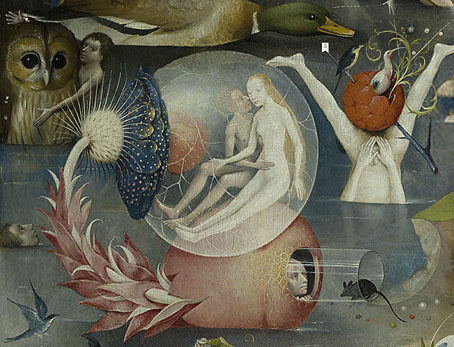
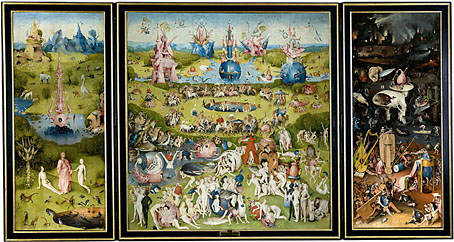
In which the indelible strangeness of Hieronymus Bosch’s triptych, The Garden of Earthly Delights (c. 1490–1510), is presented to us in the highest resolution. (I should say presented again since Google’s Art Project/Cultural Institute/whatever-it’s-called-this-week had a browsable version of their own in 2009 but this seems to have vanished. So much for the primacy of the Googleverse, etc, etc.) I’d always encourage people to see paintings in situ when possible but it remains a fact that very old and well-known works of art are difficult to study for any length of time in a crowded gallery. The more valuable works are also closely guarded by attendants who dissuade anyone from getting too close to those fragile surfaces, so it’s left to books or websites such as this one to give us the details. Not all paintings warrant this kind of attention, of course, but the crowded panels of Bosch and Brueghel the Elder certainly do. In addition to wandering among the figures you can also opt for a guided tour although bear in mind that the meaning (if any) of many of these details has never been resolved. Via MetaFilter.

bosch02.jpg

bosch03.jpg

Continue reading “Bosch details”

Weekend links 295

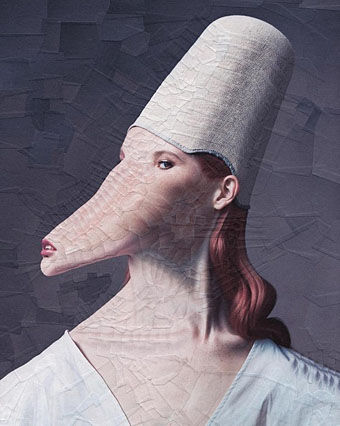
dupre.jpg

Untitled (2014) by Lola Dupré. Via.

Announcement of the week (if not the month/year) is the news that the BFI will be releasing all of the BBC dramas directed by Alan Clarke on DVD/Blu-ray in May. In addition to the long-awaited appearance on disc of Penda’s Fen (1974) we can expect a previously unseen director’s cut of Clarke’s last TV film, The Firm (1989), the DVD premier of Baal (1982) with David Bowie, plus many other works including some from the 1960s that were believed lost. (And it should be noted that this isn’t everything of Clarke’s; he also worked occasionally for ITV and later directed feature films for Channel 4.)

The BFI attention is a tribute to an exceptional director that’s overdue. Clarke has long been a cult figure among the British actors who worked with him, and among directors such as Harmony Korine and Gaspar Noé, but the tendency of TV to give one-off dramas a single screening has meant that much of his best work has been unavailable for years outside old VHS tapes. Clarke is important for having persistently chosen difficult subjects which he directed with a flair and intensity usually only found in cinema. When he died in 1990 the BBC repeated a handful of his films but the only ones given repeated DVD release have been the violent dramas with the big names attached: Scum (1979, with Ray Winstone), Made in Britain (1982, with Tim Roth), and The Firm (with Gary Oldman). Clarke’s oeuvre is much more than a parade of nihilistic villains, as will become evident later this year.

• A psychedelic video directed by Peter Strickland for Liquid Gate (ft. Bradford Cox) by Cavern of Anti-Matter. The debut album from Cavern of Anti-Matter, Void Beats/Invocation Trex, will be out later this month.

Celebrating Dusseldorf, the city that birthed Krautrock. (Article loses points for not mentioning producer Conny Plank.)

All Rivette’s features might be regarded as different kinds of horror films; Céline et Julie vont en bateau is his first horror comedy. The anxiety and despair of Paris Nous Appartient and La Religieuse, L’Amour Fou and Spectre seem relatively absent, yet they perpetually hover just beyond the edges of the frames. We still have no privileged base of ‘reality’ to set against the fictions, each of which is as outrageous as the other; and along with Borges, we can’t really say whether it’s a man dreaming he’s a butterfly or a butterfly dreaming he’s a man—although we may feel, in either case, that he and we are just on the verge of waking.

Jonathan Rosenbaum on work and play in the house of fiction: Jacques Rivette’s Out 1 and Céline and Julie Go Boating

• Mixes of the week: Finders Keepers Radio Show Krautrock Special, and The Ivy-Strangled Path Vol. XV by David Colohan.

• At Dangerous Minds: Super strange sculptures (by Shary Boyle) only the dark and demented could love.

• Beautiful Brutalites: S. Elizabeth questions Arabella Proffer about her paintings.

KTL is a musical collaboration between Peter Rehberg and Stephen O’Malley.

• Why study art when you can make it? The strange world of…This Heat.

Sarah Galo on the explicitly sexual female artists that feminism forgot.

Irmin Schmidt‘s favourite music (this week).

• LSD: My life-saving drug by Eric Perry.

The Occult Activity Book

Twenty Tiny Cities

Der LSD-Marsch (1970) by Guru Guru | Krautrock (1973) by Faust | Düsseldorf (1976) by La Düsseldorf

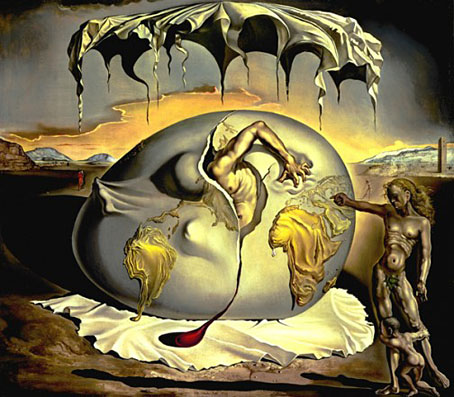
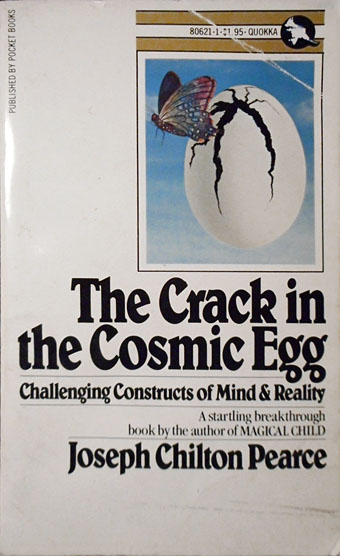
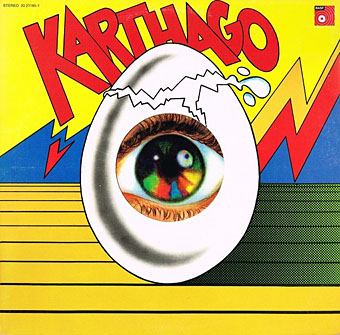
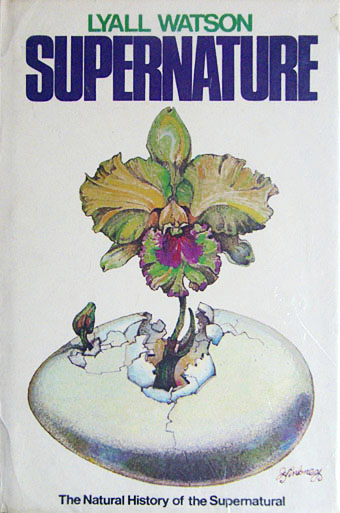
Cosmic eggs

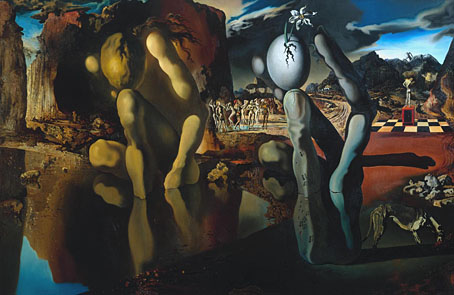
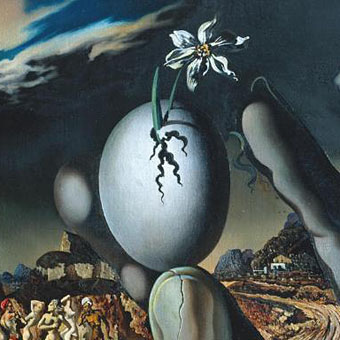
1: The Metamorphosis of Narcissus (1937) by Salvador Dalí.

dali1.jpg

dali2.jpg


2: Geopoliticus Child Watching the Birth of the New Man (1943) by Salvador Dalí.

dali3.jpg


3: The Crack in the Cosmic Egg: Challenging Constructs of Mind and Reality (1971) by Joseph Chilton Pearce.

pearce.jpg


4: Karthago (1971) by Karthago.

karthago.jpg

Cover design by JH Löffler.


5: Edge Of Time (1972) by Norma Winstone.

winstone.jpg

Cover art by Terry Eden.


6: Supernature (1973) by Lyall Watson.

watson.jpg

Cover art by Jerry Pinkney.


7: A Cosmic Book (1988) by Itzhak Bentov.

bentov.jpg


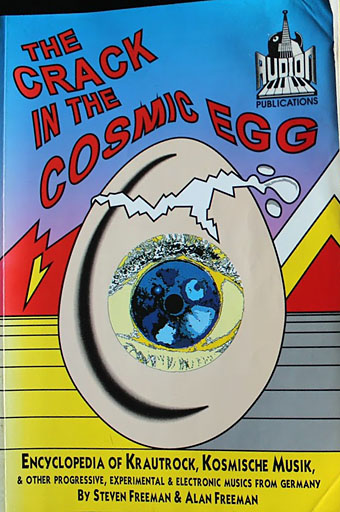
8: The Crack in the Cosmic Egg (1996) by Steven Freeman & Alan Freeman.

freeman.jpg


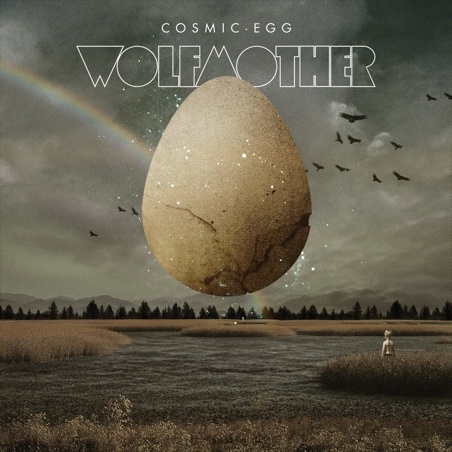
9: Cosmic Egg (2009) by Wolfmother.

wolfmother.jpg

Cover by Invisible Creature.


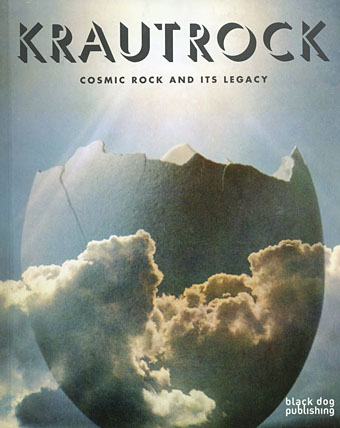
10: Krautrock: Cosmic Rock and Its Legacy (2012) edited by Nikos Kotsopoulos.

krautrock.jpg

Weekend links 293

meyohas.jpg

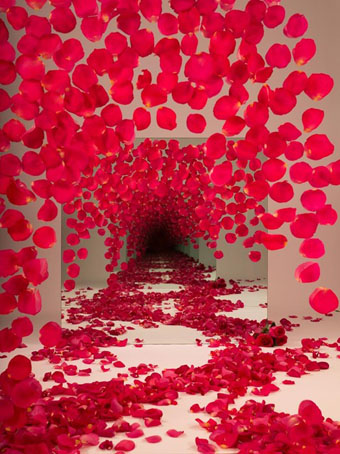
Red Petals by Sarah Meyohas.

• “For MMoB, I want it to be like a [Werner] Herzog movie, so at our concerts the people on stage aren’t necessarily people who are named. We’re trying to create an entity that is beyond music and relates visually and sonically with everything in a way that’s different.” Randall Dunn talks to Simona Mantarlian and Daniel Jones about the Master Musicians of Bukkake and his production work for other artists.

• “Is reel-to-reel tape the new vinyl?” asks FACT mag. It’s certainly better than cassette tape (if less convenient) but it was always a niche format for albums, even in the 1970s. Rene Chun made a similar argument for an emerging trend last October. Those expensive machines do look tempting… Early adopters should start collecting here before prices rise.

Airwaves: Songs From The Sirens is a new release of spectral audio transmissions by A Year In The Country: “…a gathering of scattered signals plucked from the ether, cryptograms that wander amongst the airwaves…” Physical versions come with the usual plethora of monochrome artefacts.

A vivid memory to his friends, Litvinoff was one of those people whose performance was their life. His most lasting achievement was the profound influence he had on Performance – the hallucinatory film directed by Nic Roeg and Donald Cammell, and starring Mick Jagger, which captured the London of the late 1960s, merging pop stardom, violent criminality, illegal drugs, gender-blurring, the occult and Jorge Luis Borges.

Jon Savage on David Litvinoff

• Virgin Prunes “are THE #1 most underrated group of the post-punk era” says Richard Metzger. I’d say that honour goes to The Passage but the Virgin Prunes were unique even if they’re too often dismissed as a freak footnote in the U2 story.

Magic, Witches & Devils in the Early Modern World is a free exhibition at the John Rylands Library, Manchester, that will run until August 2016. Related: “John Dee painting originally had circle of human skulls, x-ray imaging reveals.”

• “What I’m seeing now is an awful lot of people just following things. We tried to find our own thing and ask, ‘What else is there?'” Charles Hayward on the past and present of post-punk band This Heat.

• “I’ve never been tempted to write anything that was not essentially nightmarish.” Thomas Ligotti in a comprehensive profile (originally run in 2010) at Dennis Cooper’s blog.

• Mixes of the week: An introduction to Stereolab by Jon Dale, and Silent Radio Transmission Jan 2016 by SilentServant.

• Kicked Toward Saintliness: Max Nelson on the dark erotics of Jean Genet’s Our Lady of the Flowers.

• Reverse Engineering: Danny Hyde on Coil, Backwards and NIN.

Fuck Yeah! Anna von Hausswolff

Harry Flowers (1970) by Jack Nitzsche | Flowers In The Air (1970) by Sally Eaton | Darkness: Flowers Must Die (1972) by Ash Ra Tempel

Standing stones

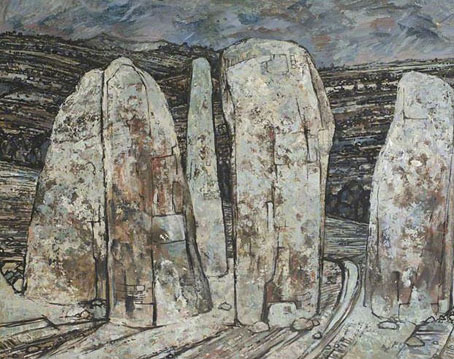
stones07.jpg

Standing Stones (recto) (1960) by Jonathan D. Cramp.

The Uffington White Horse is famously best viewed from the air which not only prompts continual speculation about its creation but also explains why there aren’t many paintings of it. White horses in British art are either the physical creatures or the much later chalk figures that can be found on southern hillsides. More surprising, perhaps, is the lack of paintings of Britain’s many neolithic monuments. Gothic and other ruins were a common feature of Romantic art but—Stonehenge aside—the circles and monoliths that litter the British landscape seem to have been ignored until very recently.

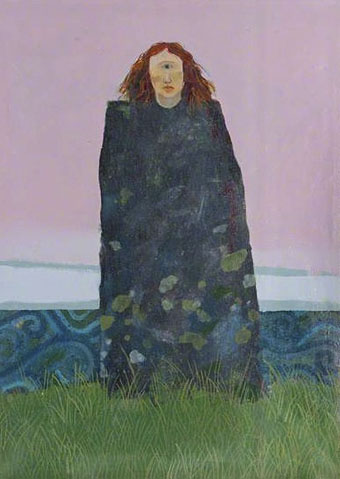
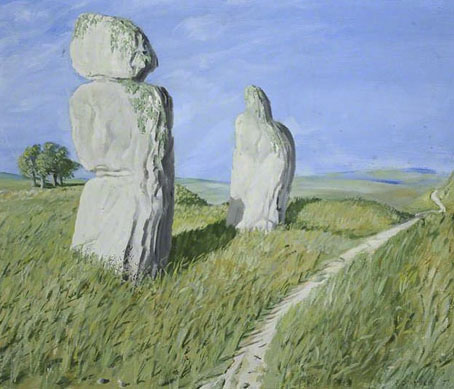
All the paintings here are from the BBC’s Your Paintings catalogue of the art on public display in Britain, and its notable that their dates coincide with the popular resurgence of interest in neolithic monuments. (The site does show a few older paintings but they’re a mix of the unattributed and the unimpressive.) Derek Jarman’s paintings of Avebury are absent since they were featured here last month. I especially like the stark and sombre picture by Gomer Lewis, an artist whose work I hadn’t seen before.

stones02.jpg

Standing Stone (1976–1977) by Helen F. Wilson.

stones06.jpg

Standing Stones (1977) by Peter Standen.

Continue reading “Standing stones”