Masonic fonts and the designer’s dark materials

golden_compass.jpg

The trailer for The Golden Compass turned up this week, the first part of Philip Pullman‘s His Dark Materials trilogy, and I can’t help but note that the film’s designers have chosen Jonathan Barnbrook’s Mason font for the titles and the rest of the typography. This isn’t so surprising given that Mason has been used on the covers of several editions of the books already but I wonder if this flush of even greater popularity will spell (as it were) the end of a stylish typeface.

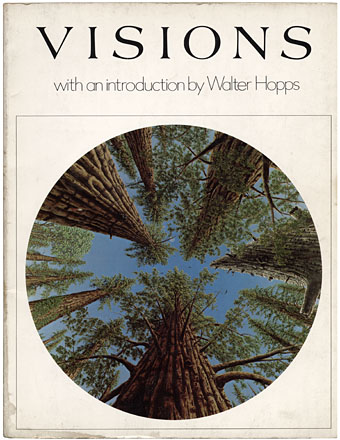
hdm.jpgMason (originally named Manson) was one of Barnbrook’s earliest published type designs, appearing in 1992 via the Emigré foundry, and over the past fifteen years has been widely imitated and become the default font for fantasy works, especially book jackets. The attraction for the genre is obvious in the way the design uses elegant and traditional serif letterforms that have been amended slightly to give them a distinctive quasi-ecclesiastical flavour, with flourishes derived from Greek, Renaissance and Biblical letters. The Gothic arch of the letter A has also helped make the font a popular choice for New Age or occult books. Mason was designed as a set of serif and sans serif variations but it’s Mason Serif Regular which is used the most. (The cover for The Science of His Dark Materials shown here is using both the sans serif variation and Mason Regular Alternate.)

Distinctive fonts take a while to get around and I don’t recall seeing Mason until at least 1994. From 1995 to 2000 it began to appear everywhere, even in newspaper ads for a while, before finding a permanent place in the book world. The trouble with this kind of ubiquity is that the novelty the design once possessed quickly vanishes and it begins to runs the risk of becoming a design cliché. Many typefaces go this way, especially in the publishing world where the choice of typeface is often dictated by genre expectations. So Orbit-B and its variants used to signify “science fiction” or “the future” in the 1970s, Caslon Antique and Rubens have become associated with horror while FF Confidential has been over-used for crime novels.

Continue reading “Masonic fonts and the designer’s dark materials”

Chiaroscuro II: Joseph Wright of Derby, 1734–1797

wright1.jpg

An Experiment on a Bird in the Air Pump (1768).

As promised, one of my favourite chiaroscurists. The impression Joseph Wright’s work made on me at the age of 13 was one of many revelations from my first visit to the Tate Gallery. The paintings which struck me most of the older works there were all of the Romantic or late-Romantic era: Turner, Francis Danby, John Martin, Philippe de Loutherbourg and Joseph Wright’s enormous An Experiment on a Bird in the Air Pump, which is now housed in the National Gallery. The National Gallery site has this to say about the picture:

A travelling scientist is shown demonstrating the formation of a vacuum by withdrawing air from a flask containing a white cockatoo, though common birds like sparrows would normally have been used. Air pumps were developed in the 17th century and were relatively familiar by Wright’s day. The artist’s subject is not scientific invention, but a human drama in a night-time setting.

The bird will die if the demonstrator continues to deprive it of oxygen, and Wright leaves us in doubt as to whether or not the cockatoo will be reprieved. The painting reveals a wide range of individual reactions, from the frightened children, through the reflective philosopher, the excited interest of the youth on the left, to the indifferent young lovers concerned only with each other.

The figures are dramatically lit by a single candle, while in the window the moon appears. On the table in front of the candle is a glass containing a skull.

As with many paintings, the online reproductions do little justice to the subtlety of Wright’s rendering of light and shade. This remains his most famous picture although he made another on a similar theme, A Philosopher Giving a Lecture on the Orrery (below) and, like Godfried Schalcken, he has at least two studies of people viewing statues by candlelight, a common practice at that time for the way the light gave classical sculpture a spurious life. Wright’s painting of The Alchymist is another popular work, turning up frequently in occult encyclopedias. Being a native of Derby he also became (along with de Loutherbourg) one of the first painters to depict the beginnings of the Industrial Revolution whose flaring furnaces provided an ideal subject for dramatists of flame and shadow.

Before leaving the tenebral world, I’ll note that Claire left a message to say that issue 24 of Cabinet Magazine has a feature on shadows in art, symbolism and philosophy.

Continue reading “Chiaroscuro II: Joseph Wright of Derby, 1734–1797”

Chiaroscuro

baglione.jpg

Heavenly Love and Earthly Love by Giovanni Baglione (1602–1603).

Chiaroscuro\, Chia`ro*scu”ro\, Chiaro-oscuro\, Chi*a”ro-os*cu”ro\, n. [It., clear dark.] (a) The arrangement of light and dark parts in a work of art, such as a drawing or painting, whether in monochrome or in colour. (b) The art or practice of so arranging the light and dark parts as to produce a harmonious effect.

Following from the earlier post about shadows in art, some favourite examples by masters of chiaroscuro. Another artist not represented here will be the subject of a post of his own in the next couple of days. The Dutch painter Godfried Schalcken (below) was the subject of the horror tale Schalcken the Painter by Joseph Sheridan Le Fanu, a story memorably filmed by Leslie Megahey for BBC television in 1979. Horror and the chiaroscuro effect belong together, as Fuseli’s Nightmare demonstrates, and many of Schalcken’s paintings seem even more curious and sinister after you’ve read Le Fanu’s story.

Update: John Klima points us to Hal Duncan‘s excellent story, The Chiaroscurist, which you can read at Electric Velocipede.

Continue reading “Chiaroscuro”

Smoke

smoke1.jpg

Advertising poster for Job cigarette papers by Alphonse Mucha (1898).

The law forbidding smoking in public places finally came into effect in England on Sunday, something that the nation’s smokers are still coming to terms with. I’ve never been a smoker but have always been easy-going about the activity, having had smoking parents and been around smokers for years. That said, it’ll be nice to go out now and not return home smelling like an ashtray.

To mark the passing of a nicotine-stained era, here’s a few of the many representations of smoking in the art world. Until I started looking for pictures today I hadn’t realised how many paintings there are of people (and dogs!) having smoke blown in their faces, like this one and this one.

smoke2.jpg

The Opium Smoker by Jean-Jules-Antoine Lecomte du Noüy.

smoke3.jpg

A Voluptuous Smoke by Charles Edouard Edmond Delort.

Previously on { feuilleton }
Perfume: the art of scent
German opium smokers, 1900

Shadows at Compton Verney

boltanski.jpg

The Candles by Christian Boltanski.

The Shadow is an exhibition at Compton Verney from Saturday 30 June–Sunday 9 September, 2007. I’d been considering a post about shadows in art for a while so this has forced my hand. There’ll be some follow-ups in the coming week, work permitting. I’m busy with a big new piece of Lovecraft-related art at the moment, among other things. More about that later.

Shadows carry with them a range of associations. Whilst the shadow exists as a scientific phenomenon, its presence, from the Greek philosopher Plato through to JM Barrie’s children’s story Peter Pan, reflects the values and beliefs of society as well as an expression of psychological states.

The Shadow is the first extensive group show of its kind to look at an ancient theme that continues to emerge particularly in the work of contemporary artists. The exhibition will provide the viewer with a series of atmospheric encounters where sometimes the source is revealed but frequently the shadow exists independently, often revealing a presence outside the space represented.

The exhibition includes painting, sculpture and video by international contemporary artists such as Doug Aitken, Laurie Anderson, Christian Boltanski, Ceal Floyer, Mona Hatoum, Gary Hill, Tracey Moffatt, Anri Sala, Fiona Tan, Andy Warhol, William Wegman and Francesca Woodman.

latour.jpg

The Choirboy (A Young Singer) by Georges de La Tour (1640s).

To compliment The Shadow exhibition, Compton Verney will present a number of key candlelight works by the French artist Georges de La Tour (1593–1652).

La Tour was born in the Duchy of Lorraine and influenced by the work of Caravaggio. His works have been attributed to a number of artists and it is only since 1915 that a group of his signed paintings were linked and attributed conclusively to La Tour.

It was not until 1972 when all his surviving works were brought together in a major retrospective exhibition at The Orangerie, Paris that he came to the attention of a wider public. This exhibition will represent a rare opportunity for British audiences to view La Tour’s paintings and will focus on a number of powerful works, mainly from La Tour’s late period, which concentrate on the effect of light on the human figure.

Georges de La Tour at ARC