Weekend links 816

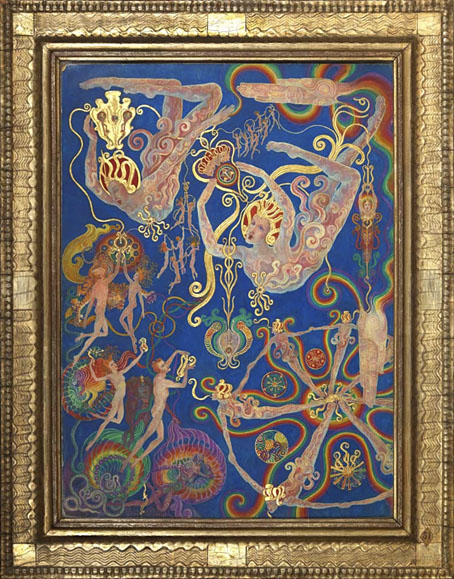
rossignol.jpg

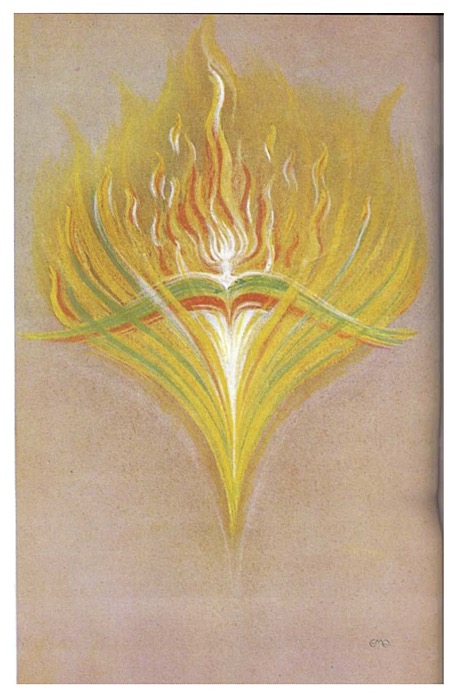
The Creative Power of the Spirit, No. 31 of A Goodly Company series, 1920–1933 by Ethel le Rossignol.

• “One moment it was a little blip. The next, our friends are dying”: the gay porn soundtrack composers lost to the Aids crisis. More gay porn: Pink Narcissus, James Bidgood’s micro-budget homoerotic fantasy, will receive a UK blu-ray release later this year.

• Old music: Thirst by Clock DVA gets a very welcome reissue later this year, having been unavailable in any form since 1992. I’m not so happy about the changes to Neville Brody’s original cover design but the album itself is a major post-punk statement.

• “Graphic design was thought to be a man’s discipline,” she says. “So I think it was quite a surprise for people to find me there.” A profile of Margaret Calvert, designer of (among other things) Britain’s road signs.

• At Colossal: A major survey in Paris chronicles Leonora Carrington’s esoteric Surrealism.

• At Public Domain Review: Sara Weiss’ Journeys to the Planet Mars (1903).

• At the BFI: The mystery music video for The Beatles’ Penny Lane.

Winners and entrants for Close-up Photographer of the Year 7.

• “Cats to blame for octopus deity enshrinement delay.”

• Steven Heller’s font of the month is Cattivo.

• At Dennis Cooper’s it’s Jack Arnold’s Day.

Pink Noir (1996) by David Toop | Pink Dust (2013) by Sqürl | The Pink Room 2 (2024) by Seigen Ono

Weekend links 808

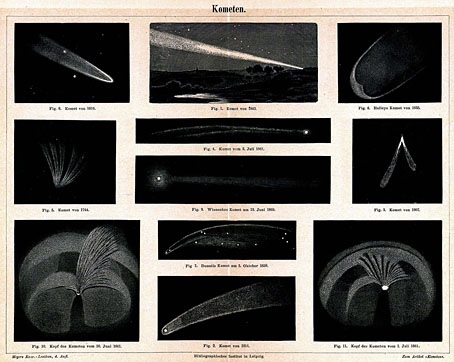
kometen.jpg

Comets from Meyers Konversationslexikon (1885–90).

• At The Daily Heller: Steven Heller reviews A Life in Ink, a new monograph about the art of Ralph Steadman. Heller is full of praise for Steadman, and discusses commissioning his work for The New York Times. But in his bewilderment at Steadman’s lack of a knighthood he seems unaware of the degree to which state honours are frequently refused by Britons, especially those who position themselves in opposition to the established order. Americans are obsessed with awards and “halls of fame”, and appear to regard Britain’s state honours as something like the Oscars with a royal seal, rather than what JG Ballard once described as “a Ruritanian charade that helps to prop up the top-heavy monarchy.” If Steadman has deliberately shunned the honours list he’d be joining a venerable company.

• “In mid-19th century Italy, two eccentric aristocrats set forth on parallel projects: constructing ostentatious castles in a Moorish Revival style. Iván Moure Pazos tours the psychedelic chambers of Rochetta Mattei, optimised for electrohomeopathic healing, and Castello di Sammezzano, an immersive, orientalist fever dream.”

• New music: Ithaqua by Cryo Chamber Collaboration is this year’s installment in the Lovecraft-themed album series (previously) from Cryo Chamber. Also this week: Analog 2025 by Various Artists; and Flux (music for a performance by still still / Marta & Kim) by Rutger Zuydervelt and Lucija Gregov.

For all their bravura and maximalism, Powell and Pressburger understood the power of leaving things out, building into their films chasms that the mind must leap, gaps that the imagination must fill. Like Joan Webster, we discover that we don’t want things to be made too easy. We want to catch our own fish rather than have them delivered, to swim in the ocean rather than in a pool.

Imogen Sara Smith on I Know Where I’m Going, one of the films from Michael Powell and Emeric Pressburger’s golden decade, the 1940s

• Among the new titles at Standard Ebooks, the home of free, high-quality, public-domain texts: In the Days of the Comet by HG Wells.

• At the BFI: David Parkinson selects 10 great Sherlock Holmes films and TV adaptations.

• Winning entries for the Capture The Atlas Northern Lights Photographer of the Year.

• Books and original drawings by Austin Osman Spare on sale at Gerrish Fine Art.

• At Unquiet Things: The art of Chie Yoshii.

Kohoutek-Kometenmelodie (1973) by Kraftwerk | Cometary Wailing (1981) by Bernard Xolotl | Kometenmelodie Part 1 (1994) by 300,000 VK

Tsathoggua rising

tsathoggua.jpg

I said last week that I’d almost finished reworking my portrait of Tsathoggua for the Lovecraft book, and here it is. Tsathoggua first came into the world in a Hyperborea story by Clark Ashton Smith, The Tale of Satampra Zeiros, before being incorporated into the Cthulhu Mythos by HP Lovecraft who refers to the god-creature in several of his stories. Where Smith describes a hideous toad-like being, Lovecraft avoids being too closely bound by material specifics, referring to an “amorphous” entity which suggests a range of possibilities for illustration. To be fair to Smith, there is an amorphous and very deadly creature lurking in the temple of Tsathoggua in The Tale of Satampra Zeiros but we never learn whether this is Tsathoggua itself or some other being.

The amorphousness of Lovecraftian entities is a factor which is too often ignored in the world of weird illustration. Cosmic horror thrives on the fluidity of physics and physical matter but many illustrators seem content to copy one another instead of inventing new teratisms, a process that results in the accretion of stereotypes. Cthulhu, as I’m always reminding people, explodes into pieces after being struck by a ship at the end of The Call of Cthulhu, the remnants then recombining when the ship sails away from the scene. Lovecraft never intended his “spawn from the stars” to resemble the accreted stereotype we see today, a kind of Jolly Green Giant with squid mask and bat wings, reaching a brawny and very human arm towards the viewer. The ultimate expression of cosmic amorphousness may be found in the Shoggoths, those alien entities whose default condition is a mass of shapeless, iridescent protoplasm.

It was the amorphous nature of Tsathoggua that I wanted to honour with my original Photoshop creation in 1999. The starting point was a photograph of a cephalopod (I forget now whether it was an octopus or a squid) torn from an old issue of National Geographic. My initial experiments with the picture weren’t intended to develop into Tsathoggua; I didn’t have anything specific in mind when I started but at some point during the production of The Great Old Ones I decided to turn the picture into Smith’s entity with the addition of a toad-like head. Rather than mould the rest of the picture into more recognisable organic shapes it was left in a largely amorphous state. The eye-like shape at the top is a complete mystery to me now, I can’t say why it was there but it felt right so there it stayed. Alan Moore’s text for Tsathoggua identifies the creature with the Kabbalistic sphere of Geburah, “Strength”, a zone imbued with the martial qualities of the planet Mars. This is one of the more arbitrary assignations in The Great Old Ones—there’s nothing especially warlike about the toad-god—but something had to occupy the space, and I’d already finished the picture before Alan started writing his pieces. For the new version I’ve redrawn some areas of the original, but most of the work has been a case of sharpening edges and improving the contrast and modelling. The spiky, crown-like upper half has been emphasised a little in order to complement the martial aspect. And the bulging, convex appearance of the original has been slightly enhanced, giving the impression that the creature’s gravitational mass is of a sufficient density to bend the light around it. None of this should be taken as a negation of Smith’s description of a squatting, pot-bellied toad-god. The icons of the Great Old Ones created by human beings are exactly this: human attempts to represent alien monstrosity. Some acolyte who happens to envision the real Tsathoggua might stammer that “It looked like…a giant toad!” thereby giving a form to the subsequent iconography. But the map is not the territory. Cthulhu doesn’t, and shouldn’t look like the statues either. The Jolly Green Giant needs to ditch the mask and wings and get back to selling canned vegetables.

Elsewhere on { feuilleton }
The Lovecraft archive

Previously on { feuilleton }
H.P.L.
The Return of the Crawling Chaos
Lettering Lovecraft
Weird ekphrasis and the Dunwich Horrors
Kadath and Yog-Sothoth
Another view over Yuggoth

The Return of the Crawling Chaos

nyarlathotep.jpg

Behold Nyarlathotep, v. 3.0, this being yet another revision of an old illustration. Some readers may recognise the imagery from version 2.0 (2009) or even the original that appeared in my Haunter of the Dark book in 1999. Earlier this month the work I’ve been doing for the new edition of the book reached the end of another stage with the completion of all the necessary redrawing of The Dunwich Horror. I’ve also just finished drawing page 24 of the story, the page I’d left half-done when the strip was abandoned in 1989. Everything I do from now on will be new material.

Having got this far I decided to pay a little more attention to the upgrading of the book’s fourth section, The Great Old Ones, by finishing Nyarlathotep, something I began this time last year then set aside when I got involved in rescanning all the old comics pages. As I’ve mentioned before, several of the pieces for this section of the book were some of my earliest digital illustrations, created a few months after I’d bought a secondhand and very underpowered Macintosh computer. Nyarlathotep was an attempt to depict the hybrid nature of a Mythos entity which combines elements of an Egyptian pharaoh, the diabolic “Black Man” of European witch cults, a sinister stage magician or scientist, and the winged abomination that Robert Blake finds lurking in the steeple of the Starry Wisdom church. Version 1 was one of my very first digital collages which suffered as a result of my inexperience with the new medium, hence my eagerness to rework the design in 2009 when Cyaegha, a metal band I’d been working with, requested a Nyarlathotep-themed T-shirt. The first version had been aimed more at the theatrical/scientific aspect of the character, with a poster in the background from John Nevil Maskelyne’s Egyptian Hall in London. For version 2 I added a number of organic elements to bolster the “Haunter of the Dark” side of the character. Version 3 keeps all the details from version 2 while replacing some of the collaged elements with similar ones taken from better sources. The new design is also slightly taller to account for the enlarged page size of the new book.

sephiroth.jpg

The Sephiroth chart from the second edition of the book, 2006.

The most notable additions to the new piece are the names of the character in Latin letters and Egyptian hieroglyphs (𓋔𓇋𓄿𓂋𓈌𓊵), the latter being a suggestion from this Reddit post. The Egyptian spelling is conjectural but I have a guidebook to the hieroglyphic language which confirms that most of the letters are the ones they should be. The words aren’t included solely as decoration. The Great Old Ones was a collaboration with Alan Moore in which Alan wrote eleven texts or invocations which position each god or entity on one of the spheres of the Kabbalistic Tree of Life. Alan was heavily involved with the Kabbalah at this time, being also engaged with the first few issues of Promethea, a story which involves a physical (or metaphysical) journey from Malkuth to Kether. The Great Old Ones takes the same journey in reverse, and from a much darker perspective, like a Lovecraftian equivalent of the Qliphoth, the “nightside” of the Kabbalistic spheres. In Alan’s scheme, Nyarlathotep is positioned at sphere 8, Hod (or “Splendour”), a sphere associated with gods of magic and language like Thoth, Hermes and Mercury. I imagine most Mythos-acquainted occultists would agree with adding Nyarlathotep to this pantheon. In addition to being gods of magic and language, Thoth, Hermes and Mercury also serve as celestial messengers, a function which Lovecraft assigns to Nyarlathotep in The Whisperer in Darkness when one of the Mi-Go declares “To Nyarlathotep, Mighty Messenger, must all things be told.”

As for the rest of The Great Old Ones, I have four more of them still to be reworked, one of which, Abdul Alhazred (or Lovecraft himself) is almost finished. Further progress will be posted here.

Elsewhere on { feuilleton }
The Lovecraft archive

Previously on { feuilleton }
Lettering Lovecraft
Weird ekphrasis and the Dunwich Horrors
Kadath and Yog-Sothoth
Another view over Yuggoth
Nyarlathotep: the Crawling Chaos

Weekend links 804

phantom.jpg

Poster for The Phantom of the Opera, 1925. The first Universal horror film, and the best screen adaptation of Gaston Leroux’s novel, was released 100 years ago this month.

• “Evolution seems to have a thing for mind-bending molecules here on planet Earth. Psychedelics are more widespread in nature than you might think. These remarkable compounds, which can profoundly alter consciousness, arose repeatedly across evolutionary time, stretching back at least 65 million years. To date, some 80 species of fungi, at least 20 plants, and a species of toad have been documented to produce psychoactive molecules. And scientists continue to identify new ones.” Kristin French presents a trip around our surprisingly psychedelic planet.

• “There was no condescending sense with Potter —all too present today as then—that the public were idiots who needed to be intellectually housetrained, by their enlightened ‘betters’. […] Television was not treated as a particularly serious medium, something Potter upended not by performing ‘seriousness’ but by bringing out the possibilities few had believed it contained.” Darran Anderson on the television plays of Dennis Potter.

• At Public Domain Review: AD Manns on a possible origin for the occult lore presented in Charles Godfrey Leland’s Aradia, Or the Gospel of the Witches, a founding text for the witchcraft revival of the 20th century.

• New music: Implosion by The Bug vs Ghost Dubs; Herzog Sessions by Mouse On Mars; VHS Days Vol. 1 by Russian Corvette.

• At Wyrd Britain: A link to a video interview in which the great Ian Miller about his long illustration career.

• At the BFI: David West selects 10 great Hong Kong action films of the 1980s.

• Mix of the week: DreamScenes – November 2025 at Ambientblog.

• At The Wire: Stream the new album by Ann Kroeber & Alan Splet.

Seb Rochford’s favourite records.

• RIP Tatsuya Nakadai, actor.

Phantom Lover (2010) by John Foxx | Phantom Cities (2020) by The Sodality Of Shadows | Phantom Melodies (2018) by Cavern Of Anti-Matter