Weekend links 629

vallee.jpg

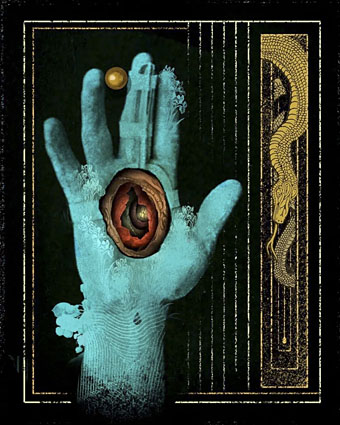
UFOs: The Psychic Solution (1977) by Jacques Vallée. A retitled reprint of The Invisible College (1975) with cover art by Peter Tybus.

• “In the summer of 1992…a curious experimental interstellar ambient-house album, made it to number one in the UK charts, promoted by a top ten single that was almost forty minutes long.” Darran Anderson navigates the noösphere with my favourite Orb album, U.F.Orb.

• Among the recent arrivals at Standard Ebooks, the home of free, high-quality, public-domain texts: Hope Mirrlees’ strange fantasy novel, Lud-in-the-Mist (1926).

• James Balmont’s guide to the intricate cinema of Hong Kong’s crime auteur, Johnnie To.

Shortlisted photos from the Astronomy Photographer of the Year Contest.

• At Dennis Cooper’s: Spotlight on…Jean Genet Miracle of the Rose.

• Steven Heller’s font of the month is Ambicase.

• New music: Two Sisters by Sarah Davachi.

• RIP Peter Brook and James Caan.

Unidentified Flying Object (1970) by UFO | Psychic And UFO Revelations In The Last Days (1994) by Bill Laswell & Pete Namlook | UFOnic (1995) by Sabalon Glitz
Weekend links 628

eckman-lawn.jpg

Collage art by Alex Eckman-Lawn at Unquiet Things.

• “…I love those niches and fringes in the creative world. I believe they deserve our support. But in most instances, this support must be driven by our generosity, philanthropy, and commitment to our core values—and not merely by profit seeking. Because as soon as profit maximization enters the picture, these outliers on the distribution curve don’t make the cut.” Ted Gioia explores the myth of “the Long Tail”.

• “Here we were, an Italian, an Englishman and an American in Munich, three foreigners in a foreign land—it was an accident we got together in the first place.” Pete Bellotte talking to Jude Rogers about the recording of I Feel Love by Donna Summer, a cult item in these quarters. Most of the history is very familiar but I didn’t know that Bellotte is a Mervyn Peake obsessive.

The radical, revolutionary homoerotic art of Sadao Hasegawa. Writing about the artist in 2007 I said that “a decent collection of his work for a western audience is long overdue”; we finally have such a thing courtesy of Baron Books.

• At Wormwoodiana: Undefined Boundary: The Journal of Psychick Albion, a magazine by the creators of the Coil zine, Man is the Animal, that “aims to celebrate the visionary, psychedelic and numinous in Britain”.

Dennis Cooper’s favourite fiction, poetry, non-fiction, film, art, and internet of 2022 so far. Thanks again for the link here!

• New music: Devotional by The Lord + Petra Haden, Dreamtides by Field Lines Cartographer.

Fall Into Sleep by K Of Arc.

Psychic Fire (1975) by Master Wilburn Burchette | The Psychic (1995) by David Toop | Psychic Wounds (2020) by Trees Speak

Weekend links 627

aldridge.jpg

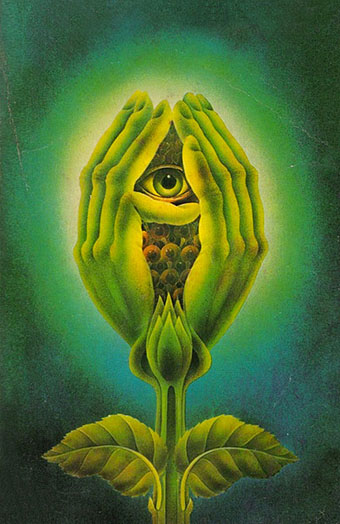
Cover art by Alan Aldridge for The Secret Life of Plants, 1975. Via.

• At Aquarium Drunkard: Alice Coltrane and band in a furious live performance at the Berkeley Community Theatre, 1972. The audio is on YouTube, and was also released on (unofficial) vinyl a couple of years ago, but you can download the whole set at Dimeadozen. (Free membership required.)

• “Black Square is tragic; it’s absurd; it can be bewildering or funny; it’s certainly metaphysical; and now it serves as a precursor for works and projects yet to be imagined.” Andrew Spira on the precursors of Black Square by Kazimir Malevich.

• “The possibility of plant consciousness cuts two ways, depending on whether you see plants as friend or foe, benevolent or threatening.” Elvia Wilk on the secret lives of plants.

• New/old music: Robot Riot by Stereolab. A previously unreleased recording from the mid-90s which will appear on the fifth instalment in the Switched-On compilation series.

• “Dare’s good, but Love And Dancing broke the mould and kicked off the whole modern dance scene.” Ian Wade on 40 years of remix albums.

• Coming soon from Strange Attractor: Arik Roper: Vision of The Hawk.

• At Unquiet Things: Deborah Turbeville’s unseen Versailles.

• “Thinking like a scientist will make you happier”.

• At Dennis Cooper’s: Karel Zeman Day.

Plantasia (1976) by Mort Garson | Musik Of The Trees (1978) by Steve Hillage | The Secret Life Of Plants (1979) by Stevie Wonder

Weekend links 626

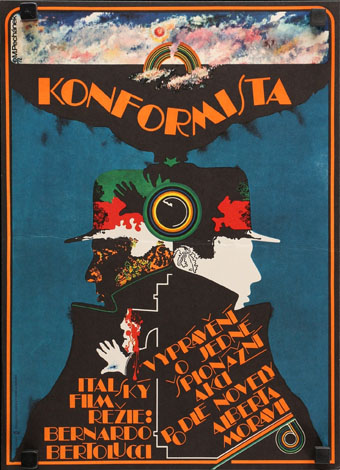
conformist.jpg

Czech poster for Bernardo Bertolucci’s The Conformist. Art and design by Miroslav Pechánek, 1972.

• “Acknowledgements are not part of the novel; in fact, they break the spell the author has spent 200 or more pages weaving. We should take a book on its merits, knowing as little about the author as possible. As one reader put it to me, ‘the end of a book is time for thinking about the book, not for an acceptance speech’.” John Self on dedications and acknowledgements.

• Mixes of the week: a Power Ambient mix by A Strangely Isolated Place, and a mix for The Wire by Nexcyia.

• At Spoon & Tamago: 3D-scanned stones create vessel for human-made interventions.

Weeks turned into months. Slowly it dawned on me that I was performing the role of Boswell for a man who might be: a) a put-on maestro or arcane troll; b) a fiction writer slash performance artist; or c) a lunatic. But by his own admission King had tagged me with a familiar spirit. Whether or not he was telling the truth was irrelevant at this point. I could feel something squatting on my soul. I needed to see what it was.

Kent Russell on looking for demons in a disenchanted world

• A trailer for Mad God, Phil Tippett’s 30-years-in-the-making animated feature.

• New music: Vesta by Azu Tiwaline, and Right, Right, Right by Nils Frahm.

• At Dennis Cooper’s: Max Hattler Day.

• “Marcel Duchamp was not a thief.”

• RIP Jean-Louis Trintignant.

Demons Of Rage (1972) by Nik Raicevic | Shall Come Forth The Demons (1991?) by Yuri Morozov | Angels Of Darkness, Demons Of Light (2011) by Earth

Luminous Procuress

luminous01.jpg

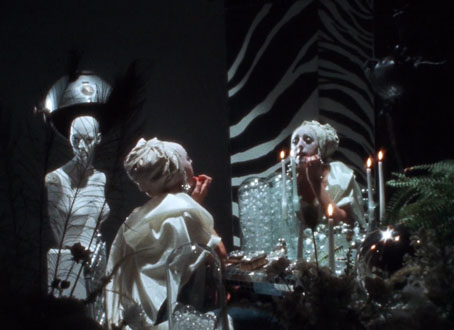
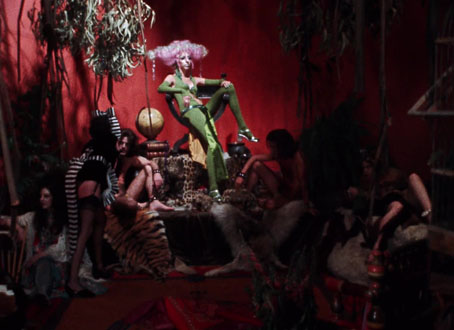
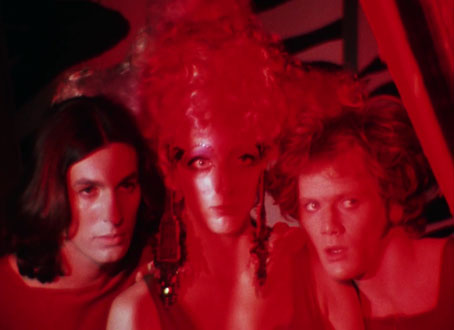
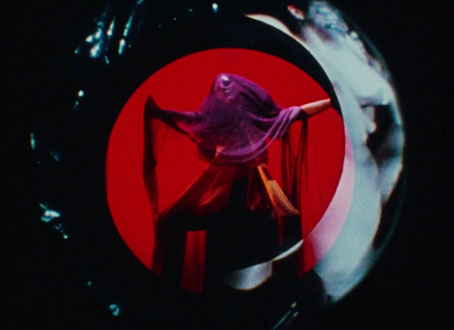
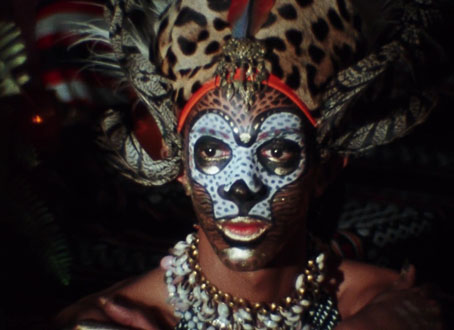
How to describe this one? Inauguration of the Pleasure Dome, pt 2? Bargain-basement Satyricon? The latter is probably more apt, Kenneth Anger’s longer films are more formal than Luminous Procuress. Steven Arnold’s only feature film resembles something made by the extras from a Fellini extravaganza after they’ve stayed overnight at Cinecittà; a series of artfully-arranged tableaux (artful arrangement being Arnold’s forte), together with a hardcore sex-scene (hetero) that seems out of place beside the relatively chaste antics elsewhere:

Luminous Procuress is an altogether extraordinary, individualistic phantasmagoria. It was filmed entirely in San Francisco over a two-year period, and describes the adventures of two wandering youths in San Francisco who visit the home of a mysterious woman, the Procuress. She is an elegant emblem of sorcery, her vivid features glowing under bizarre, striking maquillage, and one is not certain who she is or where she intends to lead the protagonists. Although the language she speaks is vaguely Russian, it appears that the Procuress has psychic powers. She discerns a sympathetic response to her on the part of the youths, and by magical means, conducts them through fantastic rooms, on a psychic journey. Through strange passageways, one voyages with the Procuress and her charges, glimpsing hidden nightmares and panoplied chambers of revelry, where celebrants, ornately festooned, dance and make love before unseen gods… (more)

luminous02.jpg

Arnold’s film follows the low-budget form by being shot without synchronised sound, so the dialogue, such as it is, has been dubbed on later. Rather than try and match words to the improvised scenes Arnold instead gives his characters foreign voices, most of which are mumbling and may not even be saying anything intelligible in their own language. This spares us any Warhol-like amateur theatricals while augmenting the dream-like atmosphere. The music by Warner Jepson is the icing on a very unusual cake. Jepson was a serious electronic composer whose rather abrasive debut album, Totentanz, was included in the Creel Pone catalogue of electronic obscurities in 2005. For the film Jepson provides swathes of synthesizer doodling interspersed with arrangements for keyboards and voices. All this and the Cockettes too. Salvador Dalí loved it.

luminous03.jpg

luminous04.jpg

luminous05.jpg

Continue reading “Luminous Procuress”