Weekend links 699

gartside.jpg

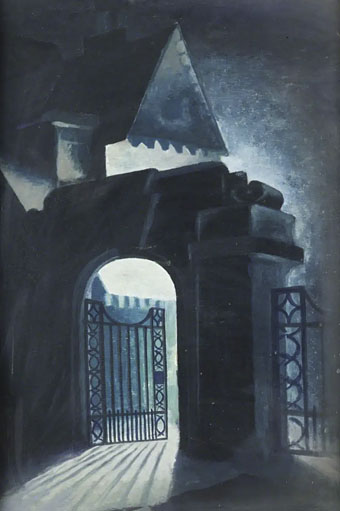
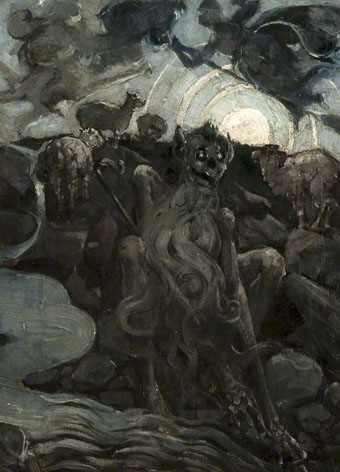
November Evening (1955) by Brian Gartside.

• The next Jon Savage compilation for Caroline True Records will be Jon Savage’s Ambient 90s, a dive into the side of rave culture that I always preferred, even while disputing the use of the “A” word. Anything with beats isn’t ambient by my definition, but I’ve been complaining about the nomenclature since 1991 to no avail. It’s on pre-order anyway.

• “They produced in me an infinity of new images and feelings, that sometimes raised me to ecstasy, but more frequently sunk me into the lowest dejection.” Thus Frankenstein’s monster during his reading of three books that happen to be important texts for the Romantic imagination. Hunter Dukes looks at the syllabus of Frankenstein’s monster.

• “Figure on Led Zeppelin IV cover identified as Victorian Wiltshire thatcher”. Last year I discovered the source for the lyrics and credits lettering designs used on the same album’s inner sleeve. Not as newsworthy, obviously, but I thought it was a good piece of cultural detective work.

• At Aquarium Drunkard: An interview with Morton Subotnick, now 90 years old. “Pioneer” is an over-used label, especially in electronic music, but Subotnick really does warrant the description.

• At Wormwoodiana: Mark Valentine on Unburied Bane, an EP by The Heartwood Institute based on a story by “the enigmatic N. Dennett”.

• At Unquiet Things: Art and captions that didn’t make the print version of The Art of Fantasy by S. Elizabeth.

• “Hidden demon revealed in the shadows of a Joshua Reynolds painting.”

• New music: Polygon by Galya Bisengalieva, and Saor by Claire M. Singer.

• Steven Heller’s font of the month is Letraflex.

• At Dennis Cooper’s: Arthur Lipsett’s Day.

Martin Carthy’s favourite music.

Little Demon (1956) by Screamin’ Jay Hawkins | Ballad Of Maxwell Demon (1998) by Shudder To Think | On Demon Wings (2000) by Bohren And Der Club Of Gore

Imaginary Landscapes: A film on Brian Eno

eno1.jpg

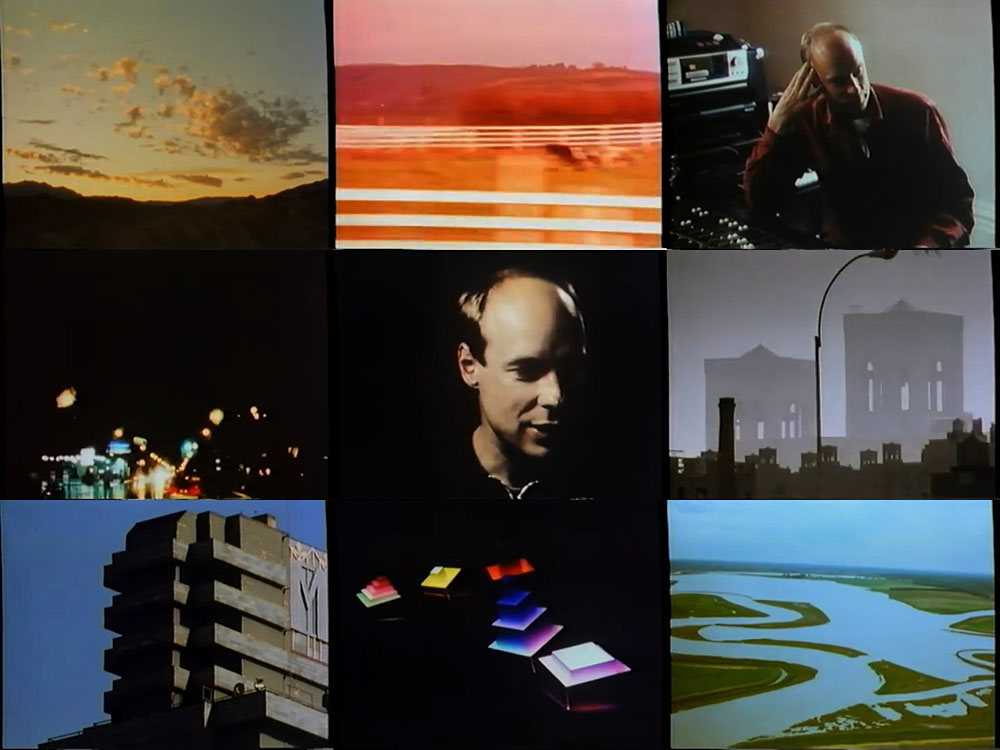
The landscapes are those that may come to mind when listening to one of Brian Eno’s instrumentals, as Eno himself explains in this 40-minute portrait by Duncan Ward and Gabriella Cardazzo. I linked to a streaming copy of this several years ago but Flash streams are no use today so it’s good to find again on YouTube. Imaginary Landscapes was made in 1989, and the relatively short running time isn’t really enough to do justice to Eno as either composer or indefatigable theorist. The brevity is also a little surprising when the whole thing was shot on film in the UK, USA and Italy. Maybe expense was an issue? Whatever the answer, we get to see many actual landscapes—California, the rivers and shoreline of Suffolk, the urban landscape of New York City—while Eno explains some of the ideas behind his art and his music. He discusses his time in New York, which he’d recently left to return to his home town of Woodbridge, and his intention to develop his art installations to a greater degree than he’d done in the past. We know now that he did exactly this, I got to see one of his “Quiet Club” installations at the Hayward Gallery’s Sonic Boom group show in 2000. The quietness was rather compromised by sound leakage from other noisier exhibits but it was one of the show’s more memorable pieces.

eno2.jpg

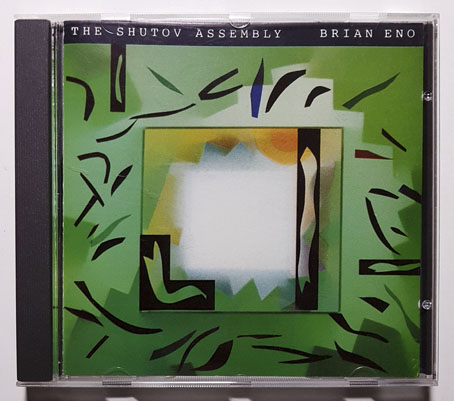
I’ve a lot of time for Eno’s approach to art installation and the instrumental music he creates for these works, less so for his recent songs. Imaginary Landscapes was made shortly before the release of the song-based Nerve Net, an album I’ve never liked very much, plus another release, The Shutov Assembly, a collection of instrumentals that I’ve listened to more than most of his albums, with the possible exception of Thursday Afternoon. Many of the posts here were written to the accompaniment of The Shutov Assembly, I find it an ideal album of “thinking music”, more so than the later Neroli which is actually titled “thinking music” but which takes the Eno systems approach to a minimal extreme. The Shutov Assembly could be regarded as another collection of imaginary landscapes, with each piece having a nine-letter title that refers to a real location (all of which hosted one of Eno’s artworks) without being in any way illustrative. The Shutov pieces were recorded around the time Imaginary Landscapes was being made, and we see Eno demonstrating synthesizer sounds that are close to some of those you hear on the album. I’d have been happy with a lot more of this, 40 minutes more in fact, but the film-makers had other ideas.

Previously on { feuilleton }
Harold Budd, 1936–2020
Synapse: The Electronic Music Magazine, 1976–1979
Fourth Worlds: A Jon Hassell Mix
Mistaken Memories Of Medieval Manhattan
Thursday Afternoon by Brian Eno
Moonlight in Glory
Tiger Mountain Strategies
Generative culture
My Life in the Bush of Ghosts

Weekend links 698

ayrton.jpg

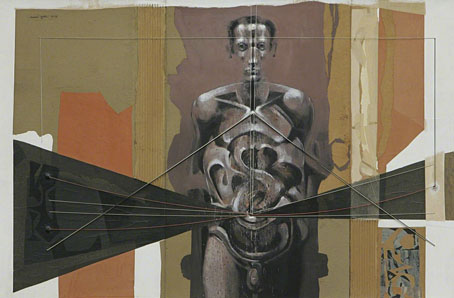
Contained Maze (1966) by Michael Ayrton.

• At Public Domain Review: Skeletons (1692) by Ikkyu, a Japanese monk, whose book is “a mixture of poetry and prose that comes down to us in printed editions supposedly replicating a manuscript, now lost, by the monk’s own hand. The text describes a series of visions of animated skeletons that Ikkyu had when he visited an abandoned temple. The lively illustrations testify to their maker’s sardonic sense of humour: he images skeletons dancing, drumming, drinking sake, having sex.”

• At The Daily Heller: Victor Moscoso’s Psychedelic Valedictory Exhibit. The exhibition will be at the Instituto Cervantes in New York City which has an accompanying 224-page catalogue of Moscoso’s posters and other designs.

• More Moscoso: Color (1971) and Moscoso Comix (1989), free to download at the Internet Archive. Moscoso’s underground comics experimented with the form in a manner that still looks radical today.

Drone and ambient metal is often invoked in elemental terms. There is something antediluvian and beyond about it. Pierce the earth’s crust, and there is liquid fire, ever so slowly shifting the tectonic plates we inhabit. Such music is envisaged as massive and totally beyond our control. It infuses the foundations of civilization. As Attila Csihar intones on Sunn O))) track ‘Aghartha’, named for a legendary subterranean kingdom: “Into the memories of the consciousness of ancient rocks/ Nature’s answer to eternal question”.

Stripped of the trappings of modern pop and rock, ambient metal invites a search for answers to the bigger questions. Ancient musical modes are resurfaced to get us closer to a putative godhead.

Dan Franklin on Earth 2, the deceptively-titled debut album by Earth. The album’s 30th anniversary has prompted a collection of remixes, Earth 2.23, by various artists

• At Spoon & Tamago: Download over 30 butterfly designs by Meiji-era artist Yuho Tanaka.

• New music: HYbr:ID II by Alva Noto, and The View From Vega by Benge.

The winners of the Landscape Photographer of the Year 2023.

• At Dennis Cooper’s: Guy Maddin Day (restored/expanded).

• A happy 20th birthday to Swan River Press.

Industrial Landscape (1980) by Marc Barreca | Desolate Landscape (2012) by John Zorn | Primordial Landscape (2013) by Patrick Cowley

The Great Drone Ones

cryo1.jpg

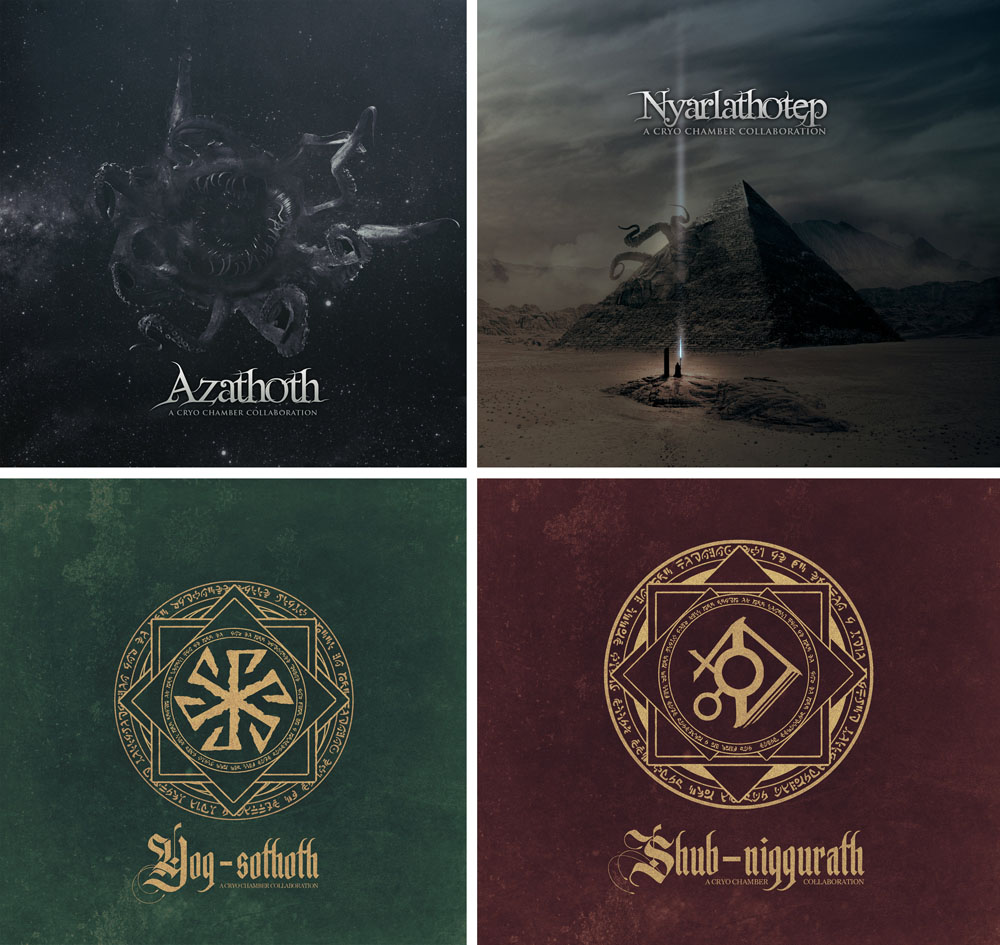
Cover by Simon Heath with Nicolas Crombez.

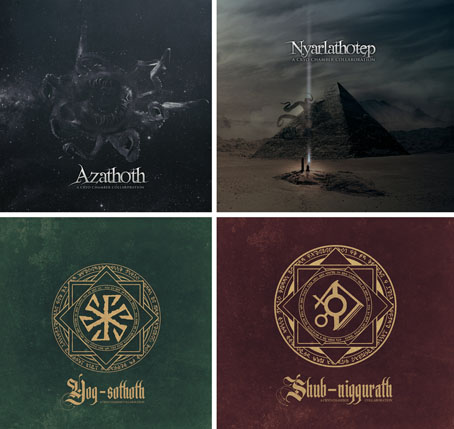
October, as I’ve noted before, is drone month, and this year I finally decided to catch up with the most recent instalments in the series of Lovecraft-themed albums that Cryo Chamber have been releasing each year since 2014. I’m still waiting for the discs to arrive—the Shoggoth Mail has been taking its time to slither here from Kracow—but Bandcamp happily assuages any impatience by offering immediate downloads. All of these albums are a collaborative effort between a varying roster of Cryo Chamber artists, with the contributions being blended together to create disc-long tracks (usually two discs to an album) that offer audio portraits of the gods or beings of the Cthulhu Mythos. The contributors do their best to maintain a consistent mood (and, where necessary, the same key) so there aren’t any of the abrupt exchanges you often get in music mixes. As to the identity of the groups or individuals involved, I could name names but as I’m not familiar with their work outside these releases there’s not much I can say about them.
cryo2.jpg

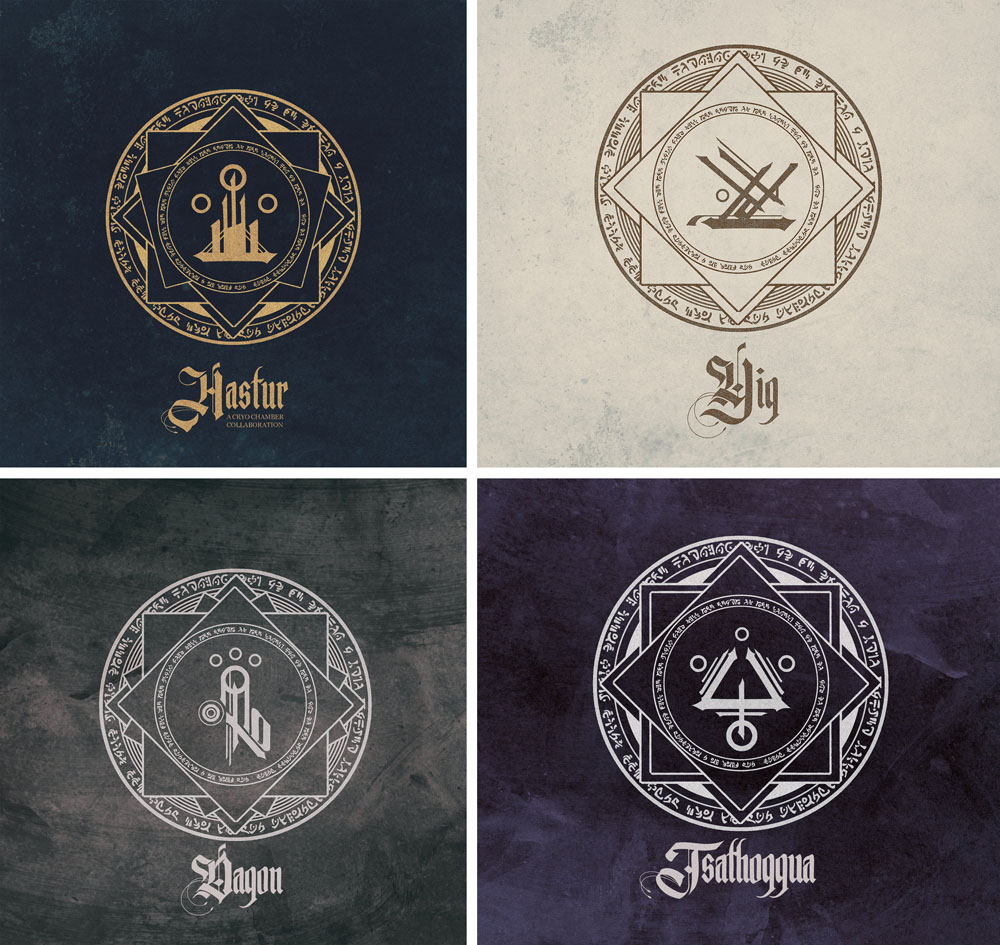
Covers by Simon Heath.

Lovecraftian music used to be little more than one-off tracks on rock albums but, as with Lovecraftian illustration, there’s a lot more fully-realised material to be found today. One of the things I like about the Cryo Chamber albums is that they’re wholly instrumental (the “Cthulhu fhtagn” intonation on Cthulhu is a rare exception), and with each piece being an hour or more in length I find them very amenable as soundtracks for illustration sessions. Cryo Chamber specialises in a variety of dark ambient music that’s more evocative than the abstract equivalents produced by artists like Thomas Köner: Gothic doom and apocalyptic science fiction are recurrent themes. Since cosmic horror tends to be a blend of Gothic doom and apocalyptic science fiction it was almost inevitable that one or more of HP Lovecraft’s monstrous extraterrestrials would eventually raise its tentacles somewhere in the Cryo Chamber discography. This type of music is a better match for weird fiction than most of the rock music derived from Lovecraft’s stories, in part because it resembles the kinds of atmospheric timbres that you find on the better horror soundtracks. There’s more substance here than Köner’s “grey noise” but rhythm is minimised or omitted altogether, and there’s a general avoidance of overt musicality. One of the precursors of the Cryo Chamber sound, Lustmord, established the form in 1992 with The Monstrous Soul, an album that quotes liberally from Jacques Tourneur’s The Night of the Demon while borrowing track titles (IXAXAAR, The Daathian Doorway) from Kenneth Grant’s eldritch occult philosophies.
cryo3.jpg

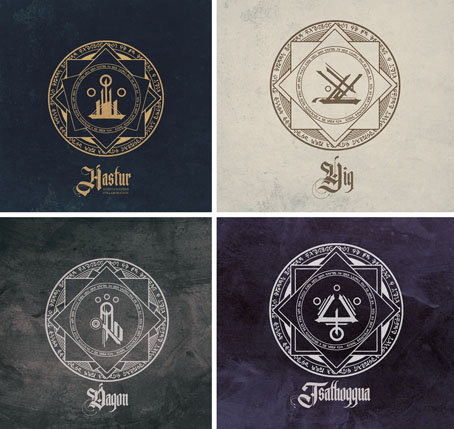
Covers by Simon Heath.

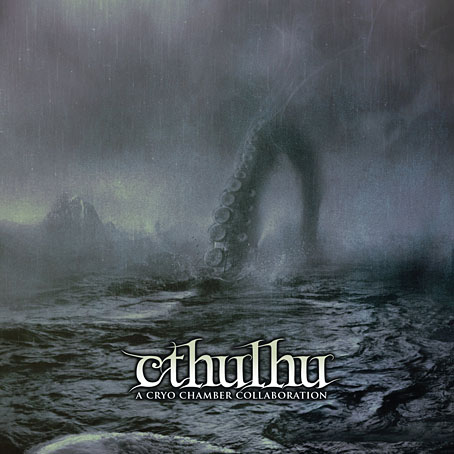
The Cryo Chamber Collaborations began with Cthulhu, the only single-disc release, and one which I seem to play the most. Subsequent releases have dealt with Lovecraft’s other Mythos gods—Azathoth (2015), Nyarlathotep (2016), the only three-disc release), Yog-Sothoth (2017) and Shub-Niggurath (2018)—before working through the extended Mythos with albums devoted to Hastur (2019), Yig (2020), Dagon (2021) and Tsathoggua (2022). Some of the albums are more sonically illustrational than others: Cthulhu and Dagon evoke the oppressive chasms of the oceanic deep, while Nyarlathotep, Hastur and Yig offer intimations of the Middle East, justified in the case of Nyarlathotep’s pharaonic aspect, less so for the others. Yog-Sothoth, meanwhile, features a succession of chiming tones like those produced by Tibetan bowl gongs. Lovecraft’s fiction tells us little about the actual nature of Yog-Sothoth aside from vague references like the one in The Horror in the Museum, a story co-written by Lovecraft and Hazel Heald, in which we read of “a congeries of iridescent globes…stupendous in its malign suggestiveness.” Not an easy thing to represent in music yet the Yog-Sothoth album has its own mood and character which sets it apart from the others in the series. The most recent release, Tsathoggua, honours Clark Ashton Smith’s loathsome toad god with swathes of abrasive noise and repeated eruptions of a cthonic bass tone like those used by Deathprod on the baleful Treetop Drive.

Now that the Cryo Chamber series has made use of all the primary deities of the Mythos cycle, plus some of the secondary ones, I’ve been wondering where it may go next. There are many minor deities (or entities) created by the generations of writers that followed Lovecraft’s lead (see this list for details) but few of the names of these beings have the authority of Lovecraft’s nomenclature. They also lack the textual reinforcement that the Mythos gives to entities that would otherwise have been limited to mentions in only one or two stories. I suppose we’ll find out whether the label will be continuing the series soon enough. The albums as they currently stand run for over 18 hours in total. That’s almost enough to soundtrack the entirety of Halloween.

Elsewhere on { feuilleton }
The Lovecraft archive

Previously on { feuilleton }
Daikan by Thomas Köner
Cosmic music and cosmic horror
Drone month
Hodgsonian vibrations

Weekend links 696

hornel.jpg

The Brownie of Blednoch (1889) by Edward Atkinson Hornel.

• “None of the theatrics of most films are available in Bresson, because in some ways Bresson’s characters, along with Dreyer’s and Cassavetes’s are the most inscrutable in motion pictures—maybe since their creators are the best believers in suggestion.” Greg Gerke explores the later films of Robert Bresson.

Iizuna Fair is a short animated film by Sumito Sakakibara that will be viewable at Vimeo for the next few months.

• Occult scholar Mitch Horowitz returns to the Aquarium Drunkard podcast for a wide-ranging discussion.

Marty [Scorsese] went to the Edinburgh Film Festival in 1974 to collect an award for Alice Doesn’t Live Here Anymore. They asked him who he wanted to present it to him, and he said Michael Powell. They had no idea who he was. No one did, but I found an American doing publicity for Kubrick’s 2001 who knew where he was. He introduced Michael to Marty at a lunch where Marty bombarded Michael with questions about how he did this and how he did that. Michael writes in his autobiography that the blood started to run in his veins again, it had been so long that he and Emeric had been living in oblivion.

Marty brought Michael to America, where we had already started working on Raging Bull. Marty had been educating me about Powell and Pressburger’s films, sending me home with VHSs. I had fallen in love with them, and then he said that Michael Powell was coming for dinner one night and asked if I would like to meet him. That’s how we met and eventually became involved, all thanks to Marty.

Thelma Schoonmaker remembering her husband, Michael Powell, and discussing the ongoing restoration of his films. Good to hear that plans are afoot to resurrect Gone to Earth

Whole Earth Index is a near-complete archive of the Whole Earth Catalog and its related publications.

• At the Daily Heller: David Byrd, the East Coast’s psychedelic poster man.

• See the winners of the Nikon 2023 Photomicrography Competition.

• New music: Golden Feelings by Better Weather.

Mikrostruktury (1963) by Wlodzimierz Kotonski | La Chasse Aux Microbes (1977) by Michael Bundt | Microscopic (1995) by Gas