Aubrey Beardsley in The Studio

ab1.jpg

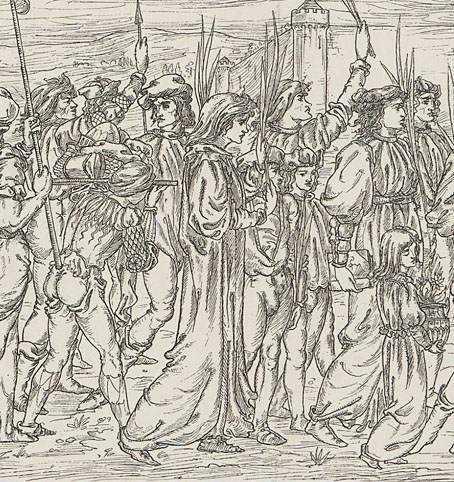
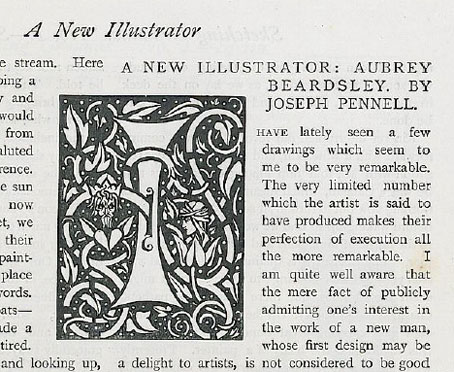
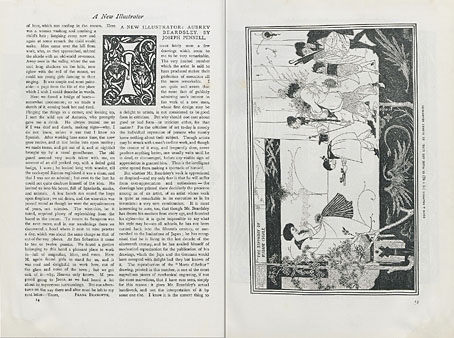
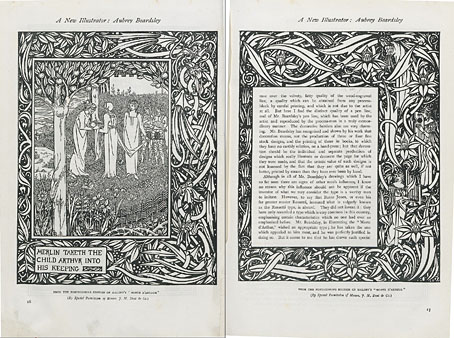
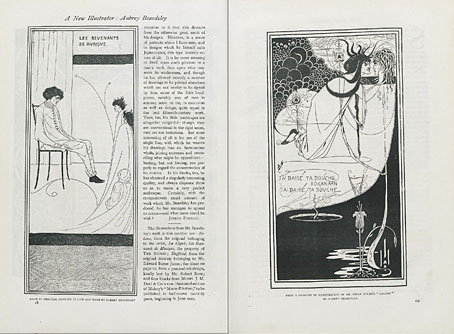
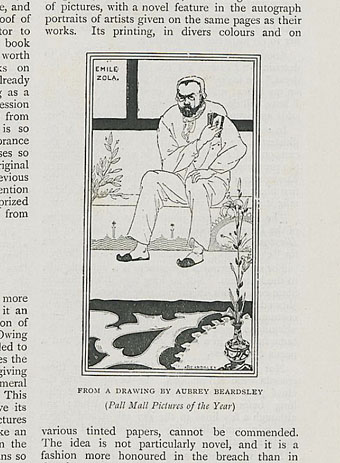
Aubrey Beardsley in the year 1893 was 21, and on the threshold of being catapulted to fame (and notoriety) via his illustrations for Oscar Wilde’s Salomé. Some of Beardsley’s drawings in the distinctive style he called “Japanesque” had already appeared in The Pall Mall Magazine, and he was hard at work on some 600 illustrations and embellishments for Dent’s Le Morte D’Arthur which began publication in 1894. Some of those illustrations are featured in the glowing introduction by Joseph Pennell which appeared in the first issue of The Studio magazine in April 1893 (when Beardsley was still only 20), a title that became the leading showcase for the British end of the Art Nouveau movement in the 1890s. Pennell’s appreciation also included Beardsley’s Joan of Arc’s Entry into Orleans, a piece which showed how much the artist’s early work owed to Mantegna, and the first drawing of Salomé which later helped secure the Wilde commission. The Joan of Arc picture was reproduced as a fold-out supplement in the magazine’s second issue.
ab2.jpg

All the major Beardsley books refer to Pennell’s article but I’ve never had the opportunity to see it in full until now, thanks to the excellent online archives at the University of Heidelberg. There are many volumes of the international editions of The Studio at the Internet Archive but for some reason these don’t include the early numbers; at Heidelberg we can now browse the missing issues. In the first volume in addition to Beardsley there’s a piece about Frederic Leighton’s clay studies for paintings and sculptures, illustrations by Walter Crane and Robert Anning Bell, and an article on whether nude photography can be considered art. In this last piece several of the examples happen to be provided by Frederick Rolfe aka Baron Corvo, and Wilhelm von Gloeden, two men who we now know had other things on their mind when they were photographing Italian youths.

The collected volumes of The Studio from 1893 to 1898 may be browsed or downloaded here. I’ve not had time to go through the rest of these so I’m looking forward to discovering what else they may contain.
ab3.jpg

ab4.jpg

ab5.jpg

Detail from Joan of Arc’s Entry into Orleans.
ab6.jpg

Elsewhere on { feuilleton }
The Aubrey Beardsley archive
Weekend links 176

dlouhy.jpg

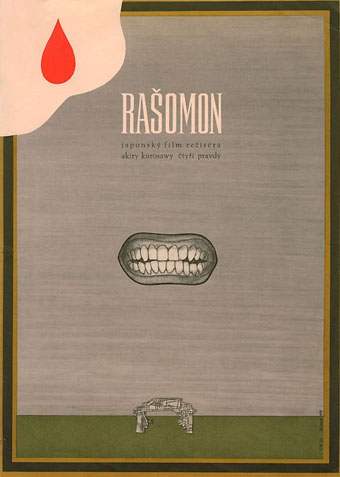
This week PingMag was looking at Czech film posters. This one by Bedrich Dlouhy is for the belated 1970 release of Kurosawa’s Rashomon.

• In October Alison Goldfrapp curates an exhibition for The Lowry, Salford, featuring her favourite art. Examples will include work by Leonora Carrington, Lotte Reiniger and Henry Darger so I’ll definitely be seeing this one. The new Goldfrapp album, Tales of Us, is released this week. Alison Goldfrapp & Lisa Gunning’s film for Annabel is here.

Michael Glover profiles artist Tom Phillips who has a new show of his paintings at the Flowers Gallery, London. The indefatigable Phillips also talked to Tracy McVeigh about his design for the new 50 pence coin which celebrates the centenary of Benjamin Britten.

Get Carter director Mike Hodges remembers re-teaming with Michael Caine for the island-set crime thriller Pulp, and shares a letter that JG Ballard wrote to him in admiration of the film.

Dismantling the surveillance state won’t be easy. Has any country that engaged in mass surveillance of its own citizens voluntarily given up that capability? Has any mass surveillance country avoided becoming totalitarian? Whatever happens, we’re going to be breaking new ground.

Bruce Schneier on how to deal with the total surveillance state.

• Babel/Salvage presents The Midnight Channel, the newest montage of poetry by Evan J. Peterson, inspired by cinema of the horrific, fantastic and bizarre.

• Mixes of the week are from composer Amanda Feery at The Outer Church, and Pinkcourtesyphone (Richard Chartier) at Secret Thirteen.

• At Dangerous Minds: Kimberly J. Bright on the psychedelic poster art of Hapshash and the Coloured Coat. Related: LSD may not be bad for you, says study.

Queer Zines: a 400-page study edited by AA Bronson & Philip Aarons.

• Justin Abraham Linds on The Walt Whitman of gay porn.

• Designs for theatre and print by Oskar Schlemmer.

Beautiful Mars: a Tumblr.

Catleidoscope!

• Goldfrapp: Lovely Head (2000) | Strict Machine (2003) | Caravan Girl (2008)

Electronic Music Review

emr01.jpg

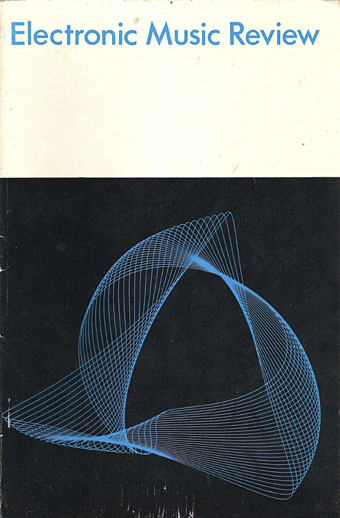
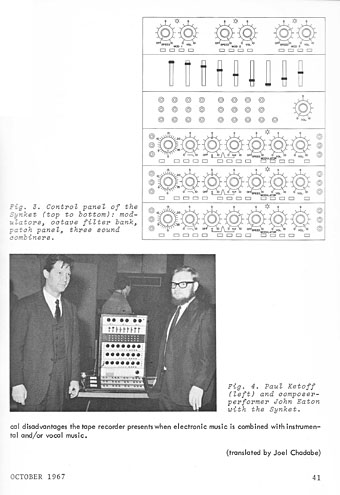
A new addition at the Ubuweb archives that’s catnip for anyone interested in the history of electronic music. Electronic Music Review was Reynold Weidenaar & Robert Moog’s short-lived journal devoted to the world of electronic music at a time when the field was rapidly growing away from the academic, “serious” side of musical composition and being taken up by the pop world.

All seven issues are present, running from January 1967 to July 1968. Pages of VCF circuit diagrams aren’t so interesting unless you’re an electronic engineer but the magazines also feature unique articles from composers who are now very well known, including Luciano Berio, Frederic Rzewski, Tod Dockstader, Henri Pousseur, Alvin Lucier and Jon Appleton. Despite the many women working in the field they evidently didn’t go looking for any to write for them. Granted, Wendy Carlos is among the contributors but in the late 60s she was still using the name Walter. In the later issues, Dockstader, Carlos and others review the recent electronic music releases. It’s especially fascinating to see an early reaction to albums such as Morton Subotnik’s Silver Apples of the Moon, and the debut from The United States of America, a cult favourite of mine for many years.

emr02.jpg

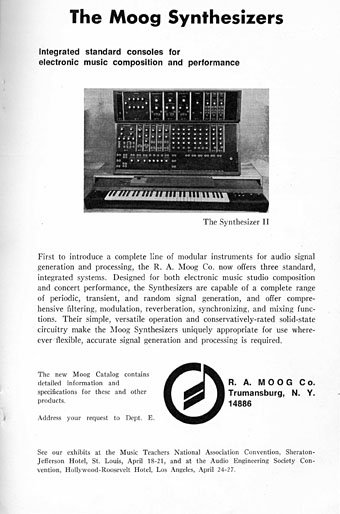
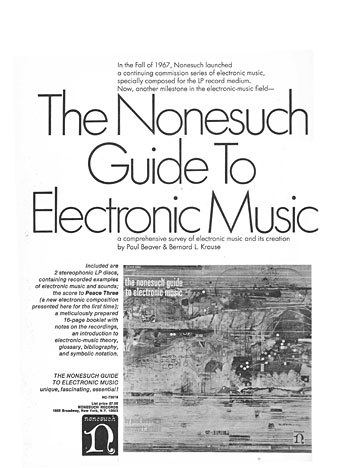
Scattered throughout the issues are ads for the latest studio gear and new album releases. One of these, The Nonesuch Guide to Electronic Music, was compiled by Paul Beaver and Bernard Krause. The latter is still recording, and happens to be interviewed in the current issue of Arthur Magazine.

emr03.jpg

emr04.jpg

Continue reading “Electronic Music Review”

Just the ticket: Cabaret Voltaire

cv01.jpg

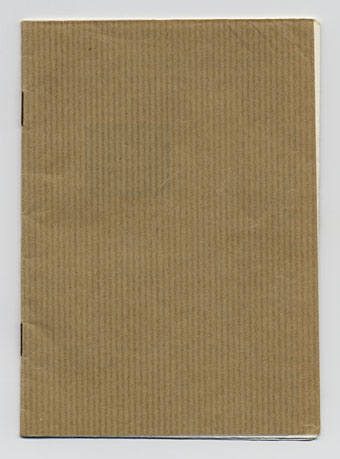
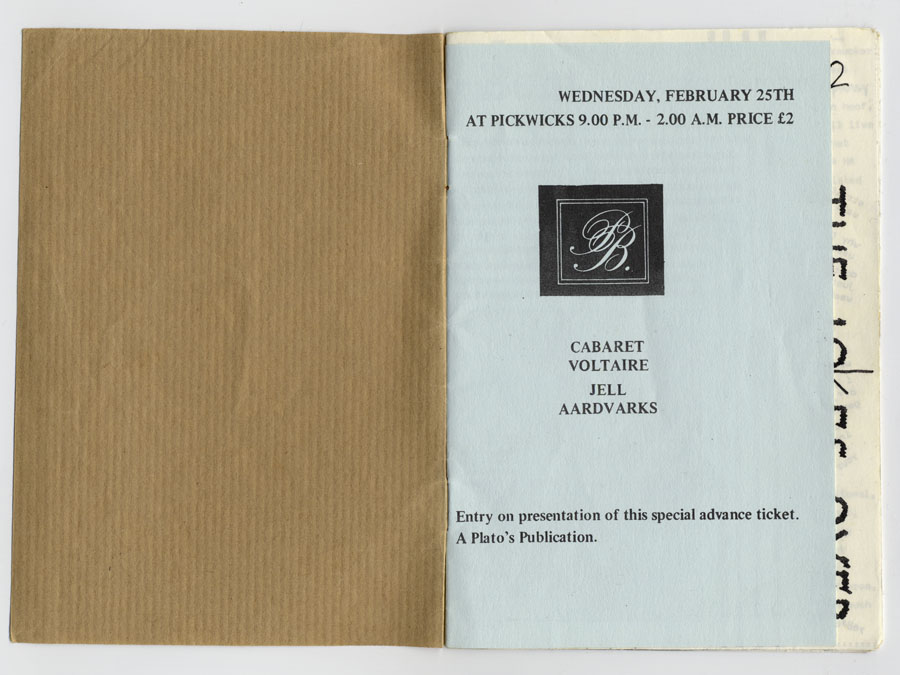
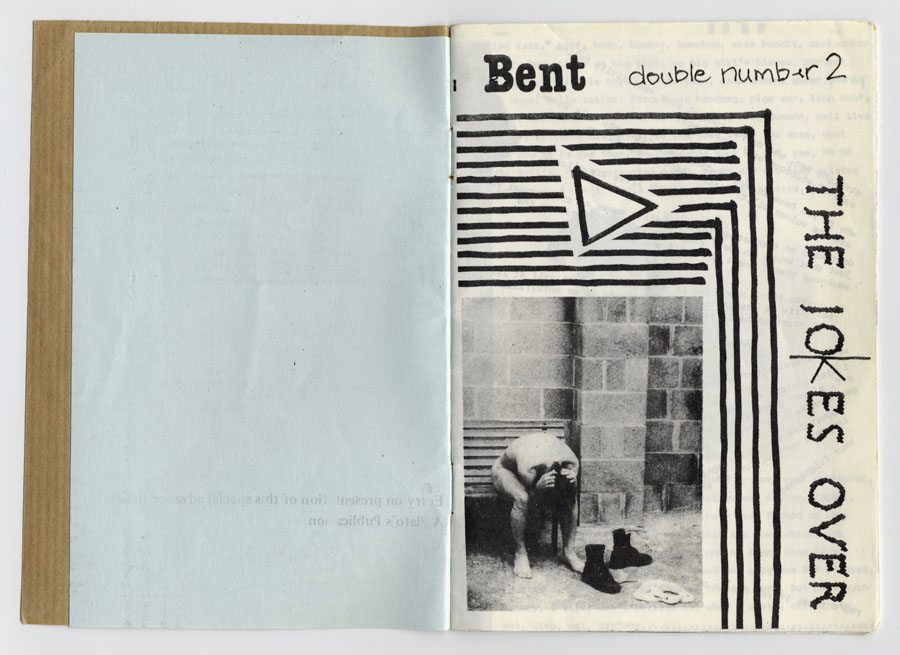
The current issue of The Wire has a great appraisal by Keith Moliné of the musical history of Cabaret Voltaire, a well-timed piece given the recent announcement of forthcoming reissues from Mute Records. Having been a Cabophile from the start I’m rather biased, but the Wire piece has had me listening to the early albums and singles this week (between bouts of Zdenek Liska), and finding the passage of time has made those early recordings seem increasingly strange. Cabaret Voltaire were one of the few groups I liked obsessively enough to collect ephemera from newspapers and magazines. Knowing this, a friend gave me this curious fanzine/ticket from a gig the group played in Liverpool in February, 1981. The venue was Plato’s Ballroom at Pickwicks, and judging by the wording inside—”A Plato’s Publication”—it seems it was the venue’s idea to make the ticket a small (10.5 x 15 cm) booklet.

cv02.jpg

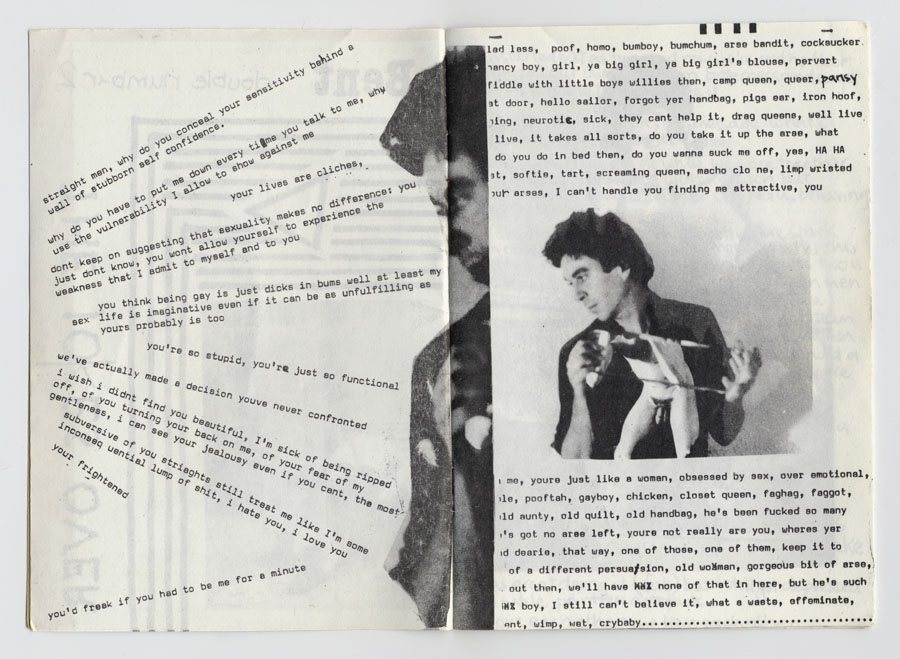
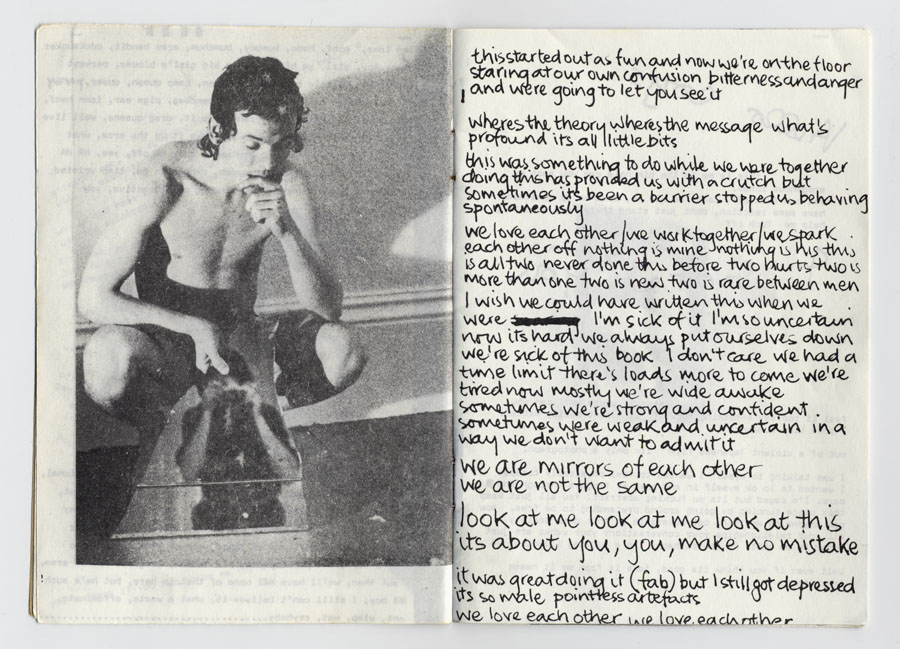
What’s surprising about this is that the fanzine the ticket is bundled with has nothing at all to do with music (or that other perennial of 80s post-punk culture, left-wing politics) but is a glimpse of life as a gay man in Liverpool. I’ve always found this fascinating for the daring it took to foist the thing on a bunch of unwitting Cabs fans, most of whom would have been straight men and not especially sympathetic to the subject matter. In the context of 1981 forcing people to look at grainy shots of naked men with accompanying text (by another man) declaring them to be a turn-on was a transgressive act. The only representations of anything gay in the popular media were a few camp (and therefore safe) comedians; Derek Jarman was still an underground figure, and as late as 1984 a BBC play about gay men was prefaced with a warning about its “contentious” subject.

cv03.jpg

I’ve no idea who was responsible for the fanzine, there are no credits, and it’s possible that the people involved didn’t want to be too easily identified. If the tone of the writing seems rather dramatic then, again, it’s important to see it in context of a country which wasn’t much more amenable to gay people than Russia is today. Saying things in public that most people didn’t want to hear was a challenging act; emotions often ran high.

cv04.jpg

Looking for information about the gig turned up this newspaper ad. (Who were Jell and Aardvarks, I wonder?) By an odd coincidence only the day before I’d found this upload from the same person of a very scarce compilation tape that happens to be from the same year, and which features contributions from Cabaret Voltaire’s Chris Watson and Richard Kirk. The Men With The Deadly Dreams was compiled by Geoff Rushton, aka John Balance of Coil, and was apparently limited to 200 copies. Among the other highlights there’s a track from Eyeless in Gaza, whose early work I like a great deal, and an electronic piece by Throbbing Gristle’s Chris Carter which I think is exclusive to this collection. Two artefacts—fanzine and tape—with brown paper covers that give a snapshot of Britain’s underground culture in 1981.

cv05.jpg

Continue reading “Just the ticket: Cabaret Voltaire”

Weekend links 173

orszag.jpg

Icarus (1974–75) by Lili Ország.

• The Cabaret Voltaire albums released on the Virgin label in the 1980s have suffered the same shoddy treatment on CD as other Virgin reissues, a situation to be rectified in November with an extensive revisiting of the CV back catalogue. The long-overdue reappraisal will also include the release of Earthshaker, a collection of previously unavailable recordings from the Virgin period.

• It’s that book again: Design Observer has the preface from Lolita — The Story of a Cover Girl: Vladimir Nabokov’s novel in art and design, a book by John Bertram and Yuri Leving. At The Millions John Bertram talks to designer John Gall about the problems Lolita poses for cover designers.

• Jerry Lewis’s The Day the Clown Cried (1972) has acquired legendary status over the years for the apparent tastelessness of its subject matter—a clown in Auschwitz—and the fact that its director/star has never allowed the film to be seen in public. This week some footage arrived on YouTube.

Candy Bullets And Moon (1967), a one-off psychedelic collaboration between Don Preston and Meredith Monk.

• What’s the collective term for many bookshops? Whatever it is, there’s a lot of them in this Pinterest collection.

• At Dangerous Minds: Artist Gail Potocki’s exploration of Alice in Wonderland and the passing of time.

Anne Billson on the late Karen Black and why horror movies deserve our respect.

Tobias Carroll on the Surreal life and fiction of Leonora Carrington.

More details emerge about The Wicker Man – The Final Cut.

• Issue 35 of Arthur Magazine is now available for order.

• Graphics, drawings and collages by Jan Švankmajer.

• Every film poster designed by Saul Bass.

• Cabaret Voltaire: Just Fascination (1983) | Sensoria (1984) | I Want You (1985)