Psychotronic Video

pv1.jpg

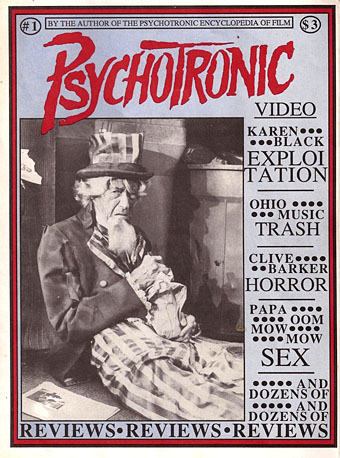
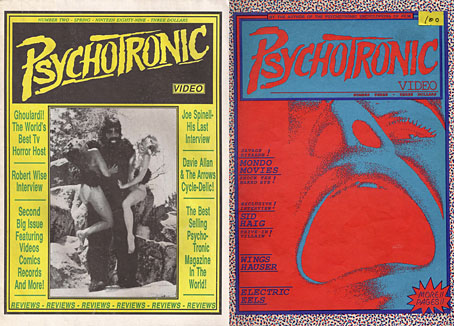
I was going to wait until the weekend to mention this but it’s too good to be lodged in a collection of links. Michael J. Weldon’s Psychotronic Encyclopedia of Film (1983) has long been one of my favourite film books, a collection of reviews by Weldon and friends written for Weldon’s NYC fanzine, Psychotronic TV. “Psychotronic” was Weldon’s umbrella label for the low-budget fare that would usually be avoided by other reviewers: “horror, exploitation, action, science fiction, and movies that used to play in drive-ins or inner city grindhouses.” A small handful of actors were considered psychotronic enough (on account of their appearing in many psychotronic films) that Weldon claimed their presence in any film made it psychotronic even if it contained no overt genre or exploitation content. So the Encyclopedia lists Fellini’s 8 1/2, for example, simply because Barbara Steele appears in it. Likewise, Casablanca is psychotronic because of Peter Lorre. As I recall, the other psychotronic actors were John Carradine (“the greatest PSYCHOTRONIC star of all time”), Vincent Price, Boris Karloff and Bela Lugosi.
pv2.jpg

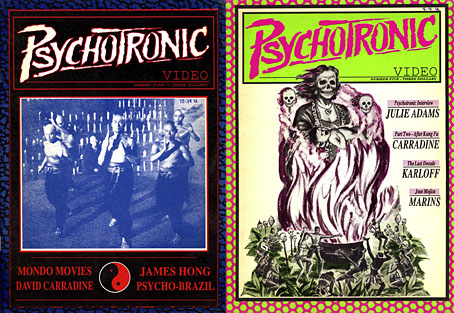
The trouble with books of film reviews is that the passage of time makes them increasingly subject to omissions, so I was delighted when Weldon launched Psychotronic Video magazine in 1989. Not only was this a continuation of the encyclopedia’s film listings it was also filled with related features: interviews with character actors, cult figures and interesting stars (Karen Black, James Coburn); a regular music column which mostly covered the kinds of bands who would watch psychotronic films; a regular obituary feature; and pages crammed with bizarre and curious graphics: film ephemera, ads from old magazines, headers by comic artist Drew Friedman, and mermaid drawings by Weldon’s girlfriend, Mia. One of my favourite features, which ran from the first issue, concerned Weldon’s obsession with The Rivingtons’ Papa Oom Mow Mow and The Trashmen’s Surfin’ Bird, an ideé fixe which had Weldon cataloguing as many cover versions or film inclusions of the songs as he could find.
pv3.jpg

Psychotronic Video ran for 41 issues until folding in 2006. I bought the first 23 or so then lapsed after the one comic shop selling it in Manchester was closed down by the IRA bombing of the city centre in 1996. Back issues are increasingly scarce (and not always cheap) so it’s good to find all 41 issues at the Internet Archive together with 10 issues of the even more scarce Psychotronic TV. The quality isn’t perfect—some of the scanned pages are subject to blurring—but I can now see what was in the rest of the magazines, and finally get to read the Timothy Carey interview in the one issue I missed, no. 6. Many of the actors interviewed with enthusiasm by Psychotronic Video have since died so the magazine is even more valuable for its insights into careers ignored by other publications.

Previously on { feuilleton }
Bikers and witches: Psychomania
The Cramps at the Haçienda

Weekend links 382

yoshida.jpg

Raven (2015), a metal sculpture by Taiichiro Yoshida.

• “Lumia: Thomas Wilfred and the Art of Light [at the Smithsonian American Art Museum] restores Thomas Wilfred (1889–1968) to his rightful place in the history of modern art.”

• At Brown Noise Unit: a fascinating, lengthy interview by Philip Kaberry with Stephen O’Malley of Sunn O))) et al, with particular focus on O’Malley’s work with Japanese musicians.

• Erik Davis talks to scholar, writer, and mythographer William Rowlandson about Jorge Luis Borges, magical trees, Yankee mysticism, and the power of the weird and murky.

• The first issue of the world’s first magazine of fantastic art and literature, Der Orchideengarten (previously), has been reprinted in full with additional English translation.

• At Muddy Colors: the month in covers for September/October which includes my cover for Under the Pendulum Sun by Jeannette Ng (and which is on sale now).

• At 3:AM Magazine: Adam Scovell talks to horror author Ramsey Campbell about the ghost stories of MR James.

Paralysis: Live at Silent Night #8, a new release on (limited) cassette and digital by The House In The Woods.

• At Dangerous Minds: Jozef van Wissem buries the dead in his new video, Virium Illarum.

PKD Files — A podcast about the life and work of Philip K. Dick.

• Russell Cuzner on The Strange World of Nurse With Wound.

Clark Collis on the rise and fall of Fangoria.

• The North Star Grassman And The Ravens (1971) by Sandy Denny | Flight Of The Raven (1979) by Emerald Web | Kill The Great Raven (1979) by Snakefinger

The art of Rafael Romero Calvet, 1885–1925

calvet01.jpg

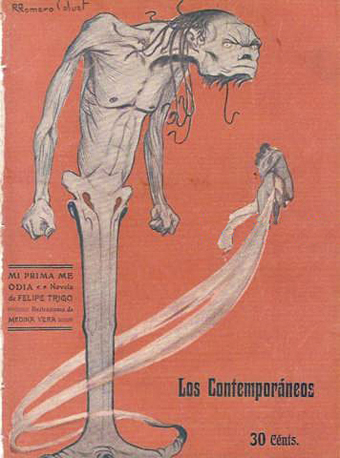
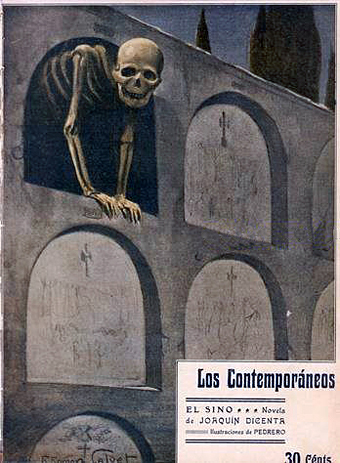
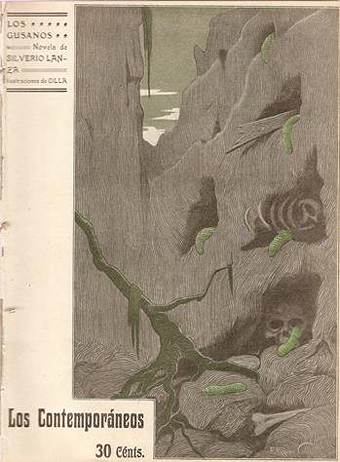
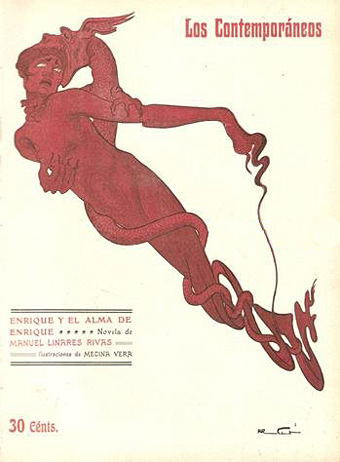
Recent picture research turned up another illustrator whose work I hadn’t seen before. Rafael Romero Calvet was Spanish, and the dates above aren’t necessarily accurate (he may have been born in 1884). He did die young, however, and probably too soon to make more of an impact outside the magazines he was working for. The covers here are all from Los Contemporáneos, a Spanish publication that ran from 1909 to 1926. Many of Calvet’s covers—dating from 1909–1910—are grotesque and macabre enough to suit Der Orchideengarten, although that magazine wouldn’t be launched for another ten years.

calvet02.jpg

There’s more of Calvet’s work at Wikimedia Commons, while this feature at Collectors Weekly has a glimpse of his cover for Baudelaire’s Les Fleurs du Mal.

calvet03.jpg

calvet04.jpg

Continue reading “The art of Rafael Romero Calvet, 1885–1925”

Weekend links 374

vasconcelos.jpg

Le Chasseur by Lupe Vasconcelos who was profiled this week at Unquiet Things, and whose work may also be seen at the Ars Necronomica art show in Providence, RI, until the end of the month.

• “After a morning’s writing, Stevenson would entertain himself with music, particularly the flageolet, which he played so badly ‘people fled from the sound’.” Peter Moore reviewing Robert Louis Stevenson in Samoa by Joseph Farrell.

• Jon Hassell’s 1981 album, Dream Theory in Malaya: Fourth World Volume Two, will be reissued next month.

• Mixes of the week: Secret Thirteen Mix 228 by Arma Agharta, FACT Mix 614 by Do Make Say Think.

Yet, entertaining as all this is, in a macabre key, the dead are hard to think about—and, in many ways, to read about. Unlike animals, which Lévi-Strauss declared were not only good to eat but bon à penser, too, I found that I averted my eyes, so to speak, several times as I was reading this book. Not because of the infinite and irreversible sadness of mortality, or because of the grue, the fetor, the decay, the pervasive morbidity—though Laqueur’s gallows humour about scientific successes in the calcination of corpses can be a bit strong—but because the dead present an enigma that can’t be grasped: they are always there in mind, they come back in dreams, live in memory, and if they don’t, if they’re forgotten as so many millions of them must be, that is even more disturbing, somehow reprehensible. The disappeared are the unquietest ghosts. Simone Weil writes that the Iliad is a poem that shows how “force…turns man into a thing in the most literal sense: it makes a corpse out of him.” But Laqueur is surely right to inquire why that thing, the “disenchanted corpse…bereft, vulnerable, abject”, is a very different kind of thing from the cushion I am sitting on or even my iPad (which keeps giving signs of a mind of its own). I have always liked Mme du Deffand’s comment, when asked if she believed in ghosts. A philosopher and a free thinker, she even so replied: “Non, mais j’en ai peur.” (“No, but I am frightened of them.”)

Marina Warner reviewing The Work of the Dead: A Cultural History of Mortal Remains by Thomas Laqueur

New Worlds magazine at the Internet Archive. Not a complete run but it’s a start.

Brigit Katz on breakthroughs in the scientific search to replicate psilocybin.

• The relaunched (and slightly renamed) Manchester Digital Music Archive.

• At Dennis Cooper’s: Robert Altman Day (restored/expanded).

• RM Rhodes presents the art of Philippe Druillet.

Fragile Self

Dream Lover (1964) by The Paris Sisters | Dream Street (1966) by Henry Mancini | Dream Letter (1969) by Tim Buckley

Weekend links 371

behold.jpg

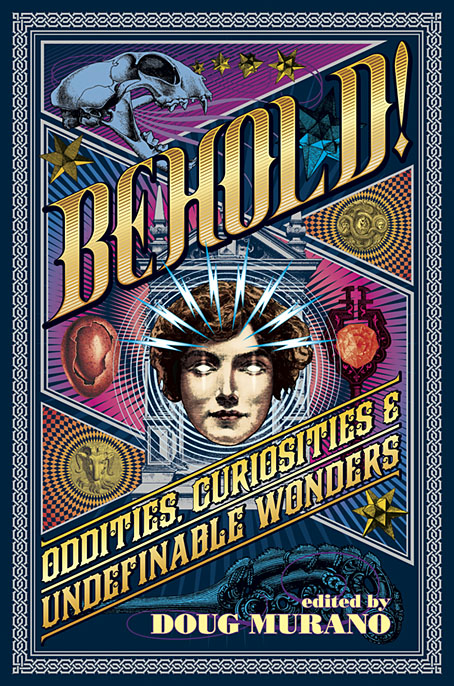
• My cover design for the Doug Murano-edited story collection, BEHOLD! Oddities, Curiosities and Undefinable Wonders, appeared here last December but a repost is in order since the book has been published this week by Crystal Lake. Back in December I didn’t have a list of the featured authors but I do now: Clive Barker, Neil Gaiman, Ramsey Campbell, Lisa Morton, Brian Kirk, Hal Bodner, Stephanie M. Wytovich, John Langan, Erinn L. Kemper, John FD Taff, Patrick Freivald, Lucy A. Snyder, Brian Hodge, Kristi DeMeester, Christopher Coake, Sarah Read and Richard Thomas. The foreword is by Josh Malerman, and the interior illustrations are by Luke Spooner.

• “How do you memorialize an artist who refused to remain identical to himself? How do you remember one of the great philosopher-artists of memory?” Ben Lerner on the elusive Chris Marker.

Diabolical Fantasia: The Art of Der Orchideengarten, 1919. A welcome reprinting of art from the German magazine of weird fiction compiled by Thomas Negovan. (Previously)

• Coming in September: Conny Plank: The Potential of Noise, a documentary by Reto Caduff and Stephan Plank about the great record producer.

The Roman Roads of Britain mapped by Sasha Trubetskoy in the style of Harry Beck’s London Tube Map.

• At Dennis Cooper’s: Spotlight on…Julia Kristeva Powers of Horror: An Essay on Abjection (1980).

Ian Shank on the trove of erotic Roman art that scandalized Europe’s royals.

• At Haute Macabre: Biblio-alchemy: The Liquid Library of Annalù Boeretto.

• What makes a French film noir? Andrew Male has some suggestions.

David Shariatmadari on how 1967 changed gay life in Britain.

• Mix of the week: Gated Canal Community Radio.

• A Gallery of Moods by Mlle Ghoul.

Loe And Behold (1970) by Sir Lord Baltimore | Behold The Drover Summons (1983) by Popol Vuh | Beholding The Throne Of Might (2014) by The Soft Pink Truth