Zimbu Xolotl Time

wb1.jpg

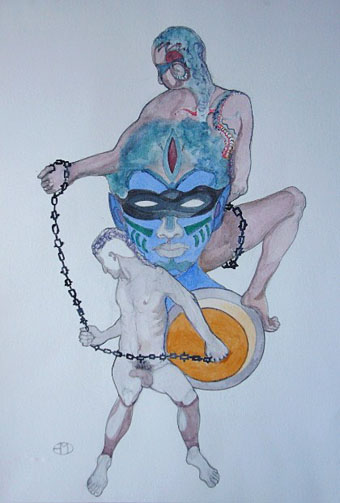
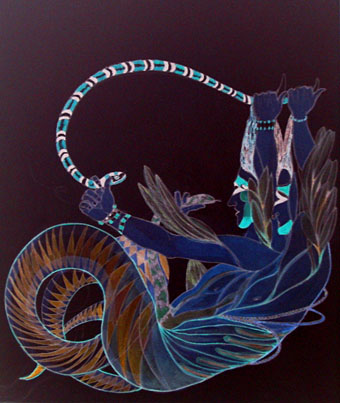
Or The Wild Boys revisited. These are two of Emma Doeve’s Wild Boys paintings from the Academy 23 book which was published in October by WhollyBooks to coincide with the recent London event remembering and celebrating The Final Academy, a William Burroughs-themed series of events held in London and Manchester in 1982. I’ve mentioned before that the book contains an edited version of my post about the event at Manchester’s Haçienda club. The book is now sold out but I expect some copies will find their way into the secondhand market eventually. Had Emma’s pictures been around a year ago I would have included them in my post about The Wild Boys and the various music and art inspired by Burroughs’s novel. They’re also a reminder that I ought to finish my own Wild Boys portfolio which has languished this year while I’ve been engaged with other things, not least finishing the Reverbstorm book. Something for the future, then. As for Zimbu Xolotl Time, Phil Hine can explain.
wb2.jpg

Elsewhere on { feuilleton }
The William Burroughs archive
Weekend links 135

kuhlman.jpg

Two Grove Press covers by Roy Kuhlman. From Arden Kuhlman Riordan’s Pinterest page collecting her father’s cover designs.

• “When people asked me what boylesque was, I’d say I’m doing burlesque and I have a penis,” said Mr. Ferguson.

Sequence5: 42 tracks of new, atmospheric/ambient music. A free download in a variety of formats.

The trailer for Jimmy’s End, the forthcoming film by Alan Moore and Mitch Jenkins.

As a porn performer, I can say from experience and with confidence that I’ve never been objectified by other performers. Nor have I been objectified by viewers. At least not in a way that seemed to confuse them into thinking I was an object. What happens instead is that I shift in and out of object-hood. Athletes do this too—they engage with their bodies for a specific task. At the end of the game or the shoot, the context changes.

Conner Habib on The Virtues of Being an Object

Secret Weapons (1972), David Cronenberg’s lost TV movie resurfaces.

Joseph Burnett reviews Nude, the new album by The Irrepressibles.

Over a third of e-readers are used just once before being set aside.

The guarded, the cautious, the small-scale, the modest, the well-crafted—such books may be rewarded (in our own time, at the national level), but they are rarely preserved. They are not preserved because guardedness, caution, smallness, modesty, and craft can be replaced in any given generation. What is irreplaceable is excess: Of verbal kinesis, religious intensity, intellectual voracity.

Amit Majmudar on Entertainment and Excess: The Great Literary Audiences

Miniature Book Interviews with Louis Wain Bound by Hand.

A Tour Inside Salvador Dalí’s Labyrinthine Spanish Home.

• Horror fiction should be deep, not cheap, says Nina Allan.

• RIP Peter Kuhlmann aka Pete Namlook

More is More by Alex Trochut

The Useless Web

Lost In The Sea (1992) by Sequential (Pete Namlook & DJ Criss) | Angel Tech (1994) by Bill Laswell & Pete Namlook | Yenlik (Part II) (1996) by Burhan Öçal & Pete Namlook

The art of Gösta Adrian-Nilsson, 1884–1965

gan19.jpg

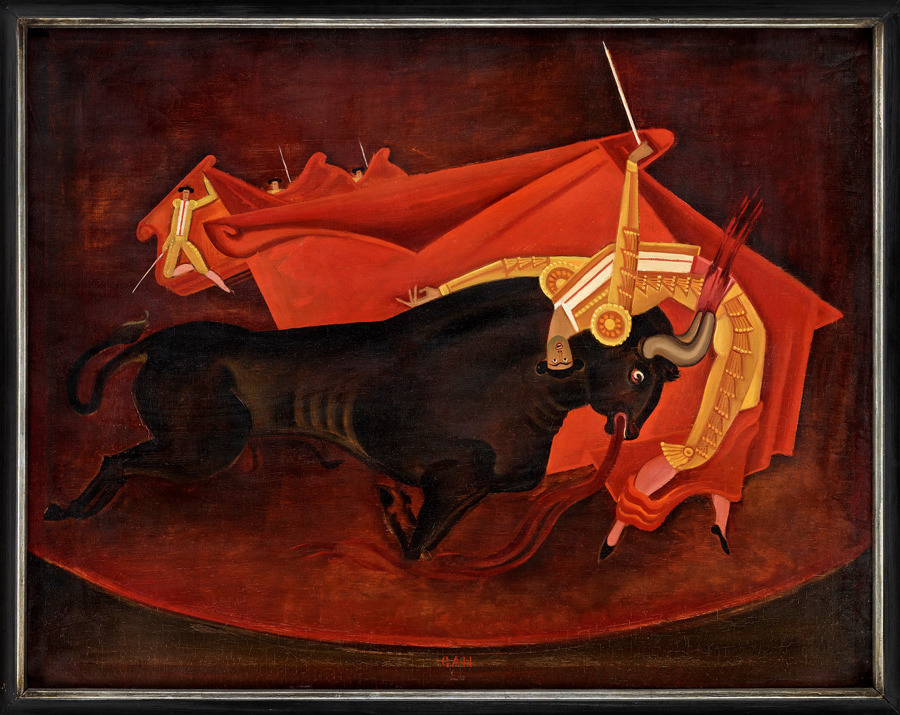
Tjur och Matador III (Bull and Matador III) (1926).

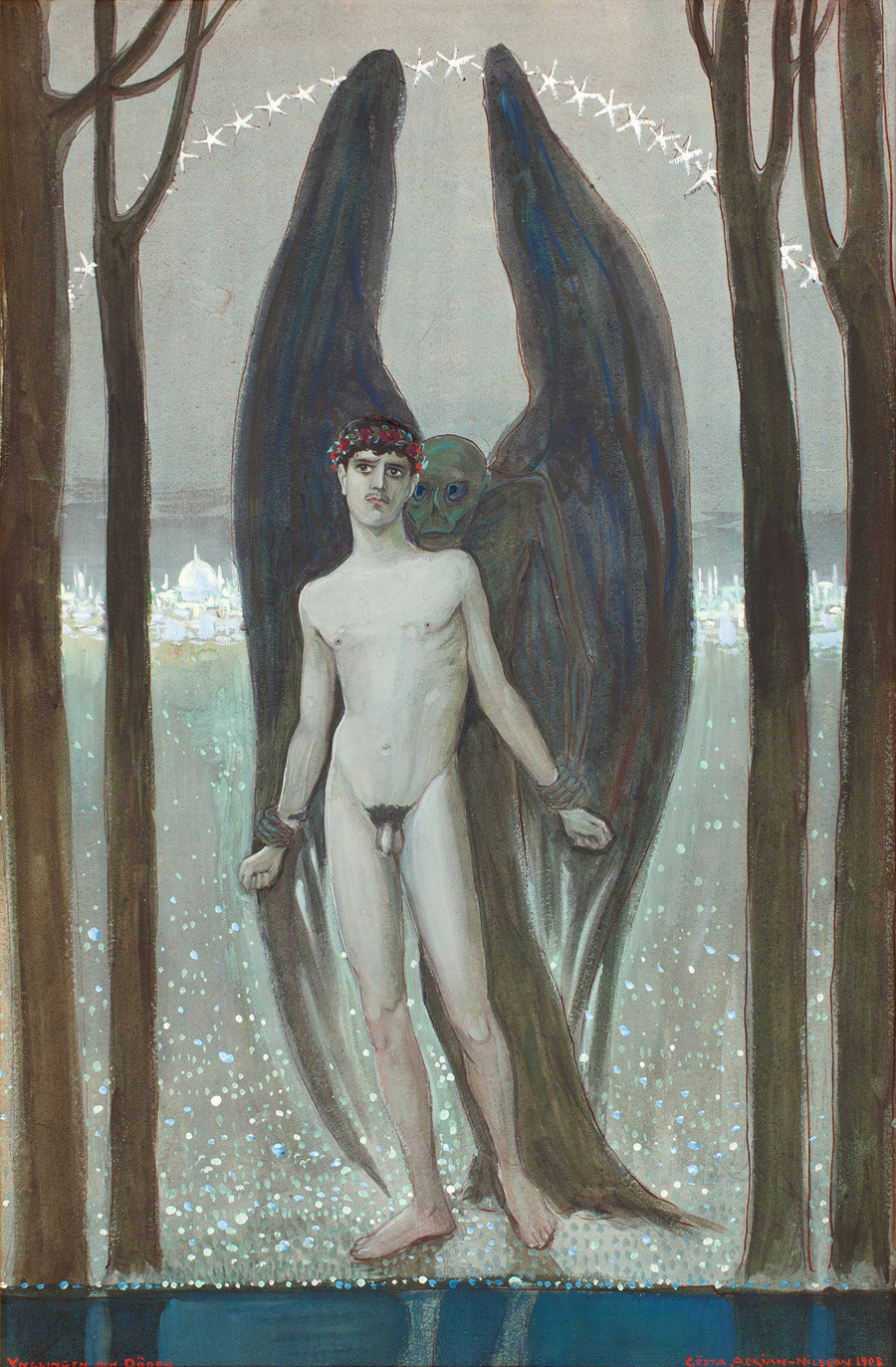
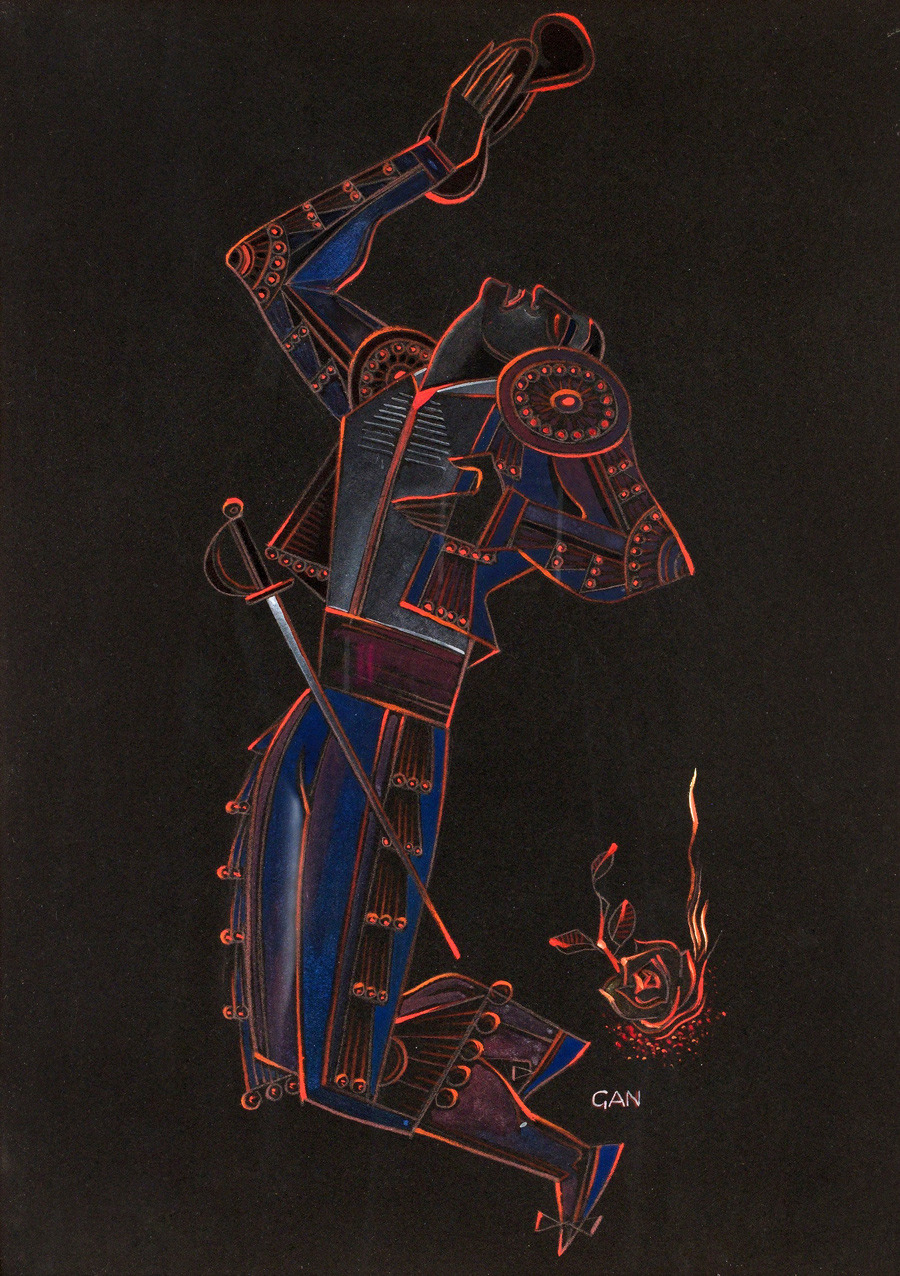
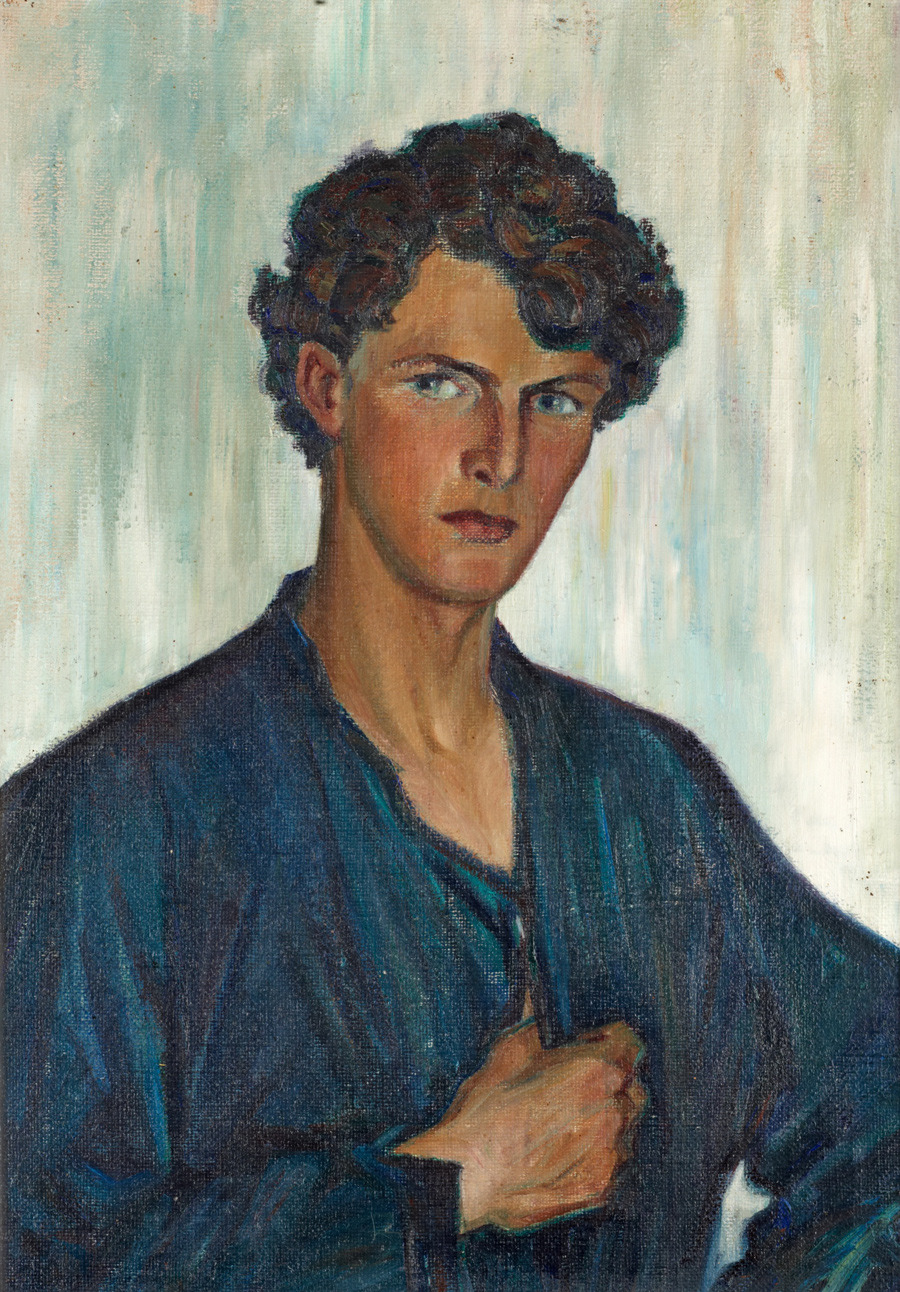
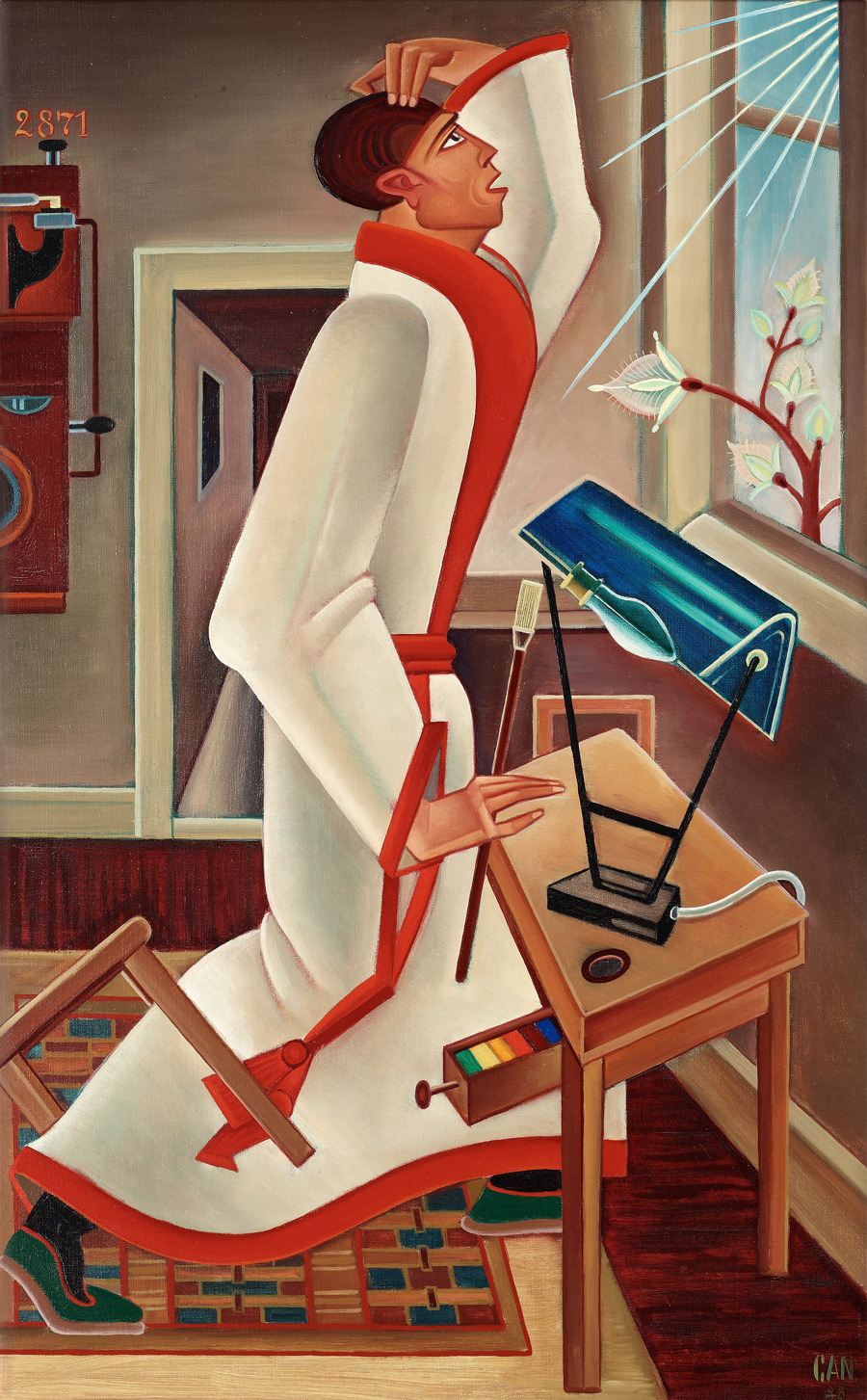
My thanks again to Will at 50 Watts for generously sending me this selection of paintings by Swedish artist Gösta Adrian-Nilsson, or GAN as he was known. These pictures alone show him to have been a very versatile artist, ranging from the late Symbolism of his Young man with death to the works below which deploy a variety of Modernist styles including nods to Cubism and Futurism. A translation of his Swedish Wikipedia page explains the preponderance of matelots and toreadors thus:

The GAN was homosexual reflected in several of his works. For example, he was at times almost manic fixed at the Mariners, and he worshiped the masculine force. Other favorite subjects were male athletes. Meanwhile, the homosexual eroticism both forbidden and taboo and GAN forced to live a double life.

It’s a shame there isn’t a good single site for his work but Google’s image search turns up a lot more paintings. There’s also this Swedish site which contains more biographical detail.

gan01.jpg

Ynglingen och döden (Young man with death) (1908).

gan02.jpg

Epilog.

gan03.jpg

Ilja (Portrait of Karl Edvard Holmström) (1911–12).

gan04.jpg

Inspiration (1928).

Continue reading “The art of Gösta Adrian-Nilsson, 1884–1965”

The art of Gregorio Prieto, 1897–1992

prieto01.jpg

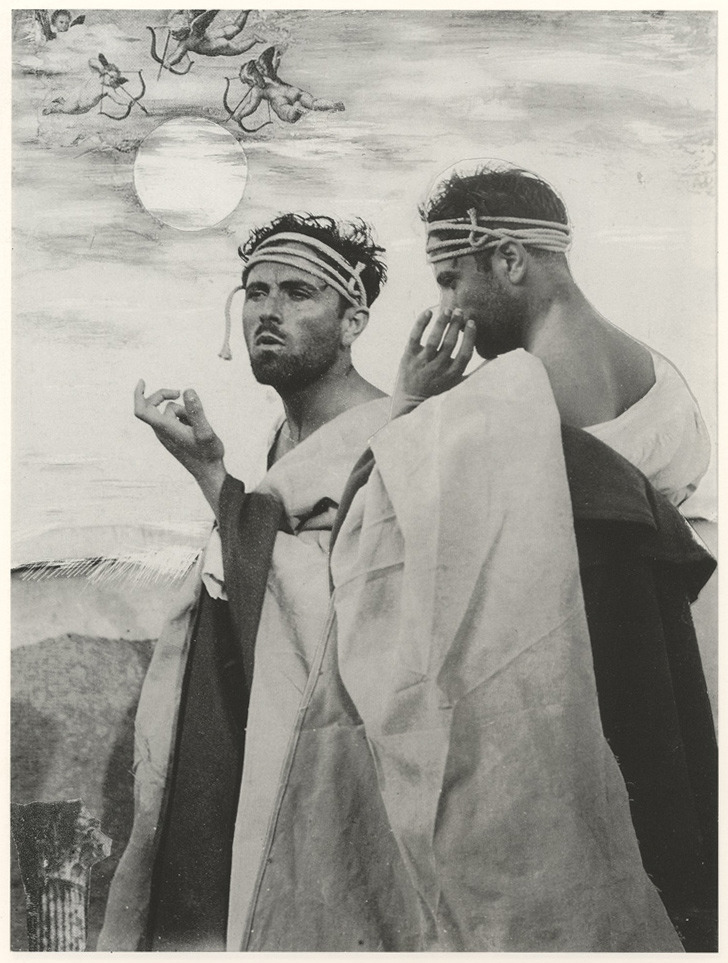
Predicadors del be i del mal (c. 1928–1930).

My thanks to Will at 50 Watts for sending these experimental photos by Spanish artists Eduardo Chicharro (1873–1949) and Gregorio Prieto, neither of whose work I’d looked at before. Prieto is of most interest here (that’s him in photo five with the metalwork wrapped around his head) for the homoerotic quality of his other work, a quality which no doubt explains why some of these pictures set the gaydar bells ringing. I thought that Javier at Bajo el Signo de Libra might have featured Prieto already but it seems not.

prieto02.jpg

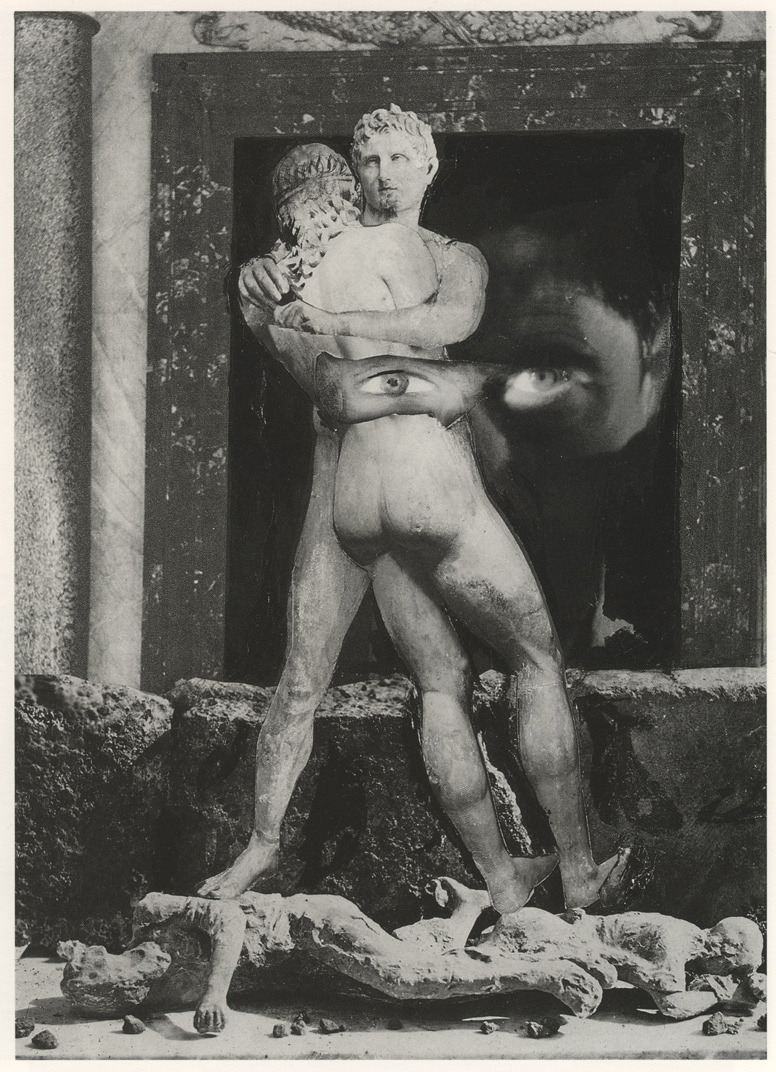
Iluita (c. 1928–1930).

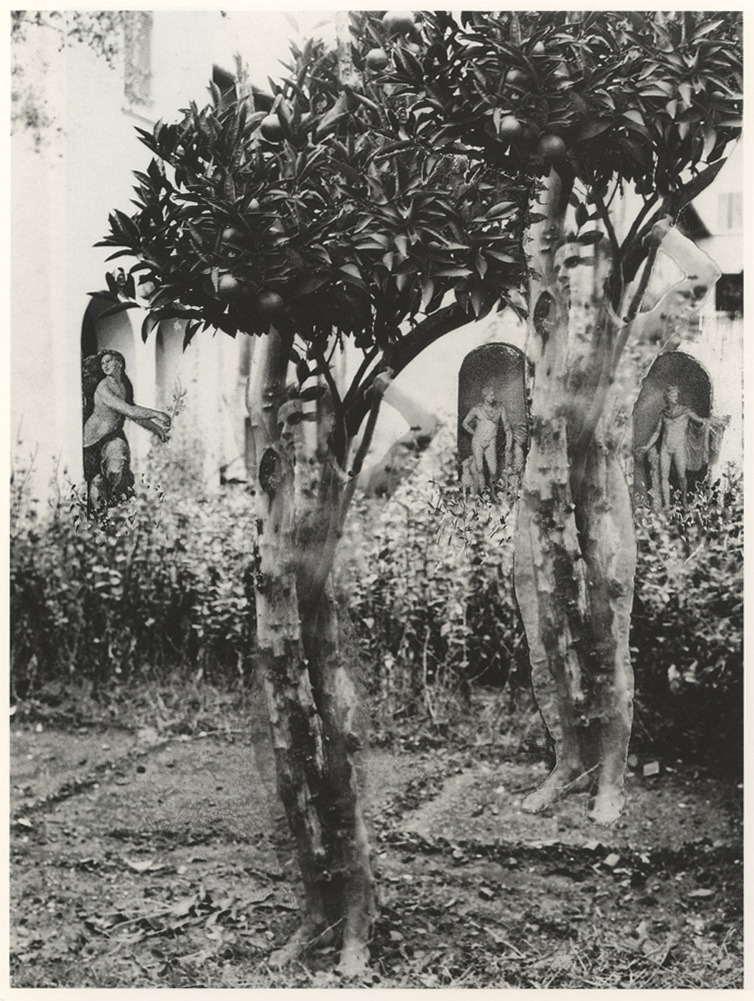
The photos are from Les avantguardes fotografiques a espanya, 1925–1945. The superimposed images are reminiscent of those that Emil Cadoo was producing in the 1950s albeit with more of a deliberate Surrealist flavour; the ruins and Classical references are also a feature of Prieto’s paintings, some of which can be seen here. (Also a coloured print of the first photo above.) The homoerotics is most evident in his line drawings, some of which can be seen here. His reclining youths and embracing sailors look rather Cocteau-like but they probably owe more to the etchings of Picasso’s Vollard Suite which were being produced around the same period. There’s more Picasso-esque Prieto at Flickr including a drawing dedicated to Lorca.

prieto03.jpg

Metamorfosi (c. 1928–1930).

Continue reading “The art of Gregorio Prieto, 1897–1992”

Weekend links 134

ulian.jpg

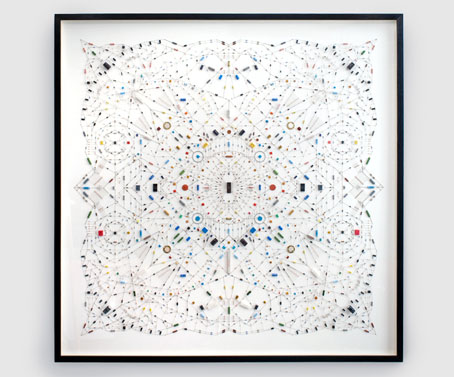
Technological mandala 02 (The beginning) (2012) by Leonardo Ulian.

• The Yellow Magic Orchestra really were the Japanese equivalent of Kraftwerk in 1978. I’d not seen this video for Firecracker before. Same goes for the Technopolis and Rydeen videos. Related: YMO’s synth programmer, Hideki Matsutake, showing off his modular Moog on a Japanese TV show.

Sra is the final book in the Aedena Cycle by Moebius. It’s never been translated into English but Quenched Consciousness has just finished posting the entire book in an unofficial translation.

• “It’s better to have a small amount of good comics, than a big amount of mediocre comics.” Dutch comic artist Joost Swarte interviewed.

• From 2007: The Strange Lovecraftian Statuary of Puerto Vallarta (Thanks, Ian.) Related: More art by Alejandro Colunga.

steam.jpg

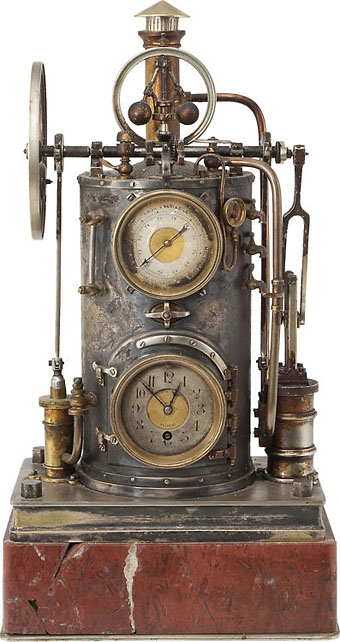
A novelty mechanical clock barometer in the form of a steam engine (c. 1885).

The MR-808: a room-size TR-808 drum machine by Moritz Simon Geist with real instruments played by robot hands.

• “Shoot us and dig the grave; otherwise we’re staying.” The women living in Chernobyl’s toxic wasteland.

Hotel Room Portraits 1999–2012 by Richard Renaldi, a new photo exhibition at Wessel + O’Connor.

Lane’s Telescopic View of the Opening of the Great Exhibition, 1851.

• “I’m the target market, and I don’t like it!” A Creative Catharsis.

Brian Eno’s new ambient album, Lux, is released on Monday.

Collages by Sergei Parajanov.

Techno City (1984) by Cybotron | Techno Primitiv (1985) by Chris & Cosey | Techno Dread (2008) by 2562.