The Running Jumping & Standing Still Film

lester1.jpg

The Beatles’ second feature, Help!, was released on Blu-ray last month. The origin of the film’s visual humour and frenetic style can be found in this short directed by Richard Lester over two weekends in 1959, a collaboration between Lester, Spike Milligan, Peter Sellers and others. It may be nothing more than ten minutes of sight gags but it was enough for The Beatles to seek out Lester as director of their first two features. (Leo McKern, the actor in the opening shot, also appears in Help!) Considering the subsequent influence of those films—from The Monkees’ TV show on into numerous pop videos—this little film is very influential indeed. Watch it here.

lester2.jpg

Previously on { feuilleton }
Petulia film posters

Mistaken Memories Of Mediaeval Manhattan

eno1.jpg

The first ambient film, at least in the Brian Eno sense of the term, although one can think of other examples prior to this, not least Andy Warhol’s Empire (1964) which is possibly alluded to in a sequence showing the Empire State Building in the distance. Eno filmed several static views of New York and its drifting cloudscape from his thirteenth-floor apartment in 1980–81. The low-grade equipment (and NTSC video) give the images a hazy, impressionistic quality. Lack of a tripod meant filming with the camera lying on its side so the tape had to be re-viewed with a television monitor also turned on its side. The assembled videos were later screened in galleries with music from some of the Ambient series of albums, and also two unique pieces.

eno2.jpg

An edited suite of seven pieces running 47 minutes was released on VHS tape in 1987. Like the original recordings, these could only be viewed by turning your TV on its side, something I used to think was a combination of the hazardous and foolhardy to all but the most diehard Eno aficionados. Television sets in the 1980s were either portable things in cheap plastic enclosures (some with curved sides), or cathode-tube monsters that would require two people two handle, assuming they weren’t screwed to a stand. I’ve yet to hear of anyone other than Eno himself who ever went to this trouble to watch a single video recording. It’s notable that recent DVD reissues of these videos, and the later Thursday Afternoon, have included horizontal as well as vertical versions.

The screen grabs here are from a 26-minute edit of the suite. The 14 Video Paintings DVD is currently out-of-print but a vertical copy can be found at Ubuweb.

Previously on { feuilleton }
Brian Eno: Imaginary Landscapes
Thursday Afternoon by Brian Eno
Moonlight in Glory
Tiger Mountain Strategies
Generative culture
My Life in the Bush of Ghosts

Weekend links 166

foxxbelbury.jpg

The Julian House cover art for the forthcoming collaboration between John Foxx and Belbury Poly (here renamed) has been revealed. Single no. 9 in the Ghost Box Listening Centre Study Series is now available.

• In addition to new Ghost Box records there’s more Hauntological (for want of a better term) cinema on the way this summer with the DVD/BR release of Ben Wheatley’s A Field in England. The potted description at Movie Mail is “a monochrome psychedelic trip into magic and madness set during the English Civil War”. Julian House has made a trailer. Meanwhile at Fangoria, there’s a PIF mixtape from The Advisory Circle. This accompanies an interview with John Krish, director of the most bizarre of the UK’s many strange and alarming public information films from the 1970s.

• More mixes: The hour-long OH/EX/OH show for The Geography Trip on Chorlton FM. “Expect slumber / tension / euphoria in almost equal measures.” It’s marvellous. At Self-Titled mag there’s DJ Food with O Is For Orange: Boards of Canada, Broadcast, The Books, etc.

Tangiers is a computer game based on the fiction of William Burroughs. Jim Rossignol talked to Alex Harvey about the development of the project.

walpurgisnacht.jpg

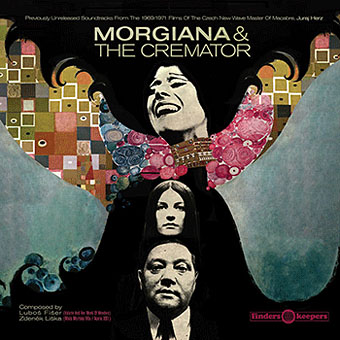
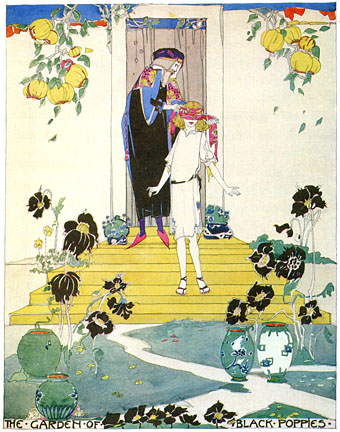
Walpurgisnacht (1917) by Amadeus. A drawing that could easily be from the late 1960s. If anyone knows the full name of the artist, please leave a comment. Via Beautiful Century.

Rebecca J. Rosen asks “What would the night sky look like if the other planets were as close as the moon?”

• The mystery of Charles Dellschau and the Sonora Aero Club.

The Surreal Cave Paintings Of Stockholm’s Metro Stations.

• At 50 Watts: More strange art from Marcus Behmer.

Ry Cooder in 1970. Directed by Van Dyke Parks!

The Post Office Tower: now you see it…

• At Little Augury: 99 Meninas.

Sartori In Tangier (1982) by King Crimson | City Of Mirage (2010) by John Foxx

The Sea of Monsters

beatles1.jpg

The German definite article has unfortunate implications when applied to a group of Brits, but if we overlook this detail the poster makes an interesting contrast with its US counterpart. Where the American design depicts all the film’s main characters, Heinz Edelmann’s painting concentrates almost solely on the creatures from the Sea of Monsters with no Blue Meanies in sight. As is often the case with film posters, both designs give a slightly different impression whilst being accurate in their selective representations. Yellow Submarine was reissued on DVD and Blu-ray last year. It looks and sounds marvellous.

beatles2.jpg

Previously on { feuilleton }
Tomorrow Never Knows
Yellow Submarine comic books
A splendid time is guaranteed for all
Heinz Edelmann
Please Mr. Postman
All you need is…

Richard Matheson, 1926–2013

matheson1.jpg

The Incredible Shrinking Man.

Of Richard Matheson’s many books I’ve only read I Am Legend so can’t say much about his fiction other than to confirm (as everyone else does) that none of the three adaptations so far have managed to do it justice. Of his work for film and television there’s too much to say, it’s so copious and indelibly memorable. Here’s a list of five favourite Matheson creations.

The Incredible Shrinking Man (1957)

JG Ballard frequently referred to this as one of his favourite science fiction films, not because of the SF element, which is never properly explained, but because of its inadvertent Surrealist qualities. For my part, every time I watched this I was always impatient to get to the later scenes where the unfortunate Scott becomes trapped in the cellar, and his own house becomes an increasingly alien and hostile environment. The ending where he accepts his condition is very Ballardian.

matheson2.jpg

Duel (1971)

A sweating and manic Dennis Weaver is pitted against an anonymous truck driver who remains unseen but for a few shots of an arm and some boots. The lethal game of cat-and-mouse was famously directed by Steven Spielberg, his second feature, and one that’s a lot more impressive than some of his subsequent films. Watch it on YouTube.

matheson3.jpg

The Legend of Hell House (1973)

Matheson’s take on Shirley Jackson’s The Haunting of Hill House—four investigators in a haunted mansion—with the gain ramped up 100%. The film starts off quietly but is very soon into full-on hysteria; director John Hough finds so many eccentric camera angles you could actually calm down after this by watching a Terry Gilliam film. Meanwhile Roddy McDowell chews the scenery as though over-acting is going out of fashion. Bonuses are a grown-up Pamela Franklin (Flora in Jack Clayton’s superb The Innocents), and a great score from Radiophonic synthesists Brian Hodgson and Delia Derbyshire. Watch the trailer.

matheson4.jpg

Trilogy of Terror (1975)

A three-story TV movie in which Karen Black took all the leading roles. No one remembers the first two stories but everyone who’s seen this remembers the third, Amelia (based on a Matheson short story, Prey), in which Ms Black is hunted in her apartment by a Zuni fetish doll. It’s on YouTube!

matheson5.jpg

Nightmare at 20,000 Feet (1983)

Sorry, Shatnerphiles, but the superior version of this story is the one from Twilight Zone: The Movie. John Lithgow is a much better actor than William Shatner, the gremlin on the wing of the plane is a fearsome creature that’s seriously destructive (not, as Matheson lamented of the original, “a surly teddy bear”), and the whole sequence is directed by George Miller fresh from Mad Max 2. The original Twilight Zone episode wasn’t bad but it can’t compete with Miller pulling out all the stops. Watch it here.

Previously on { feuilleton }
New York City abandoned