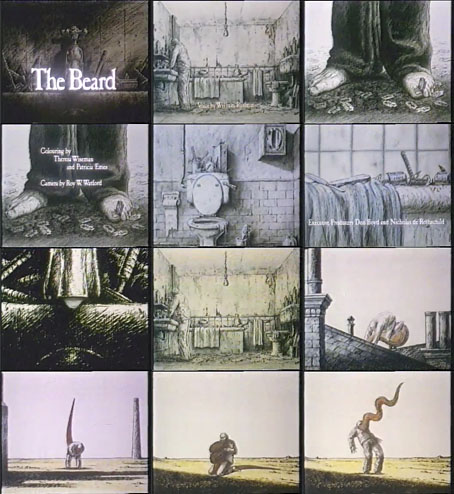
The Beard, a film by Ian Emes

beard.jpg

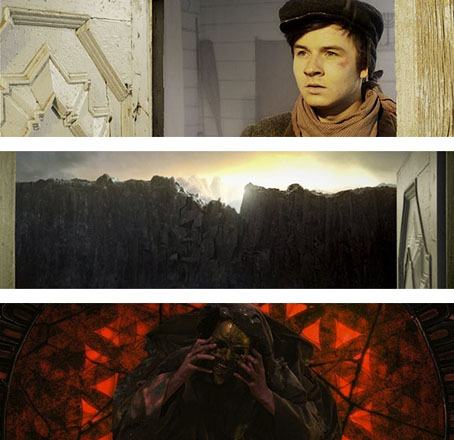
The Beard (1978) is a short, surreal animated film, directed by Ian Emes and based on an idea and illustrations by Peter Till. Electronic musician Adrian Wagner provided the soundtrack. I’d been looking for this on YouTube for a while, hoping to see it again. It’s a great piece of work, opening in a comical fashion when a shaving man (voiced by William Rushton) finds his beard taking on a life of its own, then turning increasingly nightmarish. A low-res copy sourced from video tape does no justice to the detailed drawings but it’s still worth a watch.

Somewhat better known, if not quite so strange, is Martin Scorsese’s student film, The Big Shave (1967), which may be seen here.

The Dreamlands: A Lovecraftian film

dreamlands.jpg

A crowd-funding goal has been announced for The Dreamlands, a feature film set in the worlds of HP Lovecraft’s Dream Cycle which, if it goes ahead, will be director Huan Vu’s second Lovecraftian feature. His first, Die Farbe (2010), is an excellent adaptation of The Colour Out of Space which impressed me with its atmosphere and its serious attitude towards the material, qualities that you can’t always rely on where horror cinema is concerned.

The Dreamlands will of necessity be more fantastical and so warrants a larger budget, hence the funding bid. I was asked to contribute to the production side of this late last year but prior commitments intervened, not least all the work I was doing on Lovecraft’s Monsters. I did find time to design the star symbol that’s being used to promote the film, however, and there’s talk at the moment of my working on some of the gifts for the funders in the higher brackets. More about that later. Watch the teasers, they’re very good.

Elsewhere on { feuilleton }
The Lovecraft archive

Weekend links 207

barker.jpg

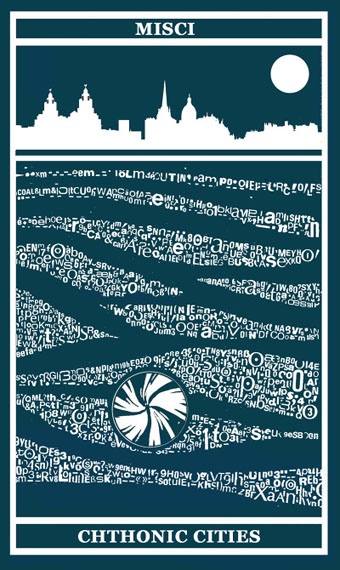
Chthonic Cities by David Chatton Barker. One of a series of Folklore Tapes screenprints available from Bleep.

• The original version of Kenneth Anger’s Lucifer Rising, the one with the Jimmy Page soundtrack that was completed in 1973, has always been described as lost/stolen/buried or otherwise gone forever. So you’d think the news that a print had been discovered recently by Brian Butler would have received greater attention. There’s a screening in Los Angeles this Thursday. When do the rest of us get to see it?

Chris Marker: A Grin Without a Cat, an exhibition and series of Marker-related events at the Whitechapel Gallery, London. Related: The Encounter of M. Chat & Chris Marker as Told By Louise Traon.

• The trailer for The Gospel According to St Derek, a forthcoming documentary about Derek Jarman. Related: Carl Swanson on why Tilda Swinton is not quite of this world.

Maybe there’s just something conservative at the bedrock of American fiction. […] Or maybe it’s just another symptom of the creeping conservatism that’s infected so many aspects of the culture.

Eric Obenauf talks to author Jeff Jackson whose comments about cultural conservatism could equally be applied to the UK.

• Primitive graphics, inventive graphics, budget Surrealism, and some great theme tunes; it’s Trunk TV, Episode 1: Title Sequences.

• Mixes of the week: Secret Thirteen Mix 110 by Black To Comm, and Intro To Drone For Debcon 1, almost 7 hours of music!

Joseph Burnett reviews Ett, an album of electronic music by Klara Lewis.

The Delian Mode (2009), a film about Delia Derbyshire by Kara Blake.

• Extracts from Tokyo Reverse by Simon Bouisson and Ludovic Zuili.

Dan Piepenbring on The Haunting Illustrations of Alfred Kubin.

• At Strange Flowers: Photos of arcades by Germaine Krull.

• Fish, Fiends, and Fantasy: The Gothic Art of Ian Miller.

• At 50 Watts: Richard Teschner and His Puppets.

• Sonic Foam: Ian Penman on Kate Bush and Coil.

Bits and Pieces

Lucifer (1968) by The Salt | Experiment IV (1986) by Kate Bush | Methoxy-N, N-Dimethyl (5-MeO-DMT) (1998) by Coil

Kusama’s Self-Obliteration, a film by Jud Yalkut

kusama1.jpg

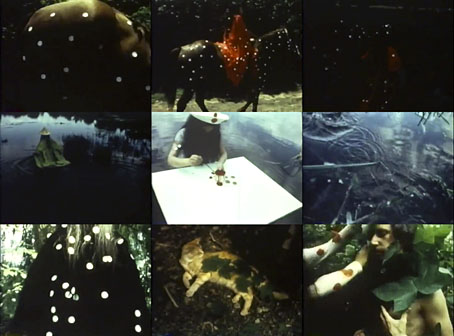
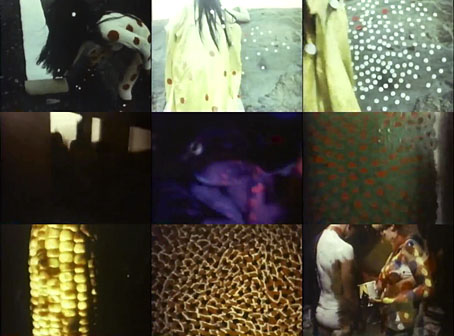
Yayoi Kusama’s art has often been classed as psychedelic—some of her mirrored rooms were featured in the travelling Summer of Love exhibition in 2005—but this is more a consequence of her activities meshing with the interests of the late 60s than anything else; her preoccupations always seem a lot more personal and obsessive. Jud Yalkut’s short film shows Kusama and various friends cavorting in typical underground-movie fashion in 1967, the main indicator of the artist’s involvement being her sticking polka dots (and leaves) onto everything: trees, people, cats, horses, even a river. Later on there’s more polka-dotting at some kind of body-paint happening inside one of her mirrored rooms. The film itself is pretty psychedelic in the second half, looking like outtakes from Roger Corman’s The Trip. The of-the-moment score was provided by The CIA Change, whoever they were. Watch it here.

kusama2.jpg

Previously on { feuilleton }
Infinite reflections
Yayoi Kusama
The art of Yayoi Kusama

Trip texts

trip1.jpg

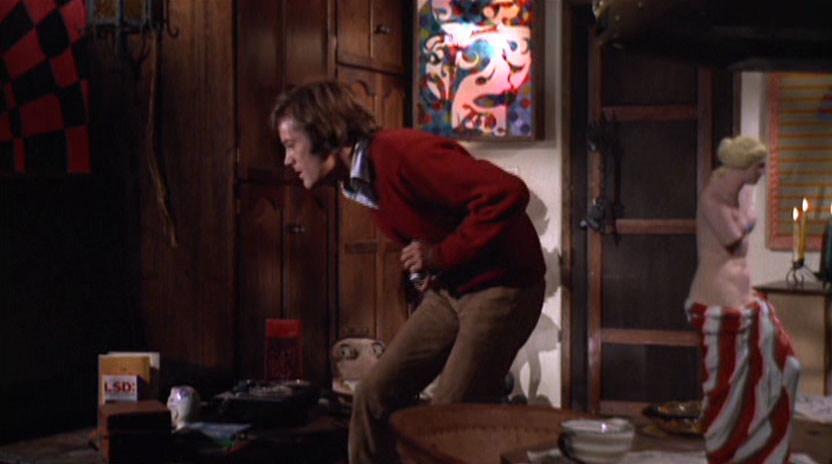
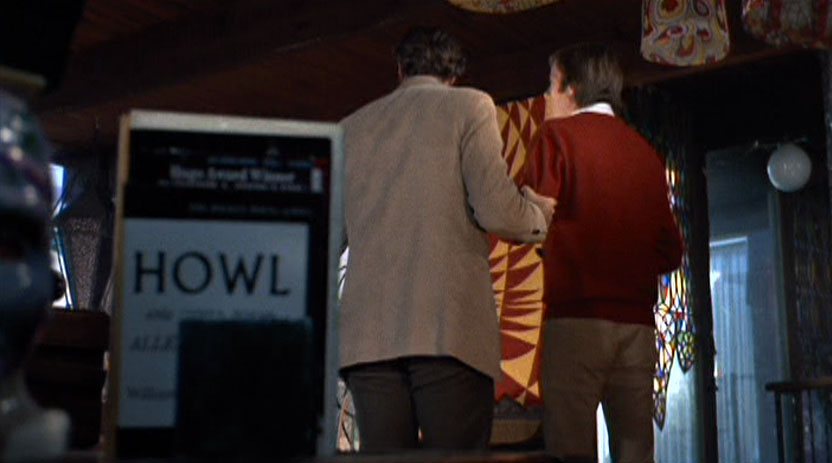
I would have changed the subject today if it wasn’t for spotting a copy of David Solomon’s LSD: The Consciousness-Expanding Drug (1964) in Roger Corman’s notorious and rather creditable stab at psychedelia, The Trip (1967). Corman’s film is an oddity in his run of AIP exploitation films in being far less condemnatory than you’d expect (although Peter Fonda’s character isn’t always enjoying his experience), and must also be the only film in the whole AIP canon with signifying texts.

trip2.jpg

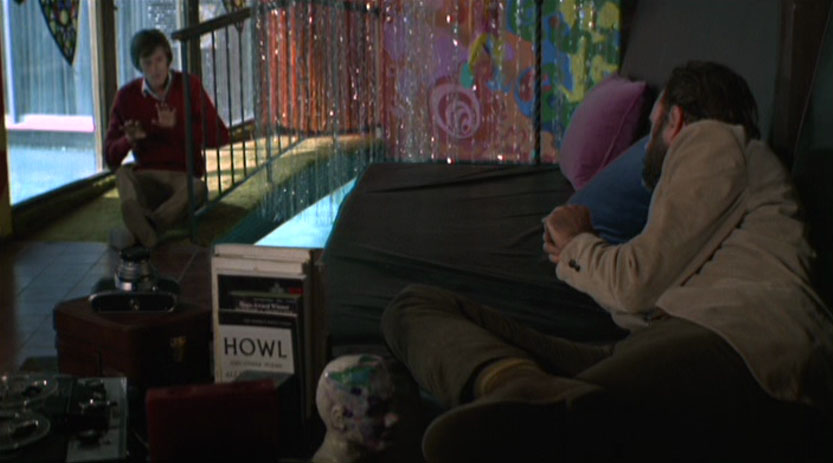
By the time Solomon’s book makes an appearance, Fonda’s character, Paul, has started freaking out but earlier on, during his conversations with John (Bruce Dern), we have Allen Ginsberg’s Howl and Other Poems (1956) shouting out of the frame. “I saw the best minds of my generation destroyed by madness…” Okay Rog, we get it.

trip3.jpg

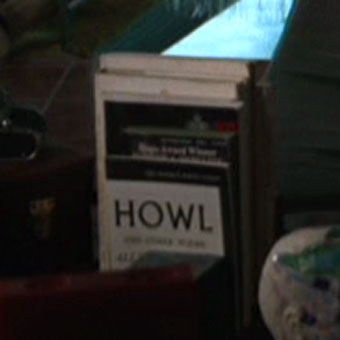
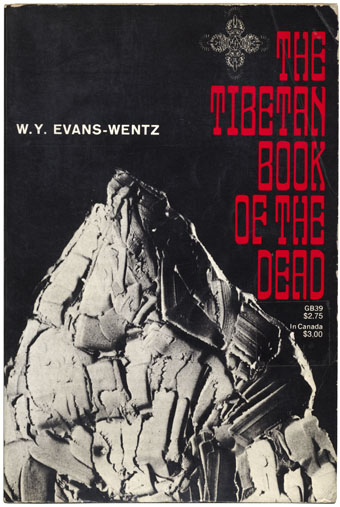
There’s more, however. Behind Howl there’s another book whose identity eludes me, while behind that you can make out the red typography and white dorje symbol from the 1960 OUP edition of The Tibetan Book of the Dead. The only reason I recognised this is because I own that edition so the cover is very familiar. This would be a popular text in an acid-tripper’s apartment; John tells Paul to “Relax and float down stream”, a line that recapitulates the advice given in Leary, Metzner and Alpert’s The Psychedelic Experience: A Manual Based on The Tibetan Book of the Dead (1964). Most surprising for me about this inclusion is that The Tibetan Book of the Dead features a lot more prominently in that other major film about psychedelic experience, Enter the Void (2009). Am I the only person to have made this material connection? Probably. Does anyone care? Probably not, but I do like recording these associations.

trip4.jpg

tbotd.jpg

Cover design by Lawrence Ratzkin.

Previously on { feuilleton }
Acid albums
Acid covers
Lyrical Substance Deliberated
The Art of Tripping, a documentary by Storm Thorgerson
Enter the Void
In the Land of Retinal Delights
The art of LSD
Hep cats