Claude Shepperson’s First Men in the Moon

shepperson01.jpg

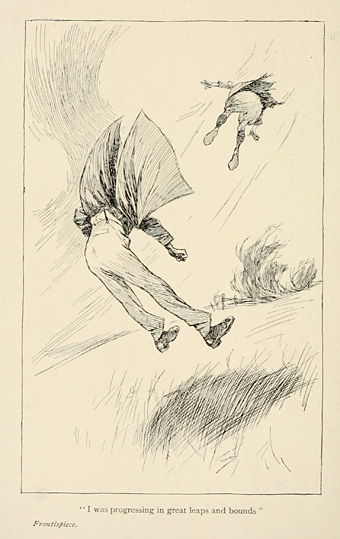
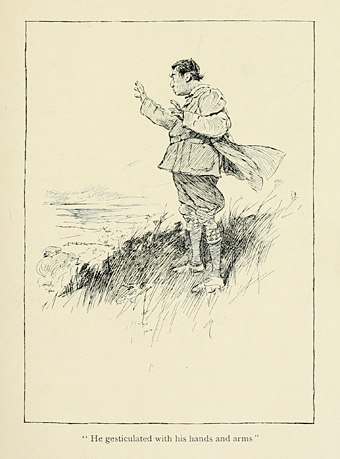
In the week following the Moon-landing anniversary I’ve been re-reading The First Men in the Moon by HG Wells. This was a late entry in Wells’ extraordinary run of science fiction novels, and is both shorter and lighter in tone than his earlier novels, some of which veer at times into outright horror. The First Men in the Moon might have been a serious examination of interstellar travel but the narrative is overtly comic in places, rather like The Man Who Could Work Miracles, a Wells story in which a fantastic gift is offered to a character unprepared to make the most of it. Wells’ lunar explorers—Bedford, a failed entrepreneur, and Cavor, an absent-minded inventor—lurch from one mishap to another, yoked together through their own inadequacies. Early in the proceedings Cavor destroys his house when his gravity-repelling “Cavorite” generates a violent funnel of air before launching itself into space. Cavor regards this as fortunate, explaining that a slightly different set of circumstances might have removed the breathable atmosphere from the entire planet for a day or so. The trip to the Moon is conducted almost on a whim: Cavor has no real reason for going, and Bedford tags along in the hope of finding some future business opportunity. Like the hapless protagonists of Withnail and I, this is a lunar voyage undertaken “by mistake”.
shepperson02.jpg

It’s probable that Wells regarded absurdity as being the best way to approach a story that was less original than his earlier works. The first edition of the novel opens with an epigraph from Lucian’s True History (or True Story), a book from the second century AD which includes a journey to the Moon among its planetary travels. Lucian’s book was the first to feature such a journey (and is often regarded as the first work of science fiction) but many others followed, even before From the Earth to the Moon (1865) by Jules Verne, a book which Bedford mentions during the expedition discussions. (Cavor has never heard of it.)

shepperson03.jpg

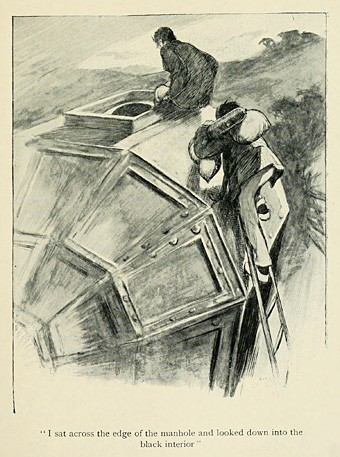
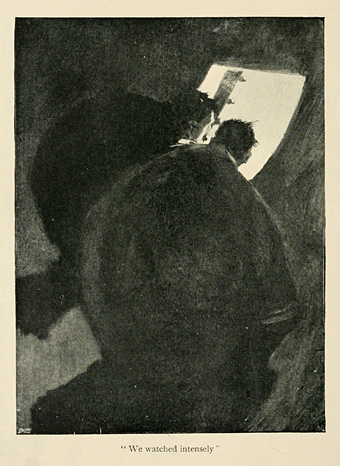
The illustrations here by Claude Allin Shepperson are also from the first edition, and are closer to the tone of the novel than those by other artists. E. Hering’s illustrations for American readers are in a style which is more detailed and inventive than Shepperson’s but which also suggests a more serious story. Readers expecting a new War of the Worlds would have been surprised. Shepperson’s drawing of Cavor’s spacecraft evidently provided the model for Ray Harryhausen in the 1964 film adaptation, although Harryhausen’s Selenites differ from both Shepperson and Wells’ descriptions. Nigel Kneale’s screenplay deviates from the book elsewhere but the film is still a more faithful adaptation than those based on Wells’ more popular novels, as are many of the other screen adaptations, the first being a lost silent from 1919. All of which reminds me that I’ve not seen Harryhausen’s film for many years. I’d welcome another date with the Grand Lunar.
shepperson04.jpg

shepperson05.jpg

Continue reading “Claude Shepperson’s First Men in the Moon”
Weekend links 473

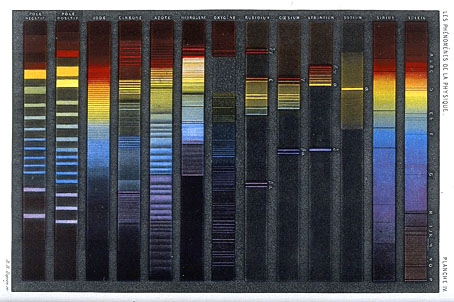
spectra.jpg

“Spectra of various light sources, solar, stellar, metallic, gaseous, electric”, print by René Henri Digeon; plate IV in Les phénomènes de la physique (1868).

• More polari: Thom Cuell this time with another review of Fabulosa!: The Story of Polari by Paul Baker. Good as it is to see these articles, one thing they all share is paying tribute to the polari-enriched radio series Round the Horne without crediting its writers, Barry Took and Marty Feldman.

• “…with its conspiracy theories, babbling demagogues and demonised minorities, Bahr’s investigation is sadly all too relevant today.” Antisemitism (1894) by Hermann Bahr, is the latest new translation from Rixdorf Editions.

Isao Tomita in 1978 showing a presenter from NHK around his tiny studio. Japanese-only but the discussion reveals that the words “synthesizer”, “tape recorder” and “mixer” sound the same as they do in English.

Ben Frost talks to Patrick Clarke about his music for German TV series, Dark.

• PYUR composes a guide through limbo with Oratorio For The Underworld.

• Steven Heller on Don Wall’s book design for a Paolo Soleri retrospective.

• Coming soon from Fulgur Press: Ira Cohen: Into the Mylar Chamber.

Will Harris compiles an oral history of Q: The Winged Serpent.

• Mix of the week: a mix for The Wire by Overlook.

• At Dennis Cooper’s: Magic Shop Internationale.

Shadow In Twilight by Pram.

The Feathered Serpent Of The Aztecs (1960) by Les Baxter | The Serpent (In Quicksilver) (1981) by Harold Budd | Black Jewelled Serpent Of Sound (1986) by The Dukes Of Stratosphear

Weekend links 472

isono.jpg

Poster art by Hiroo Isono.

• “[Divine] didn’t want to pass as a woman; he wanted to pass as a monster. He was thought up to scare hippies. And that’s what he wanted to do. He wanted to be Godzilla. Well, he wanted to be Elizabeth Taylor and Godzilla put together.” I can’t help linking to yet another John Waters interview when he always has things like this to say.

• Fifty shades of grey: great towers of the Eastern bloc photographed by David Navarro & Martyna Sobecka.

• Seeking Beastliness and Defining Beauty: Clive Hicks-Jenkins on visualisations of Beauty and the Beast.

Fire Temple by Bobby Krlic (The Haxan Cloak) from the Midsommar soundtrack.

Brad Jolliff & Mark Robinson on the scientific legacy of the Apollo programme.

John Boardley on Renaissance memes and the chemical pleasure garden.

• “It’s important to go out and feel the so-called reality,” says David Lynch.

Peter Strickland talks to Robert Barry about his new film, In Fabric.

Nico in Manchester: “She loved the architecture—and the heroin”.

• Mix of the week: Secret Thirteen Mix 292 by Paco Sala.

• Andrei Codrescu on the many lives of Lafcadio Hearn.

Hiroo Isono: Into the Depths of the Sacred Forest.

• At Dennis Cooper’s: Queer.

The Beast (1956) by Milt Buckner | The Beast (1989) by Rhythm Devils | Beast (1994) by Brian Eno

Weekend links 471

maclean.jpg

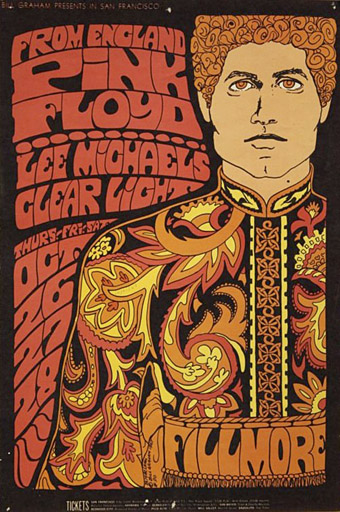
Pink Floyd, Lee Michaels, Clear Light (1967) by Bonnie MacLean.

• Electronic musician Mort Garson has been subject to a revival of interest recently, with reissues of his works as Ataraxia (The Unexplained), and Lucifer (Black Mass). The latest reissue is Mother Earth’s Plantasia (1976), an album released under Garson’s own name, and one of several works of plant mysticism from the 1970s (see Stevie Wonder’s Journey Through The Secret Life Of Plants, and Green by Steve Hillage).

• “It is striking how much of this work sounds like a missing link from the art world to the popular groups of the time, such as the Detroit techno pioneers Cybotron and the Japanese electro legends Yellow Magic Orchestra.” Geeta Dayal on the reconfigured Speak & Spell machinery of Paul DeMarinis.

The cost of free love and the designers who bore it: Madeleine Morley meets the women of psychedelic design.

For the transhumanist anarchist Wilson, the neurological relativism revealed by his own learning and personal deprogramming experiments called for a form of ‘guerrilla ontology’ that lampooned, rejected and transmitted much needed interference into the ‘reality tunnels’ that attempt to control much of contemporary society and individual behaviour. In the Schrödinger’s Cat Trilogy, characters are repeatedly placed in positions of cognitive dissonance, where they are forced to reevaluate their own belief systems due to experiences that they are unable to accommodate.

Sean Kitching on the 40th anniversary of Robert Anton Wilson’s Schrödinger’s Cat Trilogy

• They said books were dead, they were wrong: Adrian Shaughnessy on a decade of Unit Editions.

• Mixes of the week: Xianedelica by Jesús Bacalão, and Kosmische Mix By Tarotplane.

• Swinging 60s surrealist Penny Slinger: “Collectors thought I came with the art”.

• Cabaret Voltaire: Chance Versus Causality (Teaser).

Luc Sante on postcards of American violence.

• At Dennis Cooper’s: Peter Whitehead Day.

Computerwelt (1981) by Kraftwerk | Speak And Spell (1984) by Christina Kubisch | Time Space Transmat (1985) by Model 500

Fracture by Paul and Gaëtan Brizzi

fracture1.jpg

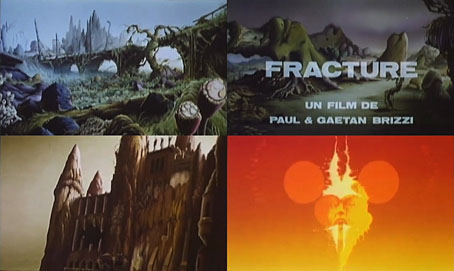
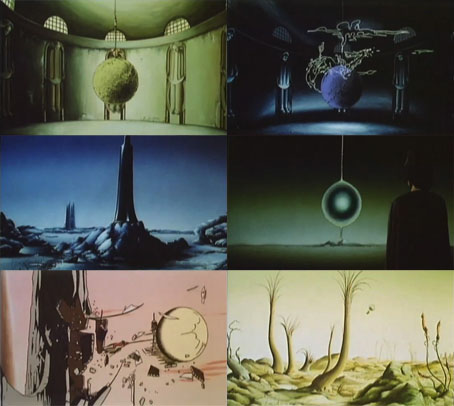
Fracture (1977) is a short animated film from France by the Brizzi Brothers (Paul and Gaëtan), a duo better known for their work on feature-length animated films such as Asterix versus Caesar (1985), and a number of films for Disney. Fracture is their earliest work, and isn’t remotely Disney-like, delivering an SF/fantasy scenario of alien inexplicabilities that makes it an animated counterpart of the comic strips that were running in Métal Hurlant (and its US counterpart, Heavy Metal) in the late 1970s. (The Brizzi Brothers’ most recent works have been comic books so I’d be surprised if Fracture didn’t have comics influence.)

fracture2.jpg

Comics and animation have a considerable advantage over film and TV in being able to avoid the commercial imperatives that explain away mysteries and make the alien too familiar. Animation doesn’t exploit this advantage as often as it might so examples such as Fracture are all the more rare and valuable. The Brizzi Brothers’ film may not be as thoroughly strange and inexplicable as Piotr Kamler’s masterpiece, Chronopolis (1983), but it has its moments. As a bonus, the soundtrack is lifted from albums by Tangerine Dream and Edgar Froese which have been monopolising my waking hours for the past two weeks.

Previously on { feuilleton }
The Captive, a film by René Laloux
Continu-discontinu 2010, a film by Piotr Kamler
L’Araignéléphant
Le labyrinthe and Coeur de secours
Chronopolis by Piotr Kamler