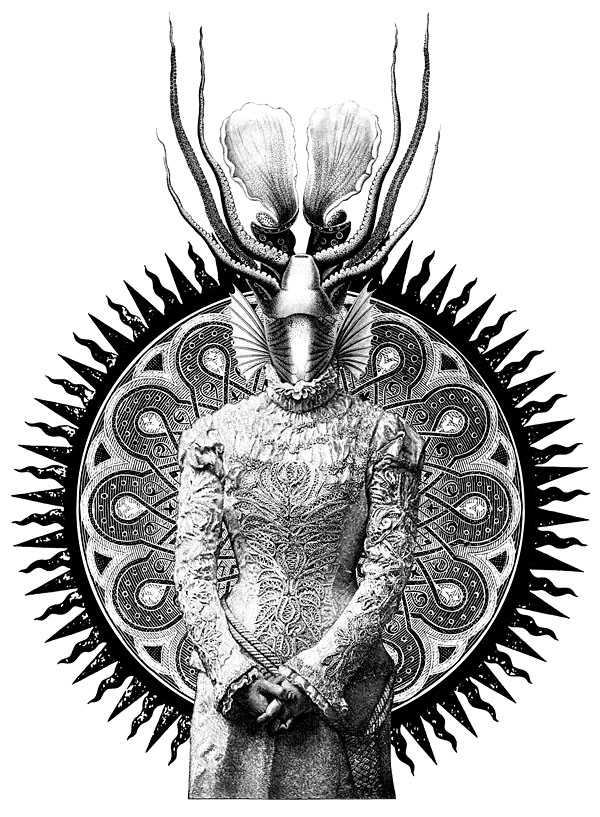
This week’s Photoshop researches lead to interesting encounters.
Previously on { feuilleton }
• Fascinating tentacula
• Jewelled butterflies and cephalopods
• Haeckel fractals
• Octopulps
A journal by artist and designer John Coulthart.

Fantasy
This week’s Photoshop researches lead to interesting encounters.
Previously on { feuilleton }
• Fascinating tentacula
• Jewelled butterflies and cephalopods
• Haeckel fractals
• Octopulps
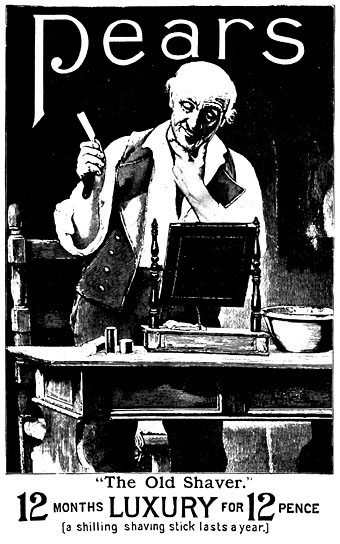
Pears Soap ad, Illustrated London News, March 16, 1895.
I’ve been working feverishly this week to complete page designs for The Thackery T. Lambshead Cabinet of Curiosities which will be published next year by HarperCollins. This is a sequel of sorts to 2003’s Thackery T. Lambshead Pocket Guide to Eccentric and Discredited Diseases to which I was also a contributor and designer. Ann and Jeff VanderMeer are editing the new collection, and Jeff has posted a couple of teaser introductions to the contents here and here. Gabriel in yesterday’s comments mentioned Terry Gilliam’s animations for the Monty Python TV series, something I was reminded of today while leafing through a 1968 collection of old advertising graphics looking for suitable pictures. Victorian Advertisements was compiled by Leonard de Vries and Ilonka van Amstel, and its Pears Soap ad (above) is obviously the source of Gilliam’s animation (below) showing a man lathering his face then beheading himself with a straight razor, a gag which features in both the TV series and the first Monty Python feature film And Now For Something Completely Different.
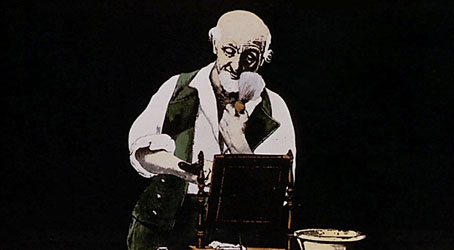
And Now For Something Completely Different (1971).
It’s easy to see what would have attracted Gilliam to the De Vries book when it’s filled with bizarre or grotesque ads like the Bovril one below; someone evidently decided that the meaty drink ought to be promoted via the novelty of electricity.
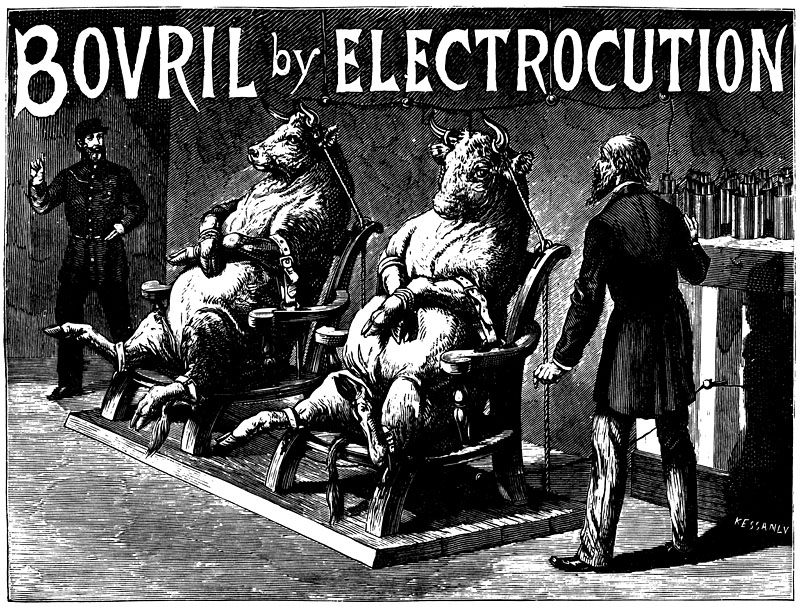
Bovril ad from The Graphic, Christmas number, 1891.
De Vries features many ads for electrical products, not all of them genuine or even likely:
Pseudo-science began to play the part it still plays in therapeutic advertising. Electric light was, by the end of the century, being installed in theatres and restaurants and in some private houses. To what other uses could the magnetic fluid be put? Electricity was the new magic and all kinds of quarters began to exploit its possibilities—and impossibilities. The Medical Battery Company Limited, of Oxford Street, assured the public that its Electropathic Belt had “restored thousands of sufferers to health and vigour”, and had “proved an inestimable blessing to the weak and languid”. It was particularly recommended for “weak men suffering from the effect of youthful errors”. Did the weak men in question wear the contraption in bed? Women also could benefit by it, and one is a little surprised to find this and other remedies for “female irregularities” so frankly discussed. An Electric Corset was the “Very Thing” for ladies. One can only wonder how the batteries if there were any operated. And what could possibly be meant by an “electric” towel, and how could failing sight be cured by an “eye battery”?
There’s also an Electric Hair Brush which gives “hope for the bald” without explaining how it differs from an ordinary brush. Several of the pieces in the new Lambshead volume will be exploring similarly eccentric territory. Watch this space for further details.
Previously on { feuilleton }
• Portuguese Diseases
• Pasticheur’s Addiction
• Short films by Walerian Borowczyk
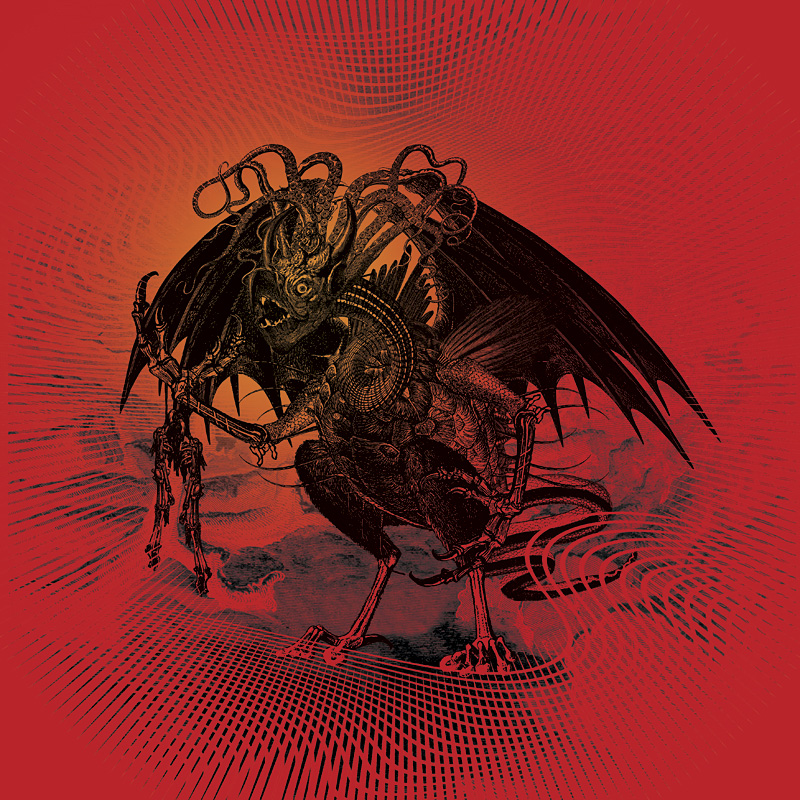
The Jabberwock (2010).
’Twas brillig, and the slithy toves
Did gyre and gimble in the wabe;
All mimsy were the borogoves,
And the mome raths outgrabe.“Beware the Jabberwock, my son!
The jaws that bite, the claws that catch!
Beware the Jubjub bird, and shun
The frumious Bandersnatch!”He took his vorpal sword in hand:
Long time the manxome foe he sought—
So rested he by the Tumtum tree,
And stood awhile in thought.And as in uffish thought he stood,
The Jabberwock, with eyes of flame,
Came whiffling through the tulgey wood,
And burbled as it came!One, two! One, two! And through and through
The vorpal blade went snicker-snack!
He left it dead, and with its head
He went galumphing back.“And hast thou slain the Jabberwock?
Come to my arms, my beamish boy!
O frabjous day! Callooh! Callay!”
He chortled in his joy.’Twas brillig, and the slithy toves
Did gyre and gimble in the wabe;
All mimsy were the borogoves,
And the mome raths outgrabe.
The past month has been inordinately busy which has meant all the fine plans for a 2011 Coulthart calendar have been set back further than intended. No prizes for guessing the theme this year. This picture made its web debut last weekend at Alicenations, a Brazilian site devoted to all things Carrollian. Lots of splendid artwork on the rest of their page, including some of Jan Švankmajer’s Alice collages and some familiar bestiary hybrids. As to the calendar, I’m pleased to say the series of pictures is starting to feel halfway finished so I may have the whole thing completed and uploaded to CafePress sometime next week. Keep your vorpal blades crossed. In the meantime, here’s a picture detail, and while we’re on the subject, let’s not forget Terry Gilliam’s first feature film or the 1968 single from Boeing Duveen & The Beautiful Soup. (Given a choice I prefer the B-side, Which Dreamed It?)
Previously on { feuilleton }
• Alice in Acidland
• Return to Wonderland
• Dalí in Wonderland
• Virtual Alice
• Psychedelic Wonderland: the 2010 calendar
• Charles Robinson’s Alice’s Adventures in Wonderland
• Humpty Dumpty variations
• Alice in Wonderland by Jonathan Miller
• The Illustrators of Alice
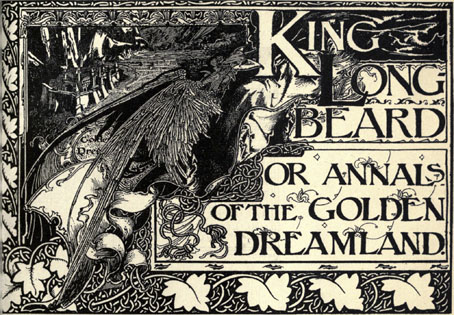
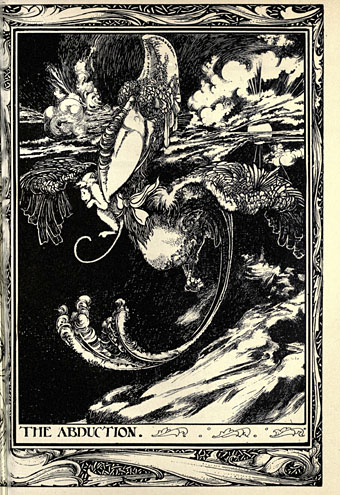
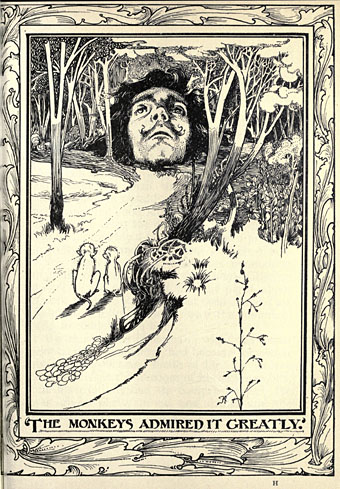
For proof that it’s worth persevering with the eccentric tagging or non-labelling at the Internet Archive, look no further than this tremendous edition of King Longbeard (1898) by Barrington MacGregor which features some astonishing illustrations by Charles Robinson. The illustrator’s name isn’t attached to the book files, I found this by cross-referencing, something I’ve been doing a lot of in order to find other books about design history. I’ve written about Robinson’s work before but I was still taken aback by some of these drawings, a handful of which verge on outright Surrealism. The two monkeys peering at a giant head is one I’ve seen reproduced elsewhere, although I couldn’t say where, so it’s good to be able to find the source at last. I haven’t read through any of the stories so the explanation of that scene remains a mystery. If you want the solution then the book files are here (click the “All files: HTTP” link for the full set).
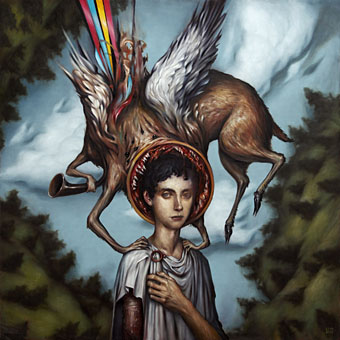
Blue Sky Noise (2010) by Esao Andrews.
• Franz Xaver Messerschmidt is the first exhibition in the United States devoted exclusively to the 18th-century sculptor. Related: an earlier post about the artist’s work.
• How are the team behind War Horse planning to follow up their smash hit? With a gay love story performed by puppets. Related: Achilles (1995) by Barry JC Purves.
• More great posts at A Journey Round My Skull: Czechoslovakian Expose VI and Black Cradle of Bright Life, fifteen works by the Macedonian artist Vangel Naumovski (1924–2006).
• Top 10 Anti-Gay Activists Caught Being Gay. Related: “Fuck your feelings,” in which columnist Dan Savage gets righteously impatient when a correspondent complains. As Savage says, people who use their faith as a stick to beat gay people contribute to an atmosphere of intolerance in which kids are bullied for being gay (or appearing to be), or transgender, or merely different, and kill themselves as a result. Over the past couple of weeks there’s been an upsurge of US media attention to the most recent suicides; Savage inaugurated the It Gets Better project in order to help. Also related: God Loves Poetry.
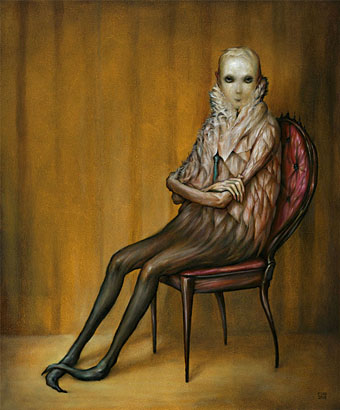
Meigh (2010) by Esao Andrews.
• Antony Hegarty enthuses about Shoot Yer Load, one of the scurrilous 12″ singles released by my Savoy colleagues in the 1980s. Antony and the Johnsons have a new album out, Swanlights, on Secretly Canadian.
• When the future of music was a rainbow hued parabola: book designer John Gall collects old synthesizer manuals.
• Fantastic Memories (1944) by Maurice Sandoz, illustrated by Salvador Dalí.
• Urban optometry: life as a London crane operator at BLDGBLOG.
• Today is 10/10/10 which means it’s Powers of Ten Day.
• These New Puritans: a band like no other.
• Art Nouveau: a virtual exhibition.
• Diaghilev: Lord of the dance.
• Flaming Telepaths (1974) by Blue Öyster Cult; Flaming Telepaths (2005) by Espers.