Weekend links 124

despont.jpg

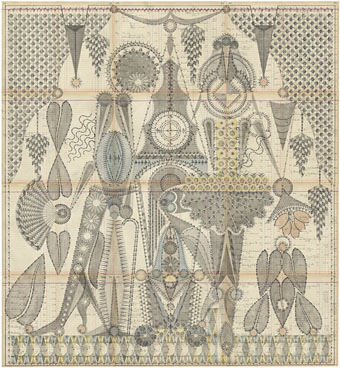
Couple with Clock Tower (2011) by Louise Despont.

Assuming such a thing doesn’t already exist, there’s a micro-thesis to be written about the associations between the musicians of Germany’s Krautrock/Kosmische music scene in the early 1970s and the directors of the New German Cinema. I’d not seen this clip before which shows the mighty Amon Düül II jamming briefly in Fassbinder’s The Niklashausen Journey, a bizarre agitprop TV movie made in 1970. More familiar is the low-budget short that Wim Wenders helped photograph a year earlier showing the Düül performing Phallus Dei. Wenders later commissioned Can to provide music for the final scene of Alice in the Cities. And this is before you get to Werner Herzog’s lengthy relationship with Popol Vuh which includes this memorable moment. Any others out there that I’ve missed?

Album sleeves in their original locations. And speaking of album sleeves, photo prints of some very famous cover designs by Storm Thorgerson will be on display at the Public Works Gallery, Chicago, throughout September and October.

Crazy for kittehs: the quest to find the purring heart of cat videos: Gideon Lewis-Kraus goes where few journalists dare to tread. Also at Wired, the same writer explores the Cat Cafés of Tokyo.

The City of Rotted Names, a “shamelessly Joycian cubist fantasy” by Hal Duncan, available to read in a variety of formats on a pay-as-thou-wilt basis until Monday only.

• Jailhouse rockers: How The Prisoner inspired artists from The Beatles to Richard Hawley.

How To Survive A Plague, a documentary about HIV/AIDS activism in the US.

• Deborah Harry: hippy girl in 1968, punk in 1976, and Giger-woman in 1981.

Alan Garner answers readers’ questions about his new novel, Boneland.

• For steampunk aficionados: ‘COG’nitive Dreams by Dana Mattocks.

• David Bowie, Iggy Pop, Madonna & Asparagus: Kraftwerk in 1976.

• New music videos: Goddess Eyes I by Julia Holter | Sulphurdew by Ufomammut | Warm Leatherette by Laibach.
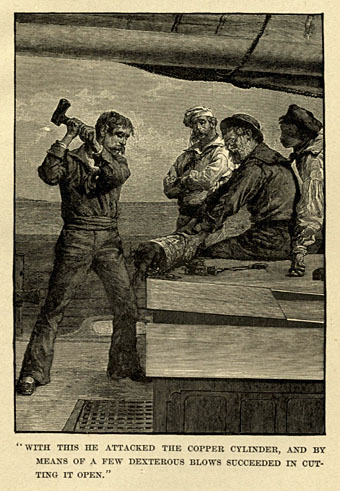
A Strange Manuscript Found in a Copper Cylinder

strange01.jpg

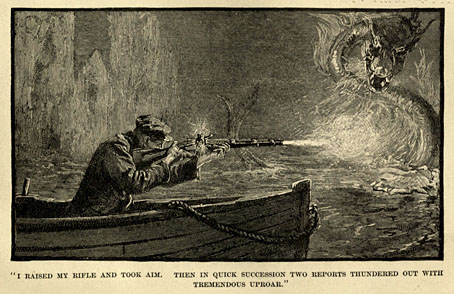
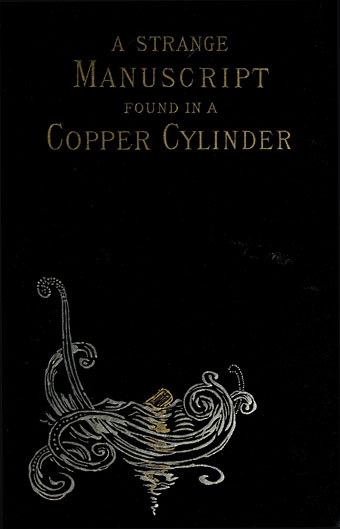
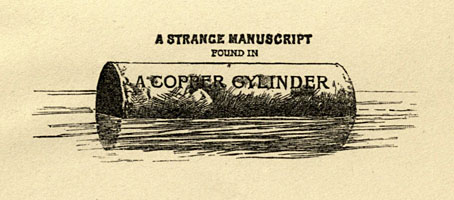
A great title. As usual I came across this whilst searching for something else. Something about this was familiar but I haven’t read the book, and I suspect it will be one of those where the title proves a lot more evocative than the narrative. The author was a Canadian writer, James De Mille (1833–1880), and this novel of all his works is the most well-known for its predating more famous fantasy novels by H. Rider Haggard. Wikipedia has a précis:

The satiric and fantastic romance is set in an imaginary semi-tropical land in Antarctica inhabited by prehistoric monsters and a cult of death-worshipers called the Kosekin. Begun many years before it was published, it is reminiscent of Edgar Allan Poe’s The Narrative of Arthur Gordon Pym of Nantucket and anticipates the exotic locale and fantasy-adventure elements of works of the “Lost World genre” such as Arthur Conan Doyle’s The Lost World, Edgar Rice Burroughs’ The Land That Time Forgot, as well as innumerable prehistoric world movies based loosely on these and other works. The title and locale were inspired by Edgar Allan Poe’s Ms. Found in a Bottle.

strange02.jpg

The illustrations are by Gilbert Gaul from the story’s serialisation in Harper’s Weekly in 1888. The best one shows a ride on a huge pterodactyl-like creature called an athaleb that makes me think of the ride on the shrowk in David Lindsay’s A Voyage to Arcturus, albeit without the erotic fervour of Lindsay’s episode. Fervour or no, the road to Lindsay’s philosophical weirdness begins with early novels such as this. De Mille’s book may be browsed here or downloaded here.

strange03.jpg

strange04.jpg

Continue reading “A Strange Manuscript Found in a Copper Cylinder”

Raymond Bertrand paintings

bertrand19.jpg

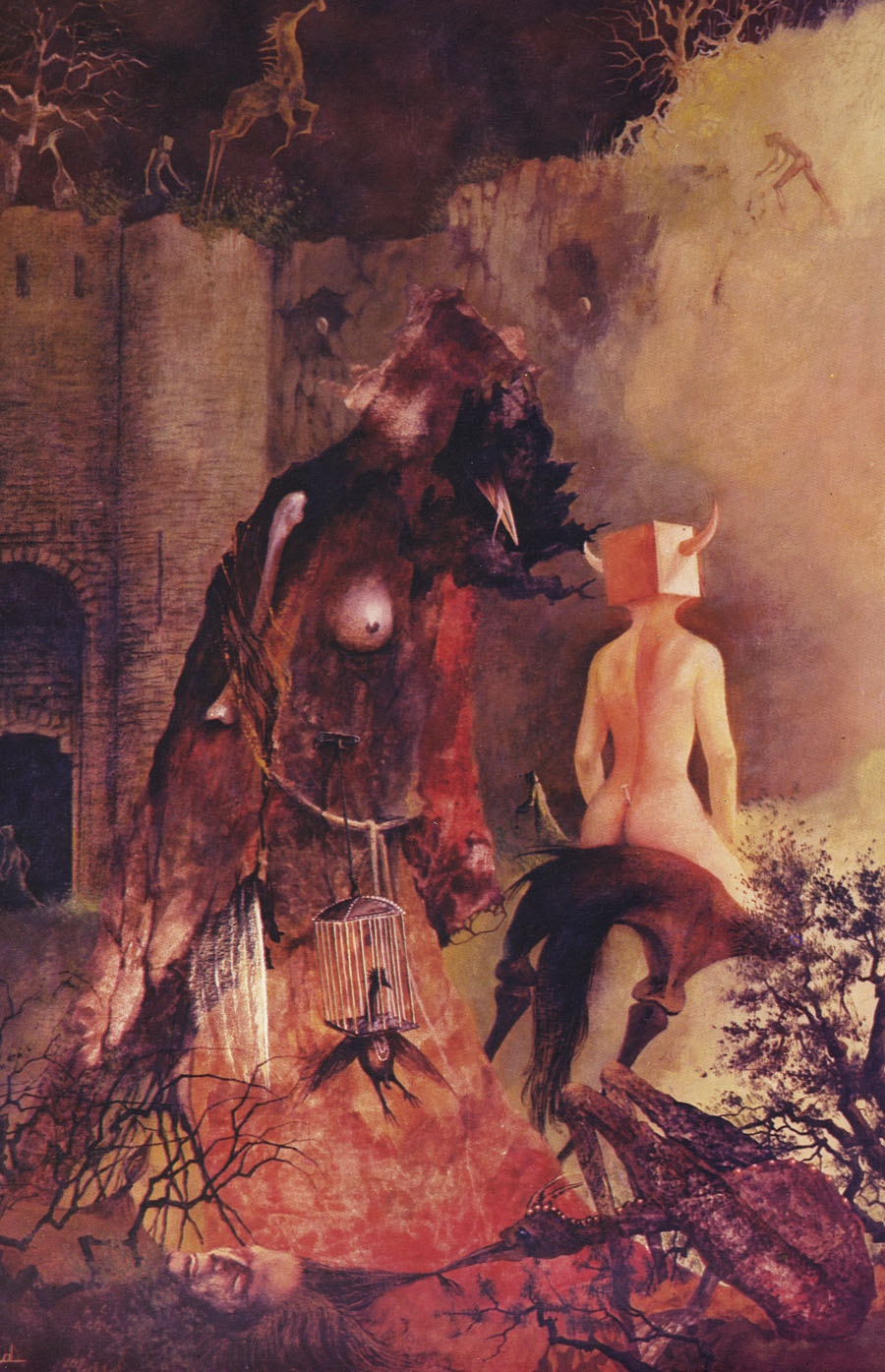
Scanning some of my work today I thought I’d follow yesterday’s post with a few scans of the colour plates in the second Eric Losfeld volume of Bertrand’s work, Dessins Erotiques II (1971). None of the pictures in the book are titled, and there’s little detail either about their production. Among the colour works is the Boschian piece above which for once doesn’t have one of the artist’s strange women as its sole subject. A few more scans from the same book can be seen at this earlier post.

bertrand16.jpg

bertrand17.jpg

Continue reading “Raymond Bertrand paintings”

More Golems

barta.jpg

Golem by Jiri Barta.

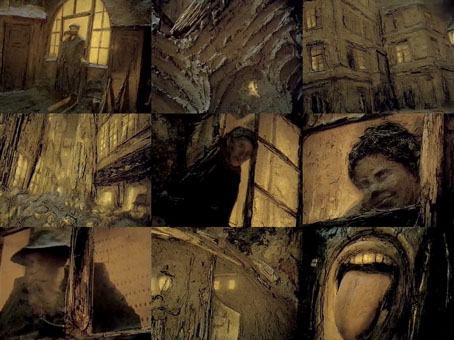
There are always more golems. Among recent reading I’ve been catching up with the works of Michael Chabon, and have just finished The Amazing Adventures of Kavalier & Clay (2000), a novel concerned with several things that obsessed me when I was 13, namely Harry Houdini, conjuring tricks and the Empire State Building. Chabon even acknowledges JC Cannell’s The Secrets of Houdini, a book I re-read many times trying in vain to learn some of Houdini’s card tricks. What didn’t obsess me at that age happens to be the main subject of the novel: superhero comics. Chabon does a good job of communicating the enthusiasm that powered the early days of the American comics industry, however, and I can appreciate the enthusiasm that history generates for him even if I don’t quite share it. Lurking at the back of his story is the mute and symbolic figure of Rabbi Loew’s Golem of Prague, mention of which prompted me to see whether Czech animator Jiří Barta had managed to complete his film of the Golem story, a project which has been stalled since the 1990s. He hasn’t, unfortunately, but there is a trailer which I hadn’t seen before, a sight that makes the prospect even more tantalising. Someone give this man some money to finish his film.

emet.jpg

Emet (2009).

Elsewhere, there’s Emet by Bonsaininja Studio, Milan, a short steampunk take on the Golem creation story. Great use of CGI and digital animation but I’d still prefer to see Barta’s version. Meanwhile, the whole of Paul Wegener’s The Golem: How He Came into the World (1920) is now on YouTube. If you’ve never seen Wegener stomping around medieval Prague with his shopping basket then here’s your chance.

See also:
Golem: The Recipe For Life by Michael Chabon

Previously on { feuilleton }
Hodgson versus Houdini
Das Haus zur letzten Latern
Hugo Steiner-Prag’s Golem
Barta’s Golem

Books Borges never wrote

borges2.jpg

Design by Hector Haralambous.

The composition of vast books is a laborious and impoverishing extravagance. To go on for five hundred pages developing an idea whose perfect oral exposition is possible in a few minutes! A better course of procedure is to pretend that these books already exist, and then to offer a resume, a commentary… More reasonable, more inept, more indolent, I have preferred to write notes upon imaginary books.

Jorge Luis Borges

Borges was true to his intention in scattering invented volumes throughout his work, a number of the ficciones either have invented books as their subjects or use them to propel the narrative. Tlön, Uqbar, Orbis Tertius is perhaps the most elaborate example, the story in which Borges invents an encyclopedia which is itself being invented to prove a philosophical point. My favourite Borges site at The Modern Word has a page detailing some of the imaginary volumes. Invented books naturally suggest invented book covers. Several years ago another Borges site took up the challenge for the latter which is where the examples above and below originate. The site is now defunct but its pages can be seen mostly intact thanks to the Internet Archive. The book covers are here and here. The designs for the most part could have been better, although they don’t look any worse than some of the poorly-designed covers for genuine books now flooding the web thanks to print-on-demand and electronic publishing.

borges3.jpg

Design by George Kranitis.

ttl7.jpg

The Spanish language edition of the Thackery T Lambshead Pocket Guide to Invented and Discredited Diseases (1977).

All of which reminded me of my own fake Borges covers from 2003, supposedly Borges’ own compilations of The Thackery T Lambshead Pocket Guide to Invented and Discredited Diseases, the fake disease guide edited by Jeff VanderMeer and Mark Roberts. These were created in colour but printed in black-and-white. Since they’ve appeared here before I’ve included links this time to larger copies. In a detail that Borges might have appreciated the idea for the disease guide came about after Modern Word editor Allen B. Ruch, who often manifests as The Great Quail, remarked to Jeff VanderMeer that “I think I have contracted Mad Quail Disease”. You have to be cautious with casual quips to writers, you never know where they might lead.

ttl8.jpg

An English paperback reprint of the Borges edition (1979).

Update: While we’re on the subject… Remember the Fake Books from The Royal Tenenbaums? Here They Are!

Elsewhere on { feuilleton }
The book covers archive

Previously on { feuilleton }
Borges and I
Recovering Viriconium
Forbidden volumes
Pasticheur’s Addiction