Reversible men and Lipský’s Happy End

overloaded.jpg

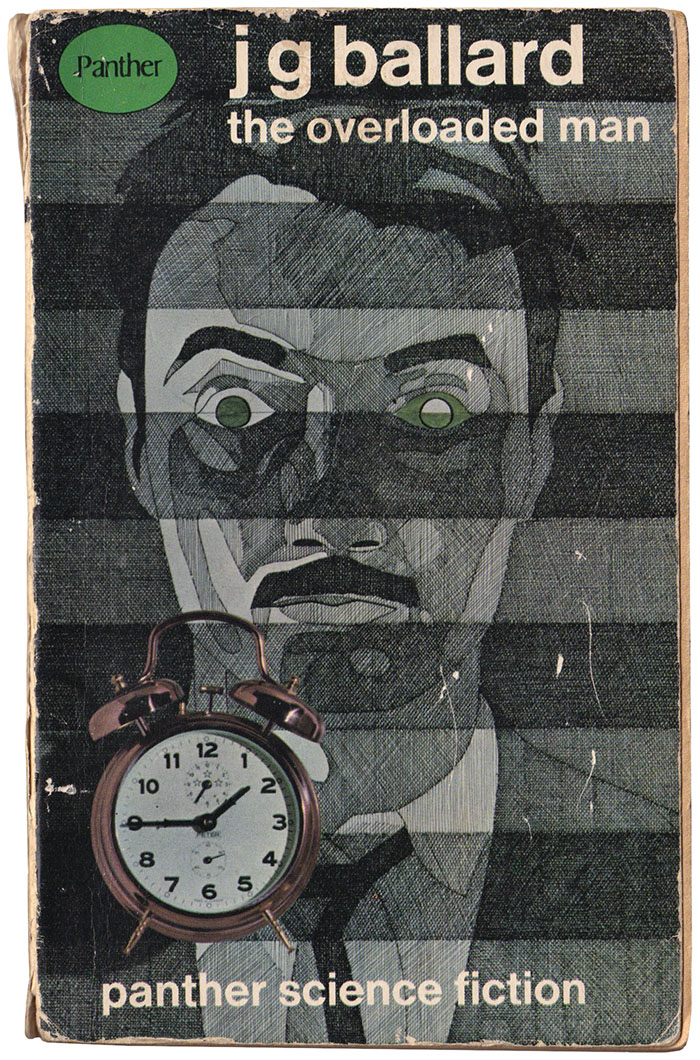
A paperback ravaged by the passage of time. Art by Ray Ginghofer.

Time of Passage, a piece of short fiction by JG Ballard, received its first publication in Science Fantasy magazine in February, 1964. The piece was subsequently collected in two paperbacks, The Impossible Man and Other Stories (Berkley Medallion, 1966), and The Overloaded Man (Panther, 1967). Time of Passage is more of a biographical sketch than a story, describing in reverse the life of a stockbroker, James Falkman, a man “born” in 1963 by being dug out of a grave while surrounded by tearful relatives. Ballard goes on to describe the major events of Falkman’s life, from retirement to career to marriage, charting the man’s gradual descent into youth and eventual infant helplessness. The story ends with Falkman bheing taken to a hospital in 1900 for a final encounter with his mother, his “death” in Ballard’s words.
venus.jpg

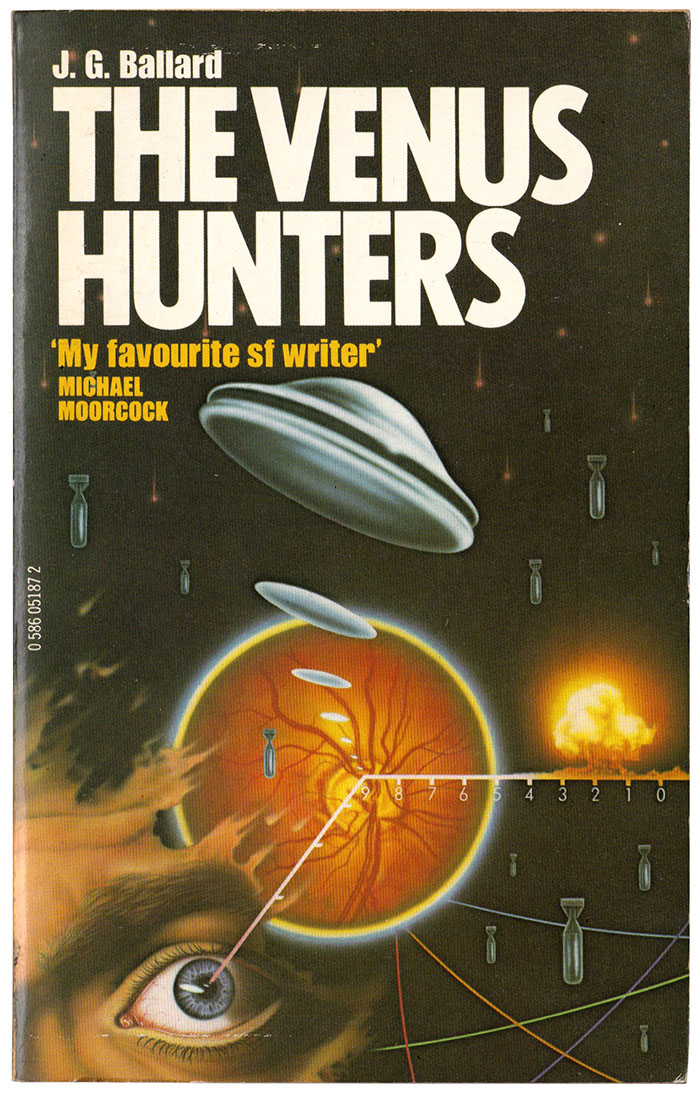
A revised reprint of The Overloaded Man, 1980. The artwork by Peter Gudynas may be the only Ballard cover to feature flying saucers.

There may be earlier literary examples of the life described in reverse but Ballard’s is the earliest one I know of. I’m thinking here of explicit reversals of human circumstance, as opposed to the more common reverse chronology whereby an otherwise forward-flowing story is chopped into episodes which are then presented in a reversed order. Philip K. Dick’s Counter-Clock World (1967) is a novel-length extrapolation of Ballard’s concept, set in a future where time has started to run backwards, and the dead are being born again in cemeteries. The 1960s saw a peculiar spate of fiction along these lines; to paraphrase Charles Fort, it must have been time-reversal time. In an earlier Ballard story, Mr. F is Mr. F, the titular character finds himself aging in reverse while time continues to run forward for his wife and the world outside their home; in An Age (1967) by Brian Aldiss scientific experiments reveal that time is actually moving in reverse despite our perceptions to the contrary.
reversible.jpg

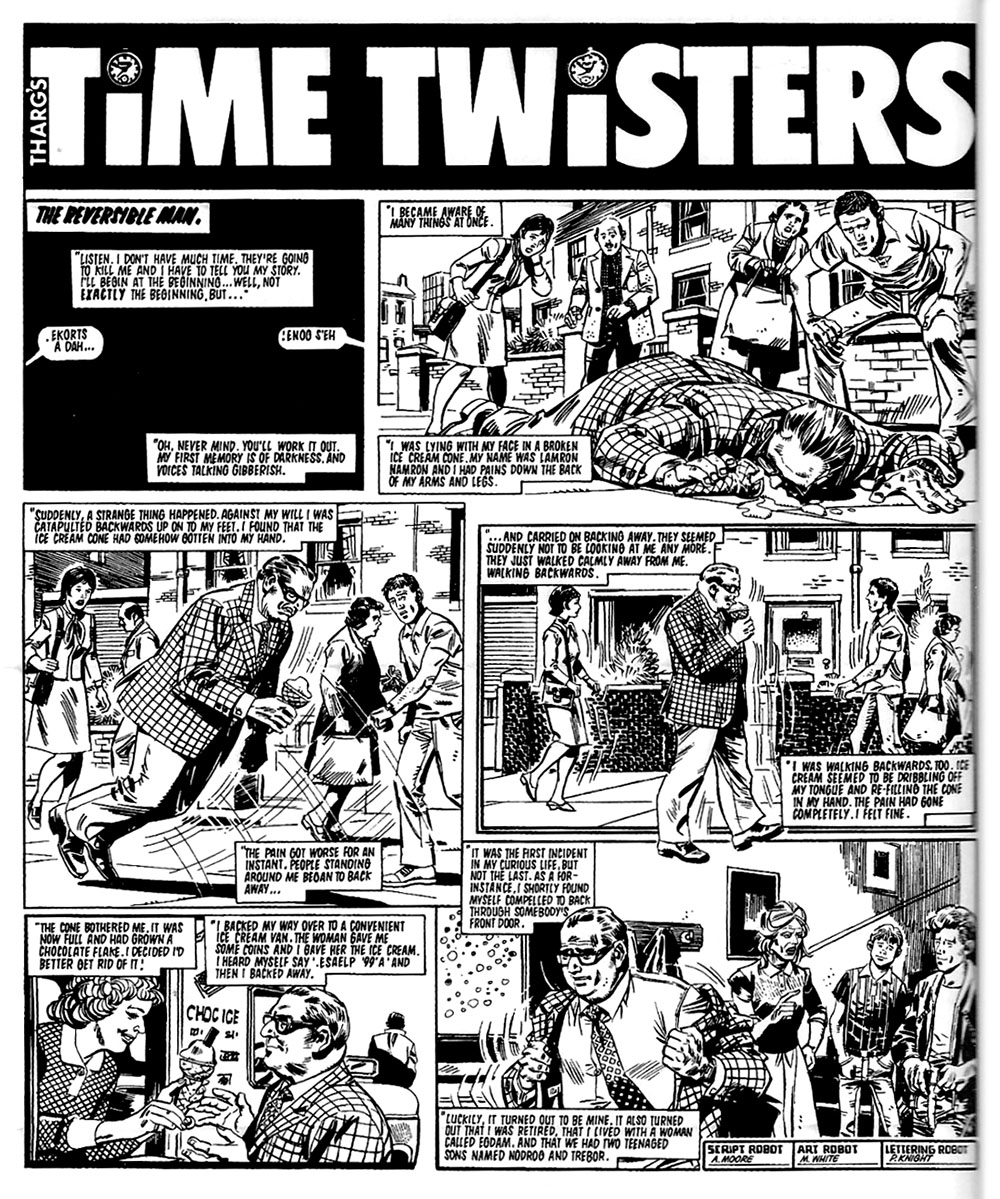
Art by Mike White.

Alan Moore would no doubt have been familiar with one or more of these stories when he wrote The Reversible Man for 2000 AD in 1983, a four-page strip which shows the life of an ordinary man from death to birth. Moore freshens the concept a little by the use of first-person narration. The most well-known treatment of the idea is Time’s Arrow by Martin Amis, a novel whose structure was taken by some reviewers as wholly original even though Amis said he was inspired by a passage in Kurt Vonnegut’s Slaughterhouse-Five. I’ve always felt Amis was being evasive on this point; he was very familiar with Ballard’s fiction, he interviewed Ballard and reviewed his novels on several occasions. Anyone with this much interest in Ballard’s work would have read Time of Passage in one of its many reprintings.
happy-end.jpg

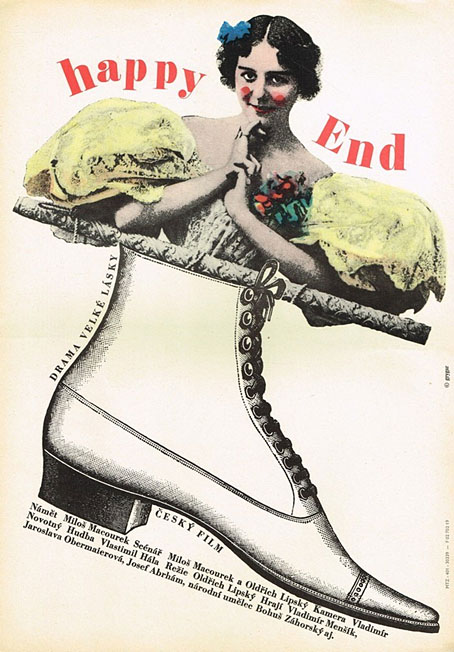
Design by Milan Grygar.

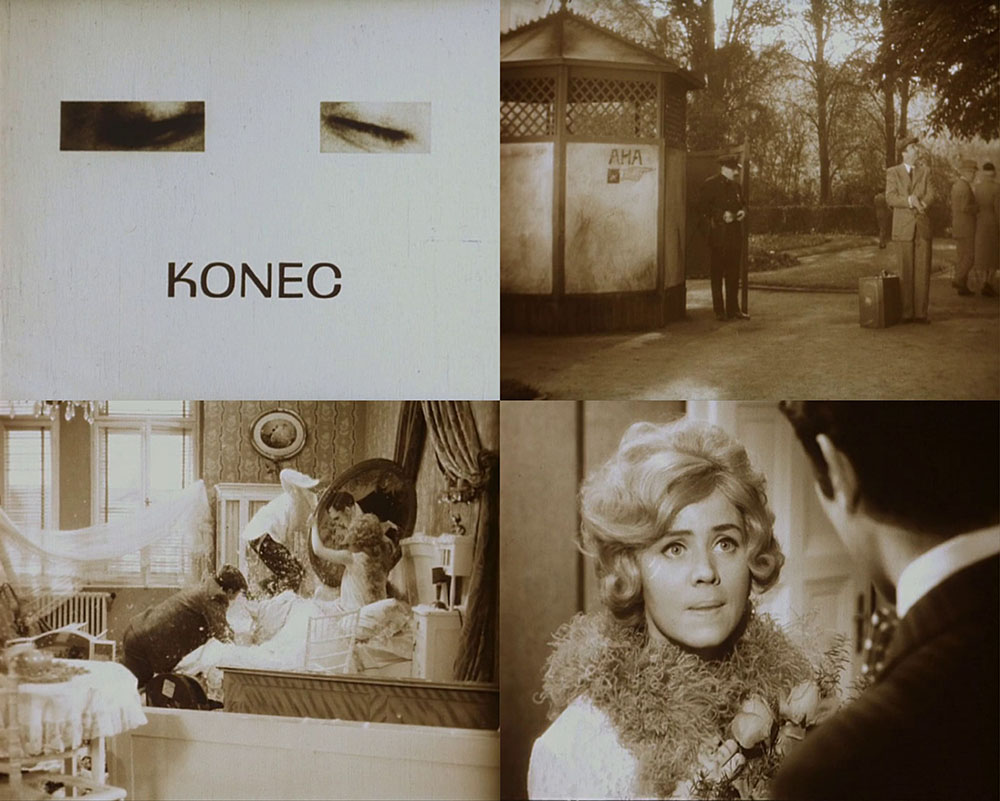
When it comes to authorial influence it seems unlikely that Czech film-maker Oldřich Lipský could have been influenced by Ballard or Dick’s time-reversals, which makes the appearance of Happy End in 1967 all the more remarkable. Lipský’s feature film, which I watched last week, is essentially Ballard’s death-to-life narrative played for its comic potential, with the film itself running in reverse for much of the time. Happy End opens with a title card in Czech—”Konec” (“The End”)—before presenting the “birth” of its protagonist by means of a guillotine. The decapitated head of Bedřich Frydrych (Vladimír Menšík) is attached to his body, after which the guards lead him (backwards) to the place described by his cheerful voiceover as a school (aka prison) where he says he’s being prepared for life in the outside world. Before he sets off to his waiting apartment the police give him a suitcase containing the body of his wife, Julie (Jaroslava Obermaierová), the pieces of which he assembles in the bath in his apartment. Julie is “revived” when Frydrych pulls an axe from her forehead, after which Julie’s lover, Ptáček (Josef Abrhám), makes his first arrival, jumping backwards into the bedroom through the window.
he1.jpg

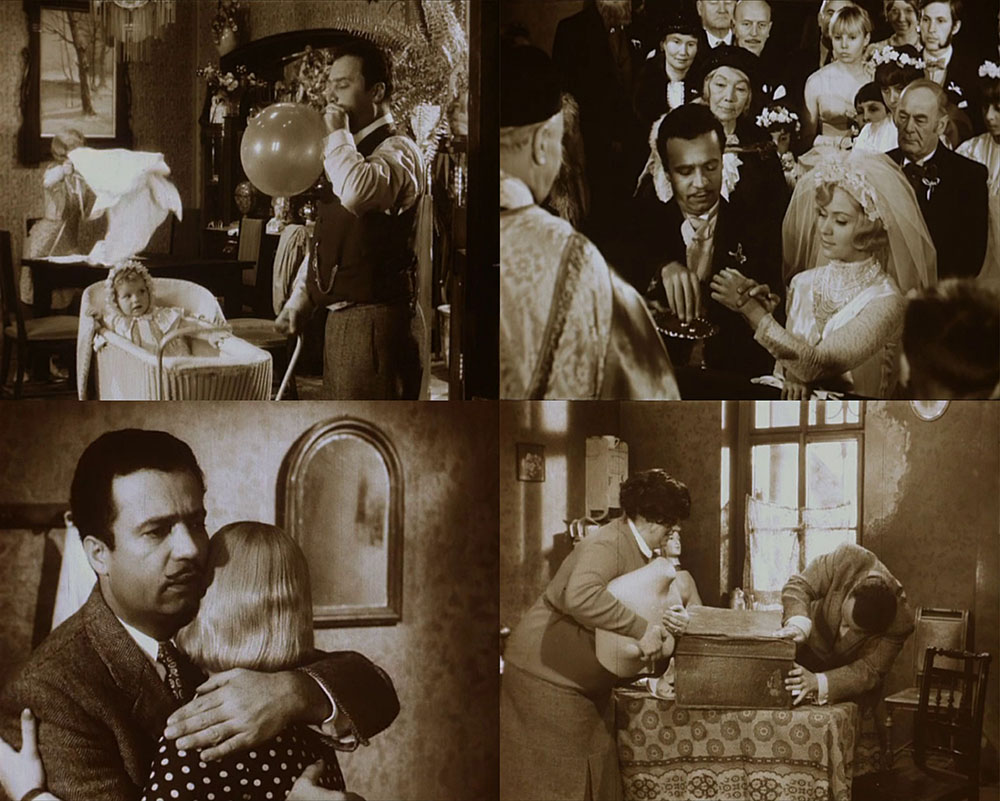
The love-triangle between Frydrych, Julie and Ptáček forms the bulk of the story, and also the basis for much of the film’s black humour. One of the hallmarks of the reversed biography is ironic reinterpretation, something that Amis makes a substantial meal of in his novel. In many cases it’s easier to do this with film than it is with words: a fight between Frydrych and Ptáček becomes an energetic “tidying up” of the apartment, with the cuckolded husband and the wife’s lover reassembling broken furniture and clearing away all the signs of destruction. Happy End is a long procession of these reversals, accompanied by Frydrych’s voiceover narration which persists in giving any tragic and difficult moments a positive gloss. Most of them, anyway. A substantial win at the racetrack becomes a negative incident when the events are played in reverse. But the loss of money is offset by Frydrych and Julie’s young daughter who pulls fresh banknotes out of an impromptu fire on the kitchen floor.
he2.jpg

For non-Czech speakers the humour and invention of Happy End is undermined by the effort required to keep up with the film’s frenetic pace (many of the scenes are speeded-up as well as running in reverse) while reading subtitles which reinterpret everything you’re seeing on the screen. My own viewing was further compromised by amateurish subtitles, but this is all the more reason to watch it again. Second Run have recently released Happy End as a region-free blu-ray with “new and improved English subtitle translation”. This is the second Lipský film I’ve watched to date (thanks, Jay!). I’ll be looking for more.

Previously on { feuilleton }
Art on film: Je t’aime, Je t’aime
Zeuhl Ẁortz!

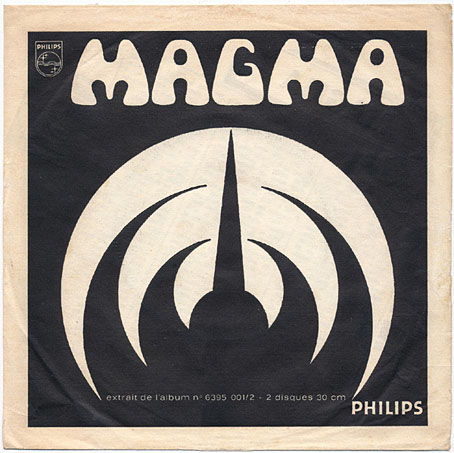
magma-single.jpg

Kobaïa / Müh (1970), a single by Magma.

1: Zeuhl definitions

Zeuhl is an adjective in Kobaïan, the language written by Christian Vander, drummer and founder of the French band Magma.

Pronunciation: zEU(h)l, while the EU are like a French E with a slight U, and the (h) is a semi-silent letter which is an integrated part of the EU, totalling in a “syllable and a half”. (Prog Archives)

Zeuhl (pronounced [zœl]; lit. ’celestial’) is a music genre that is a hybrid of jazz fusion, symphonic rock and neoclassical music, established in 1969 by the French band Magma. The term comes from Kobaïan, the fictional language created by Magma’s Christian Vander and Klaus Blasquiz for Magma, in which Zeuhl Ẁortz means approximately ‘celestial force’.
[…]
Zeuhl is determined by several characteristic elements. Especially important are dominant rhythm fractions, usually in the form of a pumping bass guitar and sometimes sluggish or flexibly playing drum kits. Slow repetitive structures that serve to build a hypnotic atmosphere are just as prominent as solo passages of high technical finesse. Vocals are often widely present and can consist of polyphonic choral movements, such as Carl Orff’s Carmina Burana, or soloistically performed passages with shrill intonation. Zeuhl bands also often have solo guitarists or pianists that usually have a more than accompanying function, especially to emphasize the repetitive patterns. (Wikipedia)


2: The Birth of the Zeuhl

“1967,” he says. “The year John Coltrane died. It seemed to me that afterwards, it was as though music had to try to start all over again. Someone had to pick up the pieces, go on searching in the way that he had. Nobody could match him, but people could pick up the flame. It was almost impossible for anyone to do anything new after Coltrane, but you had to try, try to find other new directions. So that’s what I tried to do with Magma. I was a bit young at the time, but…”

Christian Vander describing the birth of Magma to Paul Stump, The Wire, July 1995


3: Zeuhl lists

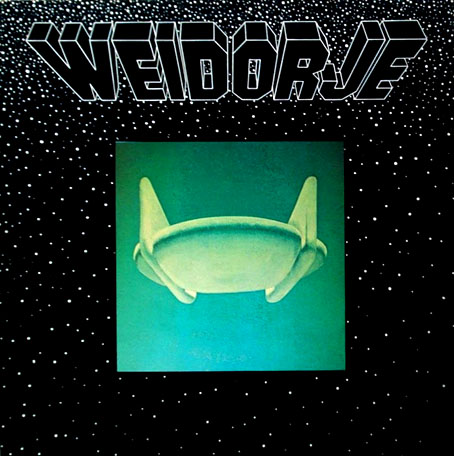
weidorje.jpg

Weidorje (1978) by Weidorje. Cover art by Klaus Blasquiz.

Shindig! Magazine: Magma in seven records, and Deeper Underground: the best albums by the Magma family by Warren Hatter.

• Prog Is Alive and Well in the 21st Century: My Favourite Zeuhl Albums of All-Time by Drew Fisher.

• Bandcamp: There is No Prog, Only Zeuhl: A Guide to One of Rock’s Most Imaginative Subgenres by Jim Allen.

• Discogs: Zeuhl lists by Neit and ultimathulerecords.

• Prog Archives: Top 100 Zeuhl.


4: Live Zeuhl

magma-poster.jpg

A poster by Jofre Conjota for a concert in Chile demonstrating that Zeuhl can exist without electricity.

Magma, Hippodrome du Pantin, Paris, 1977 (46 mins; a French TV film that captures one of the 70s lineups in peak form. Includes an almost complete performance of Mekanïk Destruktïẁ Kommandöh.)

Weidorje, French TV, 1979 (11 mins; Magma offshoot Weidorje were only active for a couple of years, this may be their only TV appearance.)

Magma, Théâtre Bobino, Paris, 1981 (A complete concert—1 hr 53 mins—from the group’s weird-funk period: Christian Vander leaves his drumkit to sing and rant at the audience, everyone is dressed in spacey glitter outfits, and some of the songs from the Merci album can’t be classed as Zeuhl at all. The musicians are all first rate, however.)

Magma play Köhntarkösz, 2005 (A fantastic 32-minute performance in a very cramped venue.)

Collectif PTÄH interprète Magma (12 mins; a Magma covers band playing in a village square.)


5: Cinematic Zeuhl

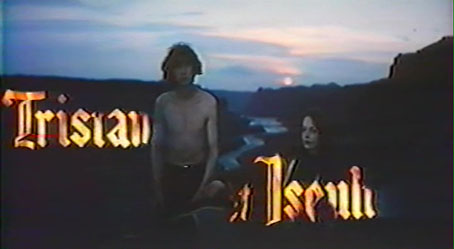
tristan.jpg

Tristan et Iseult (1972): a French feature film with a score by Christian Vander and three members of Magma. The soundtrack album was later incorporated into the Magma official discography as Ẁurdah Ïtah.

Moi y’en a vouloir des sous (1973): a French satire in which Magma make a brief appearance as a way-out rock group.


6: Lovecraftian Zeuhl

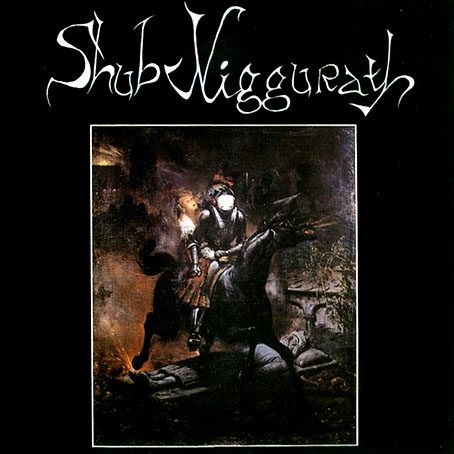
shub-niggurath.jpg

Les Morts Vont Vite (1986) by Shub Niggurath. Cover art: La Ballade de Lénore (1839) by Horace Vernet.

Liriïk Necronomicus Kanht (1978) by Magma.

Dagon (1980) by Eskaton.

La musique d’Erich Zann (1981) by Univers Zero (a Belgian group, originally named Necronomicon, which included former members of an earlier group named Arkham).

Yog-Sothoth (1986) by Shub Niggurath.


7: Comic Zeuhl

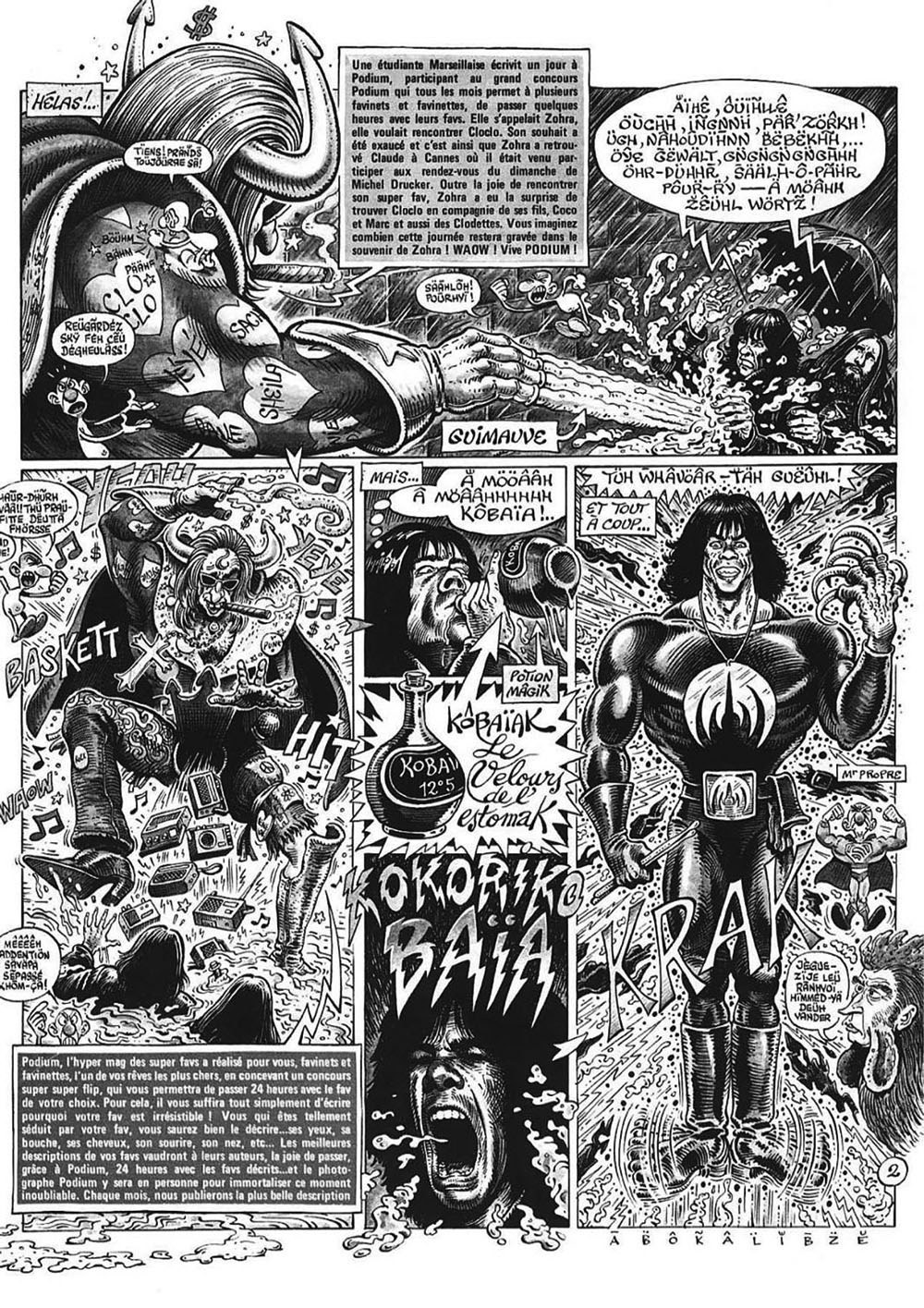
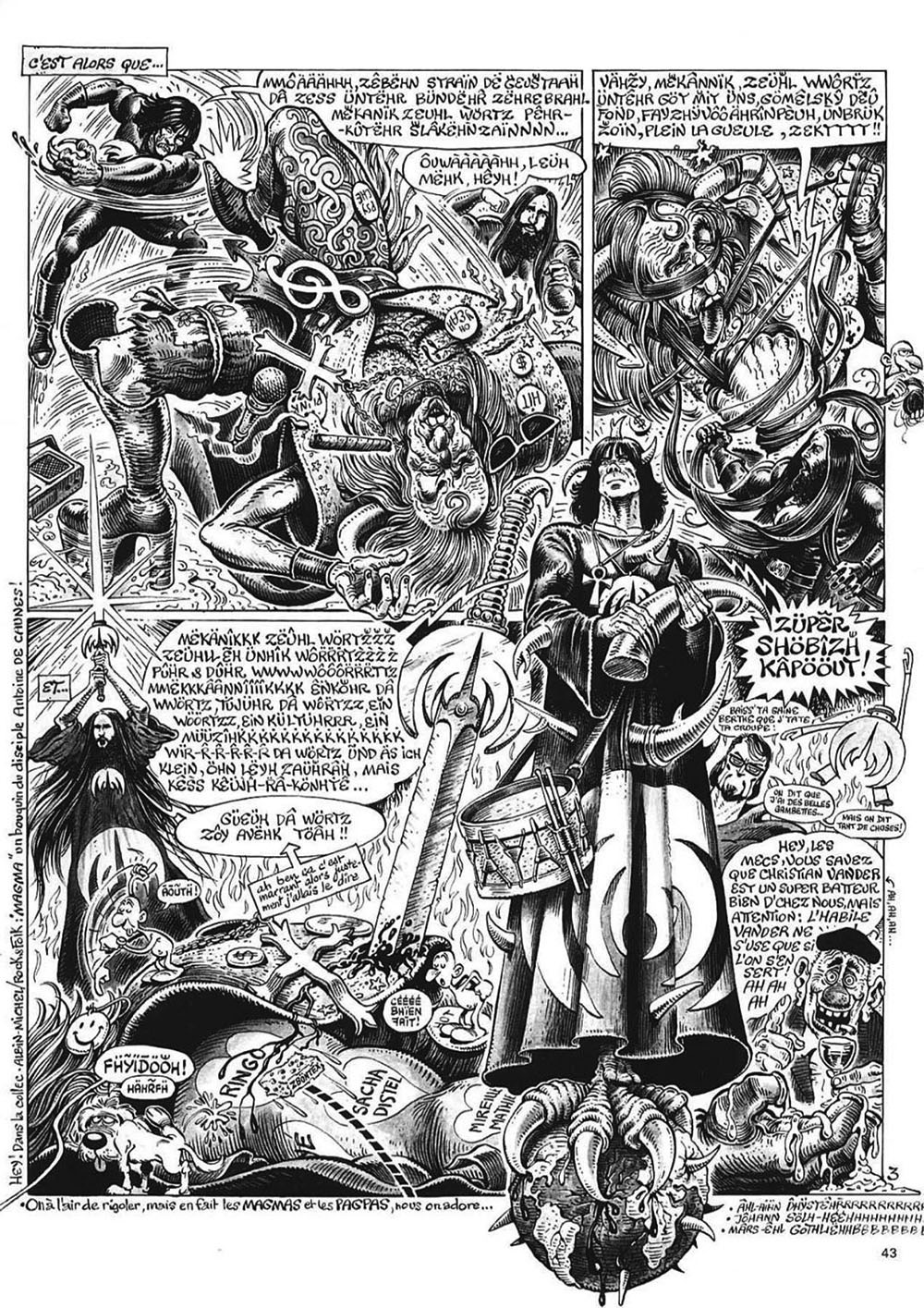
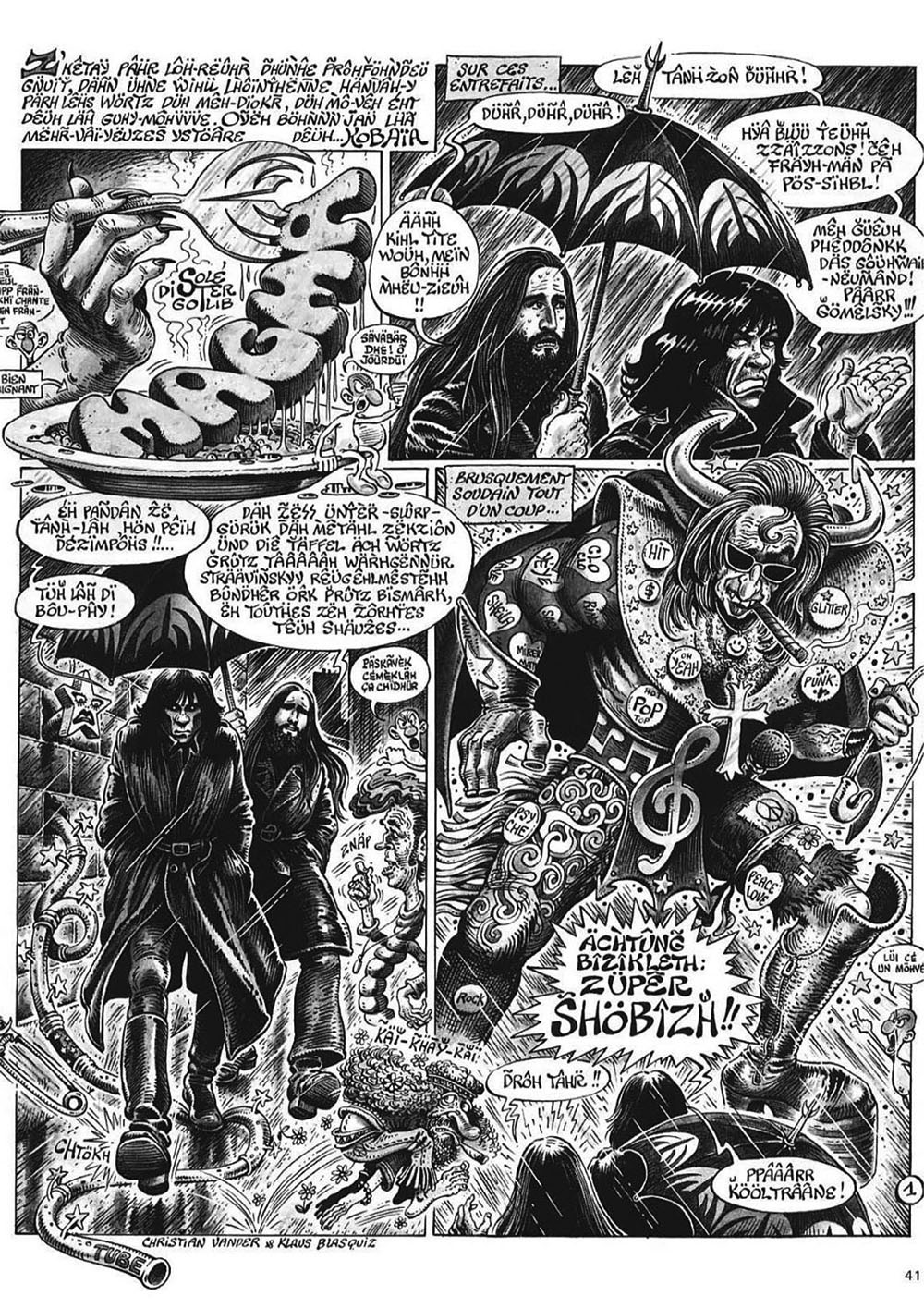
Magma’s Christian Vander and Klaus Blasquiz in a three-page comic strip from Pop & Rock & Colégram (1978), a collection of satirical music-themed pieces by Jean Solé, Alain Dister & Marcel Gotlib.

magma-comic1.jpg

magma-comic2.jpg

magma-comic3.jpg

Previously on { feuilleton }
Dune: some French connections
HR Giger album covers

Weekend links 806

wilson.jpg

Cover art by George Wilson for The Twilight Zone #45, September 1972. Via.

• At Public Domain Review: Thea Applebaum Licht on the history of art within art, or cabinets of curiosity and paintings within paintings.

• The final 2025 catalogue of lots for the After Dark: Gay Art and Culture online auction. Homoerotic art, photos, historic porn. etc.

• At Smithsonian Mag: See the “Mona Lisa of Illuminated Manuscripts,” a 600-Year-Old Bible covered in intricate illustrations.

It’s amazing, the number of people out there who love everything about queer life except for queer sex, who would prefer that sex and sexual orientation live in entirely different zip codes, that they exist as non-overlapping magisteria; it’s so much safer that way. Who wants gay sex polluting their enjoyment of the abstraction that is Being Gay?

That is what gay love is, now, in the collective imagination of American commerce: a set of identity relations projected onto bored and indifferent celebrities who will half-heartedly play along with the idea because doing so moves units and, anyway, what does it cost them? The more that sexual orientation slouches to the point of pure abstraction, the less effort it takes. Anyone and anything can be gay, now, because gay is just a set of pompous liberal cultural signifiers that have no earthly material relation to homosexuals.

“I miss when homoeroticism was erotic,” says Freddie deBoer. I’ve made similar complaints myself over the years. For some genuinely erotic homoeroticism, see the latest auction link above.

• At Ultrawolveunderthefullmoon: Illustrations for Edmund Weiss’s Bilderatlas der Sternenwelt.

• DJ Food’s latest harvestings of psychedelic ephemera may be seen here.

• At Dennis Cooper’s: Bruce Connor’s Day.

• The Strange World of…David Lynch.

• RIP Udo Kier and Tom Stoppard.

Atlanta Surrealist Group

Menergy (1981) by Patrick Cowley | Eros Arriving (1982) by Bill Nelson | Erotic City (“Make Love Not War Erotic City Come Alive”) (1984) by Prince & The Revolution

The art of Jean-Michel Nicollet

nicollet12.jpg

French artist Jean-Michel Nicollet isn’t really known as a comic artist but one of his strips appeared in the Métal Hurlant Lovecraft special in September, 1978, and was reprinted in the Heavy Metal Lovecraft special a year later. Nicollet’s three-page story, H.P.L., is a slight thing which you can read below but his paintings present more of the atmosphere of Lovecraft’s fictional worlds than many of the other strips in those issues, including the equally slight contribution from Moebius. Prior to this, Métal Hurlant had been using some of Nicollet’s paintings for cover art, as a result of which one of the same illustrations appeared on the cover of the very first issue of Heavy Metal magazine in 1977. The winged Lovecraft from his comic strip turned up again on the cover of a Robert Bloch story collection for French publisher Nouvelles Éditions Oswald (NéO) in 1980.

nicollet09.jpg

Nicollet seems to have retired now from cover work but during the 1970s and 80s he was a very prolific illustrator, especially for NéO. NooSFere has a gallery of his covers which are mostly for reprints of early 20th-century horror, fantasy and adventure tales, also a few detective stories. He seems to have enjoyed illustrating classic detective fiction (photos show him posing with a large Holmesian pipe) so there may well be more covers which aren’t included in the NooSFere list.

nicollet11.jpg

The selections I’ve chosen here match my own preferences for cosmic horror and weird fiction, and represent another attempt to look further afield for this type of illustration. French cover design can be unsympathetic to cover illustration, crowding the paintings with poor type choices and purposeless graphics. The uniform layouts of NéO treat the artwork with more respect.

nicollet13.jpg

nicollet14.jpg

Continue reading “The art of Jean-Michel Nicollet”

Lettering Lovecraft

font.jpg

A font design.

I’m still working on the new edition of my Lovecraft book, other projects permitting. The restoration gained a substantial boost last week when I finished re-lettering all the old comics pages, something I was initially reluctant to do given the amount of work involved. To date, there are 71 finished comics pages, 69 of which contain one or more lettered captions. This has never been a book where I’d want to use a typical US-style comics font, and with drawn pages you often want to avoid using book fonts which look too mechanical and precise when set among drawings. The thing to do—if I was going to do it at all—would be to design a font that would be a neater version of my hand-drawn lettering without looking so different that it changed the character of the pages. I’ve made fonts in the past but never taken the time to make one that would have to work this well.

There were two reasons for committing to all the effort. The first was that my lettering on the old pages had never been all that good to begin with. When I started work on The Haunter of the Dark in January 1986 the only comic strips I’d drawn had been jokey four-panel things while still at school. For the Lovecraft adaptations I was inventing my own method of comics adaptation from the ground up, paying little attention to prior examples beyond being vaguely inspired by Bryan Talbot’s first Luther Arkwright book, and the strips I enjoyed in Heavy Metal magazine. The Heavy Metal strips generally gave primacy to the art, with artwork that was more like illustration than production-line comic art. As with underground comics, most of the strips were also lettered by the artists themselves. The captions I drew on the second page of The Haunter of the Dark were pretty much invented on the spot, and since I tended to go along with these decisions once they’d been made, the first few pages established the look of all those that followed.

stone.jpg

The weathered reference page from A Book of Lettering.

The lettering style I ended up with was an awkward amalgam of three different designs: my own lower-case letters, plus two sets of capitals taken from a page in A Book of Lettering (1939) by Reynolds Stone, one of my mother’s books from art school that she gave me when I was about 10 years old. For some reason I thought it would be a good idea to use the Black Letter (or Gothic) capitals at the beginning of each new text box, with the uncials being used for any other capitals in the following sentences. By the time I’d finished the first story I was starting to think that using the Gothic caps was a bad idea, but rather than correct all the pages I stuck with the decision through The Call of Cthulhu and on into The Dunwich Horror. More of a problem for readers was that my lower-case letters were made with the same very thin pen I was using for most of the drawing, so they weren’t always easy to read. Once again, I stuck with the original decision.

All of which leads to the second reason for re-lettering the pages: if I was going to finish The Dunwich Horror then I’d have to letter any new pages in the old manner, hand-drawing boxes that matched the earlier pages. It was this factor that made me decide I’d much rather design a font based on my hand-drawn letters then apply this to all the pages in order to create a more satisfying and unified body of work.

BBOM-font.jpg

The Bumper Book of Magic font.

If you’re used to working with vector shapes—something I do almost every day—dropping shapes you’ve designed into a font-making application is easy enough. The time-consuming part—and the thing that makes me avoid creating more fonts of my own—is applying all the kerning settings to every single character. Kerning is the name for the process that causes all the letters to sit neatly beside each other without any unsightly gaps. When I was working on The Bumper Book of Magic I created a font based on the book’s magical alphabet so I could type out words to use on some of the pages. I didn’t bother tuning the kerning for this design since it was only being used for headings, not passages of text; any uneven spaces were adjusted manually. My Lovecraft font isn’t as finely tuned as those produced by professional font designers but it does function as intended, and is much more readable than its hand-drawn equivalent.

text1.jpg

Hand-drawn lettering from The Call of Cthulhu, 1987.

In digitising the letters I made a number of small adjustments. The upper-case letters are still rather uneven, being for the most part based on the uncial set from the lettering book. The lower-case letters have been tweaked a little so that the “t” isn’t so easily confused with the “e”, while all the loops on “g”, “j”, “p”, “q” and “y” now match each other. I’ve followed the original design by creating two sets of tails for these letters. The looped tails were an affectation that had a tendency to impinge on any letters running underneath which meant I had draw half loops to avoid having a tall letter or a capital collide with the loop above it. I’ve grown used to seeing the looped tails, and I wanted to keep them for the font design, so to evade collisions I made an extra set of letters with half tails which can be used at appropriate instances. In doing this I was pleased to see that some of the loops made ligature-style joins with the ascenders of letters like “h” or “k”. I can imagine typesetters frowning at the occasional overlaps of tails with ascenders but I don’t mind this so long as the readability of the sentence isn’t affected too much.

text2.jpg

The same passage re-lettered (and slightly rewritten), 2025.

The results of all the effort have been hugely beneficial. All the pages are now much neater and more readable yet they don’t look substantially different from the older printed versions. I also weeded out a couple of unforgivable spelling errors which had been sitting uncorrected for far too long. And I was able to get rid of the ruled lines that I used to end the captions where the hand-drawn letters didn’t quite fill out the box. One advantage of lettering a pre-existing story is that you can add extra words to the captions, or even rewrite whole sentences. In a few instances I’ve been able add in more of the adjectives that were omitted to save space, so that some of the pages now have more of Lovecraft’s text than they had before.

This week I’m back at work on The Dunwich Horror which is now proceeding without my having to worry about the lettering. Further updates will follow.

Elsewhere on { feuilleton }
The Lovecraft archive