Weekend links 232

hackett.jpg

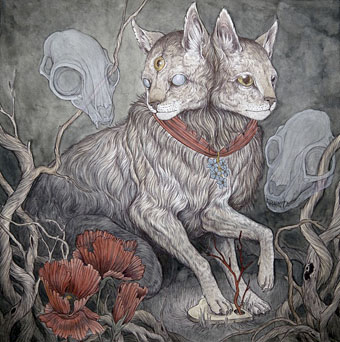
Forget Me Not (no date) by Caitlin Hackett.

• Halloween brings out the articles about weird fiction: “No one would now write of [HP Lovecraft] as the critic Edmund Wilson did, in the New Yorker in 1945: ‘The only real horror in most of these fictions is the horror of bad taste and bad art.’ The true horror was in fact that of judging Lovecraft by the standards of a defunct literary culture,” says John Gray. At The Atlantic there’s Jeff VanderMeer on the uncanny power of weird fiction, while Matt Seidel at The Millions explores the mysteries and attractions of Robert Aickman’s “strange stories”.

The Witching Hour is a video essay by Pam Grossman “examining the many different faces of witches in film”. Pam’s video opens with a scene from Suspiria; over at FACT, Goblin’s Claudio Simonetti talks about the creation of Suspiria‘s peerless soundtrack.

• David Rudkin and Alan Clarke’s uncanny television film, Penda’s Fen, is given a 40th anniversary screening later this month at the Horse Hospital, London. For those who can’t attend (and those who haven’t already read it) there’s my post from 2010.

Nabokov sees each day’s weather as a palette: “The weather this morning was soso: dullish, but warm, a boiled milk sky, with skin – but if you pushed it aside with a teaspoon, the sun was really nice, so I wore my white trousers”. He listens carefully to the sound of the rain, which his letters brilliantly orchestrate. He provides fantastic descriptions of puddles, some of which contain shifts in perspective reminiscent of the nearly cinematic transitions found in the novel he would write shortly afterwards, King, Queen, Knave:

“I looked out of the window and saw: a red-haired housepainter caught a mouse in his wheelbarrow and killed it with the stroke of a brush, then he tossed it in a puddle. The puddle reflected the dark-blue sky, quick black upsilons (reflections of swallows flying high) and the knees of a squatting child, who was attentively studying the little grey round corpse.”

Eric Naiman on Vladimir Nabokov’s Letters to Véra

• Occult rock: Peter Bebergal talks to Expanding Minds about his new book, Season of the Witch: How the Occult Saved Rock and Roll. There’s an hour-long film of Black Sabbath saving rock and roll in Paris, 1970, here.

• Mixes of the week: Burning The Existence, “a three-hour sonic exploration of the outer fringes of Goth”, and a horror soundtrack mix by Death Waltz.

• “‘Capital loathes the old,’ [Gareth] Evans said, ‘for anchoring us in the reality of the lived.'” Iain Sinclair on London’s lost cinemas.

Desirina Boskovich, co-editor of the Steampunk Users Manual, offers “7 Reasons Why Steampunk Is Totally ‘Now'”.

• Penguin has new collage covers by Julian House for The Cut-Up Trilogy by William Burroughs.

Hear a homemade synthesizer turn weather into music.

• Grotesque doodles by William Makepeace Thackeray.

full fathom five is Thom’s new blog.

Weird Dream (1976) by Harmonia 76 | Weird Caravan (1980) by Klaus Schulze | Weird Gear (1991) by Ultramarine
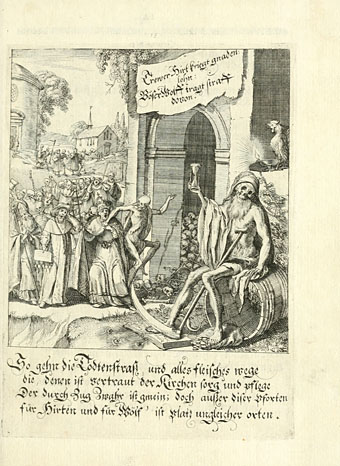
Meyer’s Todtengessängen

meyer01.jpg

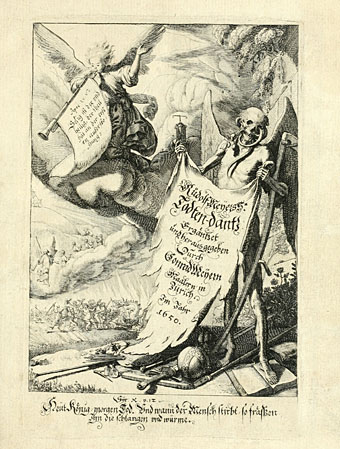
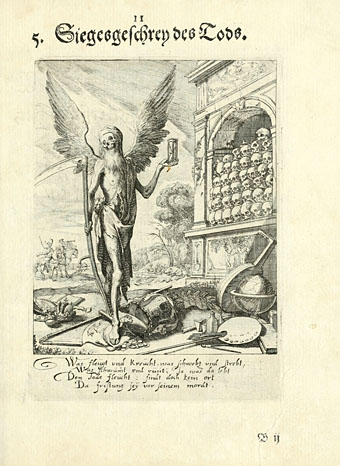
The traditional post for Día de los Muertos is a selection of illustrations by Conrad Meyer (1618–1689) for a Dance of Death from 1650. Unlike some earlier examples this book has a specific religious moral, opening with the expulsion from the Garden of Eden and ending with the triumph of Christ over Death. Given that, it’s surprising the degree of struggle in some of the illustrations, whether in the determination of the skeletal intruders to drag away the mortals they meet, or the reluctance and horror displayed by those mortals. Towards the end there are some details worthy of William Hogarth with revellers puking on unfortunate dogs. Browse the rest of the book here or download it here.

meyer02.jpg

meyer03.jpg

Continue reading “Meyer’s Todtengessängen”

Fuseli’s Nightmare

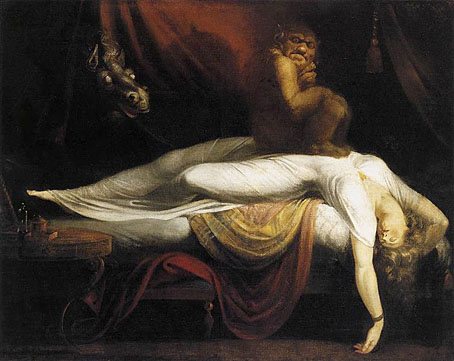
nightmare1.jpg

The Nightmare (1781).

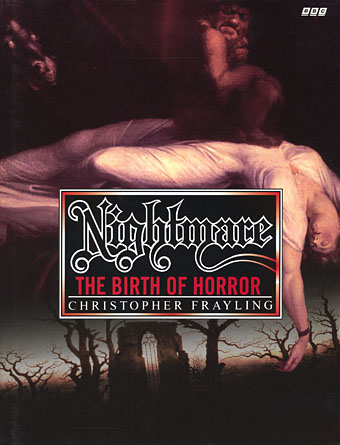
Christopher Frayling’s Nightmare: The Birth of Horror (1996) opens with a prologue examining Henry Fuseli’s most celebrated painting:

Henry Fuseli, who later wrote that “one of the most unexplored regions of art are dreams”, and who was said to have supped on raw pork chops specifically to induce his nightmare, made his name with this painting. And engraved versions, produced in 1782, 1783 and 1784, distributed the image across Europe, until Fuseli’s masterpiece became the way of visualising bad dreams.

Although The Nightmare was painted just before the Romantic craze in Western Europe—which revelled in peeling back the veneer of rational civilisation to reveal the “natural” being or the raw sensations beneath, sometimes through the gateway of dreams—it was well-known to the writers and painters of the early nineteenth century. One of them wrote that “it was Fuseli who made real and visible to us the vague and insubstantial phantoms which haunt like dim dreams the oppressed imagination”.

The Nightmare was fascinating—and scary—because it operated at so many different levels at once. It was set in the present (the stool and bedside table are “contemporary” in style), and it was concerned not so much with an individual’s nightmare—the usual subject-matter of dream paintings, often involving famous individuals and their prophecies—as with nightmares in general. It was not A Nightmare, but The Nightmare; not a vision but a sensation. This gave it a direct impact, unmediated by history, which put a lot of critics off.

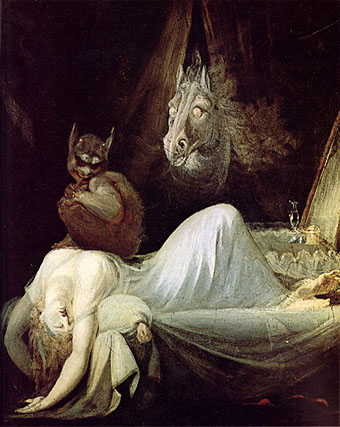
nightmare2.jpg

The Nightmare (1791).

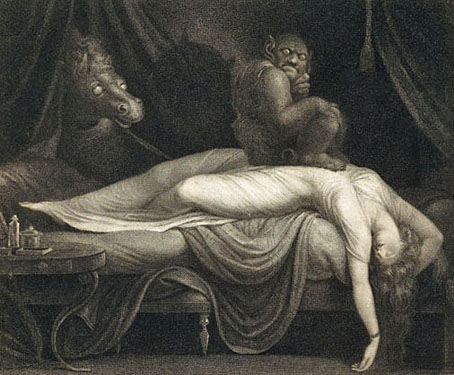
Later generations of critics have had no such problems, of course, nor have the legions of artists and cartoonists who’ve plagiarised and parodied this memorable scene. I had a vague notion of collecting some of the derivations but a quick image search reveals an endless profusion of squatting figures and thrusting horse heads. Wikipedia did provide two of the engraved versions, however. Of the two paintings above I’ve always preferred the later one: the incubus, or “mara” as Frayling calls it, looks more sinister, and the horse head has become an almost unavoidable sexual symbol. No wonder that Siegmund Freud had a copy of The Nightmare on the wall of his waiting room.

nightmare3.jpg

Engraving by Thomas Burke (1783).

Continue reading “Fuseli’s Nightmare”

Nightmare: The Birth of Horror

frayling.jpg

Nightmare: The Birth of Horror (1996): Dracula (and Louis Jourdan again).

Christopher Frayling, like Marina Warner, is that rare thing: a British academic with an enthusiasm for popular culture, and a talent for communicating that enthusiasm to a general audience. Both writers also have more than a passing interest in the darker areas of fiction, whether that means Gothic romance or contemporary horror films. One of Frayling’s first books was The Vampyre: Lord Ruthven To Count Dracula (1978); the same year he contributed an excellent Lovecraft essay, Dreams of Dead Names, to George Hay’s The Necronomicon: The Book of Dead Names, one of the two Necronomica published in the 1970s (three if you count Giger’s art book). Frayling’s essay, and another by Angela Carter are among the highlights in Hay’s curious volume.

frayling2.jpg

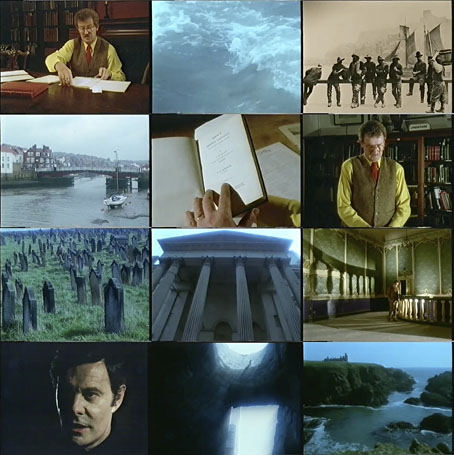
Nightmare: The Birth of Horror was both a book and a television series produced by the BBC in 1996. The year before, Frayling had written and presented Strange Landscape, an examination of the culture and philosophy of the Middle Ages. Nightmare looks at the creation of four British horror novels: Frankenstein, Dracula, The Strange Case of Dr Jekyll and Mr Hyde, and The Hound of the Baskervilles. Two of these stories—Frankenstein and Jekyll and Hyde—were famously the product of nightmares so Frayling stretches this coincidence to include the others; I’m still not sure the case is properly made for Bram Stoker but it hardly matters.

Another aspect of Frayling’s thesis is the extraordinary power of these works, all of which have had a lasting global influence. The book is naturally more detailed than the TV series, delving into the fiction for the subtexts that contribute to the power of the stories. The Dracula section is a tour-de-force of condensed information, sketching a history of fictional vampires then looking at Stoker’s career as assistant to actor Henry Irving, a man whose outsize personality was an inspiration for that of the vampiric count. There’s also some interesting speculation about Stoker’s sexuality; a letter he wrote to Walt Whitman is (to borrow a phrase from Sherlock Holmes)…suggestive. The rest of the chapter looks in detail at the slow creation of the novel. In the TV series what you lose in the literary specifics you gain in visits to some of the locations mentioned in the story, so for Dracula that means windswept Whitby on the Yorkshire coast. The same applies to the other novels: for Frankenstein there’s a visit to the Villa Diodati on the shore of Lake Geneva, a journey to Dartmoor for Hound of the Baskervilles, and so on.

I was hoping the whole series might be on YouTube but for the moment the Frankenstein episode seems to be missing. The Dracula one is the best quality, the other two look a little rough. In the meantime copies of the book may still be found at reasonable prices.

Nightmare: The Birth of HorrorDracula | Dr Jekyll & Mr Hyde | The Hound of the Baskervilles

Count Dracula

dracula1.jpg

Vampires: if they’ve never been very scarce they didn’t used to be quite so commonplace. The fortunes of Dracula, on the other hand, seem to have diminished in recent years following a centenary peak in 1997. The surprising spike of interest in the 1970s might explain the BBC’s decision to adapt Bram Stoker’s novel for television in 1977. I often used to wonder why the corporation didn’t turn some of its costume-drama prowess to more generic material. Anthony Trollope’s The Pallisers sprawled over 26 50-minute episodes in 1974 but you’d search in vain for an adaptation of HG Wells. The closest was the yearly Ghost Story for Christmas most of which were period pieces.

dracula2.jpg

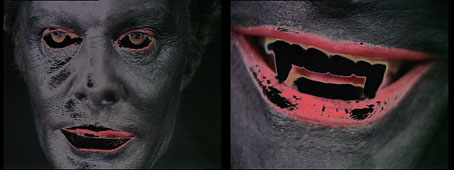
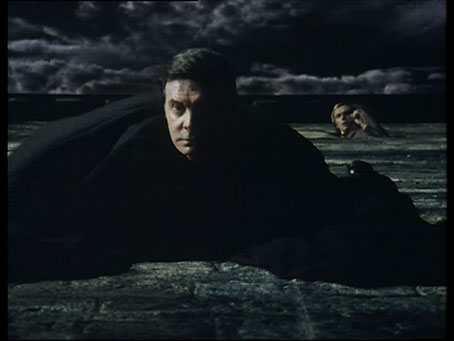
Louis Jourdan bares his fangs.

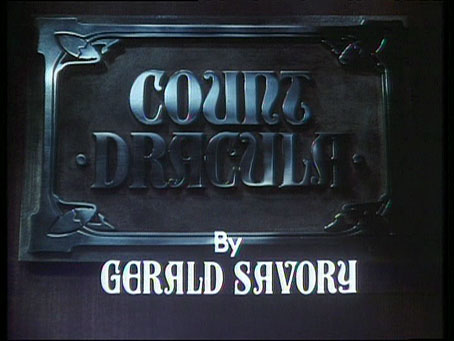
Gerald Savory’s Count Dracula, subtitled “A Gothic Romance”, was broadcast a few days before Christmas, 1977, in a single 150-minute programme. Repeat screenings broke the drama into two episodes so it’s often referred to as a mini-series. I’d read Dracula for the first time earlier that year so it was a thrill to see the story presented in such a faithful manner after all the liberties taken by feature films and derivative dramas. Count Dracula may seem primitive when compared to lavish Hollywood productions but 37 years later it’s still the adaptation that most closely adheres to Stoker’s epistolary novel.

dracula3.jpg

Louis Jourdan and Bosco Hogan (Jonathan Harker).

Continue reading “Count Dracula”