Weekend links 293

meyohas.jpg

Red Petals by Sarah Meyohas.

• “For MMoB, I want it to be like a [Werner] Herzog movie, so at our concerts the people on stage aren’t necessarily people who are named. We’re trying to create an entity that is beyond music and relates visually and sonically with everything in a way that’s different.” Randall Dunn talks to Simona Mantarlian and Daniel Jones about the Master Musicians of Bukkake and his production work for other artists.

• “Is reel-to-reel tape the new vinyl?” asks FACT mag. It’s certainly better than cassette tape (if less convenient) but it was always a niche format for albums, even in the 1970s. Rene Chun made a similar argument for an emerging trend last October. Those expensive machines do look tempting… Early adopters should start collecting here before prices rise.

Airwaves: Songs From The Sirens is a new release of spectral audio transmissions by A Year In The Country: “…a gathering of scattered signals plucked from the ether, cryptograms that wander amongst the airwaves…” Physical versions come with the usual plethora of monochrome artefacts.

A vivid memory to his friends, Litvinoff was one of those people whose performance was their life. His most lasting achievement was the profound influence he had on Performance – the hallucinatory film directed by Nic Roeg and Donald Cammell, and starring Mick Jagger, which captured the London of the late 1960s, merging pop stardom, violent criminality, illegal drugs, gender-blurring, the occult and Jorge Luis Borges.

Jon Savage on David Litvinoff

• Virgin Prunes “are THE #1 most underrated group of the post-punk era” says Richard Metzger. I’d say that honour goes to The Passage but the Virgin Prunes were unique even if they’re too often dismissed as a freak footnote in the U2 story.

Magic, Witches & Devils in the Early Modern World is a free exhibition at the John Rylands Library, Manchester, that will run until August 2016. Related: “John Dee painting originally had circle of human skulls, x-ray imaging reveals.”

• “What I’m seeing now is an awful lot of people just following things. We tried to find our own thing and ask, ‘What else is there?'” Charles Hayward on the past and present of post-punk band This Heat.

• “I’ve never been tempted to write anything that was not essentially nightmarish.” Thomas Ligotti in a comprehensive profile (originally run in 2010) at Dennis Cooper’s blog.

• Mixes of the week: An introduction to Stereolab by Jon Dale, and Silent Radio Transmission Jan 2016 by SilentServant.

• Kicked Toward Saintliness: Max Nelson on the dark erotics of Jean Genet’s Our Lady of the Flowers.

• Reverse Engineering: Danny Hyde on Coil, Backwards and NIN.

Fuck Yeah! Anna von Hausswolff

Harry Flowers (1970) by Jack Nitzsche | Flowers In The Air (1970) by Sally Eaton | Darkness: Flowers Must Die (1972) by Ash Ra Tempel

The art of Willem Arondeus, 1894–1943

arondeus06.jpg

Salomé (1916). “Your eyes are like black holes burned by torches in a Tyrian tapestry.”

This marvellous Salomé design is by a Dutch artist I hadn’t heard of before, Willem Arondeus, who might have had a longer career had his life not been cut short by a Nazi firing squad in 1943. Arondeus helped with the Dutch Resistance during the war, forging papers for fleeing Jews, and bombing the Amsterdam Public Records Office. His work warrants a place in the ever-popular gay artists archive not for any homoerotic qualities but because Arondeus was open about his homosexuality for his entire life, his last message to the world being “Let it be known that homosexuals are not cowards.” The work that can be seen online is in that hybrid style that you see a lot from the 1920s on, a blending of the prevalent Art Deco manner with some hangover from the Art Nouveau period. The Salomé piece is particularly good for the way it entangles Salomé’s figure in writhing foliage and clustered architecture.

arondeus05.jpg

De Elfenzetel (1919).

arondeus04.jpg

Stamp advert (1923).

Continue reading “The art of Willem Arondeus, 1894–1943”

Weekend links 292

splendor.jpg

The Black Sun from Splendor Solis (1582) “attributed to the legendary figure Salomon Trismosin”.

Topic B predominates this week. The Black Sun of alchemy was the first thing I thought of when the title of David Bowie’s final album was announced late last year. The Black Sun symbolises the nigredo stage of the alchemical process when putrefaction or decomposition takes place; Carl Jung in Psychology and Alchemy equates the nigredo with the dark night of the soul. At the time I didn’t seriously think that the Bowie of 2015 would have had this in mind as a primary reference even though the Bowie of the early 1970s was immersed in Golden Dawn occultism, the Kabbalah, and a reader of Pauwels & Bergier’s The Morning of the Magicians, a book that informs the lyrics of the Hunky Dory album, and which contains a great deal of discussion about alchemy and other esoteric matters. And yet… Of all the outfits that Bowie might have worn in his final video the one that he chose for Lazarus is a match for the one he wore during the Station To Station Kabbalah-drawing photo session. At Sol Ascendans Alex Sumner and his commenters explored this twilight zone.

Back in the sublunary world, Jonathan Barnbrook’s cut-out sleeve design for the Blackstar album gained additional resonance this week: the black star as the hole that’s left when a more familiar star has been removed from its setting. Hindsight also makes poignant the observation that this was the only album without a picture of the artist on the cover. Elsewhere there were speculations about the title being a reference to Black Star by Elvis Presley (who shared a birthday with Bowie) or a term from oncology, two suggestions that fit so well they’re hard to ignore.

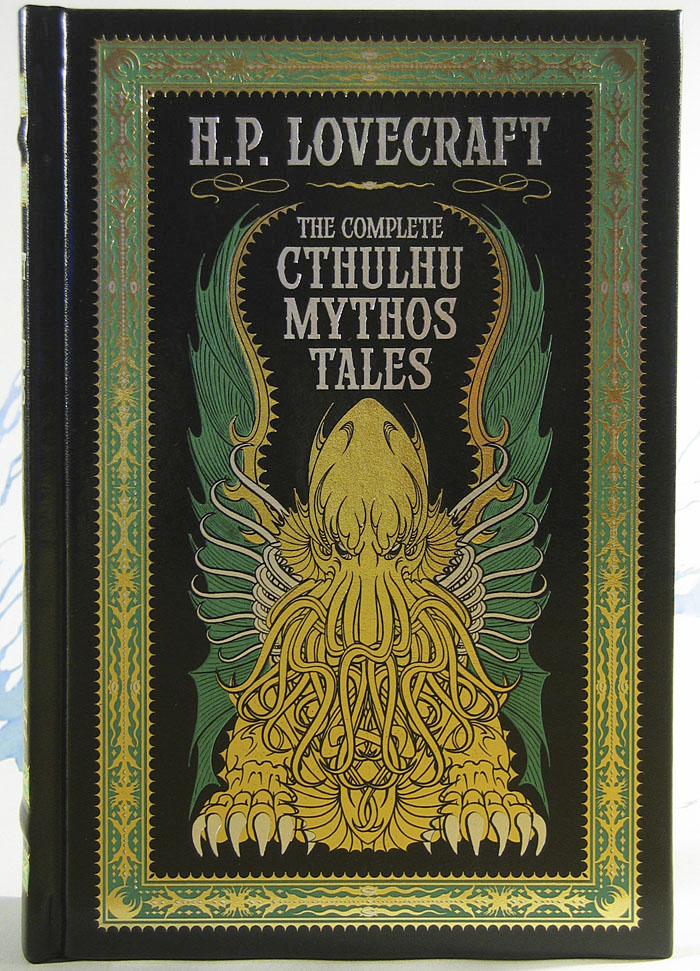
He began to develop a science fiction sensibility, drawing on the New Wave SF movement of Michael Moorcock and JG Ballard, other writers who used the genre such as Anthony Burgess and William S Burroughs, and an older fantasy tradition found in HP Lovecraft and Edward Bulwer-Lytton (whose The Coming Race is name-checked in Oh! You Pretty Things, 1971).

Jake Arnott on David Bowie’s literary influences

• In something-else-also-happened-this-week news, 2016 may see the long-awaited release of Andrei Tarkovsky’s films on Region B Blu-ray. Fingers crossed.

• International posters for The Man Who Fell To Earth. More Nicolas Roeg (and more shiny discs): Eureka (1983) will receive a Blu-ray release in March.

• Cracking the codes of Leena Krohn: Peter Bebergal on the Finnish writer of strange stories.

• Anthems for the Moon: Jason Heller examines David Bowie’s connections to science fiction.

• From 2013: Jon Savage on Bowie’s first meeting with William Burroughs in 1974.

• Mixes of the week: Bowie-esque Vol 1 and Bowie-esque Vol 2 by Abigail Ward.

David Bowie Doing Shit: a Tumblr

“Heroes” (1978) by Blondie & Robert Fripp | “Heroes” (2003) by King Crimson | “Helden” (2007) by Apocalyptica ft. Till Lindemann

Weekend links 291

brooks.jpg

Femme avec des fleurs (1912) by Romaine Brooks.

• This week’s anniversary of the Charlie Hebdo murders was noted by some of those who defended the magazine last year. “I don’t write about Charlie Hebdo in France,” said Robert McLiam Wilson, “they have plenty of people who can do that. But I’ll do almost anything I’m asked to do in the anglosphere. Why? Well, two reasons. Because none of the other Charlie people bothers to do it. And because, really, that’s where all the bullshit lives.” A year on, and the bullshit-mongers seem to have fallen silent, what with knee-jerk outrage being a short-lived affair, and the Bataclan massacre having demolished one of the main criticisms, namely that the magazine wouldn’t have been attacked if the artists and writers had shown some respect. “[Charlie Hebdo‘s] real crime is not racism but its challenge to what has become an unbreakable commandment for many contemporary liberals: ‘Thou shalt not cause offence’,” says Kenan Malik. At Literary Hub Adam Gopnik explored the same issue in a foreword for Stéphane Charbonnier’s Open Letter.

• “Immersion in the past is no escape from the present, but it supplies a constant corrective to the narrative spit out daily by media, advertising, politics, and all those other forces that attempt to mould our thinking like jelly in a pan.” Luc Sante (again) talking to Simone Wolff about his books, Low Life and The Other Paris.

• “…throwing a lot of money behind vintage equipment? Well, that’s just a millionaire’s game. Dave Grohl can do that, but David Bowie doesn’t care about that. Just stick a microphone in front of him and he’s really happy.” Tony Visconti talking to Allyson McCabe about the music business and producing Bowie.

• “Nico Hogg’s photography captures the transformation of urban London,” says George Kafka who talks to Nico about a collection of his work, Sign & Signifiers, which I designed late last year.

• At Strange Flowers: James Conway talks to Cassandra Langer about her recent biography of artist Romaine Brooks (1874–1970).

• At Dangerous Minds: Godzilla, girls and guns, the science-fiction art of Noriyoshi Ohrai. There’s more at Pinterest.

• Mixes of the week: XLR8R Podcast 420 by Andrey Pushkarev, and Secret Thirteen Mix 172 by Julien Bayle.

• Alan Moore’s magnum opus, Jerusalem, will be published later this year. Gosh Comics has a teaser.

New York Public Library makes 180,000 high-res images available online.

Prints of darkness: macabre vintage posters

Scarfolk Television is coming

Godzilla (1977) by Blue Öyster Cult | Giant Robot / Machines in the Modern City / Godzilla (1992) by Praxis | Free-Bass (Godzillatron Cush) (1995) by Axiom Funk

Vintage Mishima

vintagemishima01.jpg

Penguin reprinted several volumes of Mishima in their Vintage line in 2010 with covers designed by Anna Crone. Seven of the covers are shown here although there are one or two more, not all of them available as large images. (Not for the first time I wonder why major publishers don’t make their new covers available at a decent size.) I’d have been wary of using Hokusai’s waves on a Mishima cover but colouring the water red makes it readable as a wave of blood.

vintagemishima02.jpg

vintagemishima03.jpg

Continue reading “Vintage Mishima”