The mirror of Narcissus

nocq1.jpg

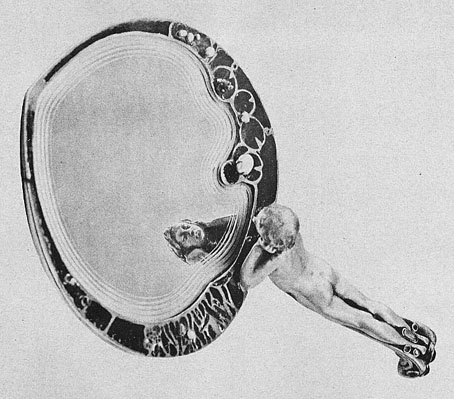
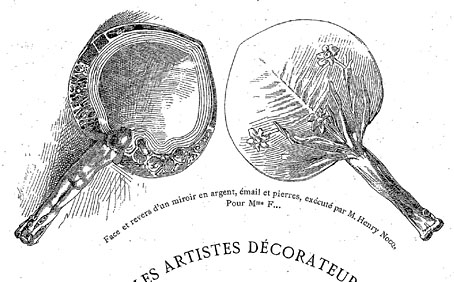
Browsing another fin de siècle magazine—Revue des Arts Décoratifs for 1897—turned up this design for a hand-mirror by Henri Nocq (or Henry as they also name him). Illustrational design was a common feature of the Art Nouveau period, and Nocq’s Narcissus-themed mirror is an ingenious confection complete with etched pond ripples, pearl-flowered lily pads, and even (though you can barely see it here) a carnelian frog. The body of the mirror was silver with narcissus flowers moulded into the obverse side. I’m surprised I haven’t come across this object before which makes me think it may not have survived. (Unless you know better…) As for Henri Nocq, there’s far more attention devoted to the portrait of him by Toulouse-Lautrec (also 1897) than there is to the designer.

nocq2.jpg

pye.jpg

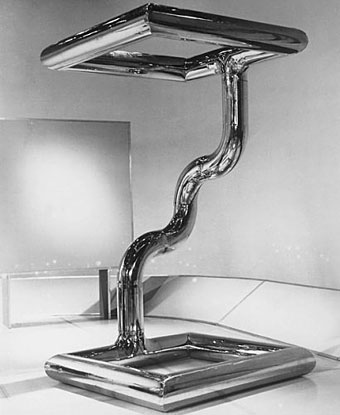
For a more contemporary sculptural take on the theme, there’s Narcissus, an early work from 1969 by British artist William Pye. See his website for other work including some gorgeous water sculptures.

Previously on { feuilleton }
Le Baiser de Narcisse
Reflections of Narcissus
Narcissus

Weekend links 57

softmachine.jpg

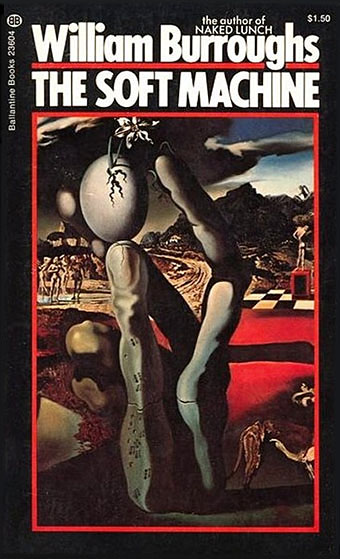
A 1973 Ballantine edition of William Burroughs’ novel with a cover illustration from Metamorphosis of Narcissus (1937) by Salvador Dalí. Via the Burroughs Book Covers archive.

The Sel Publishing House, Turkey, published a new translation of The Soft Machine by William Burroughs in January, an edition which is now under investigation by the Istanbul Prosecutor’s Office following a report by the (deep breath) Prime Ministry’s Council for Protecting Minors from Explicit Publications. The Council lodged a number of complaints, among them assertions of “lacking unity in its subject matter,” “incompliance with narrative unity,” “using slang and colloquial terms” and “the application of a fragmented narrative style.” Details here. Does Turkey still want to join the EU? Because this kind of persistently illiberal bullshit (see the earlier treatment of Orhan Pamuk) isn’t helping their case at all.

• Related to the above: Evan J Peterson reads Allen Ginsberg’s Howl in the toilet of a Seattle gay bar; Ginsberg himself reads Kaddish and other works here.

• More illiberal bullshit: LGBT activists arrested during royal wedding; Queer Resistance released a statement about the arrests. MPs, activists and trade unionists condemn new attacks on the right to protest.

The Dorian Gray That Wilde Would Want Us To Read. Harvard University Press publishes an uncensored and annotated edition of Wilde’s novel. Kudos for using Caravaggio’s Narcissus on the cover.

One weekend in late 1967, they all decamped to a hotel suite in California’s Ojai Valley for a brainstorming session. Amid clouds of pot smoke, they talked all weekend with the tape recorder running. [Jack] Nicholson then took the tapes and turned the conversations into a screenplay; according to Rafelson, he structured it while on LSD.

Revisiting The Monkees’ psychedelic movie, Head.

kraftwerkicons.jpg

Kraftwerk icons for Windows and Mac OS X by Dave Brasgalla.

Robert Louis Stevenson gets his revenge on sneaky literary agent – 120 years later. And Michael Moorcock imagines tales of unseen Mervyn Peake pictures.

Painting doesn’t look so good on the web. It looks better in life. Sculpture looks better in life. What you end up with is just a reproduction. Whereas with film or with sound or with poetry, you get the deep primary experience not the secondary experience. The web delivers those primary experiences very well.

Ubuweb’s Kenneth Goldsmith interviewed.

• Arkhonia’s Another Dispatch in a World of Multiple Veils is now a free download.

• The story of This Is The Sea: An interview with Mike Scott of The Waterboys.

Fairlight: The Rolls Royce of synthesizers.

Haeckel Clock, a free app for the iPad.

What is totalitarian art?

Porpoise Song (1968) by The Monkees | Hope For Happiness (1969) by The Soft Machine | I’m A Believer (1974) by Robert Wyatt.

Deutsche Kunst und Dekoration #21

dkd21-01.jpg

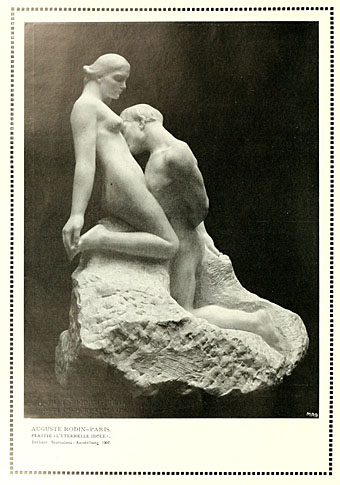
The Eternal Idol by Auguste Rodin.

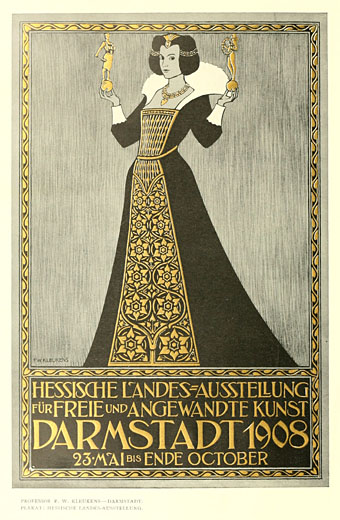
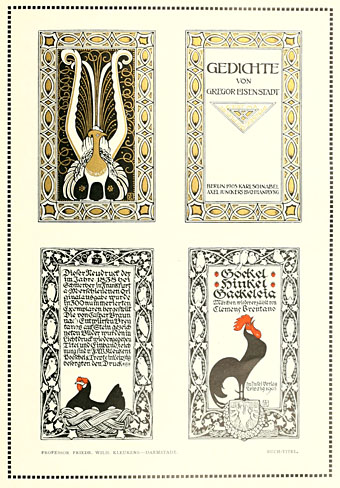
Continuing the delve into back numbers of Deutsche Kunst und Dekoration, the German periodical of art and decoration. Volume 21 covers the period from October 1907 to March 1908, and the highlight of this issue is a feature on the black-and-white art of Julius Klinger, an artist whose drawings appeared regularly in Jugend.

If you’ve been following this series it’s worth noting that volume 3 which is missing from the collection at the Internet Archive can be found at the University of Heidelberg. I would have featured it here but it turns out to be surprisingly dull compared to the other early editions. As before, anyone wishing to see these samples in greater detail is advised to download the entire number at the Internet Archive. There’ll be more DK&D next week.

dkd21-02.jpg

dkd21-03.jpg

Continue reading “Deutsche Kunst und Dekoration #21”

Deutsche Kunst und Dekoration #20

dkd20-01.jpg

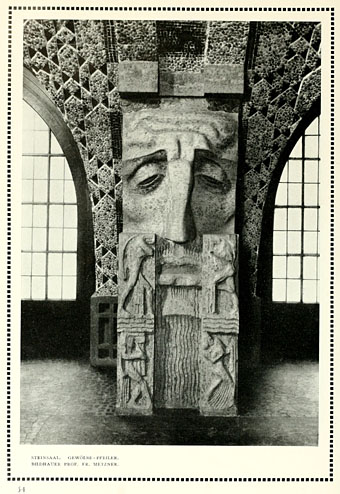
More sculptual work by Franz Metzner for a building whose interiors are in that ponderous Teutonic style which resembles designs for a fantasy film.

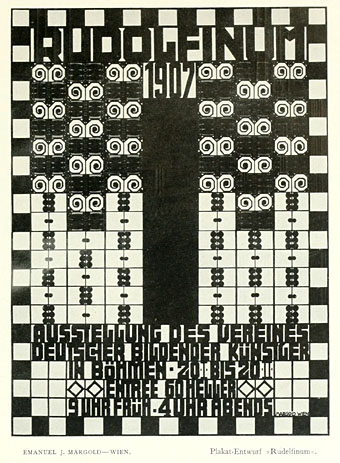
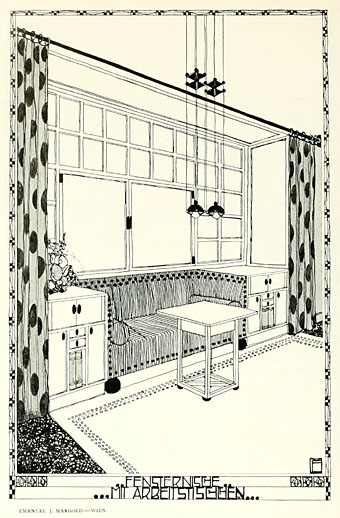
Continuing the delve into back numbers of Deutsche Kunst und Dekoration, the German periodical of art and decoration. Volume 20 covers the period from April 1907 to September 1907, and this is where this fascinating publication starts to run out of steam. A few more editions are worth looking at but after volume 25 the content collapses into the same welter of excessively dull genre painting and academic work that was plaguing Jugend magazine at this time. More about that later.

As usual, anyone wishing to see these samples in greater detail is advised to download the entire number at the Internet Archive. There’ll be more DK&D next week.

dkd20-02.jpg

dkd20-03.jpg

Continue reading “Deutsche Kunst und Dekoration #20”

Deutsche Kunst und Dekoration #19

dkd19-01.jpg

Water Serpents I by Gustav Klimt. See it in colour here.

Continuing the delve into back numbers of Deutsche Kunst und Dekoration, the German periodical of art and decoration. Yesterday’s post concerned a Klimt-like artist, today volume 19, covering the period from October 1906 to March 1907, includes further work by Klimt himself. The Wiener Werkstätte, with whom Klimt was affiliated, continues to dominate these editions, understandably so when the architecture, art and design being produced by the group was some of the most advanced in the world. In addition to the customary graphics and interiors there’s also some examples of dress design by Gustav Klimt which I hadn’t seen before.

As usual, anyone wishing to see these samples in greater detail is advised to download the entire number at the Internet Archive. There’ll be more DK&D next week.

dkd19-02.jpg

A portrait of Margaret Stonborough-Wittgenstein by Gustav Klimt. The sitter was the sister of Ludwig Wittgenstein.

dkd19-03.jpg

A poster by Koloman Moser.

Continue reading “Deutsche Kunst und Dekoration #19”