Weekend links 165

smart.jpg

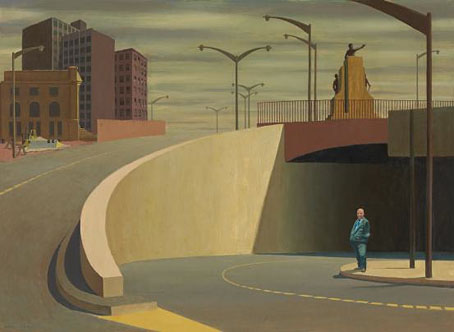
Cahill Expressway (1962) by Jeffrey Smart whose death was announced this week.

• “Russell Beale is awed by the beauty of the Roman silver Warren Cup showing men and youths making love, so startlingly erotic that the first time the British Museum was offered it in the 1950s, it turned it down flat. In 1999, when it came on the market again, the museum had to raise £1.8m to acquire it. ‘It’s just heaven, isn’t it?’ Russell Beale sighs.” Maev Kennedy on Same-Sex Desire and Gender Identity, a new exhibition at the British Museum.

• “The route to Tyburn Tree snaked through Holborn and St Giles, then went along Tyburn Road, today’s Oxford Street. It was dense with spectators.” Matthew Beaumont on the tiny memorial (Google view) for the estimated 50,000 people executed in the centre of London.

• Mixes of the Week: Bottoms Up by Staffan Lindberg for BUTT Magazine, and Electronic Ladyland, a collection of women with synths (and other instruments) from Bitch Media.

But the very thing that is valuable about diversity – the cultural and ideological clashes that it brings about – is precisely what many people fear. And that fear takes two forms. On the one hand you have the little Englander sentiment: immigration is undermining the national fabric, eroding our sense of British or Englishness, turning our cities into little Lahores or mini-Kingstons. And on the other you have the multicultural argument: that diversity is good, but it has to be policed to minimise the clashes and conflicts and frictions that diversity brings in its wake. And so we have to restrain speech, and police the giving of offence.

Kenan Malik on The Pleasures of Pluralism, The Pain of Offence.

L’Empire des Lumières is a great title for Anne Billson’s blog about Belgium. Tram-wire covered streets are one of my favourite things.

The Outer Church, 28 musical artists with an uncanny temperament collected by Joseph Stannard for Front & Follow.

His Heavy Heart, a film by Alan Moore & Mitch Jenkins, is looking for Kickstarter funding.

• In 1997 Quentin Crisp wrote about “Ten Wonderful Gangster Movies” for Neon magazine.

Raymond Chandler’s The Big Sleep redesigned for the Penguin Design Award, 2013.

• Out on DVD/Blu-Ray this month: The Curtis Harrington Short Film Collection.

A billion-pixel panoramic view of the planet Mars from the Curiosity Rover.

• In the TLS: Robert Craft on Stravinsky and The Rite of Spring.

Typophonic: Album cover typography.

The Owl Theremin is a thing.

LSD ABC

Spring Rounds From The Rite Of Spring (1975) by Alice Coltrane | Revenge Of The Black Regent (1999) by Add N To (X) | Sore Ga Afrirampo (2010) by Afrirampo
Nocturnes

night1.jpg

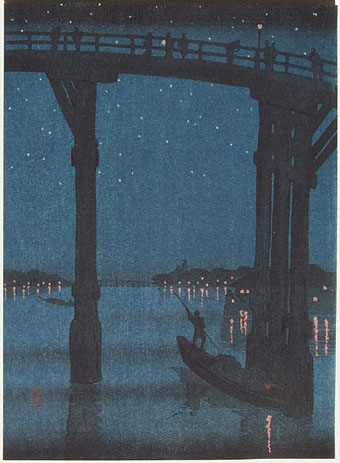
KOBAYASHI, Eijiro–”A High Bridge by Night”

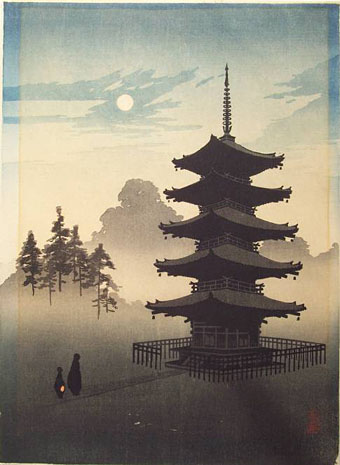
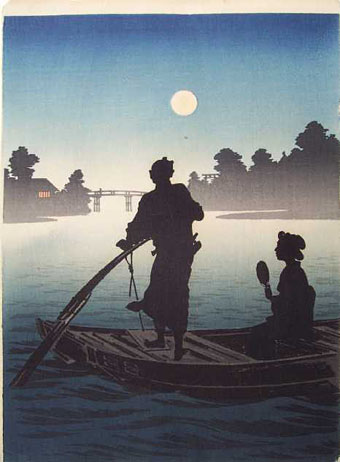
The Night Scenes is a series of 21 woodcut prints by Japanese artists published by Hasegawa/Nishinomiya in the early 1900s. Gorgeous work, and apparently popular enough for the prints to have been reissued many times since. These examples are from a print-selling site with several extensive galleries of 20th-century Japanese prints.

The High Bridge at Night struck me for being remarkably similar to Whistler’s famous painting of Old Battersea Bridge, Nocturne: Blue and Gold (1872–75). Whistler, of course, developed his mature style through looking at Japanese prints, and the Tate’s note for his painting says it may have been derived from a Hiroshige print. The Hiroshige looks nothing like the High Bridge at Night, however; was the latter based on an earlier print which Whistler had seen, or is the High Bridge (which post-dates Whistler’s painting) an example of the Japanese stealing back some of their influence from the West?

(Thanks to Wood s Lot for the prints tip.)

night2.jpg

ARAI, Yoshimune II–”A Ferry Boat”

night3.jpg

KOBAYASHI, Eijiro–”A Pagoda by Moonlight”

Continue reading “Nocturnes”

Sidney Sime paintings

sime1.jpg

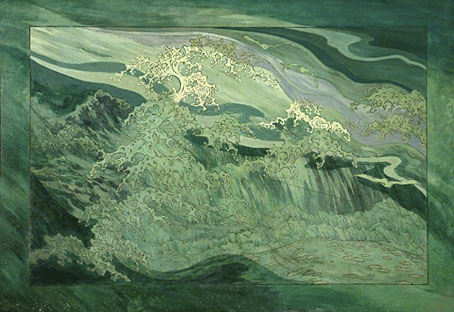
Painting of Waves.

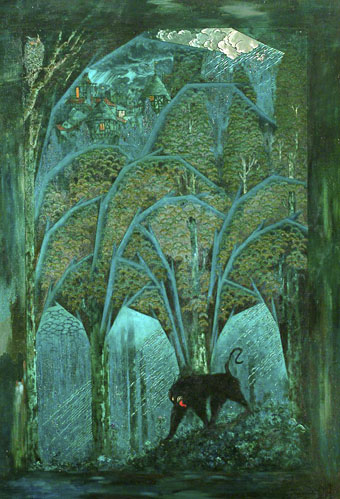
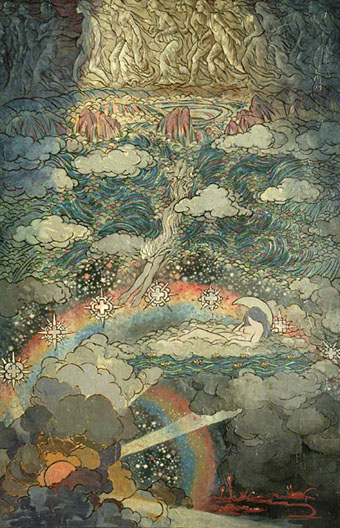
Most of the art for which Sidney Sime (1867–1941) is remembered is black-and-white or monochrome work, in part because he was engaged as a magazine illustrator at a time prior to widespread colour reproduction. All of the reproductions in Sidney Sime—Master of the Mysterious (1980) by Simon Heneage & Henry Ford are monochrome, so it’s good to find 188 of Sime’s paintings on the BBC’s British paintings website. Or it’s good up to a point… Most of the works are small oil sketches and landscape studies which would be of little interest if the artist’s name was unfamiliar. The examples here are some of the few which match the unique imagination which people still value today. Heneage & Ford refer to his painting throughout his career but it seems the best of that work must now be in private collections. All of the paintings on the BBC pages are from the collection at the Sidney H. Sime Memorial Gallery at Worplesdon near Guildford, Surrey, where there’s more of his art to be seen.

sime2.jpg

Woods and Dark Animals.

sime3.jpg

Illustrative.

Continue reading “Sidney Sime paintings”

Weekend links 164

panikanova.jpg

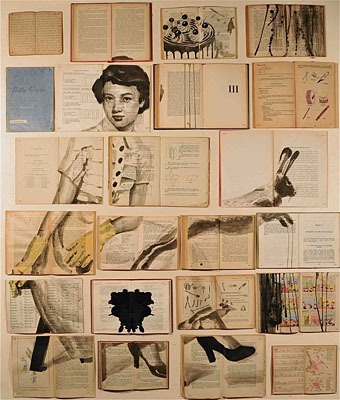
Ekaterina Panikanova paints on books.

Back in 2009 I bought a book of Art Nouveau illustration and design which contained an intriguing drawing by an Austrian artist, Franz Wacik (1883–1938). At the time there was little of Wacik’s other work online so I was delighted by the latest post at 50 Watts which showcases a selection of his illustrations. Wacik was a contemporary of British illustrator Sidney Sime, and both artists share a predilection for the comic and the grotesque.

• “The outlawing of drugs such as cannabis, MDMA and LSD amounts to the ‘the worst case of scientific censorship since the Catholic Church banned the works of Copernicus and Galileo’, the former Government drugs advisor Professor David Nutt has claimed.” Related: “At last, the edifice of drugs prohibition is starting to crumble,” says Amanda Feilding.

Alan Johnston on “A gay island community created by Italy’s Fascists”, and at Another Nickel In The Machine a report on The Gateways Club, one of the few meeting places for London’s lesbians in the 1960s. Alex Park wonders “Why Is Gay Porn So Popular In Pakistan?”

• If it’s June 16th then it must be Bloomsday: The Irish Times has a page of Joyce-related links to mark the anniversary. This year there’s a global reading of Ulysses taking place.

• “Now we can concentrate on album number nine,” says Kraftwerk’s Ralf Hutter. The rest of us will impatiently count the passing seconds.

• After a week in which George Orwell’s Nineteen Eighty-Four has seen an increase in sales, a look at its cover designs old and new.

Aleister Crowley: Wandering the Waste is a 144-page graphic biography of the Great Beast by Martin Hayes and RH Stewart.

Barnbrook Design‘s presentation of Taxidermy, a book by Alexis Turner, is rather splendid.

• FACT Mix 386 is a great collection of dubby grooves compiled by Young Echo.

• From 2001: Michael Wood in the LRB reviewing Apocalypse Now Redux.

• The first recording of Allen Ginsberg reading Howl.

Rejoyce (1967) by Jefferson Airplane | The Sensual World (1989) by Kate Bush | Molly Bloom (2013) by Alan Munde

Lewandowski at Fortune

fortune37.jpg

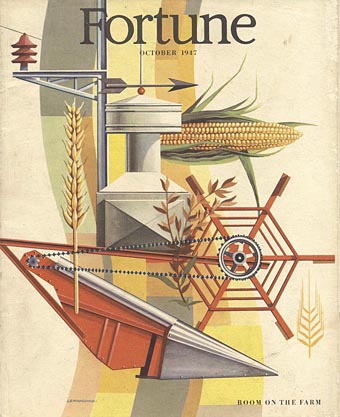
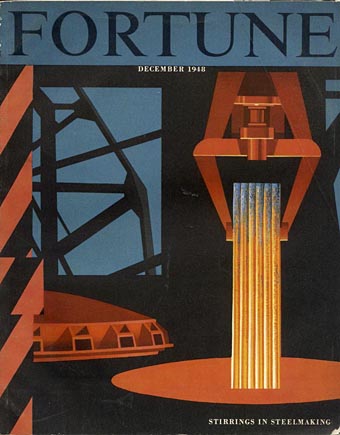
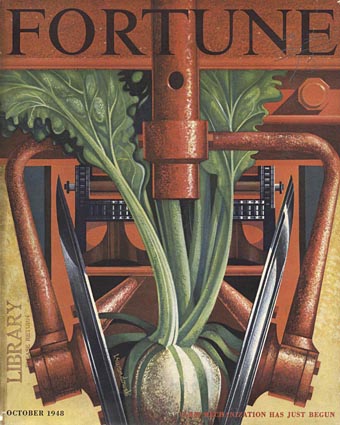
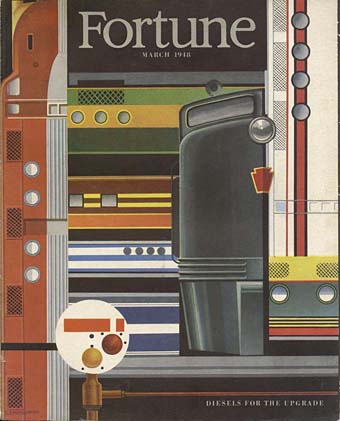
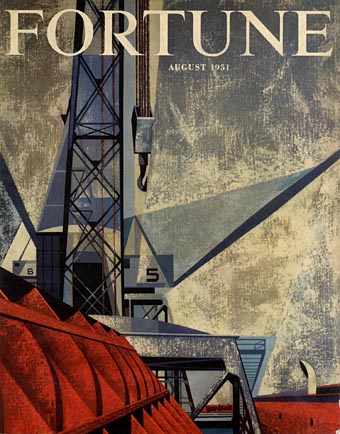
It’s a shame that artist Edmund Lewandowski (1914–1998) didn’t do more covers for Fortune magazine as I enjoy this combination of painting and design a great deal. The cover above shows how well you can illustrate a farming theme without resort to a view of rolling fields and busy tractors; the cover for March 1948 would still be a great solution today, diesel trains presented as an almost abstract pattern. Lewandowski is remembered today for his Precisionist paintings many of which continue the industrial theme.

fortune38.jpg

fortune39.jpg

fortune40.jpg

fortune41.jpg

Previously on { feuilleton }
Petruccelli at Fortune
Fortune illustrators
Fortune in June