Weekend links 634

chaffee.jpg

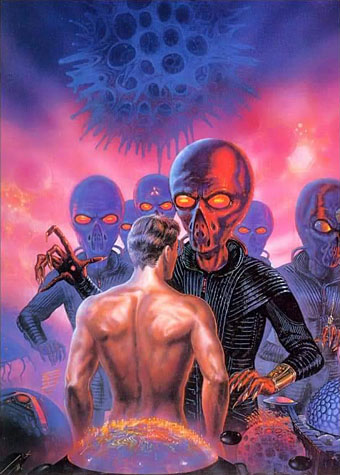
Cover for Amazing Stories, October 1992, by Douglas Chaffee. A delightfully strange painting that suggests a no doubt unintentional homoerotic scenario when divorced from its original context. Via.

• “The most curious aspect of Buckminster Fuller’s arc is that he became a counterculture icon while entrenched in the very things that betrayed its spirit.” Pradeep Niroula on Buckminster Fuller (again) whose self-importance is deflated in a new biography, Inventor of the Future: The Visionary Life of Buckminster Fuller by Alec Nevala-Lee.

• “I love both King Diamond and Weird Al. Lana del Rey and Anna von Hausswolff. Golden age illustrations of elegantly levitating fairies in a lush vibrant summer garden and the gothic charcoal rendering of melancholy moth singed by a candle’s flame.” S. Elizabeth talking to Luna Luna Magazine about inspirations and The Art of Darkness.

• “I’m writing this from my office which has a record player, currently about eight thousand records, and just one CD.” Vinyl-head Jonny Trunk talking to Norman Records about the finding and releasing of rare music.

A painter’s brilliant achievements, the unique traits of his particular style, rest on an abiding substratum of coordinated specialized crafts, a body of knowledge and practice safeguarded by a tradition upheld by the guilds. Beneath the glimmer and foreground of art history, like a powerful underground river, flow the patterns of training and production developed in the crafts. Art history is centred on individual talents romantically bringing forth their creations on their own, out of nothing. Craft is collective and anonymous. Someone had to weave the pieces of cloth that form the giant canvas of Las Meninas. Someone had to sew them together so that the stitching would show as little as possible. Someone had to cut and to assemble the struts for its support and then nail to them a canvas which in fact is not of the highest quality. It seems that Velázquez enjoyed the roughness of a surface that favoured his subtle veils and ambiguities. The loose manner of painting developed in Venice is linked to the quality of the pigments that could be purchased there, as well as to the oil medium and the thick, porous quality of a cloth that allowed subtle veils and ambiguities that are impossible to achieve on the surface of a wood panel.

Antonio Muñoz Molina on the materiality of painting, and its highest expression in the art of Diego Velázquez

• The films of Japanese director Kinuyo Tanaka are criminally overlooked, says James Balmont.

Winners of the Nature TTL Photographer of the Year 2022.

• From 2012: The Disappeared by Salman Rushdie.

• At Dennis Cooper’s: Standish Lawder Day.

• New music: Octopus by Sunfear.

Come Sta, La Luna (1974) by Can | Fontana Di Luna (1978) by Michael Rother | La Luna En Tu Mirada (2003) by Ry Cooder & Manuel Galbán

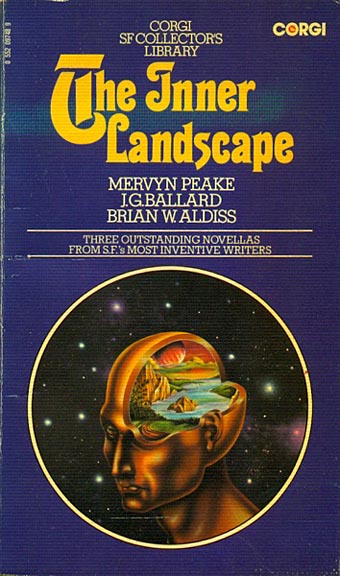
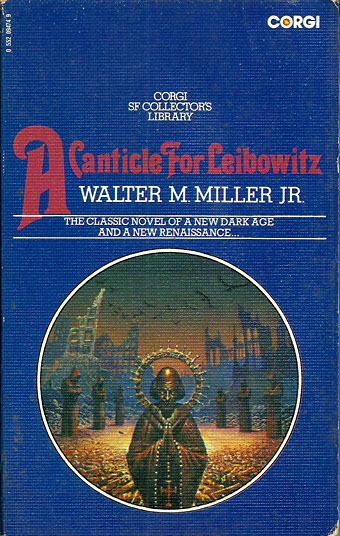
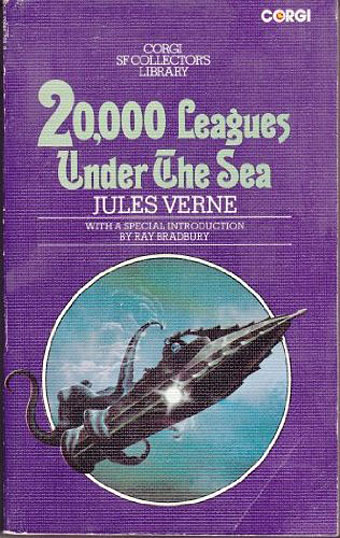
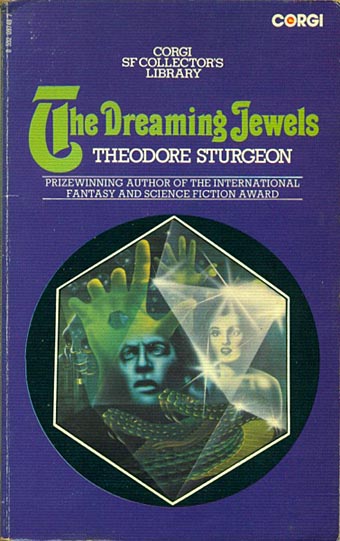
Corgi SF Collector’s Library

corgi02.jpg

Cover artist unknown.

“Here, for the connoisseur, for the devotee of the SF genre, and for those who like their reading to combine excitement with good writing, is the Corgi SF Collector’s Library – a series that brings, in a uniform edition, many of the Greats of SF – standard classics, contemporary prizewinners, and controversial fiction, fantasy, and fact…”

Only in the 1970s would you find a line of SF paperbacks with all the titles set in Thalia, a Victorian typeface revived by the post-psychedelia predilection for any design that was florid and ornate. Corgi’s SF Collector’s Library was published from 1973 to 1976, arriving just as my reading was moving from child-friendly SF to adult fiction. Consequently, I bought quite a few of these books, and still own a couple of them. The design was uniform but with a surprising amount of variation for such a short-lived series. The background colours ranged from deep blue to purple, while the card used for the covers was regular paperback stock for some of the titles with the majority using textured card, a treatment that further distinguished the series from its rivals on the bookshelves.

corgi12.jpg

Art by Joe Petagno.

Looking at these covers again I’ve been wondering if the idea of framing the artwork in a circle was borrowed from Penguin’s run of HG Wells reprints from 1967. Corgi had done something similar the same year with their Ray Bradbury series (all with art by Bruce Pennington) but the Wells editions went through several reprints, and the SF Collector’s Library follows their form even down to allowing the artwork to break the frame.

corgi03.jpg

Art by Bruce Pennington.

The samples here are a small selection of the series which featured a fair representation of British SF illustrators of the time. None of the artists were credited on the covers, however—a poor showing on the part of Corgi—so a few of them remain unidentified.

corgi01.jpg

Art by Tony Roberts.

corgi05.jpg

Cover artist unknown.

Continue reading “Corgi SF Collector’s Library”

Weekend links 633

fuller.jpg

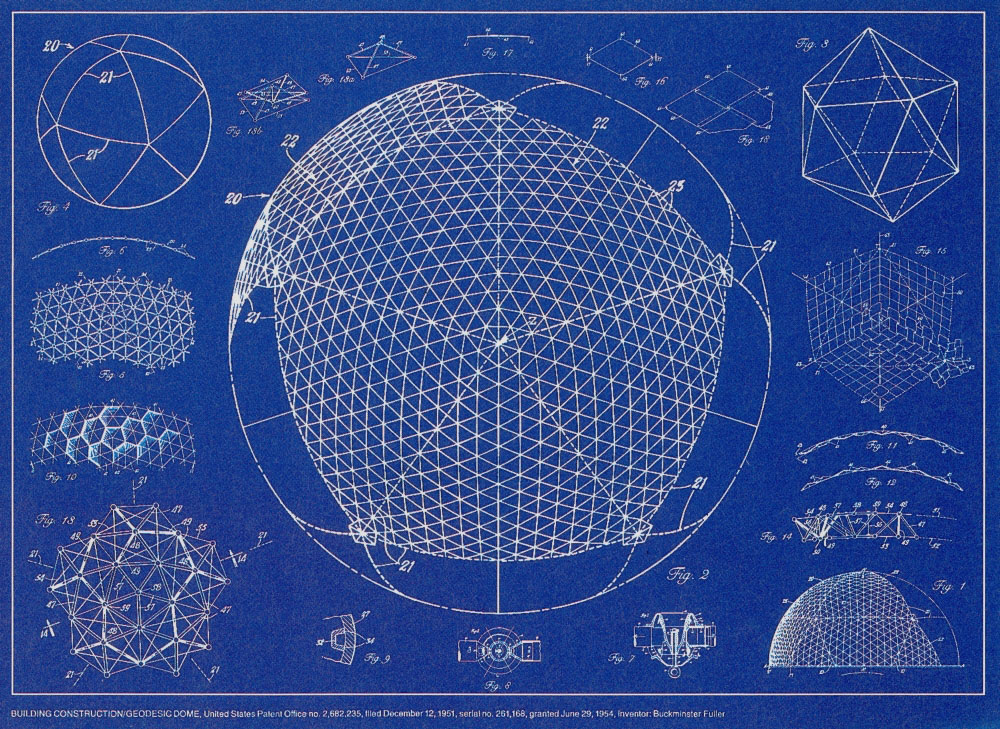
A blueprint by Buckminster Fuller for the first geodesic dome.

• “That opening sequence on the train, it’s got the dynamic of a wonderful pop video. It’s one of the world’s greatest actors who understood the power of small gestures.” Jah Wobble enthusing about Roy Budd, Michael Caine, and Mike Hodges’ baleful revenge drama, Get Carter.

• One of the BFI’s Halloween releases this year will be The Ballad of Tam Lin (1971), the blu-ray debut of a cult film that blends folk horror with modish melodrama. Direction by Roddy McDowall, music by Pentangle, and a cast that includes Ava Gardner and Ian McShane.

• New from A Year In The Country: Cathode Ray And Celluloid Hinterlands, a book exploring weird film and TV, not all of which is from the over-ploughed folk-horror furrows.

The whole notion of the Diggers kind of evolved out of the anarchism thing. And also there was more than a little social conscience. Because, by now, in ‘66, people started to come to the Haight Ashbury from all over. And that was when, in ‘66, it was still, really… Before the “Summer of Love,” it really was the Summer of Love. The “Summer of Love” [in 1967] was Life Magazine’s version. That’s what created the homeless on the streets and all that shit, because so many people came with absolutely no understanding of what they were about.

The role of the Diggers in this period was an outlaw, romantic, feed-the-people, anarchist, ‘Who’s in charge?—YOU ARE’, that kind of thing. That line in Apocalypse Now when he gets to the bridge and the little string of Christmas lights are hanging and he gets to one guy who’s guarding one end of the bridge and he says, Who’s in charge here? He says, I thought you were. And that’s so true. That is so true. Then Grogan, whenever anyone would ask, where’s Emmett Grogan… anyone could say “I’m Emmett Grogan.” So you could deflect a lot of shit.

Harvey Korspan of the San Francisco Diggers talking to Jay Babcock in another installment of Jay’s verbal history of the hippie anarchists

• “Buckminster Fuller patented the geodesic dome on June 29, 1954. Two decades later, it was everywhere in science fiction.”

• At Dennis Cooper’s: Spotlight on…Harry Mathews Tlooth (1966).

• Mix of the week: A mix for The Wire by Cheri Knight.

• Steven Heller’s font of the month is Bangel.

Tam Lin (1969) by Fairport Convention | Young Tambling (1971) by Anne Briggs | Tamlane (2016) by Dylan Carlson & Coleman Grey

Weekend links 632

klee.jpg

Der Goldfisch (1925) by Paul Klee.

• At Wormwoodiana: Mark Valentine compiles a list of finest quality old English yarns. I’m currently working my way through The Count of Monte Cristo, a novel which is a yarn-and-a-half, so I appreciate this one.

• Mixes of the week: Salve Mix for Art of Beatz by The Ephemeral Man, and Mwandishi: Wandering Spirit Songs from Aquarium Drunkard.

• Coming in October from Strange Attractor: Death Lines: Walking London’s Horror History by Lauren Jane Barnett.

• At Dangerous Minds: A teaser for Lost Futures: A Film About Mark Fisher with music by Mark Stewart.

• New music: Niemandsland by Pyrolator, and Full Circle by The Advisory Circle.

• At Spoon & Tamago: Obsessive painter of goldfish, Riusuke Fukahori.

• Old music: Silberland: Kosmische Musik Vol 1 (1972-1986).

• At Dennis Cooper’s: Gig #103: Judy Nylon.

• RIP David Warner.

Future Days (1973) by Can | Future Ghosts (1982) by Chrome | Failed Future (2011) by Master Musicians Of Bukkake

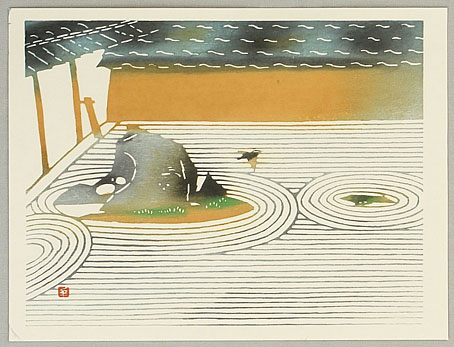
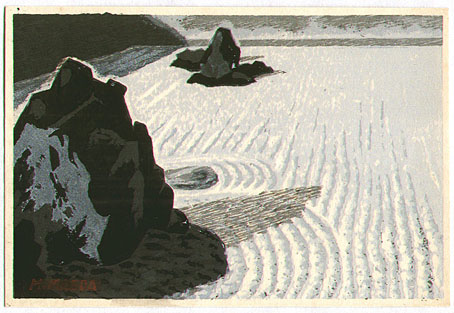
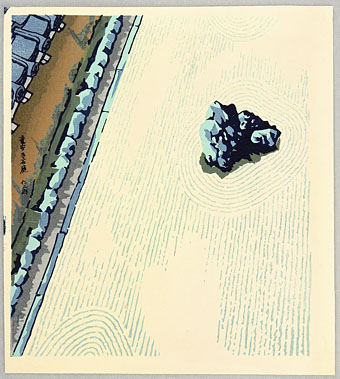
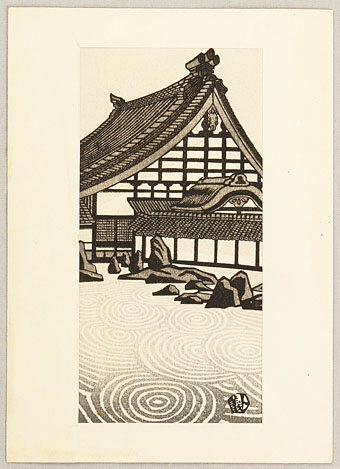
Nineteen views of Zen gardens

zengarden11.jpg

Miniature Zen Garden (1895) by Unknown.

zengarden08.jpg

Ryoan-ji Temple (Mid-20th C.) by Inagaki Toshijiro.

zengarden12.jpg

Ryoan-ji Temple (Mid-20th C.) by Maeda Masao.

zengarden16.jpg

Stone Garden of Ryoan-ji Temple (c.1950s) by Ito Nisaburo.

zengarden07.jpg

Ryoan-ji Zen Garden (c.1950s) by Okuyama Gihachiro.

Continue reading “Nineteen views of Zen gardens”