Weekend links 653

clarke.jpg

The Snow Queen (1916) by Harry Clarke.

• “…blogging remains my favourite format precisely because the writing so rarely feels like labour. Liberated from the need to pitch an idea or wield credentials, blogging—for a professional writer—frees you up to address topics outside your perceived expertise. It feels like a leisure activity because it’s leisurely—a ramble across fields of culture and knowledge, during which you sneak short cuts and trespass into areas you are not meant to go. A post doesn’t have to have a destination, a point. You can bundle or concatenate several different topics, push into adjacency things that don’t obviously or naturally belong together—like oddments inside a Cornell box. You can start somewhere and end up somewhere completely different, without any obligation to tie things up neatly.” Simon Reynolds reflecting on 20 years of the blogging thing, and neatly summarising the attractions of the medium. For some of us, anyway…

• At Smithsonian Magazine: “Structural colour was first documented in the 17th century, in peacock feathers, but it is only since the invention of the electron microscope, in the 1930s, that we have known how it works.” Tomas Weber on Andrew Parker’s nanotechnology developments which are creating some of the brightest hues in the world.

• “Bring back the Cailleach, beloved Scottish goddess of winter, shaking out the snow on the land. Bring back Mother Holda, with her wild geese and her snowflakes landing on the tongue like a gift from the sky…” Yvonne Aburrow would like to see the festival of Yule returned to its anarchic origins.

Merry Christmas Mr Lawrence, an extract from a recent audience-less concert by Ryuichi Sakamoto which he says is liable to be his last.

• At Unquiet Things: S. Elizabeth posts some of the pictures that couldn’t be fitted into The Art of Darkness.

• Mix of the week: A Tribute to Manuel Göttsching by Low Light Mixes.

• It’s the end of December so it must be time for Alan Bennett’s diary.

• RIP Mike Hodges.

Vale Berfrois.

Snow (1985) by Takashi Toyoda | Snowfall (2000) by Haruomi Hosono | Snowfall (2005) by Robin Guthrie & Harold Budd

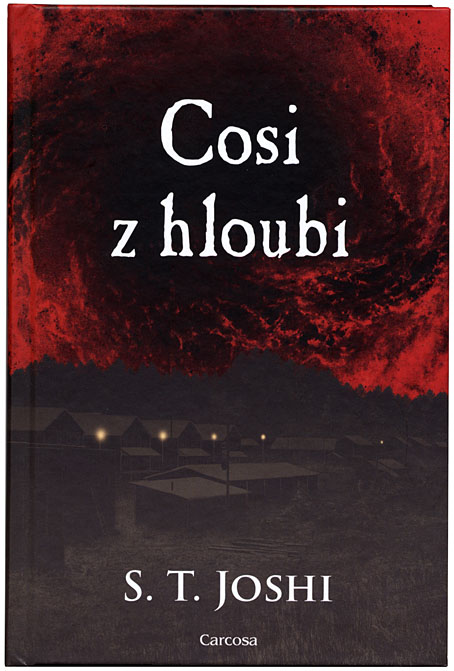
The Ravening Deep

ravening.jpg

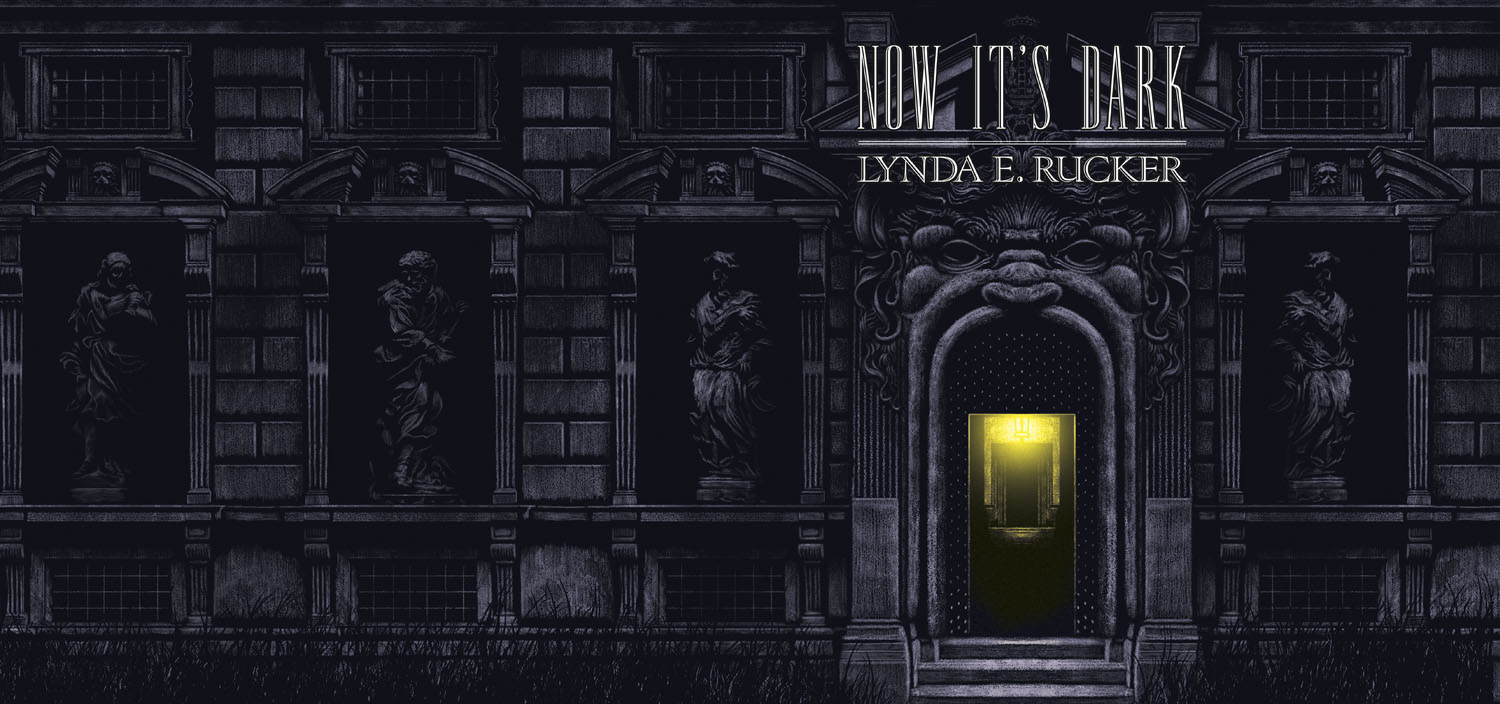
Presenting my latest cover in the Arkham Horror spin-off series for Aconyte. The Lovecraftian menace this time is oceanic:

When dissolute fisherman Abel Davenport discovers an ancient temple in the deep ocean, he falls under the influence of a long dead god. In his attempts to restore the god’s cult, Abel unleashes a plague of twisted doppelgangers on Arkham. Horrified by the consequences, Davenport realizes that he alone cannot stop the monsters from resurrecting the Ancient One.

Sometimes the only way to end one cult is to start another… Teaming up with redeemed cultist Diana Stanley and notorious thief Ruby Standish is the first step. The second is convincing Carl Sanford, the powerful leader of Arkham’s Silver Twilight Lodge, to join their cause. Together they might be the only hope of averting a cataclysmic eldritch invasion.

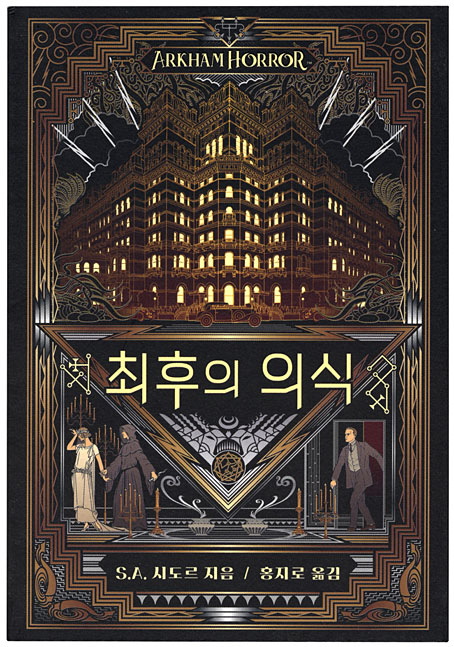
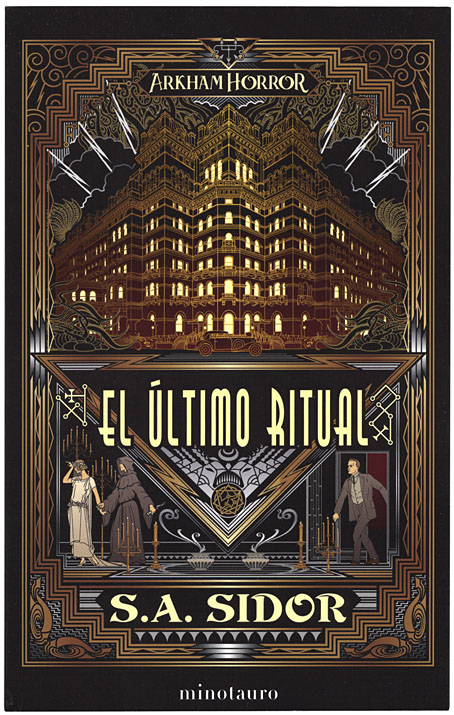
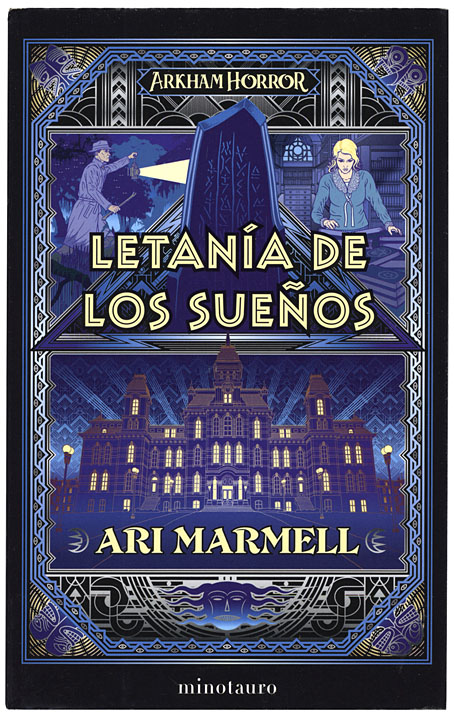
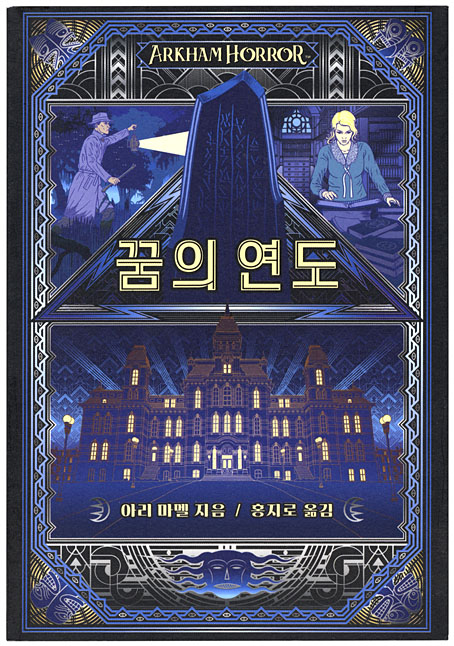
This was more of a challenge than some of my earlier covers for the series since there was a lot to fit in. That star shape in the background is an interlaced pattern like the sigil underneath the author’s name but it ended up being covered over, something I wasn’t intending but I always let these things grow organically rather than try and force everything into a preconceived design. As before, everything has been put together in Illustrator which presents its own challenges when you’re trying to achieve Photoshop-style airbrush effects. I like the way Illustrator restricts the graphical treatment to shapes, colours and hard edges, something which is perfect for these Deco-style covers. With Photoshop there’s always the temptation to start making everything more like a painting. A few of the aquatic details are adapted from Maurice Verneuil’s L’Animal dans la Decoration (1897), a book for artists showing stylised treatments of various animals and plants. I’ve had Verneuil’s book for a while as a Dover reprint but never found much use for it before.

This isn’t the last cover I’ve done this year, there’s another one still to be made public but it won’t be ready now until early in the new year. The Ravening Deep will be published in August 2023.

Elsewhere on { feuilleton }
The Lovecraft archive

Previously on { feuilleton }
Diamonds
The Devourer Below
Litany of Dreams
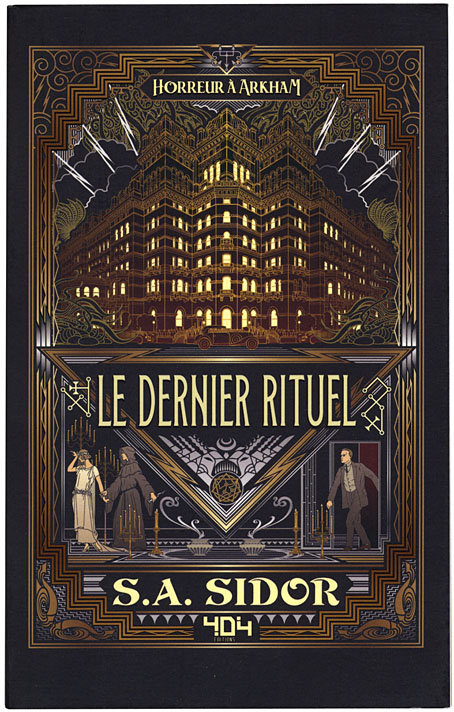
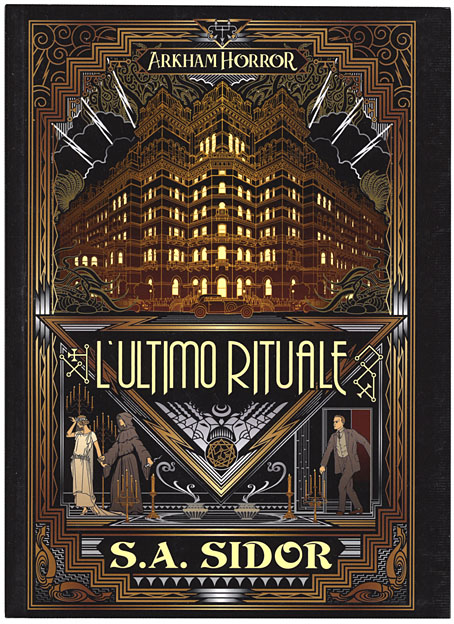
The Last Ritual

Weekend links 652

colquhoun.jpg

Landscape with Antiquities (1955) By Ithell Colquhoun.

• “The ontological horror at the core of these stories is that the stone–which represents the natural world and the uses we carve out for it–is unknowable. It’s been here, affecting the land, whether erected as a monument or laid as bricks, for longer than we can fathom, and its inaccessible past has some frightening bearing on the present.” Sean McGeady on 50 years of stone-tape theory, from Nigel Kneale to Ben Wheatley. Also a reminder that Christmas ghosts on TV could be more than another adaptation of MR James.

• “Midnight is the time when one can recall, with ribald delight, the names of all the Great Works which every gentleman ought to have read but which some of us have not. For there is almost as much clotted nonsense written about literature as there is about theology.” At Wormwoodiana: That Black-Edged Light: A Note on HM Tomlinson.

• “Anxious but stubborn herself, she was a lucid observer of social awkwardness, her subject matter in her books being primarily worry: at disasters real and imagined (comet-fall, floods, unplanned chaos), but also at small-scale domestic panics (such as how to mollify unwanted guests).” Mark Sinker reviewing Tove Jansson, a new biography by Paul Gravett.

Dennis Cooper’s favourite fiction, poetry, non-fiction, film, art, and internet of 2022. Thanks again for the link here!

• “A is for Alphabet and Architecture.” Public Domain Review now has an index. Rather slight but still useful.

Ju-on: The Curse and four other Y2K J-Horror movies you may have missed: a list by James Balmont.

• At Smithsonian Magazine: Listen to the sound of a dust devil swirling around on Mars.

• Unquiet Things offers the latest accumulation of Intermittent Eyeball Fodder.

Stone God (1957) by Martin Denny | Sanctuary Stone (1973) by Midwinter | Children Of Stone (2006) by Espers

Yellow-Red-Blue

kandinsky.jpg

This painting by Kandinsky turned up on my tablet this morning, courtesy of a Google widget that shows you a new piece of art on the day of the artist’s birth. Kandinsky was born on 16th December, 1866, although this is an adjusted date since the Russian calendar at the time was still following the Julian system. Anyway, the painting is Yellow-Red-Blue from 1925, and you can see the real thing at the Centre Pompidou in Paris.

A.R.T. art

ARTflyer.jpg

Some Manuel Göttsching-related graphic ephemera. This 1971 flyer for Ash Ra Tempel seems to be a rare item, the only place I’ve seen it being inside one of the inserts for The Private Tapes, a series of six CDs limited to 1000 copies each that Manuel Göttsching released in 1996. I was lucky to buy these when they were first released. A double-disc selection from the series followed two years later but neither this nor the rest of the set have been reissued since, despite containing a wealth of previously unreleased recordings from Göttsching’s archives, including many live concert recordings of Ash Ra Tempel. The flyer was the work of Bernhard Bendig who also drew the sleeve art for the group’s first two albums.

ARTcosmic.jpg

Not as scarce, but not very visible either, is this painting of another somewhat wonky temple by P. Praquin for a 1975 reissue of two Ash Ra Tempel albums: Inventions For Electric Guitar (which isn’t really ART), and Seven Up, the ramshackle studio jam which is mostly spoiled by the bellowings of Timothy Leary and friends. Discover Cosmic was a short-lived series of double-disc reissues of albums originally released on Cosmic Music, an imprint of Barclay Records that repackaged releases from Ohr and Kosmische Musik for the French market. There were three volumes of Discover Cosmic, the other two showcasing Popol Vuh and “The Klaus Schulze Sessions”, this being the first Cosmic Jokers album plus Join Inn by Ash Ra Tempel. The mysterious P. Praquin was responsible for all three cover paintings of which this is the best, wonky or not, a variation on the church-as-spaceship idea that may have been borrowed from the Roger Dean cover for Space Hymns by Ramases. This is one of those graphic contrivances that I usually expect to find repeated elsewhere, although to date the only other example I’ve seen was a Viennese museum poster. But there are more than enough churches that resemble spaceships to give people ideas, especially recent constructions like the Hallgrímskirkja in Reykjavík. If you know of any other steeples blasting off then please leave a comment.

Previously on { feuilleton }
Manuel Göttsching, 1952–2022
The kosmische design of Peter Geitner
Raising the roof