Fatality by OCTiV

fatality.jpg

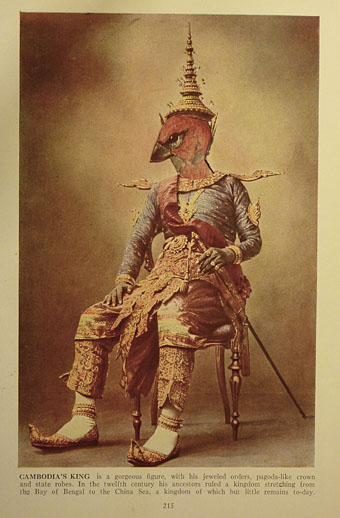
Catching up with more recent work, this was a quick collage for Fatality, a single by US musician OCTiV. This has been out for about a month. The main track—a kind of dubstep/metal hybrid—can be heard here. The request was for something on the cosmic horror spectrum which would also incorporate geometric elements, hence the swiping of a couple of polyhedra from Wenzel Jamnitzer’s wonderful Perspectiva Corporum Regularium (1568).

Among the other things which have yet to materialise there’s a book cover design for Tor, and the Ghosts in Gaslight, Monsters in Steam anthology which features some of my fiction as well as my cover design. I’m very pleased that the latter has achieved its Kickstarter funding. More about these projects later.

Abraxas: The International Journal of Esoteric Studies

abraxas.jpg

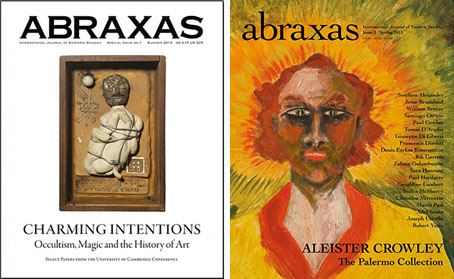
A welcome arrival in the post recently was two issues of Abraxas, the book-format journal of esoteric studies from Fulgur Esoterica. I’ve always observed the contemporary occult scene from a distance, being more interested in cultural spin-offs whether those happen to be music-oriented—as was the late, lamented Coil—or art-oriented. Something I always enjoyed about Kenneth Grant’s books was the amount of unique art material they contained, much of it by his wife, Steffi Grant, or previously unseen work by Austin Osman Spare. Fulgur have for many years continued this artistic focus, starting out by reprinting Spare’s books (and publishing new ones, such as the revelatory Zos Speaks!), and more recently turning their attention to the work of contemporary artists following similar paths.
kostromitin2.jpg

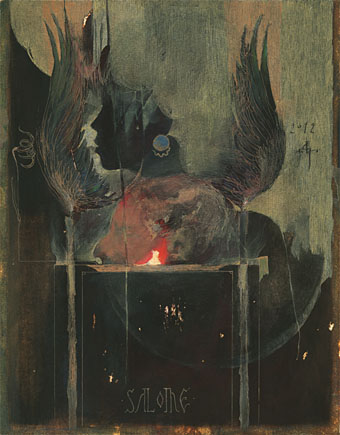
Study for Salome (2012) by Denis Forkas Kostromitin.

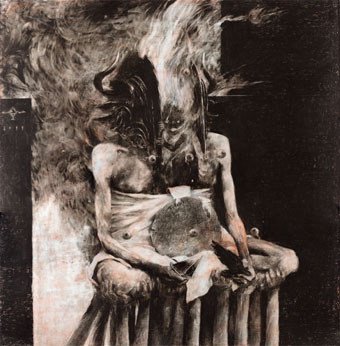
Abraxas is a venue for the latter group, especially in the most recent issue, no. 3, which features a wealth of new art, photography, essays and poetry. In the past I’ve complained about the misunderstandings Austin Spare’s work used to generate among otherwise intelligent and sensitive critics when faced with the artist’s occult obsessions; the usual response would be to lazily dismiss this side of his work as “black magic”, and therefore either kitsch or nonsense. Things have improved in recent years but it’s taken a long time for critics and curators who would show the greatest respect to a minority belief from South America, say, to offer the same respect to equally sincere artists who happen to be working in London or New York. One of the values of Abraxas for artists such as Jesse Bransford and Denis Forkas Kostromitin, both of whom are interviewed here, is that they can have a conversation with someone who won’t treat their work or their interests in a condescending manner. I’m particularly taken with Kostromitin, a Russian artist whose work I only discovered recently.
kostromitin3.jpg

M L K (Moloch) (2011) by Denis Forkas Kostromitin.

Elsewhere in Abraxas 3 there’s a feature on the recent exhibition of Aleister Crowley’s extravagant daubs, an article by Francesco Dimitri about tarantism in southern Italy, a piece about Dada by Adel Souto, and text by Paracelsus with illustrations by Joseph Uccello which is printed on a different paper stock. The production quality is as good as any art book but then that’s standard for a Fulgur publication. Mention should be made of the interior design of this issue which far exceeds the often perfunctory layout of many publications from smaller publishers. Tony Hill is credited on the masthead as Creative Director so I’m assuming he’s the person responsible. Abraxas is an essential purchase for anyone interested in contemporary occult art. The hardback of no. 3 is a limited edition that includes a signed and numbered lithograph by Denis Forkas Kostromitin.

Previously on { feuilleton }
I:MAGE: An Exhibition of Esoteric Artists

The art of Ted Coconis

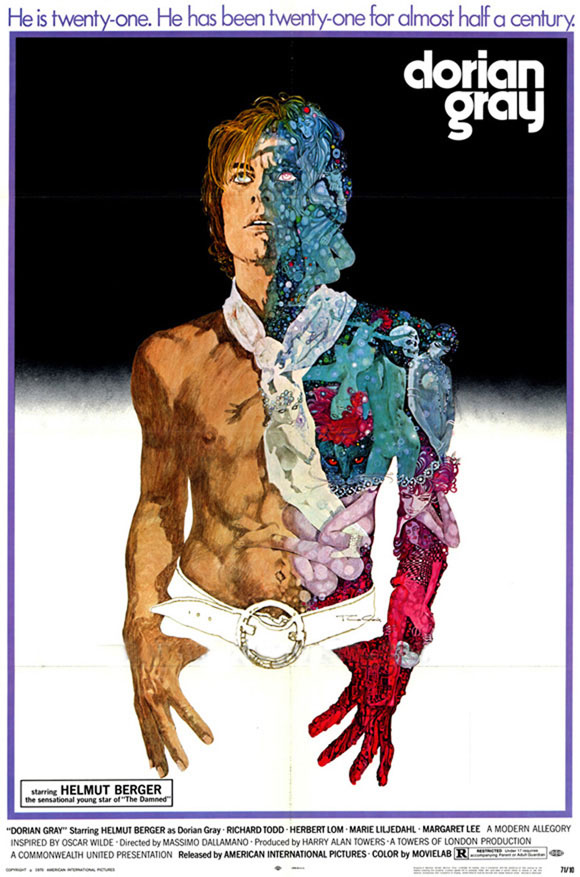
dorian.jpg

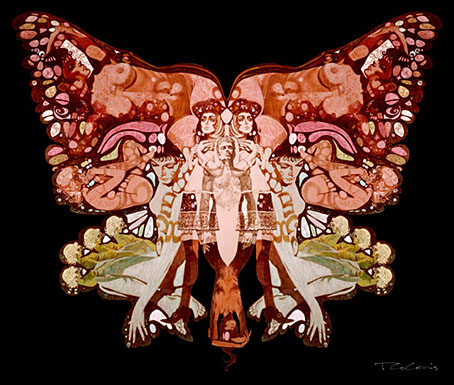
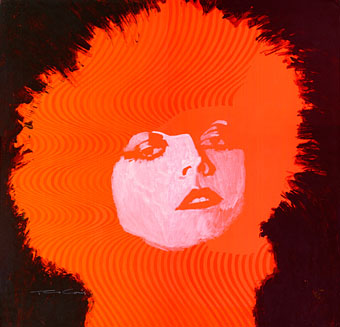
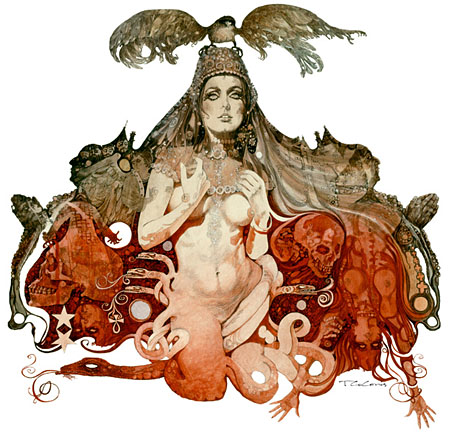
This poster for Massimo Dallamano’s 1970 updating of The Picture of Dorian Gray was featured here several years ago, and it’s taken me all this time to finally discover the name of the artist responsible, Ted Coconis. Better late than never. It could be argued that the illustrations below for Nabokov and Goldman tend more towards the artist’s own interests than representing the content of the books; I’ve not read Goldman’s novel (or seen the film) but online comments suggest that this was an unsuitable cover; Nabokov’s Ada is an erotic novel which presents its eros in a manner that’s a lot less direct than the painting implies. All I can say to this is that strict accuracy is for pedants; Aubrey Beardsley’s illustrations for Wilde’s Salomé aren’t in the least accurate yet they’re regarded as definitive. Sometimes illustrators are trying to convey in pictorial form an otherwise intangible impression of a book (or a film or play) which is what I see Ted Coconis doing here. There’s a lot more of his work at his website. It’s gorgeous stuff.

coconis1.jpg

Cover illustration for Ada by Vladimir Nabokov.

coconis2.jpg

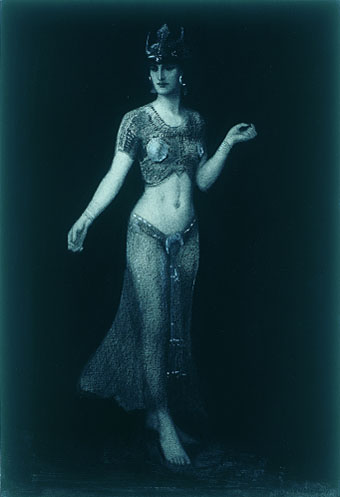
Pola Negri.

coconis3.jpg

Cover illustration for The Princess Bride by William Goldman.

Elsewhere on { feuilleton }
The illustrators archive

Weekend links 160

floyd.jpg

Collage by Jeneleen Floyd.

• “…slowly, block-by-block, pedestrians are starting to take back the streets.” Wayne Curtis on the hazards of being a pedestrian in a world of cars.

• Michael Hann looks back at LA’s Paisley Underground, and also talks to some of its key members.

Meighan O’Toole interviews JL Schnabel about her Blood Milk jewellery designs.

My central thesis is that camp was always a kind of signifying practice invented out of necessity (both for survival and for sheer creative pleasure) by “queer” (in the classic sense) outsiders – fags, drag queens, transsexuals, deviants, sexual renegades – and that it was always by its very nature deeply political and committed: Some people dedicated their entire lives to it! Sontag’s interpretation always seemed a bit dismissive to me somehow.

The seldom unprovocative Bruce LaBruce talking to Mark Allen about camp in the 21st century.

• Studiocanal launches an appeal to find the lost materials of The Wicker Man.

• At Flickr: Tales from a Parallel Universe and London’s Lost Music Venues.

Michael Wood tells us what we learn when we read Italo Calvino’s letters.

• Fragments of a Portrait: Francis Bacon and David Sylvester in 1966.

• An extract of a live session from Adrian Sherwood and Pinch.

• In Baba Yaga’s Hut: Amelia Glaser on Russian folk tales.

Buckminster Fuller Book Covers from the 1970s.

A Century of Proust.

The Real World (1982) by The Bangles | With A Cantaloupe Girlfriend (1982) by The Three O’Clock | Medicine Show (1984) by The Dream Syndicate | No Easy Way Down (live in Tokyo, 1984) by The Rain Parade

Several more Salomés

durnov.jpg

Cover of Salome by Oscar Wilde (1903) by Modest Alexandrovich Durnov.

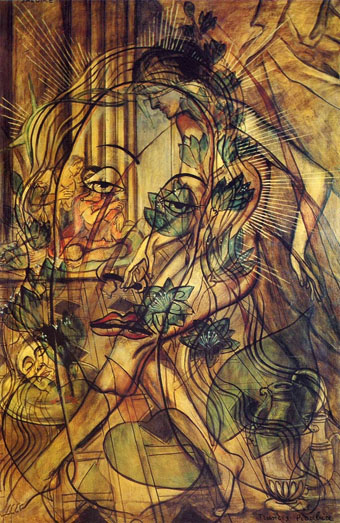
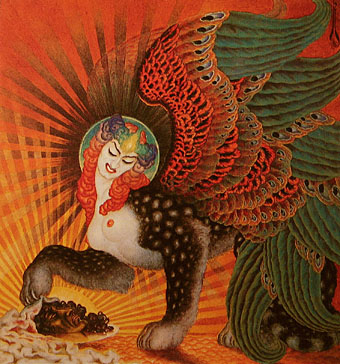
Gathering a few more Salomé renderings which have caught my attention recently. The biggest surprise is the one from Picabia since he’s an artist who these days is almost always associated with the Cubists and Dadaists. In the 1920s he returned to figurative painting and produced a number of pieces in this style. The overlaying of images reminds me of some of Hans Bellmer’s drawings.

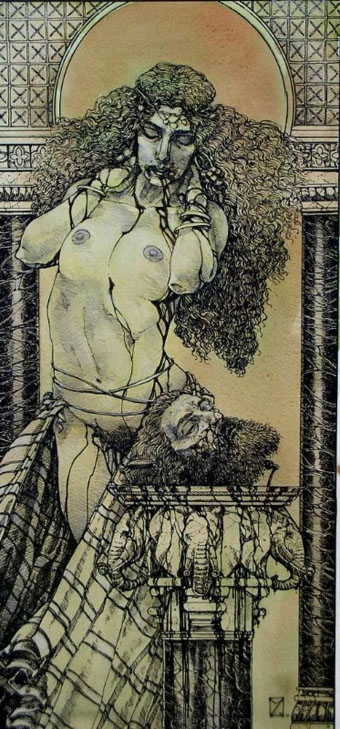
Michael Zulli is an American comic artist whose work I’ve always liked a great deal. No information about his drawing, unfortunately, so I can’t say whether it’s a one-off or part of a larger project.

wilmer.jpg

Salomé (1917) by John Riley Wilmer.

picabia.jpg

Salomé (c. 1928) by Francis Picabia.

kalmakov.jpg

Salomé Sphinx (1928) by Nicholas Kalmakoff.

zulli.jpg

Salomé (no date) by Michael Zulli.

Elsewhere on { feuilleton }
The Salomé archive