Weekend links 848

max.jpg

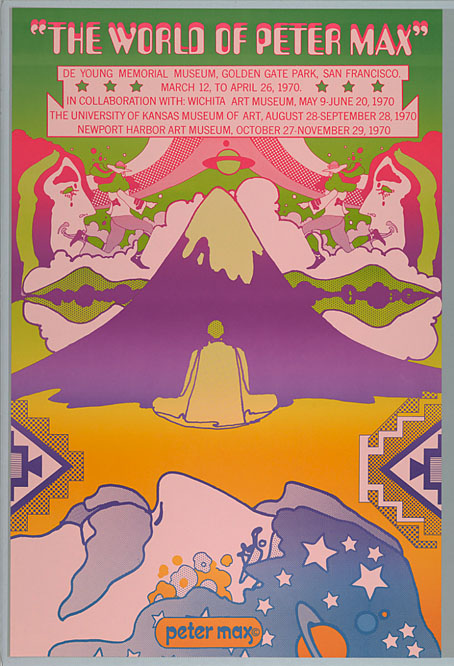
Exhibition poster, 1970.

• RIP Peter Max, an artist who made the popular manifestations of psychedelic graphics near-synonymous with his own name which was always typeset and prominently displayed with a copyright symbol on his printed creations. Max’s formulation of the artist-as-brand was so extensive he makes those who attempted similar things look like slackers. Even Salvador Dalí didn’t have his own breakfast cereal. Hippy transcendence fused with naked commercialism. More Max: The 1971 Peter Max Astrologicalendar; Riverside Drive, a Max-designed typeface; Max on TV: The Fifth Dimension Special: An Odyssey in the Cosmic Universe of Peter Max (1970); Peter Max book covers, puzzles and more.

• “Film is a very unusual combination of things because it has an incredible financial commitment of spending, yet it has to be free and creative. To be any good, the cinema that I do has to be free and yet there are many constraints on it now and my best films were made in an era of wildness…” The late Jeremy Thomas talking to Nick James in 2014 about his long career in cinema.

• At Nautilus: The Promise and Peril of Toad Smoking, the Everest of Psychedelics. Kristen French talks to Kimon de Greef about his new book, The Ego Trip: Psychedelic Toads, a Trail of Deaths and the Guru Who Peddled Transcendence.

• At Smithsonian Mag: Thomas Waters on six ways that people of the past used magic to protect their homes, from witch bottles to mystical symbols.

• New music: September Nineteen Sixty Nine by Adam Wiltzie / Jóhann Jóhannsson; Now We Can Sing by Max Richter; Norfolk by Richard Sage.

• At CDM: Adam Wiltzie talks to Peter Kirn about his posthumous collaboration with Jóhann Jóhannsson.

• At Public Domain Review: Thomas W. Laqueur on dogs in the paintings of Paolo Veronese.

• At Dennis Cooper’s: Spotlight on Leonora Carrington The Hearing Trumpet (1977).

• At the BFI: Kim Newman chooses 10 great sci-fi B-movies.

• Old music: King Crimson on German TV in 1969.

• 1969 (1969) by The Stooges | 1969 (1983) by The Sisters Of Mercy | 1969 (2002) by Boards Of Canada
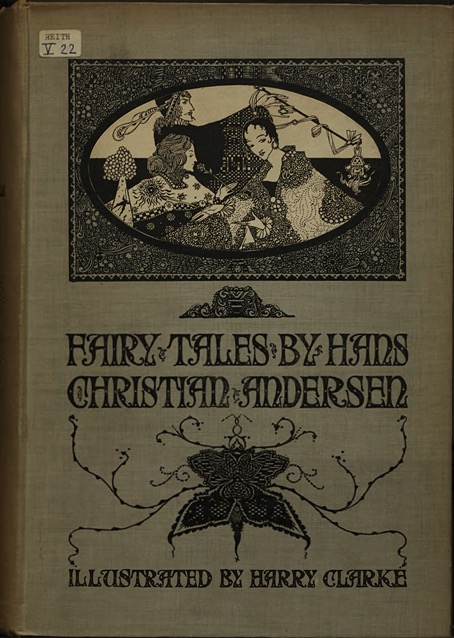
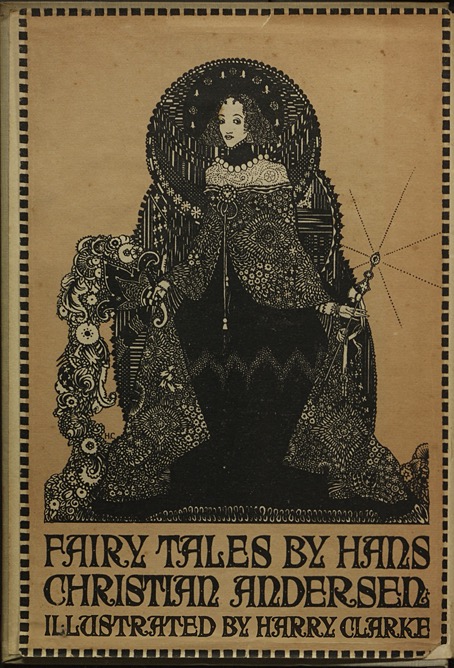
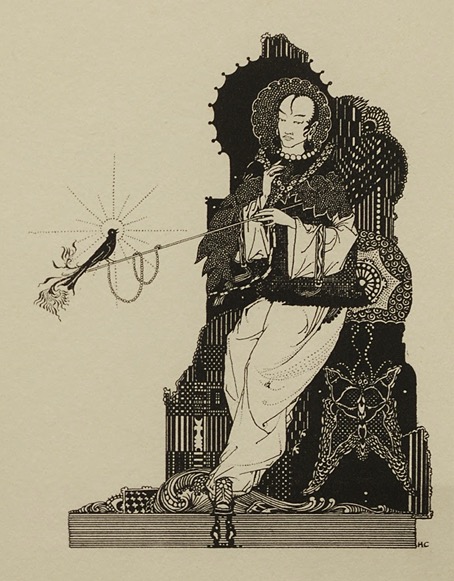
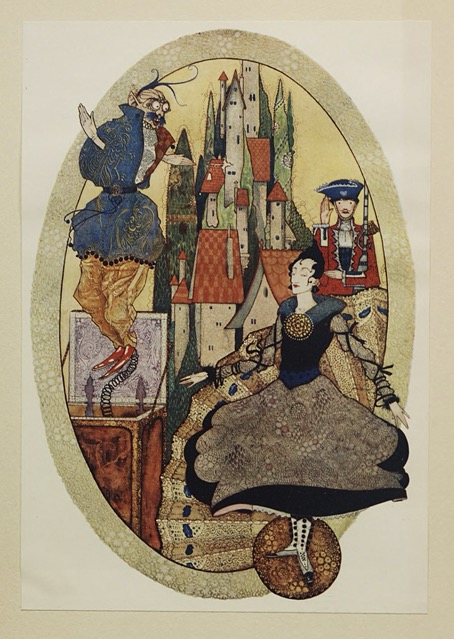
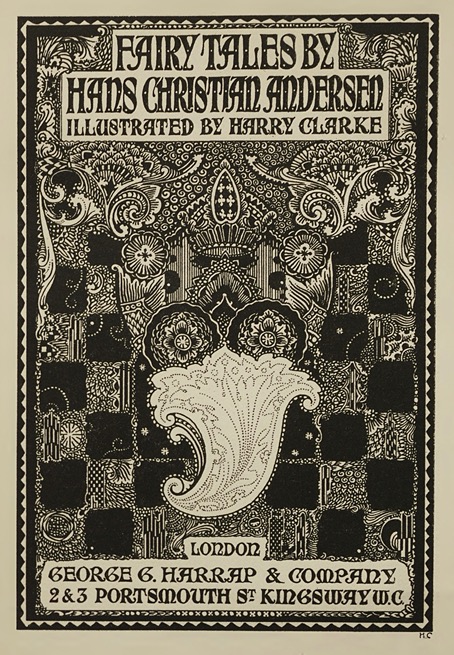
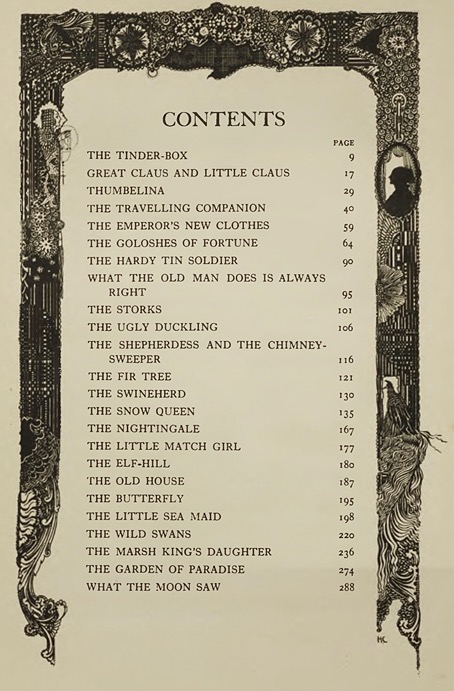
Harry Clarke’s Fairy Tales by Hans Christian Andersen

clarke01.jpg

Six years ago I put together a post of links to online sources for all of Harry Clarke’s major works of illustration. His first illustrated book, Fairy Tales of Hans Christian Andersen, was among these but the best link I could find at the time was to a set of scans at Flickr which didn’t include things like the board illustrations. (And Flickr is a generally unstable host for anything.) The images here are from this page which was added recently to Wikimedia Commons, and are taken in turn from a collection of book scans at Maastricht University.

clarke02.jpg

Clarke’s book of fairy tales was published by Harrap in 1916 but wasn’t intended to be his first illustrated edition. Harrap’s first commission had been for an edition of Coleridge’s Rime of the Ancient Mariner but the project was abandoned when most of the art was destroyed during Ireland’s Easter Uprising. Further plans for an edition of Pope’s The Rape of the Lock were also abandoned. Harrap’s decision to launch a new artist with yet another collection of Hans Christian Andersen stories seems surprising when there were already many fine editions for British book-buyers to choose from. The Robinson brothers—Thomas, Charles and William—had collaborated on a huge story collection published in 1899, with their individual contributions being subsequently repackaged as separate volumes. The same year saw another edition for which Helen Stratton provided over 400 illustrations. Edmund Dulac and Dugald Stewart Walker had produced books of their own by the time Clarke’s edition was being prepared, and there were others besides these.

clarke03.jpg

Clarke’s collection has more stories than some of those illustrated by his contemporaries but his art is also a little less assured than it would be in his later books. As a fairy-tale collection it lacks the delicate touch he brought to his illustrated edition of Perrault’s tales. There are many excellent compositions, especially among the black and white drawings but also a few pieces which aren’t so much composed as filled with competing areas of decoration that overwhelm the subject of the picture. Clarke never abandoned his fondness for minute details but in his later books his arrangements of tiny circles and baroque curlicues are much more successful.

clarke04.jpg

clarke05.jpg

clarke06.jpg

Continue reading “Harry Clarke’s Fairy Tales by Hans Christian Andersen”

Weekend links 847

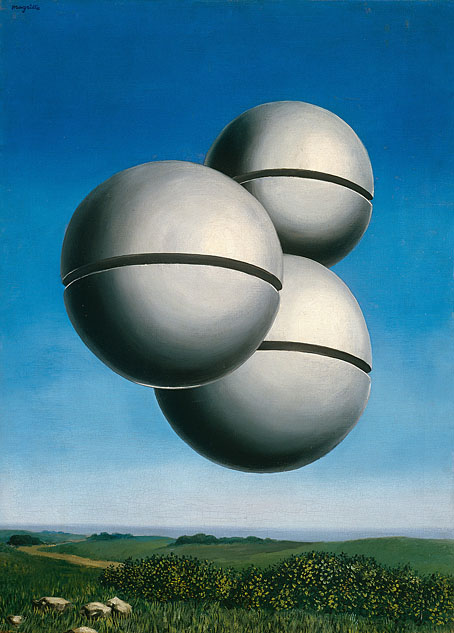
magritte.jpg

La voix des airs (1931) by René Magritte.

• “Gangsters is to the 1970s what The Prisoner was to the 1960s—a playful, knowing and mildly crazed production but today it bears an important warning from the past to us.” John Quin on the extraordinary vitality of Philip Martin’s Play For Today and the BBC drama serial spun-off from it.

• New music: Juxtapositions by Boddy | Scanner; Embodied Shadow Of Thy Secret Mind by Philippe Blache; Light on Water by Modern Apartments.

• At Public Domain Review: Metamorphosis: Transformations in the Early Modern Flap Book (early 19th century).

Maeterlinck would write of [The Great God Pan], “it is, I believe, the attempt had been made to combine the traditional, or diabolical Fantasy with the new scientific kind, and that such a mixture has produced the most disturbing work I have ever come across”. Maeterlinck’s description of Machen serves as a tidy introduction to the crux of Ray’s writings too. A writer equally perplexed, intrigued, and possessed by the “the terrifying, hypergeometric, fourth dimension”. Ray’s works span the thin fabric of reality, piercing through into other eternal worlds and abducted by its eternal horror. Ray’s worlds are numerous realities battling one another, overlapping, mimicking, and distorting; it is an evocation of time and space as a battle-field of alternativities, governed by strange supernatural forces, notably angels or the occult.

The London of the Imagination, an examination of the fictional metropolis as it manifests in the stories of Belgian writer, Jean Ray

• Mixes of the week: A Slomo mix for The Invisible College, and DreamScenes – September 2026 at Ambientblog.

• At Colossal: “Spanning 200+ works, a new book celebrates the world of fungi“.

• The Electric Music Machine: Five Days at the BBC Radiophonic Workshop (1988).

• Steven Heller’s font of the month is Ege Basalt.

• Matt Cargill’s favourite albums.

• RIP Jeremy Thomas.

• Metamorphosis (1970) by Ananda Shankar | Metamorphosis (1995) by Pet Shop Boys | Metamorphosis (2012) by Demdike Stare

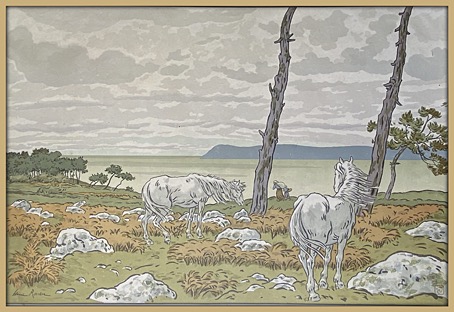
Henri Rivière’s lithographs

riviere03.jpg

Aspects de la nature: La Baie (1897).

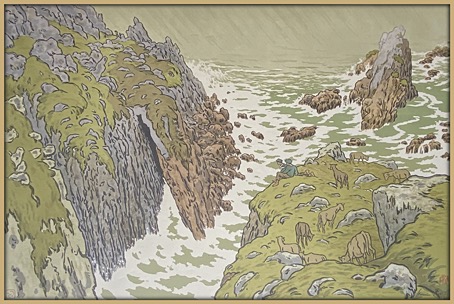
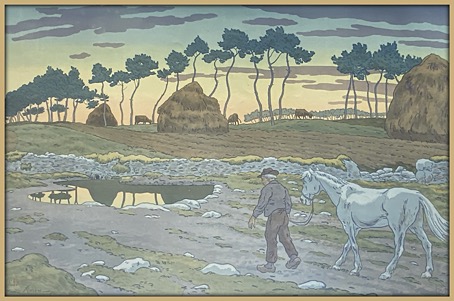
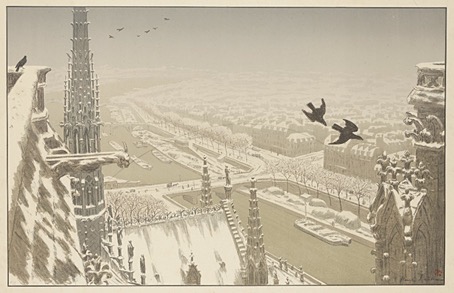
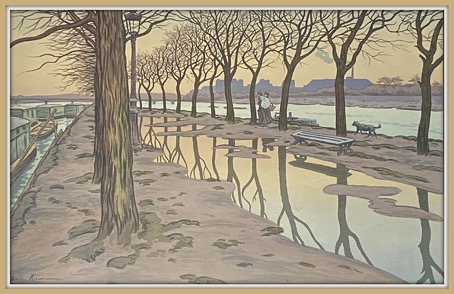
Henri Rivière (1864–1951) was a French painter and printmaker whose Thirty-six Views of the Eiffel Tower (1902) is one of my favourite picture series, a Parisian response to Hokusai’s Thirty-six Views of Mount Fuji. Rivière’s series is beautifully done, printed in autumnal hues, bound in boards that combine Art Nouveau design with the traditional styling of Japanese books, and with each print signed with a small red monogram. The same monogram—or a variation of it—turns up on many of his other prints, serving to remind the viewer of the artist’s debt to Japanese printmakers. Rivière’s lithographs apply the traditional Japanese arrangement of minimal outline and flat colour to French subjects, with an equivalent care taken over the choice of view and the structure of the composition. In their realistic detail and use of atmospheric effects this is a side of Rivière’s work that looks forward to the ligne claire style of European comic art.

(Note: several of these samples have artificially applied borders which I’ve left as they are.)

riviere04.jpg

Aspects de la nature: La Falaise (1898).

riviere13.jpg

Aspects de la nature: Le Crépuscule (1898).

riviere01.jpg

Paysages parisiens: Du haut des tours de Notre-Dame (1900).

riviere10.jpg

Paysages parisiens: L’île des Cygnes (1900).

Continue reading “Henri Rivière’s lithographs”

Weekend links 846

borges.jpg

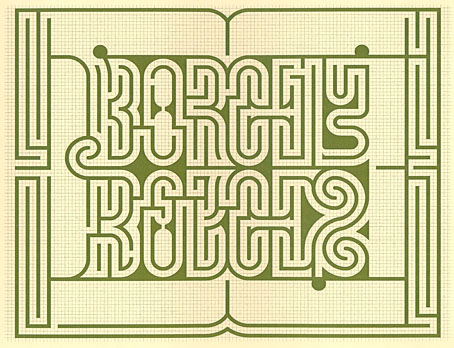
Design by Randoll Coate for the Labirinto Borges, a hedge maze at the Giorgio Cini Foundation, Venice, which was renovated earlier this year.

• “Code was probably our most overtly political record, which is interesting, touring and playing it in these very different but scary political times.”​ Stephen Mallinder of Cabaret Voltaire talking about the experience of touring America again.

• At The Daily Heller: A look at the work of designer/illustrator George Hardie whose five-decade career is to be celebrated in a retrospective exhibition in London. There’s more George Hardie here.

• “Almost as soon as weird began circulating outside of Macbeth, its meaning broadened too, from ‘eerie’ and ‘uncanny’ to ‘odd’ or ‘unusual’.” Colin Gorrie on the weird history of the word “weird”.

• At The Quietus: Toby Manning on 40 years of Gone To Earth by David Sylvian. A minor nitpick: the album’s art and design was by Russell Mills, not Vaughan Oliver.

• New music: Burning Song by Kali Malone; Obsessive Surrealism by Parallel Worlds.

• At Door Of Perception: The radical architectural designs of Eugene Tssui.

• DJ Food’s latest accumulation of psychedelic graphics from the desktop.

• Old music: When The Music’s Over (Live, 1970) by The Doors.

• Arthur Brown‘s favourite songs.

• Weird Dream (1976) by Harmonia | It’s So Weird (1983) by Bush Tetras | Ballad Of The Weird Sisters (2013) by Blood Ceremony