Weekend links 519

minotaure.jpg

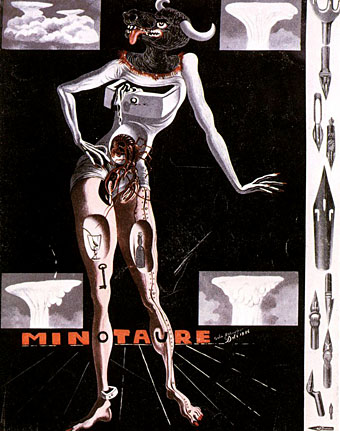
Cover of Minotaure no. 8 (1936) by Salvador Dalí.

• At Dangerous Minds: Irmin Schmidt talks to Oliver Hall about his new album of prepared piano, Nocturne, and also reveals more about the planned release of live recordings by Can.

• “Even the most zealous fan of the genre can learn something new from this book,” says Geeta Dayal in a review of Bring That Beat Back: How Sampling Built Hip-Hop, by Nate Patrin.

• The subject of a previous post but the video was later removed: Italo Calvino in a rare documentary feature for an English audience, on the BBC’s Bookmark in 1985.

• On 9th May, carillonneur Malgosia Fiebig played The Model by Kraftwerk on the bells of the Dom Tower in Utrecht as a tribute to the late Florian Schneider.

• Film footage of Alice Coltrane in her prime is a rare thing so even 17 minutes of TV from 1970 is something special.

Dan Reynolds on the fantastic alphabets designed by Jean Midolle. See also Luc Devroye’s page.

• Mix of the week: Jon Hassell tribute, part 1: Jon and his collaborators, by Dave Maier.

Nicolas Winding Refn on some of the films he’s been watching during lockdown.

• At Haute Macabre: Surrealist décor and tiny secret drawers.

HP Lovecraft dreams of a Providence trolley car in 1927.

The Museum of Ridiculously Interesting Things

Xerrox Voyage, a new recording by Alva Noto.

• At Dennis Cooper’s: Jean-Pierre Léaud Day.

The Model (1979) by Snakefinger | Model (1992) by The Balanescu Quartet | Das Modell (1997) by Rammstein
Weekend links 518

dali.jpg

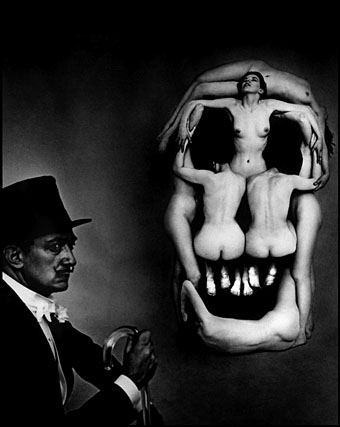
In Voluptas Mors (1951) by Philippe Halsman.

• “Equation to an Unknown (1980) is [Dietrich de Velsa’s] only film, and stands without a doubt as a masterpiece and the best French gay porn ever made.” Related (sort of): the US division of Amazon Prime had been showing a censored print of Francis Lee’s gay romance, God’s Own Country, until the director was informed and complained.

• “They lasted just one night as tour support for U2 before being thrown off. The outraged and hostile audience threw bottles of urine. The band responded by throwing iron bars back at them.” Daniel Dylan Wray on the wild times (and cookery) of Blixa Bargeld and Einstürzende Neubauten.

• “Japanese art evolved, in Saunders’s words, ‘from a distinctive alchemy of silk, soot, gold, fire, and fur,’ from a playful and curious fascination with the subject matter and tools provided by the natural world.” Tamar Avishai on art in isolation: the delicate paintings of Edo Japan.

To me, the Diggers were a phenomenon. I don’t know that there’s been anything like them in history—yes, history repeats itself, so there probably was somebody at some time, I’m just not aware of it—a situation where you have a group of people whose goal is to help other people, to bring them not just the basic necessities you need to survive but the things that you need for your imagination, your brain, your growth on other levels. It was like an opium dream or something.

Siena Carlton-Firestone (aka Natural Suzanne) talking to Jay Babcock for the fourth installment of Jay’s verbal history of the hippie anarchists

• A psychic has been ordered to pay the costs of exhuming Salvador Dalí’s corpse for a failed paternity test.

• Feel the crushing steel: David Bennun on Grace Jones and the Compass Point Trilogy.

Sleep Tones by Six Organs Of Admittance, name-your-price music for insomniacs.

• Mix of the week: XLR8R Podcast 645 by Juan MacLean.

Playing the Piano for the Isolated by Ryuichi Sakamoto.

• David Lynch Theater presents: Fire (Pozar).

Fire (1967) by Koko Taylor | Fire (1984) by 23 Skidoo | Fire (2002) by Ladytron

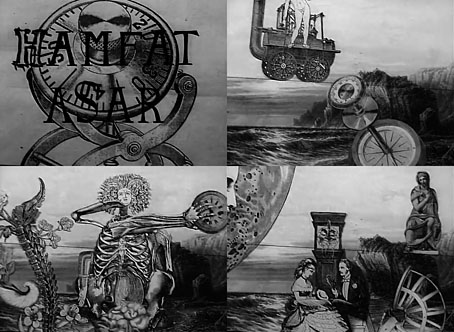
Hamfat Asar, a film by Lawrence Jordan

jordan1.jpg

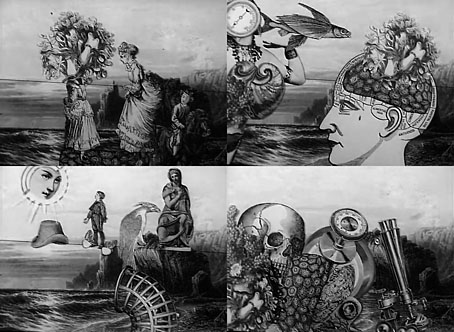
I was reminded of Lawrence/Larry Jordan recently when reading Deborah Solomon’s biography of Joseph Cornell, Utopia Parkway, in which Jordan receives passing mention for helping Cornell with some of his film work in the 1960s. One of Jordan’s short films was featured here in 2014 but I’d not been very diligent in looking for more, a considerable oversight when he was an early and accomplished practitioner of animation using collaged engravings and illustrations. He wasn’t the only animator producing work like this in the 1960s, Harry Smith, Jan Lenica and Walerian Borowczyk also used these methods, but Jordan seemed to favour the idiom more than others.

jordan2.jpg

Hamfat Asar dates from 1965, and is immediately notable for moving its collaged figures over a shoreline landscape which remains fixed for the entire running time. The narrative, such as it is, concerns a stilt-walking figure attempting to cross from one side of the screen to the other but whose progress is continually impeded by a succession of figures, creatures and bizarre assemblages. The film has been described as representing “a vision of life beyond death” although this isn’t very evident at all. Jordan’s films are much more Surreal in the true sense of the word than many other collage animations which tend towards satire or comedy, Terry Gilliam’s work for Monty Python being an obvious example of the latter. The combination of Surreal engravings with black-and-white film stock gives Hamfat Asar a distinct Max Ernst flavour, which is no bad thing. Watch it here.

Previously on { feuilleton }
Carabosse, a film by Lawrence Jordan
Labirynt by Jan Lenica
Science Friction by Stan VanDerBeek
Heaven and Earth Magic by Harry Smith
Short films by Walerian Borowczyk

Weekend links 517

magritte.jpg

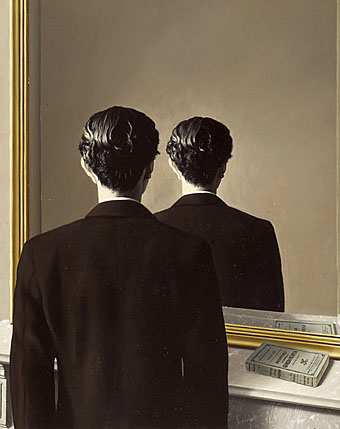
Edward James by René Magritte; La Reproduction Interdite (1937).

• “James was filmed in the late 1970s, striding round Las Pozas in a sweater and a tattered dressing-gown, surmounted by parrots (The Secret Life of Edward James can be seen on YouTube). When asked what motivated him, he replied: ‘Pure megalomania!’ He was having his second childhood, he said, though he wasn’t sure the first had ever ended.” Mike Jay on lifelong Surrealist, Edward James (1907–1984), and the concrete fantasia he built in the Mexican jungle.

• “I found the roots of electronic music in a cupboard!” Musician Paul Purgas (one half of Emptyset) on the discovery of early electronic music from India’s National Institute Of Design. Related: Purgas talks about his discovery with Patrick Clarke.

• RIP Phil May. Here’s The Pretty Things in their guise as psych band “Electric Banana” for an appearance in What’s Good for the Goose (1969). A decent moment in an otherwise terrible film.

• Music is a memory machine: David Toop explores how the transmission of music between disparate cultures can be a tool against populism and prejudice.

• Kraftwerk’s remarkable journey, and where it took us: Bob Boilen and Geeta Dayal discuss the tanzmusik of Düsseldorf.

• At Dangerous Minds: Acid Drag & Sexual Anarchy: Fifty years ago The Cockettes turned drag upside down.

Hua Hsu on the secret lives of fungi: “They shape the world—and offer lessons for how to live in it”.

• The great writer who never wrote: Emma Garman on the flamboyant Stephen Tennant.

• Cult 1998 PlayStation game LSD: Dream Emulator is finally playable in English.

Jim Jupp of Ghost Box records talks about the Intermission compilation album.

Jonathan Moodie on psychoactive cinema and sacred animation.

Alex Barrett on where to begin with Akira Kurosawa.

• At Dennis Cooper’s: Skeletons.

Skeleton Makes Good (1982) by Captain Beefheart & The Magic Band | Red Skeletons (1996) by Coil | Kids Will Be Skeletons (2003) by Mogwai

The art of Henk Bremmer, 1871–1956

bremmer3.jpg

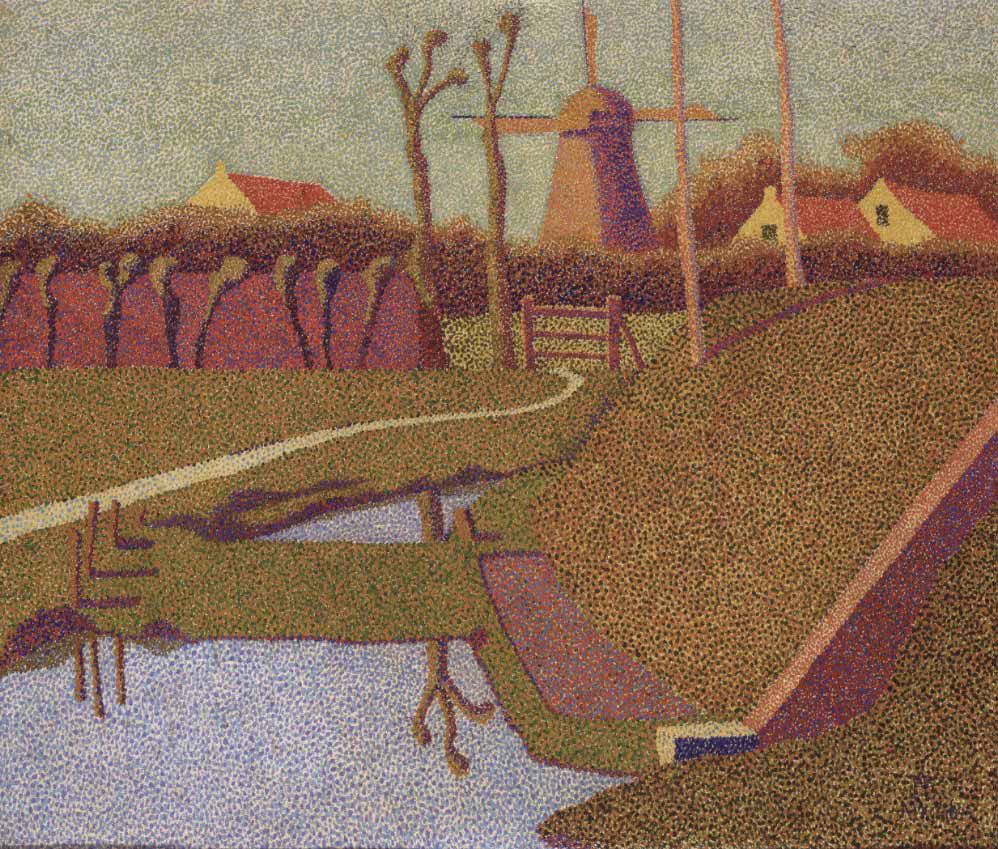
Landscape with Mill (1894; Museum De Lakenhal, Leiden).

This week’s post is another by Sander Bink about a Dutch artist whose work may be unfamiliar to those outside the Netherlands. As before, Henk Bremmer was an artist whose work I hadn’t seen until now. My thanks again to Sander for the post.

* * *

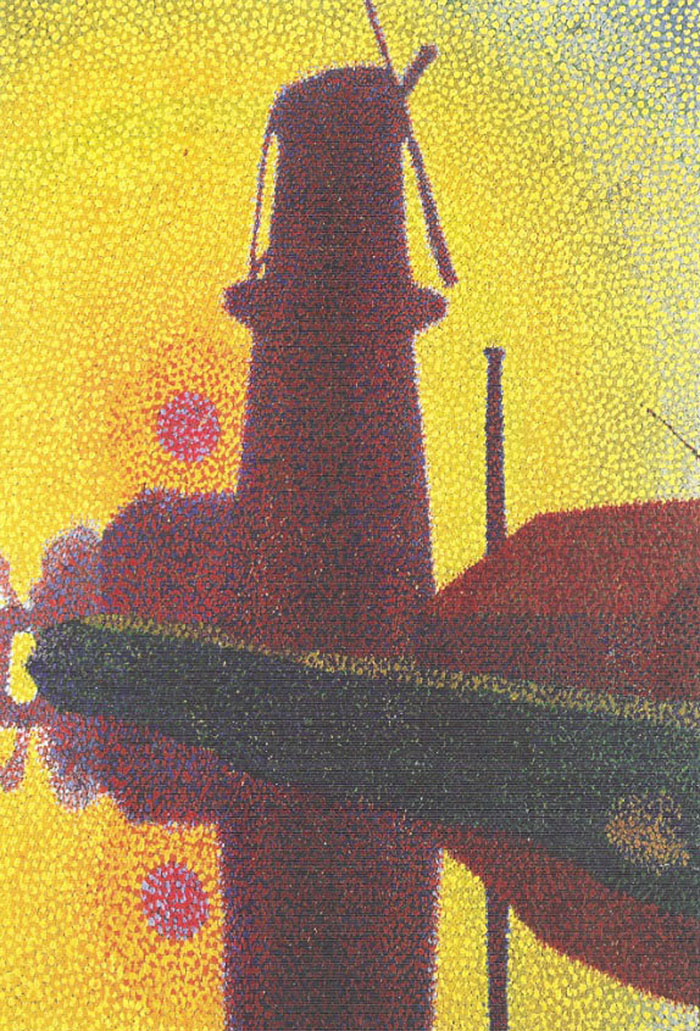
Hendricus (Henk) Bremmer was a Dutch painter, art critic, collector and art dealer. Nowadays he is mostly known for his role in forming the collection of what has become the Kröller-Müller Museum. He was enough of an authority on Dutch Modernist art from the early twentieth century to be known as “de Kunstpaus”—”the Pope of the Arts”. Bremmer was an early and important advocate of Mondriaan’s work, but the Bremmer landscapes I will focus on here are much more Modernist than those being made by Mondriaan at about the same time. Although Bremmer’s paintings from the 1890s and from around 1900 are seen as early examples of Dutch pointillism, readers of this blog will probably appreciate them for their Symbolist qualities. They are usually not seen as such but to me the Symbolist affinities are quite clear. That Bremmer was acquainted with Symbolist theory is apparent from his being an avid reader of the French Symbolists and a great admirer of Huysmans’ À rebours.

bremmer2.jpg

Windmill (1894; private collection).

In the 1890s Bremmer was friends with Dutch (Decadent-Symbolist) writers and painters such as Henri Borel, Henri van Daalhoff, Jan Toorop and Johan Thorn Prikker. When Josephin Péladan, the High Priest of Symbolism, visited the Netherlands in 1892 he stayed with Bremmer and invited him to exhibit at his Rose+Croix shows in Paris. The exhibition never materialised but one can easily understand the mystical qualities Péladan must have appreciated in Bremmers paintings. Like many Dutch intellectuals of the period Bremmer was strongly influenced by Spinoza’s mysticism. But whatever the source of his art, the landscapes here depicted can be considered “Symbolist landscapes”, like those being painted in France by Alphonse Osbert or Charles Filiger.

Continue reading “The art of Henk Bremmer, 1871–1956”